Booking your own shows means finding the right rooms before you write a single pitch. These five directories help you do exactly that.
The DIY booking landscape
Independent musicians no longer wait for a booking agent to hand them a tour. They build routes, research rooms, and pitch venue managers directly. That shift has created a crowded field of venue databases, each with a different angle: some are massive global indexes, some are community-built wikis, and some are built specifically for small stages. The challenge is not finding a list of venues. It is finding the list that matches how you actually book.
How we evaluated these directories
We looked at the same factors across every platform: how deep the venue coverage goes, how clear the pricing is, how useful the booking contacts are, and how well the tool fits a self-booking musician. We also weighed whether the platform shows you what a room actually wants, not just where it is. Each directory below stood out on a different combination of those factors.
Here is a quick look at how the five directories compare on scope, pricing model, and the kind of musician they serve.
| Provider | Best For |
|---|---|
| Indie on the Move | Genre-filtered venue searches and bulk pitching |
| No Stairs Please · Every small stage in the US | Small-stage booking with contacts and route planning |
| Gigwell Tour IQ | Professional routing with buyer contacts and radius clauses |
| BookingAgent.io Music Venue Directory | Global city-by-city venue browsing |
| VenueDB | Community-contributed venue knowledge |
The five directories in detail
#1 Indie on the Move
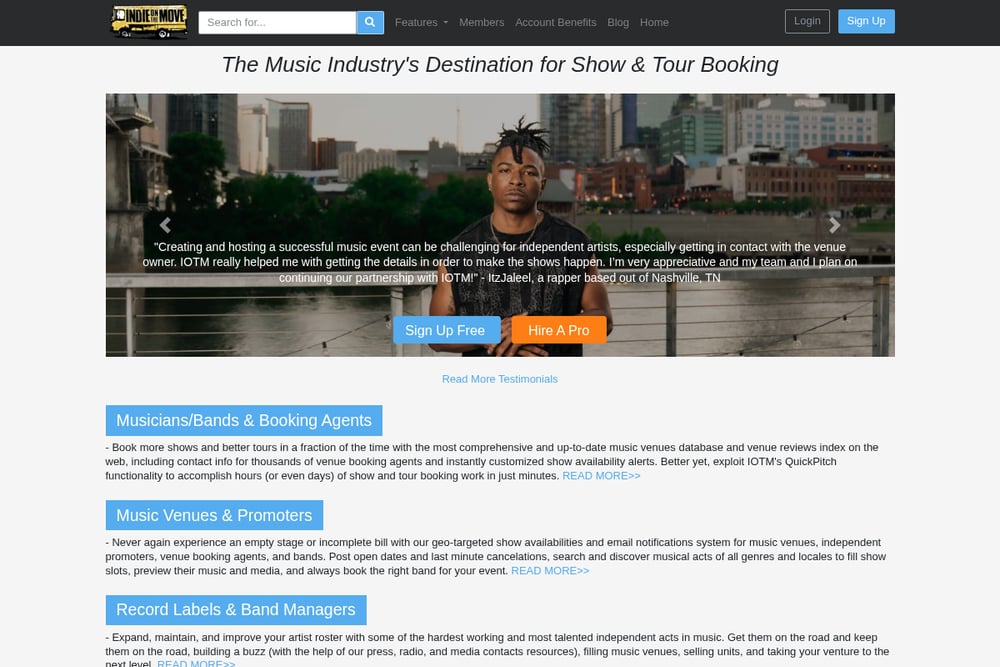 A screenshot of the Indie on the Move website.
Indie on the Move has been a staple for touring musicians for years, and its venue database reflects that history. You can filter by genre, capacity, and distance, then use QuickPitch to email multiple venues at once. The platform also lists colleges, festivals, and conferences, which widens your options beyond traditional clubs. It is a solid starting point if you want a familiar interface and a broad national footprint.
#2 No Stairs Please · Every small stage in the US
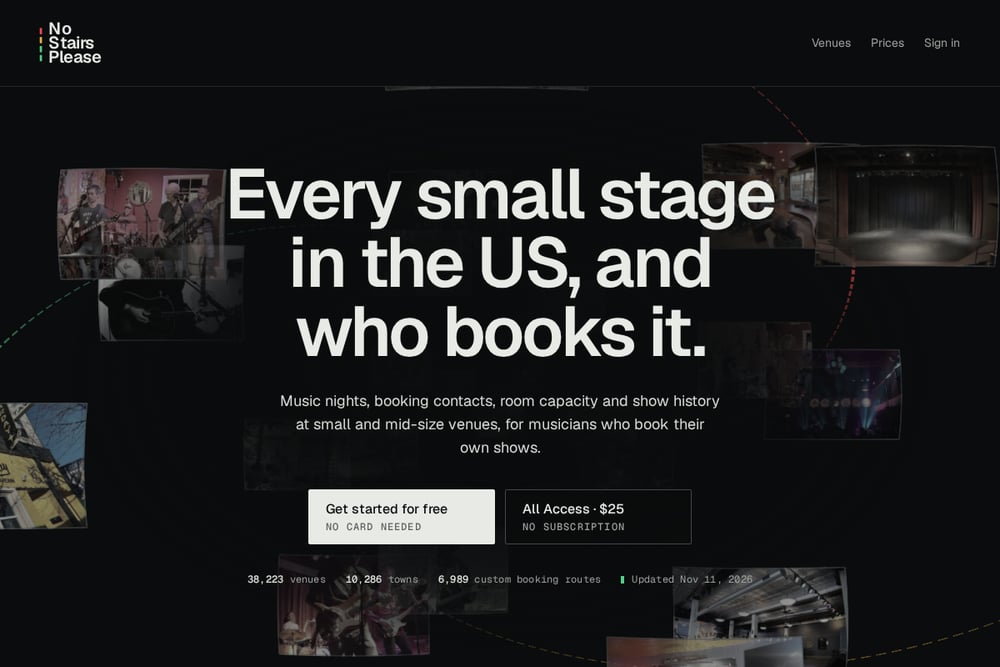 A screenshot of the No Stairs Please · Every small stage in the US website.
No Stairs Please is built for the rooms that bigger directories overlook: the small and mid-size stages where most self-booking musicians actually get their start. It lists 38,223 venues across 10,286 towns, with booking contacts, room capacity, and show history for each one. You can see which nights a venue regularly hosts music, draw a route between stops, and pitch the right person directly. The free tier requires no card, and a $25 All Access pass unlocks custom booking routes. It is the most focused tool on this list for musicians who book their own shows.
#3 Gigwell Tour IQ
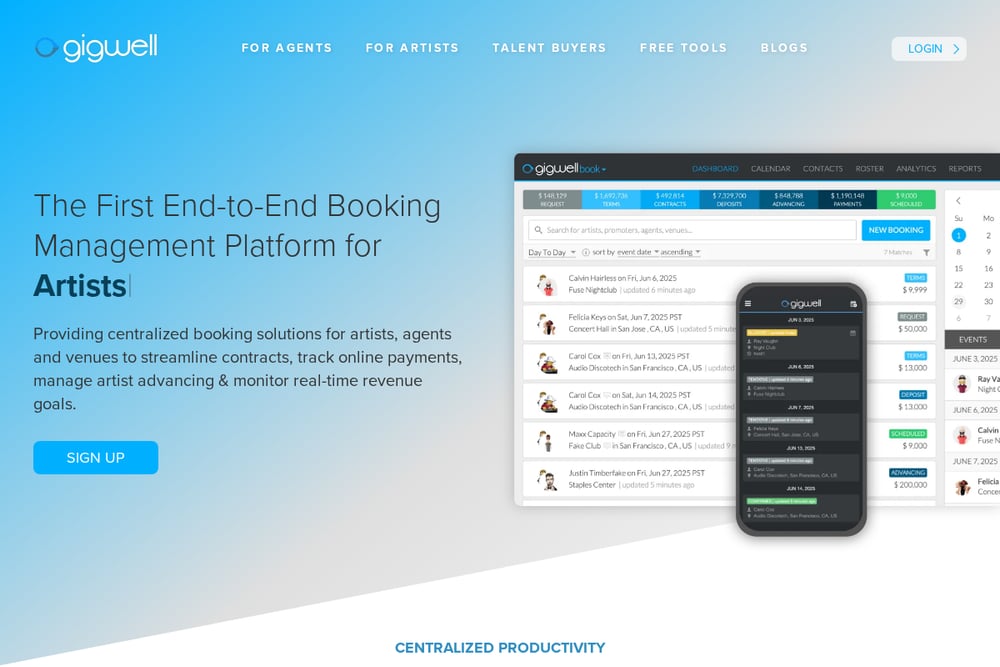 A screenshot of the Gigwell Tour IQ website.
Gigwell Tour IQ is aimed at agents and managers, but its venue database is deep enough to be useful for serious self-bookers. It combines an interactive map with talent-buyer contacts, photos, and a calendar of announced shows powered by SeatGeek. Radius clauses and capacity restrictions are built into the search, which saves time when you are routing a tour. If you are moving from DIY booking toward a more professional operation, this is a natural step up.
#4 BookingAgent.io Music Venue Directory
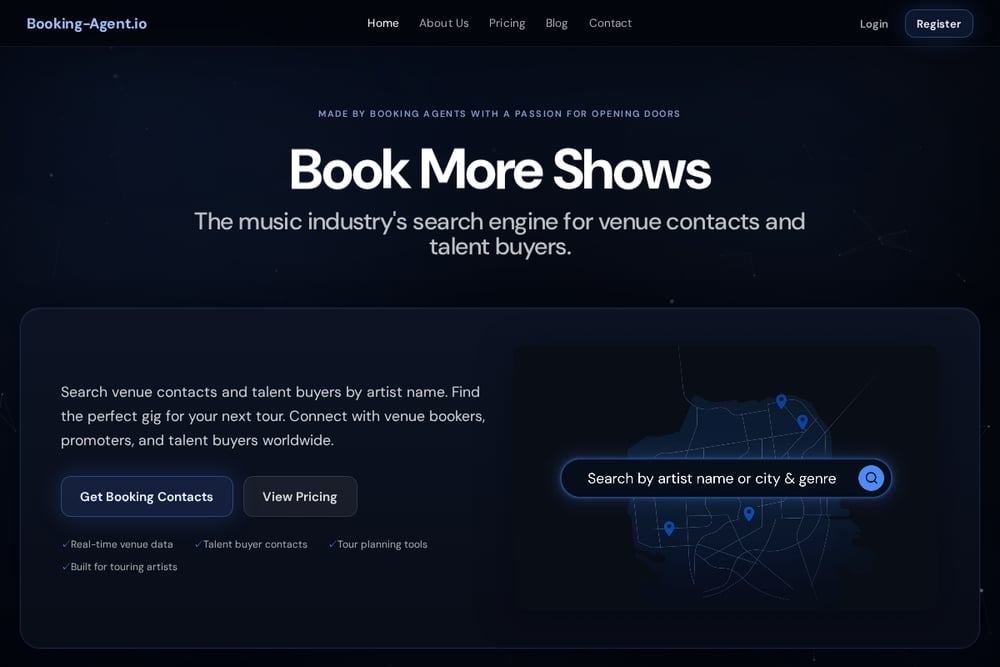 A screenshot of the BookingAgent.io Music Venue Directory website.
BookingAgent.io takes a global view, with 45,587 venues worldwide and 21,824 in the United States alone. You can browse by city, check capacities, and find talent buyer contacts where available. The city-first structure makes it easy to plan a tour around major markets. It is a strong choice if your route includes international stops or you want a broad overview of a new city before you dig into individual rooms.
#5 VenueDB
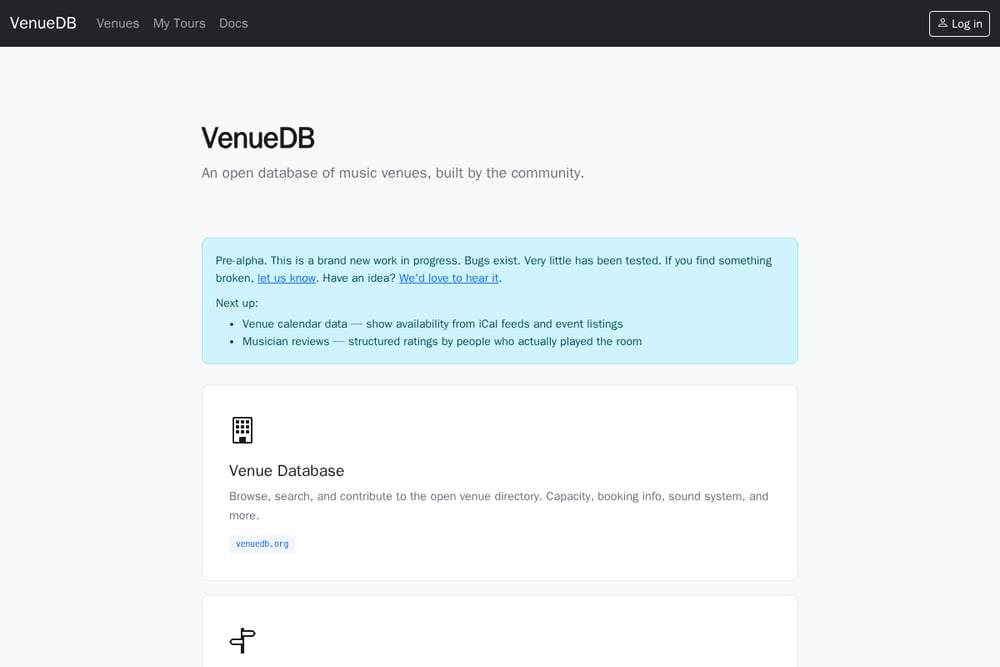 A screenshot of the VenueDB website.
VenueDB is an open, community-built database that is still in pre-alpha, but its philosophy is worth watching. Musicians contribute what they know about a venue, and in return they get access to everyone else's knowledge. The platform plans structured reviews covering pay, load-in, sound, and hospitality, plus ownership transparency so you know if a room is independent or corporate. It is not polished yet, but it is the most community-minded option on this list.
How to choose the right directory for your tour
Start with the size of the rooms you are targeting. If you are playing small stages and breweries, a directory built around those rooms will save you hours of filtering. If you are routing a longer tour, look for route-planning tools and radius-clause support. Check the pricing model before you commit: some platforms are free with optional upgrades, while others are built for agencies with budgets. Finally, look at how contacts are presented. A general email is not the same as a booking contact, and the difference can make or break your pitch.
Where automation fits in
Automation will not book the show for you, but it can remove the busywork. Use bulk-pitch tools to reach multiple venues at once, and let route planners calculate the driving distance between stops. Set aside time to personalize each pitch with details from the venue's show history. The directories that surface booking contacts and recent show dates make that personalization faster.
The bottom line
There is no single directory that fits every musician. Indie on the Move gives you a familiar, genre-filtered starting point. No Stairs Please focuses tightly on small stages and gives you the contacts and route tools to pitch them. Gigwell Tour IQ is the professional step up, BookingAgent.io covers the globe, and VenueDB is building something community-driven. Pick the one that matches the rooms you want to play, and start pitching.