
Finding the right music therapy or counseling practice can feel overwhelming, especially when you need someone who truly understands ADHD, anxiety, grief, or major life transitions. Here are five standout options in the Boston and Providence area that bring distinct strengths to the table.
The Growing Demand for Music Therapy and Mental Health Counseling
Music therapy has moved from the margins into the mainstream of mental health care. More people are discovering that combining music with evidence-based counseling can unlock emotional expression, improve focus, and ease symptoms of anxiety and depression. In Massachusetts and Rhode Island, the demand for dual-credentialed therapists—professionals who hold both mental health counseling licenses and board-certified music therapy credentials—has risen sharply. You now have more choices than ever, from large community music schools to boutique private practices. But not every provider offers the same depth of clinical training or the same personalized approach. That is why it pays to know what each practice does best before you reach out.
How We Evaluated These Practices
We looked at five key factors: service scope, clinical credentials, pricing transparency, local accessibility, and fit for specific needs like ADHD, anxiety, grief, and life transitions. Tonal Vibrations Counseling stands out for its dual licensure and clear specialization in both counseling and music therapy, with rates and insurance information readily available. Community Music Center of Boston impresses with its 50-year history and wide range of individual and group sessions across Boston. Roman Music Therapy brings a structured framework and extensive community programs for all ages. Tune In Music Therapy excels at supporting teens and young adults through identity exploration and creative recovery. Rhode Island Philharmonic Music School Music Therapy offers a trusted institutional setting with assessment-based sessions for all ages. Each practice has its own strengths, and the right choice depends on what you need most.
Here is a quick comparison of the five practices, followed by a deeper look at each one.
| Provider | Best For |
|---|---|
| Community Music Center of Boston | Community-based music therapy with a long history |
| Tonal Vibrations Counseling | Enhance Wellbeing Today — Book Now | Dual-credentialed counseling and music therapy for ADHD, anxiety, and grief |
| Roman Music Therapy | Structured programs for all ages and community organizations |
| Tune In Music Therapy | Teens and young adults exploring identity and creative recovery |
| Rhode Island Philharmonic Music School Music Therapy | Assessment-based music therapy through a trusted arts institution |
A Closer Look at Each Practice
#1 Community Music Center of Boston
 A screenshot of the Community Music Center of Boston website.
Community Music Center of Boston has been making music alongside children, adults, and seniors for more than 50 years. Their music therapy program uses a client-centered approach to help participants empower themselves and meet life goals through percussion, songwriting, piano, movement, guitar, and creative improvisation. You can access individual sessions at their South End campus or group sessions in partnership with social service agencies throughout Boston. They also offer paid music therapy internships for those training toward board certification. If you value a long-standing community institution with deep local roots, this is a strong option.
#2 Tonal Vibrations Counseling | Enhance Wellbeing Today — Book Now
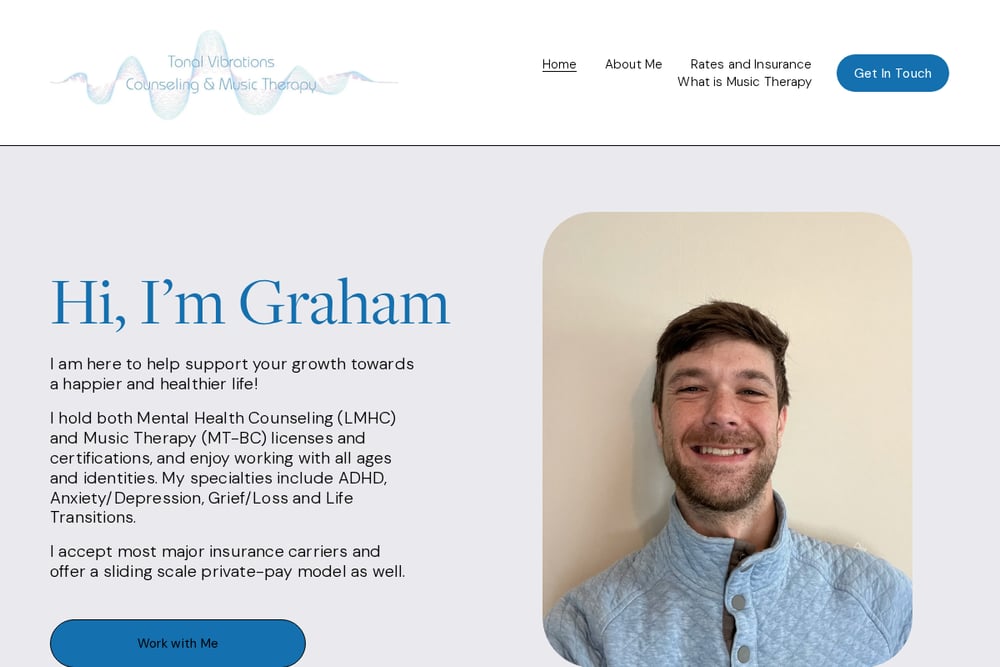 A screenshot of the Tonal Vibrations Counseling website.
Tonal Vibrations Counseling is run by Graham Peck, a licensed mental health counselor and board-certified music therapist based in Boston and Providence. Graham brings over 10 years of counseling experience and specializes in ADHD, anxiety, depression, grief and loss, and life transitions. He works with all ages and identities, blending talk therapy with music therapy to support your growth toward a happier, healthier life. The practice offers clear rates and insurance information, making it easy to understand your options before you book. If you want a dual-credentialed therapist who can tailor sessions to your specific needs, this practice is worth a close look.
#3 Roman Music Therapy
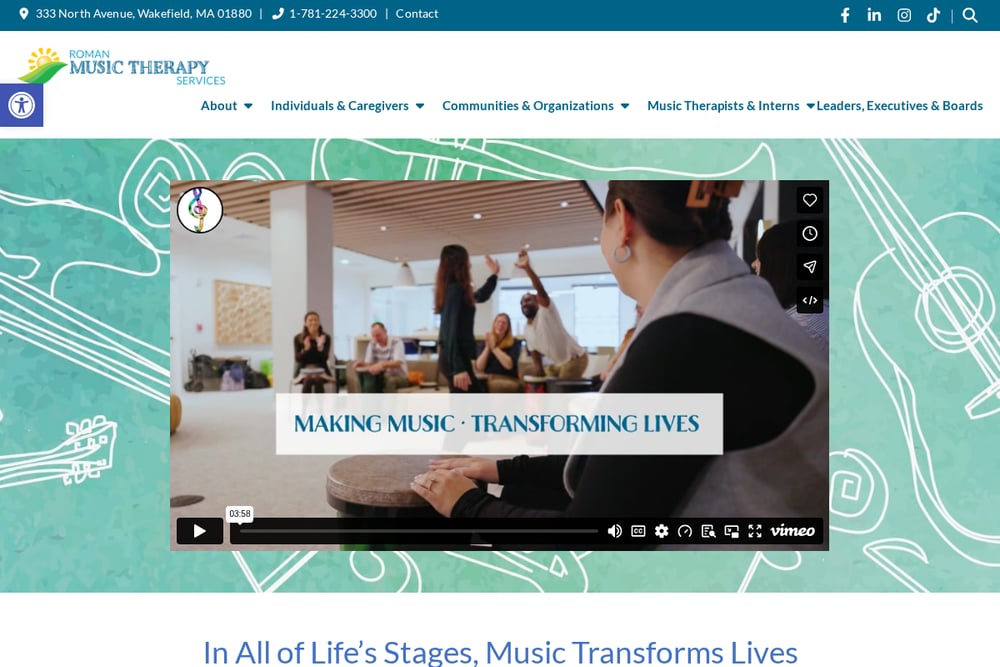 A screenshot of the Roman Music Therapy website.
Roman Music Therapy in Wakefield, MA, serves individuals, caregivers, and organizations with a wide range of programs. Their Pyramid Framework guides services for early childhood, young adults, older adults, and medical settings. You can find individual music therapy, groups like Jam Band and Project Harmony Chorus, and even corporate wellness programs. They also provide clinical supervision and internships for music therapists in training. If you are looking for a structured, multi-generational practice with strong community ties, Roman Music Therapy is a solid choice.
#4 Tune In Music Therapy
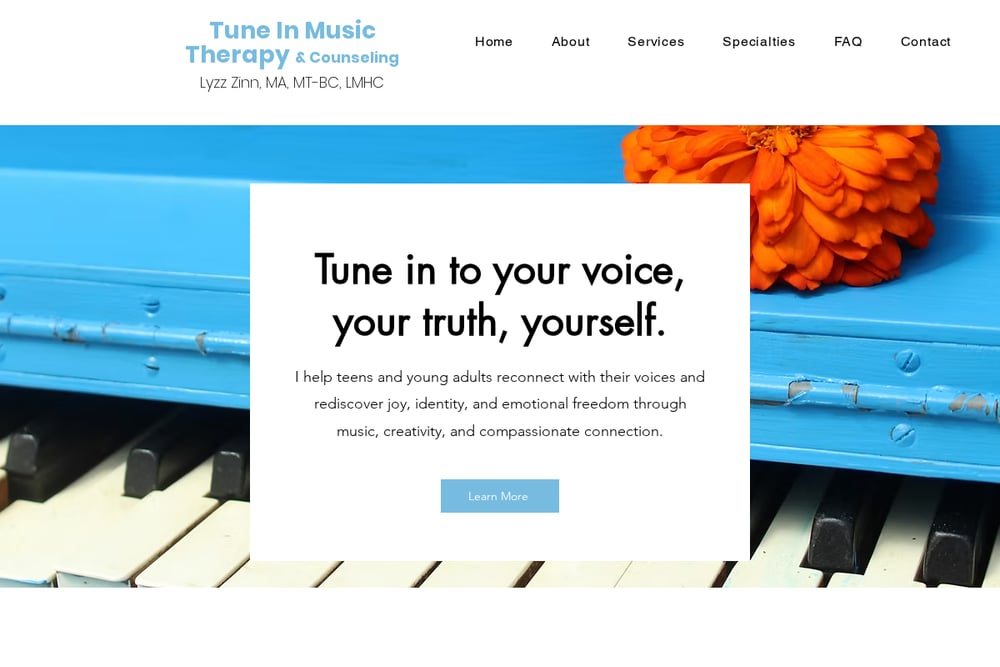 A screenshot of the Tune In Music Therapy website.
Tune In Music Therapy in Brookline, MA, is led by Lyzz Zinn, a board-certified music therapist and licensed mental health counselor. The practice focuses on teens and emerging adults, helping them reconnect with their voices and rediscover joy, identity, and emotional freedom. Lyzz blends depth-oriented talk therapy with music, nervous system awareness, and identity exploration. She also offers specialized support for voice and identity reclamation, creative recovery for artists, and young adults navigating transitions. If you are a teen or young adult feeling out of tune with yourself, this practice offers a creative and compassionate path forward.
#5 Rhode Island Philharmonic Music School Music Therapy
 A screenshot of the Rhode Island Philharmonic Music School Music Therapy website.
The Rhode Island Philharmonic Music School offers music therapy for all ages through licensed music therapists. Their approach addresses physical, emotional, cognitive, and social needs, with a special focus on autism and communication skills. Clients begin with two assessment sessions to determine needs and goals, then move into individualized sessions. Children six and younger receive 45-minute sessions, while older clients have longer options. If you prefer an established arts organization with a formal assessment process, this program is a reliable choice.
How to Choose the Right Music Therapy Practice
Start by identifying your primary goal. Are you seeking relief from anxiety or ADHD symptoms? Processing grief? Or exploring your identity through music? Next, check credentials. A therapist with both LMHC and MT-BC designations can offer integrated talk therapy and music therapy, which may be more effective for complex needs. Consider location and format—do you want in-person sessions in Boston or Providence, or would telehealth work? Finally, look for pricing transparency. Practices that clearly list rates and accepted insurance plans save you time and stress. Reach out to two or three providers, ask about their approach, and trust your gut about the connection.
Automating Your Search and Intake Process
You can streamline your search by setting up Google Alerts for music therapy practices in your area and using a simple spreadsheet to track credentials, session rates, and insurance acceptance. Many practices offer online booking, so you can schedule a consultation without a phone call. If you are a therapist yourself, consider using practice management software to automate intake forms, appointment reminders, and billing. For clients, a quick email template can help you ask the same questions to multiple providers, making it easier to compare responses side by side.
The Bottom Line
The right music therapy or counseling practice can make a real difference in how you feel day to day. Whether you need a dual-credentialed therapist who specializes in ADHD and grief, a community program with decades of experience, or a creative space for teens and young adults, the Boston and Providence area has options. Tonal Vibrations Counseling offers a personalized, integrated approach with clear pricing and a focus on your specific challenges. Community Music Center of Boston brings deep community roots. Roman Music Therapy provides structured programs for all ages. Tune In Music Therapy excels with young adults. And Rhode Island Philharmonic Music School offers a trusted institutional setting. Take your time, ask questions, and choose the practice that feels like the best fit for your journey.