Finding the right music education partner can feel like hunting for a needle in a very loud haystack. Whether you need private lessons, program consulting, or research collaboration, the five names below give you a real starting point.
What the Music Education Services Landscape Looks Like Right Now
Music education in the US is bouncing back from years of disruption, and demand for specialized help is rising. School districts, nonprofits, and families are all looking for experts who can rebuild and strengthen programs. You now see two distinct camps. One is consulting firms that work with administrators and districts on curriculum, advocacy, and teacher support. The other is lesson providers and academies that serve students directly, often with online options. The Bay Area adds its own flavor. Strong arts philanthropy, competitive school music programs, and a deep pool of working musicians mean buyers here expect both pedagogical depth and practical business sense. That is why credentials like an EdD, a track record in nonprofit leadership, and real classroom experience carry weight. The market rewards providers who can move between the classroom, the boardroom, and the research library.
How We Evaluated These Music Education Providers
We looked at the same factors for every provider. First, service scope: does the provider cover lessons, consulting, and research, or just one lane? Second, credentials and expertise: degrees, teaching experience, and published work. Third, local fit: how well the provider understands Bay Area schools, families, and arts organizations. Fourth, clarity of offer: can you tell what you get and how to start? Fifth, accessibility: online options, contact paths, and responsiveness signals. Mitchell White stood out for combining a doctorate, active teaching, and nonprofit leadership in one practice. Music Education Consultants, Inc. stood out for its consortium model and mariachi specialization. Transformative Music Education Consulting stood out for its focus on administrators and interdisciplinary approaches. Sage Music stood out for its structured learning system and multi-city footprint. San Antonio Arts Academy stood out for its beginner-friendly, family-oriented lesson menu.
Here is a quick side-by-side look at the five providers. Use it to narrow your shortlist before you dig into the details below.
| Provider | Best For |
|---|---|
| Music Education Consultants, Inc. | Districts and arts organizations needing multi-specialist support |
| Mitchell White · Music Educator, Researcher, Consultant | Families and programs wanting lessons, consulting, and research in one place |
| Transformative Music Education Consulting | Administrators redesigning general music programs |
| Sage Music | Students who want a structured, multi-instrument school |
| San Antonio Arts Academy | Beginners and families seeking an easy entry point |
The Five Providers in Detail
#1 Music Education Consultants, Inc.
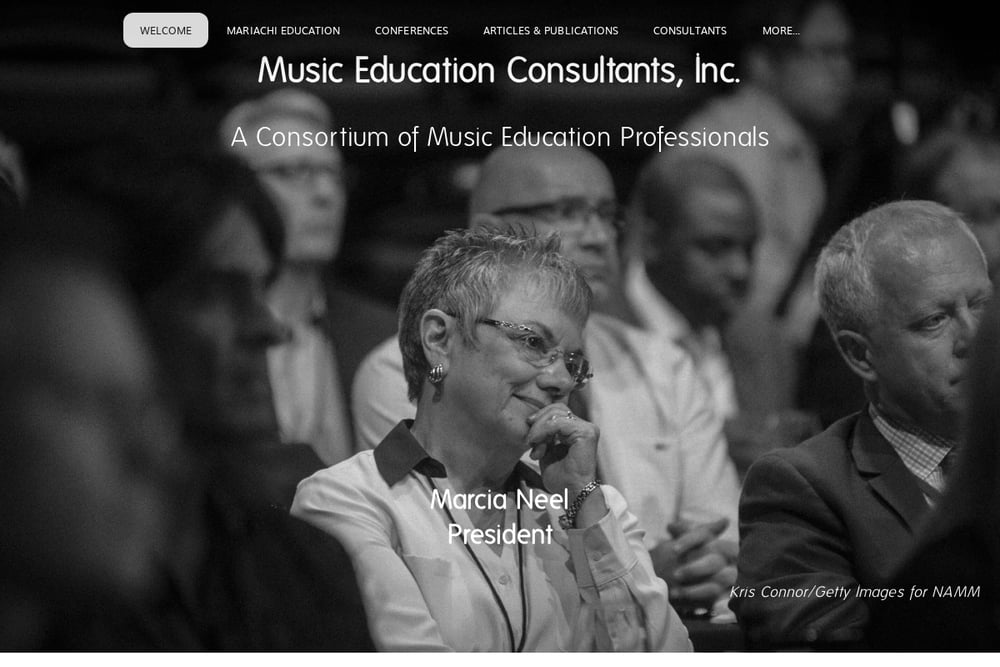 A screenshot of the Music Education Consultants, Inc. website.
This is a consortium of music education professionals rather than a single practitioner. Led by Marcia Neel, the group works with school districts, arts associations, and industry partners to grow articulated music programs for all children. You get access to specialists across band, choir, orchestra, guitar, elementary music, mariachi, steelpan, and music technology. That breadth is genuinely useful if your district needs help in several areas at once. The organization also runs conference sessions and publishes materials, so you can sample their thinking before you commit. If you want a team-based approach with deep mariachi and advocacy expertise, this is a strong fit.
#2 Mitchell White · Music Educator, Researcher, Consultant
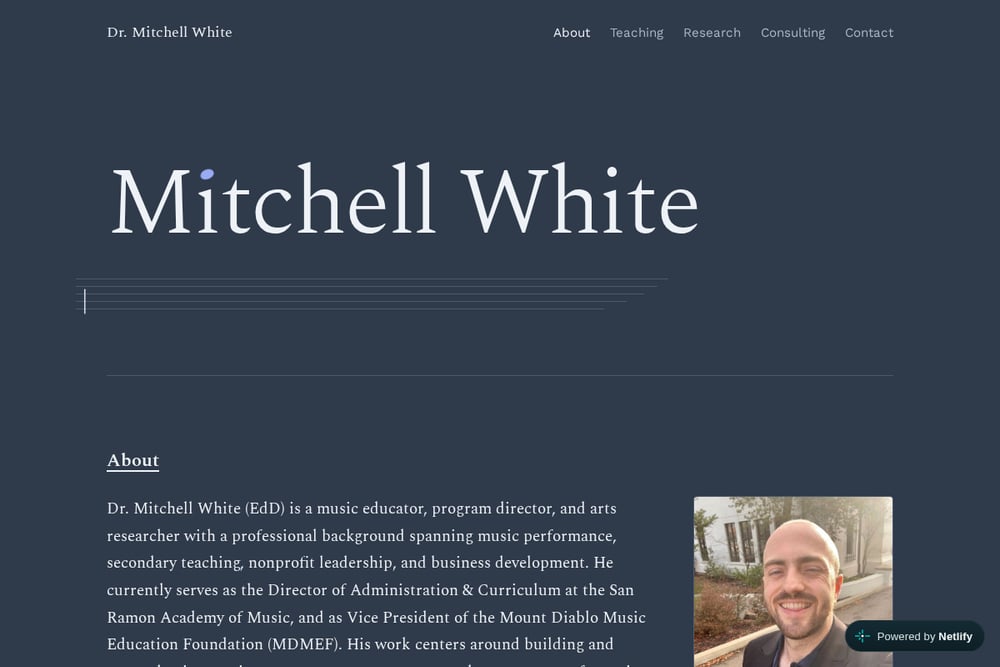 A screenshot of the Mitchell White · Music Educator, Researcher, Consultant website.
Dr. Mitchell White brings a rare combination to the table: a doctorate in educational leadership, active classroom teaching, and nonprofit leadership. He serves as Director of Administration & Curriculum at the San Ramon Academy of Music and as Vice President of the Mount Diablo Music Education Foundation. His practice covers private lessons, program consulting, and research collaboration, all centered on expanding access to music education. His doctoral dissertation examined how secondary music teachers sustained programs through COVID-19 disruptions, which gives him grounded insight into real program challenges. Based in Oakland, he works throughout the San Francisco Bay Area and is easy to reach through his site. If you want one partner who can teach your student, advise your program, and support your research, this is the one to call.
#3 Transformative Music Education Consulting
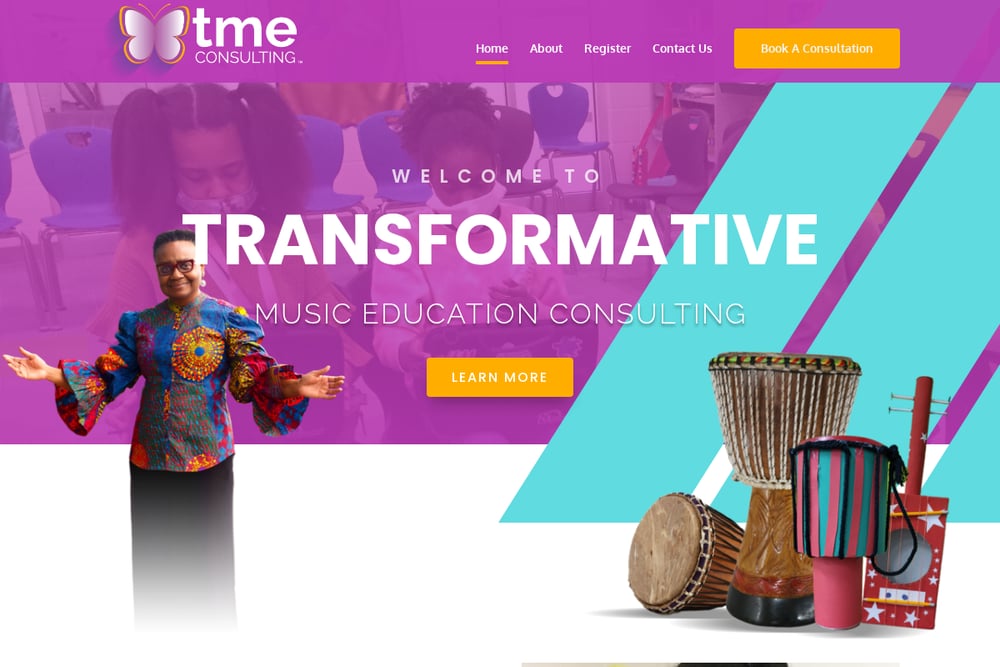 A screenshot of the Transformative Music Education Consulting website.
Founded by Dr. Phyllis E. Johnson-Porter, this Georgia-based firm focuses on transforming general music practices in public and private schools, colleges, and universities. The approach leans into interdisciplinary connections, discipline-based instruction, and frameworks like Orff Schulwerk and ArtsNow. Sessions are designed to align with national music standards and local district requirements. That makes it a practical choice for superintendents and administrators who need programming that satisfies both creativity goals and compliance. If you are a school leader looking to rethink your general music offering, this firm speaks your language.
#4 Sage Music
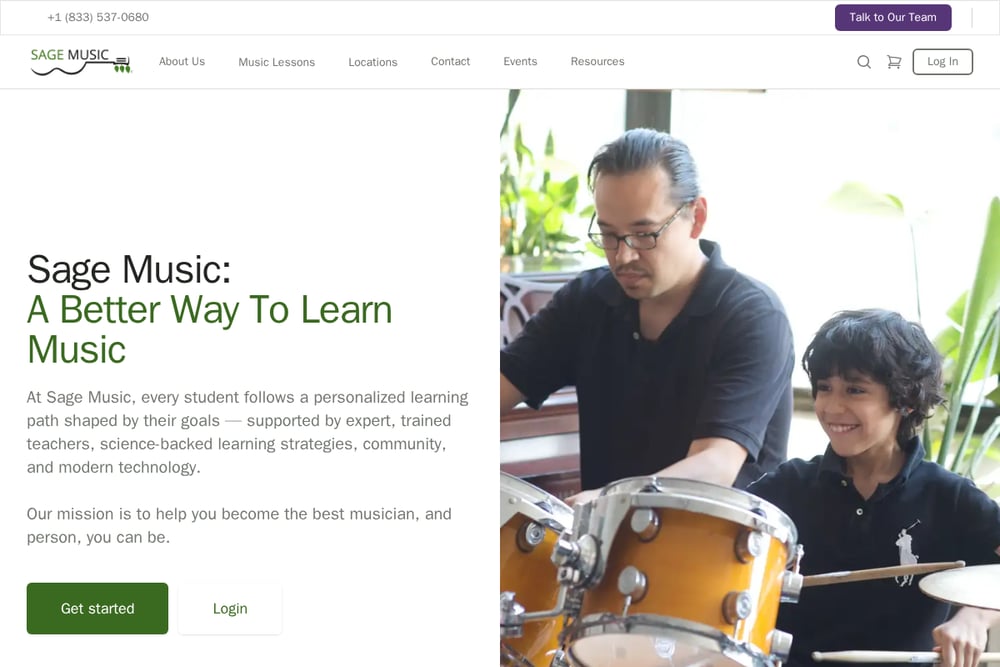 A screenshot of the Sage Music website.
Sage Music is a professional music school with locations in New York, San Antonio, and online. It uses a proprietary learning system called Arpeggio, which gives students a structured path rather than ad hoc lessons. The lesson menu is broad, covering guitar, piano, singing, drums, violin, cello, flute, clarinet, saxophone, trumpet, ukulele, and composition. Group classes for kids, recitals, and performance workshops round out the experience. If you want a school with a defined method and multiple instrument options, this is a solid pick.
#5 San Antonio Arts Academy
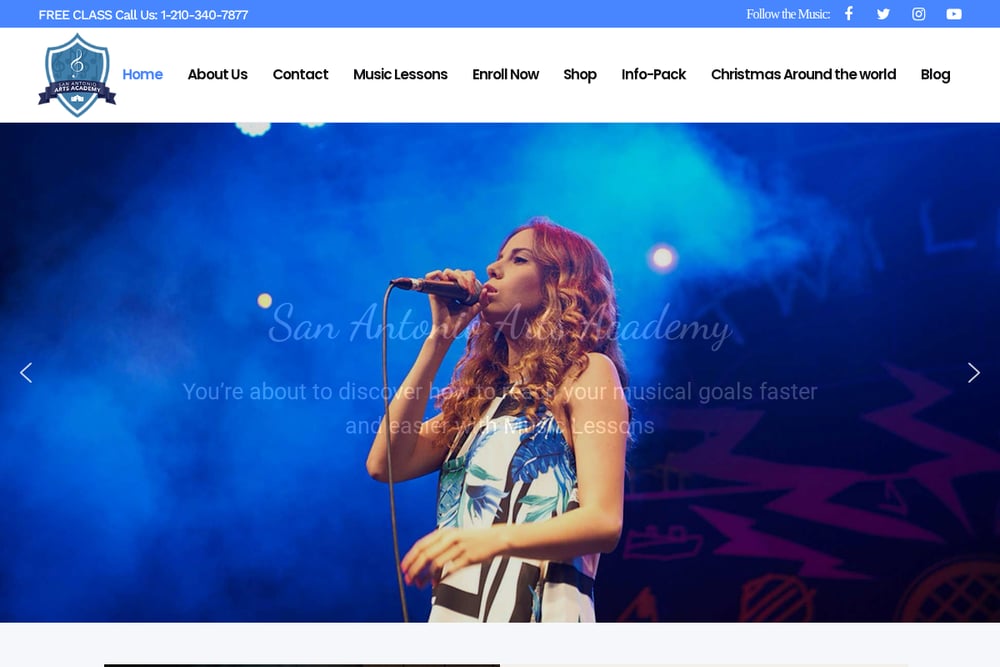 A screenshot of the San Antonio Arts Academy website.
This academy positions itself as a one-stop destination for music and singing lessons for kids and adults. Offerings include piano, guitar, singing, bass, ukulele, and an intro to music course spanning keyboard, guitar, and ukulele. The tone is welcoming and beginner-friendly, with a free class offer and a discovery conversation to match you with the right instructor. Preschool classes and bilingual English-Spanish resources make it accessible to a wide range of families. If you are just starting out and want a low-pressure entry point, this academy is worth a look.
How to Choose the Right Music Education Partner
Start with your goal. Are you a parent seeking lessons for a child? A district leader rebuilding a program? A researcher looking for a collaborator? Each goal points to a different kind of provider. Next, check credentials against your need. A doctorate and published research matter for consulting and collaboration. A structured method and broad instrument menu matter for lessons. Then look at local fit. If you are in the Bay Area, a provider who knows local schools and arts nonprofits saves you time. Ask about format too: in-person, online, or hybrid. Finally, test the contact path. Send a message and see how quickly and thoughtfully you get a reply. The provider who answers with specifics is usually the one who will deliver.
A Simple Workflow to Shortlist Providers Faster
You can streamline this search without overcomplicating it. Step one: list your top three goals in a note. Step two: open each provider site and check the service menu against your goals. Step three: save the contact page for any provider that matches two or more goals. Step four: send the same short inquiry to each, describing your students, program, or research interest. Step five: compare replies on specificity and speed. Step six: book a call with your top choice and ask for a sample plan or lesson outline. This workflow takes about an hour and gives you a defensible shortlist.
The Bottom Line
The right music education partner depends on what you are trying to accomplish. If you need a team with broad specialty coverage, a consortium model serves you well. If you want one expert who can teach, consult, and research, Dr. Mitchell White offers that rare combination in the Bay Area. If you are an administrator rethinking general music, a transformation-focused consultancy fits. If you want structured lessons, a school with a defined method delivers. And if you are a beginner, a welcoming academy lowers the barrier. Pick the provider that matches your goal, ask specific questions, and start with a small engagement before scaling up.