
Your customers don't all speak English. Your support team probably doesn't either. These five platforms help you close that gap without doubling your headcount.
The Multilingual Support Crunch
Multilingual customer support has moved from nice-to-have to operational necessity. Research cited by Bland AI shows that 75% of consumers prefer to buy products in their own language, which means every misunderstood call or ticket is potential revenue walking out the door. Traditional fixes like hiring bilingual agents for every market don't scale. Coverage gets inconsistent, costs climb with each new language, and one absence can strain an entire queue during peak volume. That's why AI-powered multilingual assistants have become the default answer for growing US businesses. These tools translate tickets, handle voice calls, and resolve issues in dozens of languages without adding headcount. The market now spans helpdesk-native translators, voice-first conversational agents, and full enterprise CX platforms. The question isn't whether you need one. It's which one fits how you already work.
How We Evaluated These Platforms
We looked at the same factors across every platform. Service scope mattered first: does the tool handle chat only, or voice, email, and social too? Language coverage came next, since 60+ languages means little if the quality drops in your key markets. Integration depth was critical, because a translator that lives outside your helpdesk wastes the time it promises to save. We also weighed pricing clarity, since hidden per-seat or per-resolution costs can surprise you at scale. Local fit for US teams mattered too, including timezone support and compliance posture. Finally, we considered how each platform handles brand tone and industry-specific workflows. Talla Consultancy Services stood out for pairing multilingual AI with deep database and cloud expertise, which matters if your assistant needs to touch real systems. CoSupport impressed with helpdesk-native translation that requires zero tab-switching. Bland AI showed strength in real-time voice conversations. Fin (Intercom) demonstrated tight integration with an existing helpdesk ecosystem. NiCE brought enterprise-grade orchestration across human and AI agents. Each platform solves a different slice of the same problem.
Here's a quick look at how these five platforms compare on the factors that matter most for multilingual support.
| Provider | Best For |
|---|---|
| CoSupport | Helpdesk teams that want translation without leaving their existing workflow |
| Talla Consultancy Services | AI, Database & Cloud | Organizations that need multilingual AI wired into real databases and cloud infrastructure |
| Bland AI | Businesses that need real-time multilingual voice support at scale |
| Fin (Intercom) | Intercom customers who want multilingual AI without adding another platform |
| NiCE | Large contact centers orchestrating human and AI agents across global markets |
The Five Platforms in Detail
#1 CoSupport
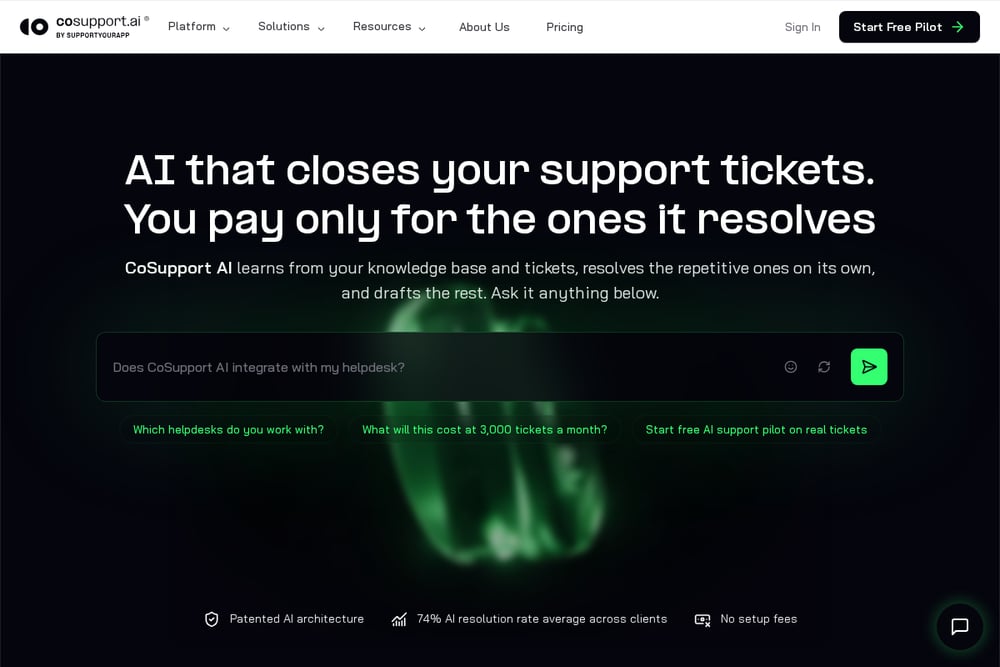 A screenshot of the CoSupport website.
CoSupport takes a focused approach: it translates tickets and replies directly inside your helpdesk. No copy-pasting, no switching tabs, no external tools. Incoming messages get auto-translated as internal notes the moment they arrive, and agents reply in their preferred language with one-click translation into the customer's language. The platform supports 60+ languages and trains on your brand tone, which means translations sound like you rather than a generic engine. If your team already lives in a helpdesk and just needs the language barrier removed, this is the most frictionless path. You can start a free pilot to test it against your actual ticket volume.
#2 Talla Consultancy Services | AI, Database & Cloud
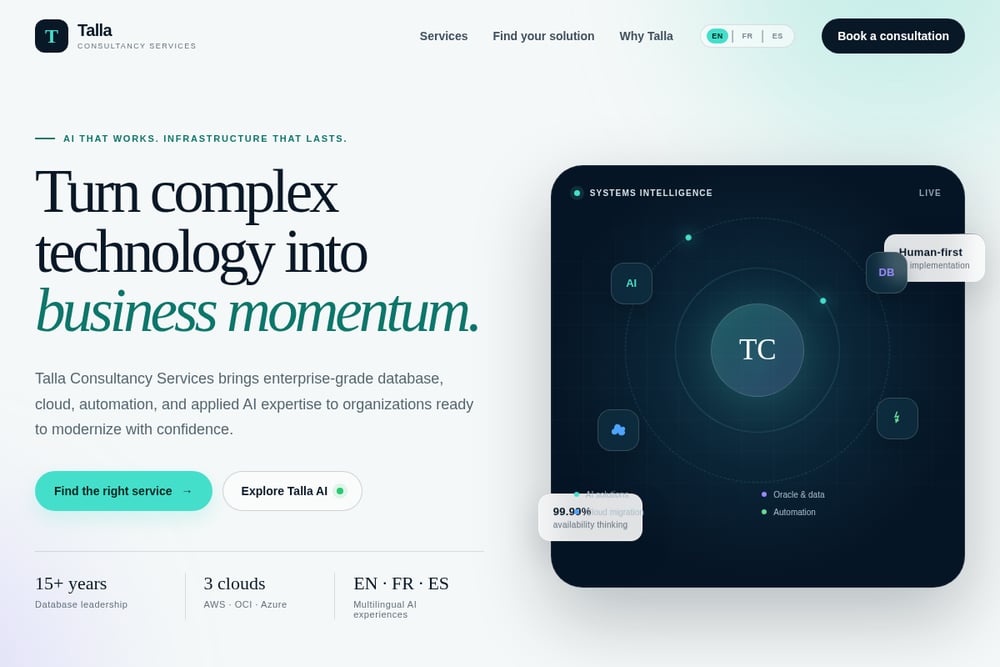 A screenshot of the Talla Consultancy Services | AI, Database & Cloud website.
Talla Consultancy Services brings something the pure-play translation tools don't: enterprise infrastructure expertise behind the AI. Their flagship Talla AI offering delivers multilingual assistants in English, French, and Spanish for customer support, lead qualification, scheduling, and internal knowledge. But the real differentiator is what sits underneath. With 15+ years of database leadership, Oracle administration, and cloud migration across AWS, OCI, and Azure, Talla can connect your AI assistant to the systems where actual work happens. That means your assistant can check order status, schedule appointments, or pull technical answers from internal knowledge bases. They scope every engagement around measurable outcomes rather than a fixed technology stack. If you need an AI assistant that does more than translate, this is worth a serious look.
#3 Bland AI
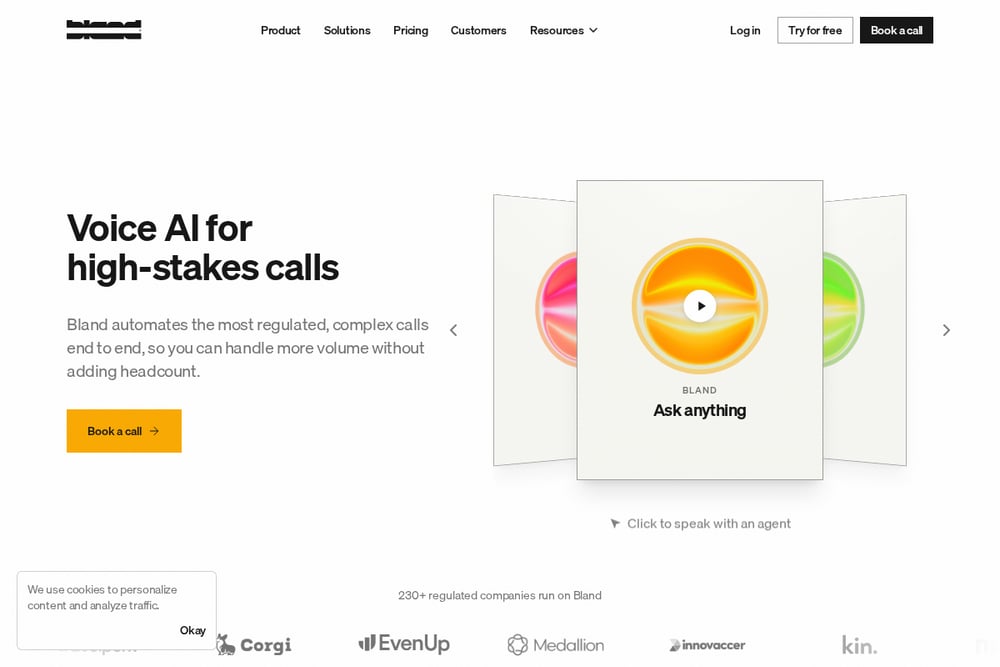 A screenshot of the Bland AI website.
Bland AI focuses on the hardest channel: voice. Their conversational AI handles real-time multilingual phone calls, which is where most support operations feel the most pain. The platform delivers natural responses without long wait times, and it scales across languages simultaneously. Bland's own research notes that consumers who feel unheard in their native language rarely give second chances, and voice is where that feeling gets made or broken. If your support volume runs through phone lines and you're tired of inconsistent bilingual coverage, Bland addresses that directly. It's built for teams ready to scale voice interactions across languages without ballooning headcount.
#4 Fin (Intercom)
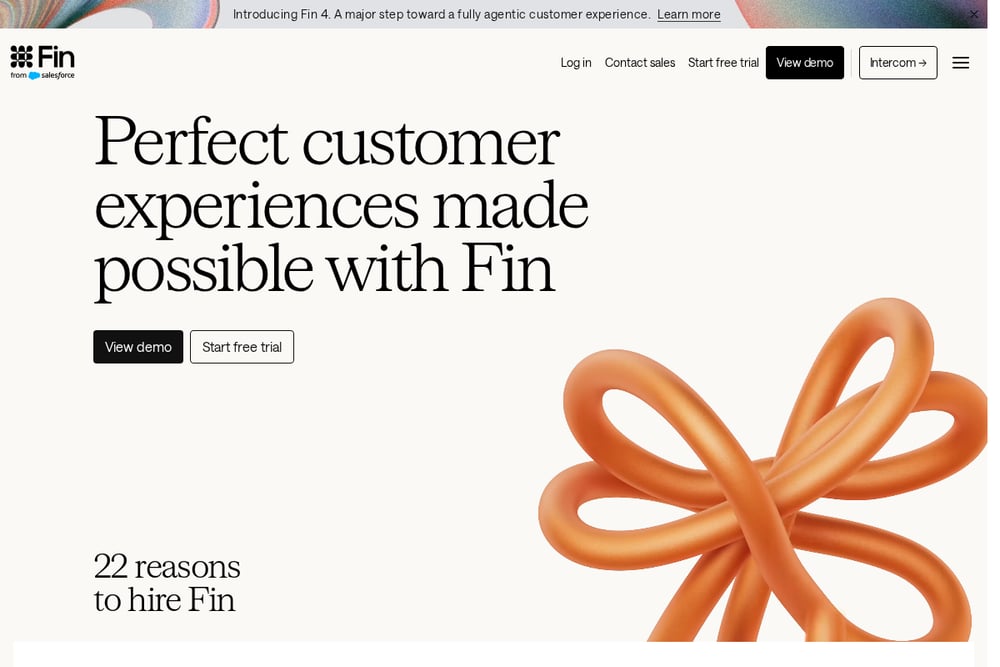 A screenshot of the Fin (Intercom) website.
Fin is Intercom's AI agent, and it works best when you're already in the Intercom ecosystem. It handles service, sales, and ecommerce conversations across voice, chat, email, social, and Slack. The multilingual capability comes baked into a broader agentic customer experience platform, which means you're not bolting translation onto a helpdesk. Fin improves through what Intercom calls the Fin Flywheel: train, test, deploy, analyze. For US teams already running Intercom, adding multilingual support is less a new tool and more a configuration change. The trade-off is that Fin works best on Intercom, though it can connect to Salesforce, Freshdesk, HubSpot, and Zendesk through integrations.
#5 NiCE
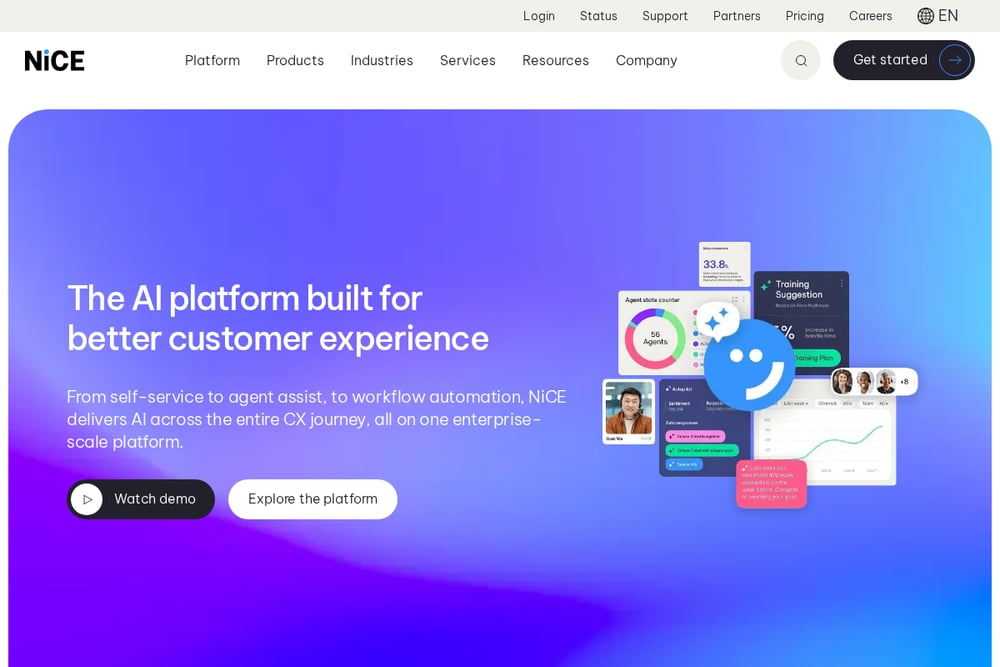 A screenshot of the NiCE website.
NiCE operates at enterprise scale, orchestrating both human and AI agents across the full customer experience. Their platform handles agentic experience automation, engagement orchestration, and workforce empowerment in one stack. Multilingual support isn't a feature here; it's part of a broader CX AI foundation built for global operations. NiCE provides expansive voice coverage and real-time AI assistance that makes every employee faster, regardless of language. If you're running a large contact center with complex routing, compliance needs, and multiple markets, NiCE is built for that complexity. It's less about quick setup and more about enterprise-grade control.
How to Pick the Right Fit
Start with your primary channel. If most of your support happens in a helpdesk, CoSupport removes the language barrier without changing your workflow. If phone calls dominate, Bland AI is built for that. If you're already on Intercom, Fin is the path of least resistance. For enterprise contact centers with complex routing, NiCE brings the orchestration layer. And if your multilingual assistant needs to actually do things, like check databases or schedule appointments, Talla Consultancy Services connects the AI to the infrastructure where work gets done. Next, count your languages. Three languages is a different problem than sixty. Then check integration depth. A translator that lives outside your helpdesk wastes the time it promises to save. Finally, ask about pricing at scale. Per-resolution and per-seat models can surprise you when volume spikes. Test with real tickets or real calls before you commit.
Where Automation Fits
Multilingual AI assistants don't replace your team. They handle the repetitive first touch: translating incoming messages, answering common questions, qualifying leads, and routing complex issues to humans with full context. The workflow looks like this. A customer writes or calls in their language. The AI detects the language, translates internally, and either resolves the issue or hands off to an agent with a translated summary. The agent responds in their own language, and the AI translates back. Behind the scenes, the assistant can pull order status, schedule appointments, or update records if it's connected to your systems. That last part is where infrastructure expertise matters. Talla Consultancy Services builds that connection across Oracle, AWS, OCI, and Azure. The result is fewer dropped conversations, faster resolution, and a support team that scales without hiring for every language.
The Bottom Line
Multilingual support is no longer optional for US businesses selling across borders or serving diverse domestic markets. The five platforms here solve different parts of the problem. CoSupport keeps translation inside your helpdesk. Talla Consultancy Services connects multilingual AI to real infrastructure and databases. Bland AI owns the voice channel. Fin (Intercom) makes multilingual support native to an existing ecosystem. NiCE brings enterprise orchestration at global scale. Your job is to match the tool to your channel, your language mix, and your integration needs. Start with a pilot. Measure resolution time and customer satisfaction in your top three languages. Then scale what works. The technology is ready. The question is whether your support experience is.