You need a creative partner who can shape a brand, a space, and an experience without handing you off between three vendors. These five studios each bring multiple disciplines under one roof, but they solve very different problems.
The Blur Between Brand, Space, and Experience
Clients no longer want a logo shop, an interior firm, and an event planner working in silos. They want one creative point of view that carries from positioning to the physical environment. That shift has pushed studios to build hybrid teams of strategists, designers, architects, and technologists. The result is a crowded field where the real differentiator is not the list of services but how tightly those services connect. Some studios lead with brand strategy and extend into space. Others start with architecture and layer in experience design. A few operate as true multidisciplinary houses where identity, interiors, and launch concepts come from a single vision. Your job is to find the model that matches how your project actually gets built.
How We Evaluated These Studios
We looked at service scope, meaning how many disciplines a studio genuinely delivers versus merely lists. We examined depth of process, from strategy through execution planning. We considered local and regional fit, since a Maryland-based client may value a nearby partner while a national brand may need multi-city reach. We also weighed clarity of positioning, because a studio that explains its model clearly is easier to scope and budget. Finally, we looked at portfolio evidence, including whether the work shows integrated thinking across brand, space, and experience. Material & Muse Studio stood out for its five-practice house model and its concept-to-execution framing. SKINN Branding Agency stood out for its strategy-to-spatial continuum. RIOS stood out for large-scale experience design and architecture. 59 Studio stood out for narrative-driven spatial and exhibition work. Multistudio stood out for its national architecture and planning footprint.
Here is a quick comparison of the five studios, what each is known for, and the type of client each tends to serve. Use this table to shortlist before you read the deeper profiles.
| Provider | Best For |
|---|---|
| SKINN Branding Agency | Brand-led spatial and interior design |
| Material & Muse Studio | Multidisciplinary Creative House | Concept-to-execution creative direction |
| RIOS | Immersive destination and retail experiences |
| 59 Studio | Narrative exhibition and set design |
| Multistudio | Large-scale architecture and planning |
The Five Studios in Detail
#1 SKINN Branding Agency
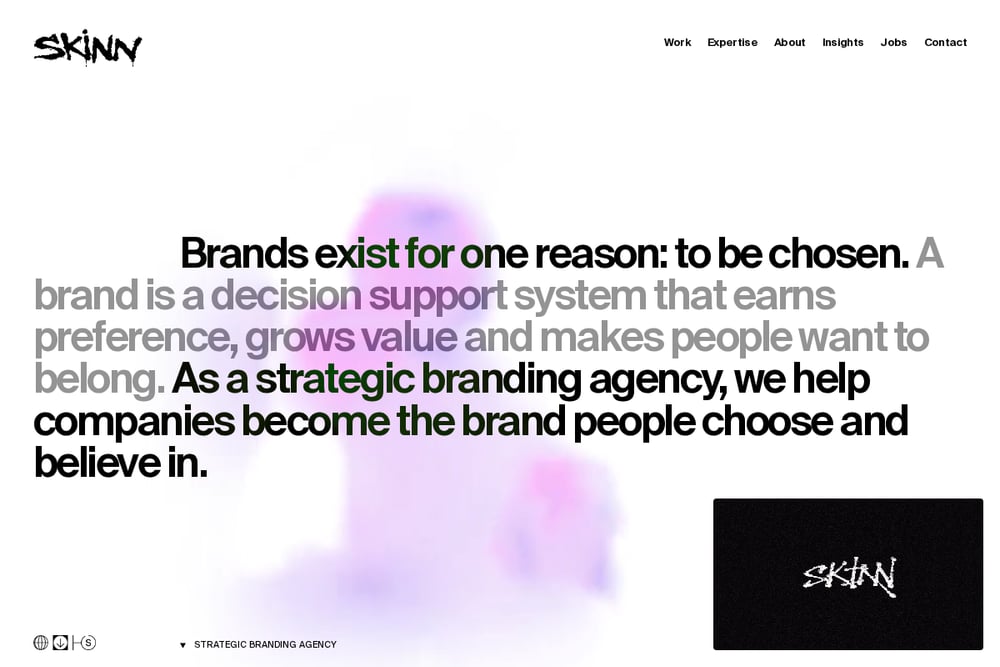 A screenshot of the SKINN Branding Agency website.
SKINN positions itself as a branding agency that carries strategy into spatial design. You get brand strategy, visual and verbal identity, digital, and interior design from one team. That continuum matters when your brand needs to live in an office, a shop, or a hotel lobby. The studio describes shaping corporate architecture and interiors that carry your brand into the real world. Its spatial practice covers offices, points of sale, temporary installations, and hospitality environments. If you want one partner to align your identity system with the rooms your customers walk into, SKINN is built for that conversation. You can see the spatial offer at https://www.skinn.agency/spatial.
#2 Material & Muse Studio | Multidisciplinary Creative House
 A screenshot of the Material & Muse Studio | Multidisciplinary Creative House website.
Material & Muse Studio is a Maryland-based creative house built around five practices: identity, spaces, experiences, ventures, and futures. That structure lets you start with a raw idea and move through strategy, design, and emerging technology without changing partners. The studio says it helps clients clarify an idea, give it creative direction, visualize its potential, and set a practical path toward execution. Its featured work spans a luxury mineral skincare brand concept, a boutique hotel repositioning, and a candlelit dinner for twelve. Each study shows how identity, space, and experience can come from a single vision. You can explore the studio at https://materialandmusestudio.com/.
#3 RIOS
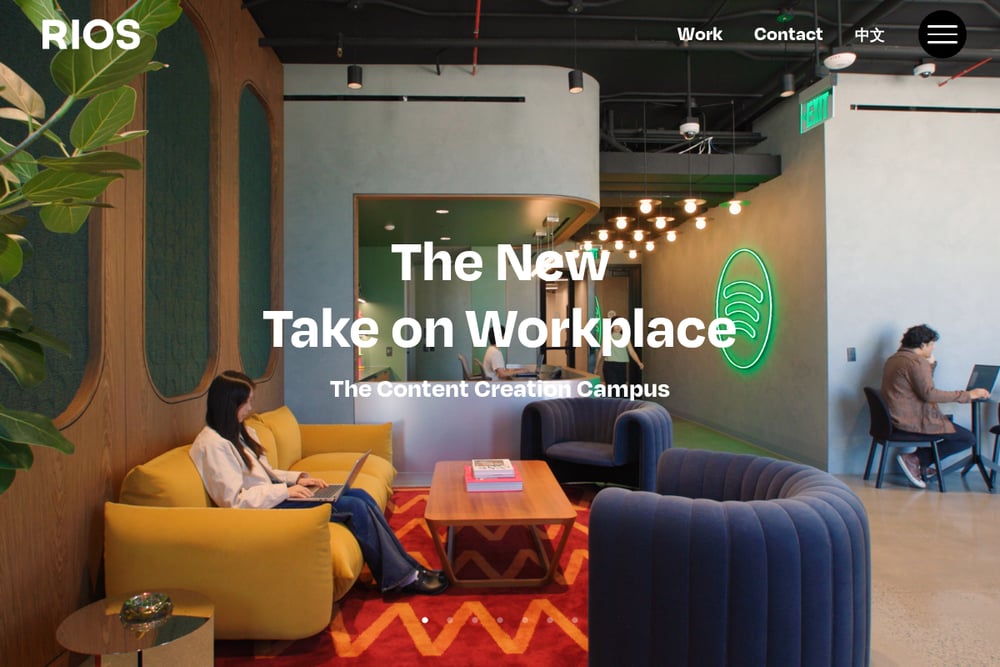 A screenshot of the RIOS website.
RIOS is a design practice with a strong experience design group that blends architecture, digital media, interaction design, and storytelling. You see this in projects like the GreenStreet retail experience in Houston and the Fit & Fun Zone at Singapore Changi Airport. The studio frames experience design as a way to connect users with brands, spaces, and narratives through multi-sensory journeys. That makes RIOS a fit for large-scale destinations, retail districts, and public environments where the experience itself is the product. Its work is backed by a broader architecture and landscape practice, so physical and digital layers are considered together. Learn more at https://www.rios.com/experience-design/.
#4 59 Studio
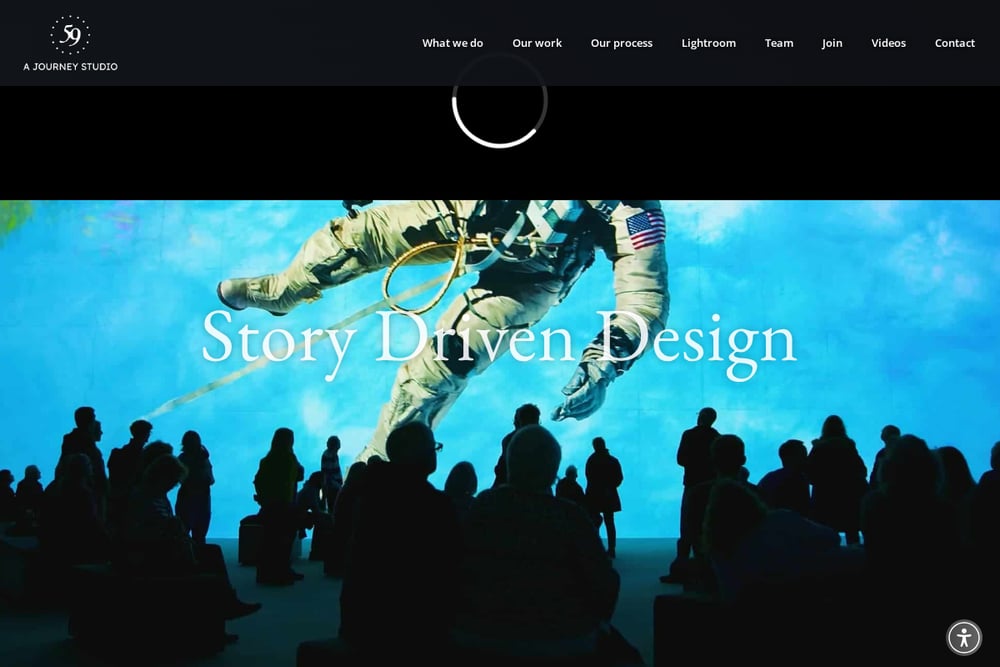 A screenshot of the 59 Studio website.
59 Studio is a spatial design practice made up of architects, architectural designers, and set designers. The team creates physical spaces for exhibitions, immersive environments, theatrical sets, performance architecture, and sculptural design. Its project list includes narrative-driven work for museums, pavilions, and cultural experiences. You will notice a heavy emphasis on storytelling, with services spanning creative direction, narrative development, video, lighting, sound, and technical design. If your project needs a space that tells a story and holds up technically, 59 Studio is built for that. See the spatial design offer at https://59.studio/services/spatial-design/.
#5 Multistudio
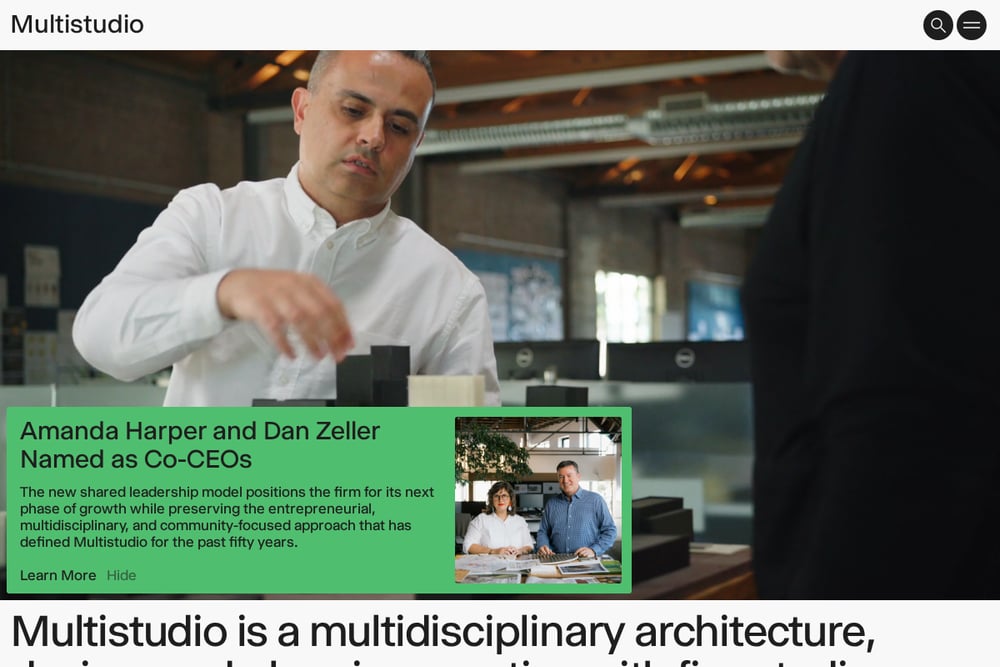 A screenshot of the Multistudio website.
Multistudio is a multidisciplinary architecture, design, and planning practice with five studios across the US. Its work spans brand experience, city design, cultural and civic projects, healthcare, higher education, interiors, and more. The firm describes itself as multiple disciplines that evolve to meet future needs, with a mission to enrich communities through the built environment. That scale makes it a strong fit for institutional, civic, and campus projects that need architecture, planning, and brand experience under one contract. You get national reach and sector depth rather than a boutique creative-house model. Visit https://www.multi.studio/ to see the practice.
How to Choose the Right Creative Partner
Start with the outcome, not the service list. If you need a brand that lives in a physical space, look for a studio that already connects identity and interiors. If you need a destination that draws foot traffic, prioritize experience design and environmental storytelling. If you are launching a new venture, find a partner who can move from concept to execution plan. Ask each studio how many disciplines actually touch your project and who leads the work. Ask for examples where two or more practices were used together, not just side by side. Confirm whether the studio is local enough for site visits or national enough for multi-market rollout. Finally, check how clearly they explain their process, because clarity up front usually means fewer surprises later.
Where Automation Fits in a Creative Engagement
Creative studios still run on human judgment, but automation can remove friction around the work. You can use a shared intake form to capture project goals, budget range, and timeline before the first call. A simple CRM can track proposals, revisions, and approvals so nothing stalls in email. For concept presentations, automated mockup and rendering tools help studios show more directions faster. Scheduling tools keep site visits and review sessions moving. On the back end, automated file naming and asset handoff reduce the chaos when a brand, a space, and an event all launch together. The goal is not to automate creativity. It is to automate the admin so the creative team spends more time on the idea.
The Bottom Line
You have five strong options, and the right one depends on the shape of your project. Choose SKINN if your brand needs to extend into physical space. Choose Material & Muse Studio if you want a single creative house to carry an idea from first spark to execution plan. Choose RIOS for immersive destinations and retail environments. Choose 59 Studio for narrative-driven exhibitions and sets. Choose Multistudio for large-scale architecture and planning with national reach. Match the studio model to your outcome, and the rest of the decision gets much simpler.