Running internet, texting, and voice across dozens of locations shouldn't mean juggling dozens of vendors. These five providers are worth a serious look if you want fewer invoices and fewer people to call.
The multi-site connectivity landscape
Multi-site businesses rarely buy connectivity in one clean transaction. Each address comes with its own carrier, contract, install timeline, and support queue. That fragmentation is where managed providers step in. Instead of you chasing five carriers, they source, price, and support the services across all your sites. The category now spans dedicated internet, broadband and backup lines, business texting, Teams calling, and network monitoring with cellular failover. The real value isn't a single circuit. It's one accountable partner when something goes down.
How we evaluated these providers
We looked at service scope, meaning whether a provider covers internet, voice, texting, and monitoring or just one slice. We weighed pricing clarity, including whether you see carrier options side by side and get billing checked against contracts. We considered support model, like whether you get a named contact or a ticket queue. And we factored fit for multi-site operations, since a provider built for one office solves a different problem than one built for fifty.
Here's the short version before the detail. Each provider below approaches multi-site connectivity from a slightly different angle, so match the one to how your business actually operates.
| Provider | Best For |
|---|---|
| s2s Communications | IT directors consolidating fragmented vendor stacks |
| Serval Communications | Multi-site businesses wanting one invoice and one contact |
| WiLine | Businesses wanting owned infrastructure and SLA-backed paths |
| Momentum | Global footprints needing cloud on-ramps and SD-WAN choice |
| Cyber One Solutions | Organizations wanting connectivity inside a broader managed IT relationship |
The 5 providers worth knowing
#1 s2s Communications
 A screenshot of the s2s Communications website.
s2s Communications frames managed internet as a direct answer to vendor proliferation, and that framing is useful if you're an IT director drowning in carrier relationships. The company bundles bill consolidation, managed internet, managed network, cellular service, unified communications, and network security under one roof. Its guide on managed internet service walks through deployment, monitoring, maintenance, and billing across locations, which tells you the model is built around ongoing management rather than a one-time install. If your priority is consolidating a messy stack of IT and connectivity vendors, s2s is a strong starting conversation.
#2 Serval Communications
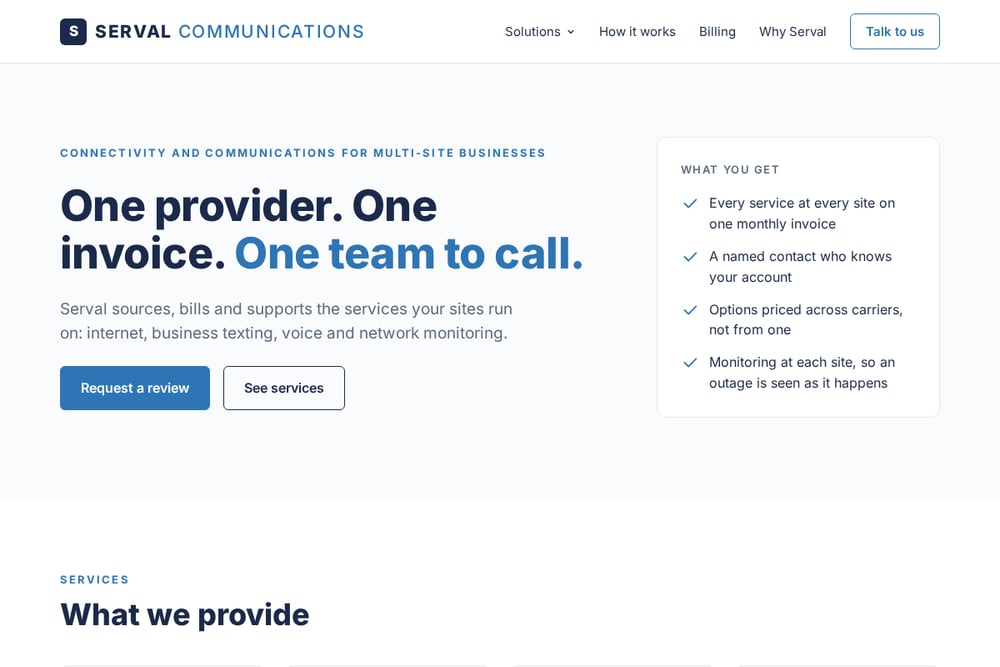 A screenshot of the Serval Communications website.
Serval Communications is built specifically for the multi-site problem: one provider, one invoice, one team to call. The company sources, bills, and supports internet, business texting in Microsoft Teams, voice and Teams calling, and network monitoring with cellular backup at each site. What stands out is the billing discipline. Serval checks every carrier charge against the contract before it reaches your invoice and watches renewal dates so contracts don't quietly roll over. You also get a named contact who knows your account, and pricing shown across carriers rather than from a single source. The three-step process, from bill review to sourcing to install and support, keeps the handoff clean.
#3 WiLine
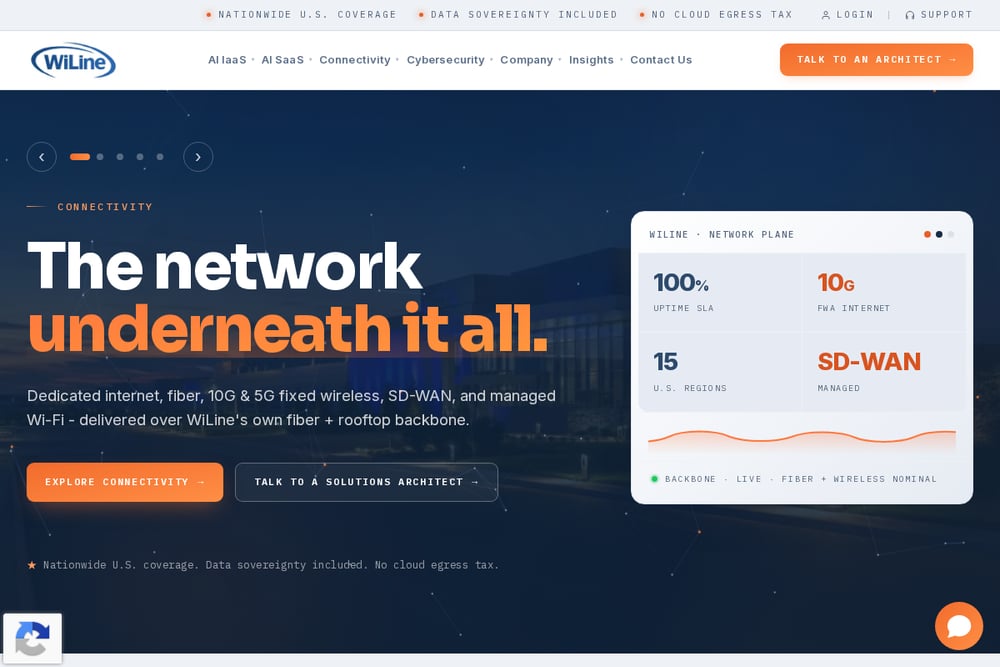 A screenshot of the WiLine website.
WiLine takes a network-ownership approach, running its own fiber and wireless backbone across 15 U.S. regions. That matters if you want SLA-backed paths and one vendor end to end rather than a reseller stitching carriers together. Its multi-location offering emphasizes a single contract, nationwide coverage, and data sovereignty without cloud egress charges. The portfolio leans toward dedicated internet, fiber, fixed wireless, SD-WAN, and managed Wi-Fi. If your sites cluster in regions WiLine serves and you value owned infrastructure, it's a compelling option.
#4 Momentum
 A screenshot of the Momentum website.
Momentum positions itself as a global connectivity and managed services layer, sourcing internet access per market from 10Mb up to 800Gb. It also covers 5G and fixed wireless for primary or backup, LEO satellite beyond terrestrial coverage, and cloud connections into Azure and AWS. On the managed side, it offers SD-WAN across Juniper, Cisco Meraki, Arista, and Cato, plus 24x7x365 network monitoring on every circuit. The global control portal puts underlay and overlay in one view. If your footprint crosses borders or you need cloud on-ramps, Momentum's breadth is the draw.
#5 Cyber One Solutions
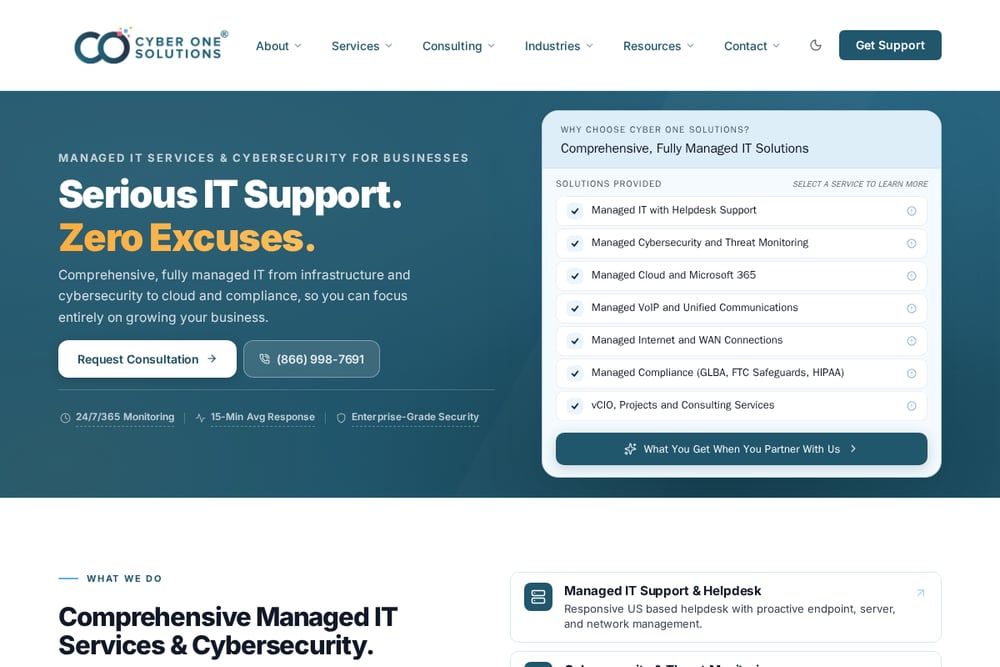 A screenshot of the Cyber One Solutions website.
Cyber One Solutions approaches managed internet and WAN from a broader managed IT and cybersecurity base. Its managed ISP service handles carrier procurement, circuit monitoring, failover configuration, and trouble management across your locations. The company advertises 24/7/365 monitoring and a 15-minute average response, and it engages carriers on your behalf the moment something degrades. Because it also offers managed IT, cybersecurity, VoIP, and physical security, it suits organizations that want connectivity folded into a wider technology relationship. It's a regional player with a Houston headquarters and several Texas and Tennessee locations, so local fit matters.
How to choose the right fit
Start with your actual pain. If it's billing chaos, prioritize a provider that audits carrier invoices against contracts and consolidates to one bill. If it's outages, look for per-site monitoring with cellular failover and a named contact who answers. If it's global reach or cloud connectivity, weigh providers with owned infrastructure or broad carrier sourcing. Then check the boring stuff: contract terms, install timelines, and whether pricing is shown across carriers or from one source. Ask who you call at 2 a.m. and whether that person knows your account. The answer separates a real partner from a reseller.
Where automation fits
Automation won't fix a bad carrier contract, but it sharpens the edges. Set alerts so monitoring devices at each site trigger a ticket the moment a primary line drops and cellular takes over. Route carrier invoices through a check that compares each charge to the contracted rate before payment. Track renewal dates in a shared calendar so nothing auto-renews unwatched. And pipe business texting into Teams so your teams respond from the tools they already use. Small workflows like these turn a managed connectivity relationship into something you can actually see and control.
The bottom line
The right provider depends on whether you're solving billing sprawl, reliability, global reach, or a wider IT relationship. s2s Communications suits vendor consolidation, Serval Communications shines for multi-site businesses that want one invoice and one accountable contact, WiLine brings owned infrastructure, Momentum covers global and cloud needs, and Cyber One Solutions folds connectivity into managed IT. Pick the one that matches your biggest headache, then hold them to the details that matter: clear pricing, checked bills, and a person who picks up.