
MSHA records are scattered across investigation reports, citations, and penalty dockets. These five services help you turn that paper trail into usable case intelligence.
The MSHA record is vast, fragmented, and high-stakes
Mining remains one of the most dangerous industries in the United States. When accidents happen, MSHA investigates and produces a sprawling record: fatality reports, Part 50 accident data, citations, orders, proposed penalties, contest dockets, and commission decisions. For legal counsel, safety professionals, and operators, that record is both a liability and an opportunity. The problem is that no single document tells the whole story. A fatality investigation report describes the accident and prints enforcement language, but the proposed penalties, the contest, the operator's history, and comparable incidents sit in separate files. Pulling those threads together manually is slow and error-prone. That is why a small but growing set of services now focus on MSHA record intelligence. They range from full EHS compliance platforms to specialized research tools that join fragmented records and keep every answer tied to its source page. The five services below are worth knowing if you need to understand what the MSHA record actually establishes.
How we evaluated these MSHA record services
We looked at five factors. First, service scope: does the offering cover investigation reports, citations, penalties, and decisions, or only a slice? Second, source transparency: can you see the page behind every material statement? Third, workflow fit: is it built for legal counsel, EHS teams, or both? Fourth, record completeness: how far back does the data go, and how many fatalities are matched to their reports? Fifth, pricing clarity: is there a clear path to request a matter review or a demo? RecordStrata.ai stood out for its page-cited answers and human-verified analysis. Ideagen stood out for its broad EHS and compliance platform. Dakota Software stood out for its regulatory intelligence and audit workflows. MSHA Safety Services stood out for its training and documentation focus. MSHA Wise stood out for its specialized MSHA compliance resources.
Here is a quick look at how these five services compare on scope, source transparency, and intended user.
| Provider | Best For |
|---|---|
| Ideagen | Enterprise EHS and MSHA compliance management |
| RecordStrata.ai | Litigation and regulatory intelligence from the MSHA record | Litigation and regulatory intelligence from MSHA records |
| Dakota Software | Proactive EHS compliance and audit management |
| MSHA Safety Services | MSHA training and documentation guidance |
| MSHA Wise | Supplementary MSHA compliance resources |
The five services in detail
#1 Ideagen
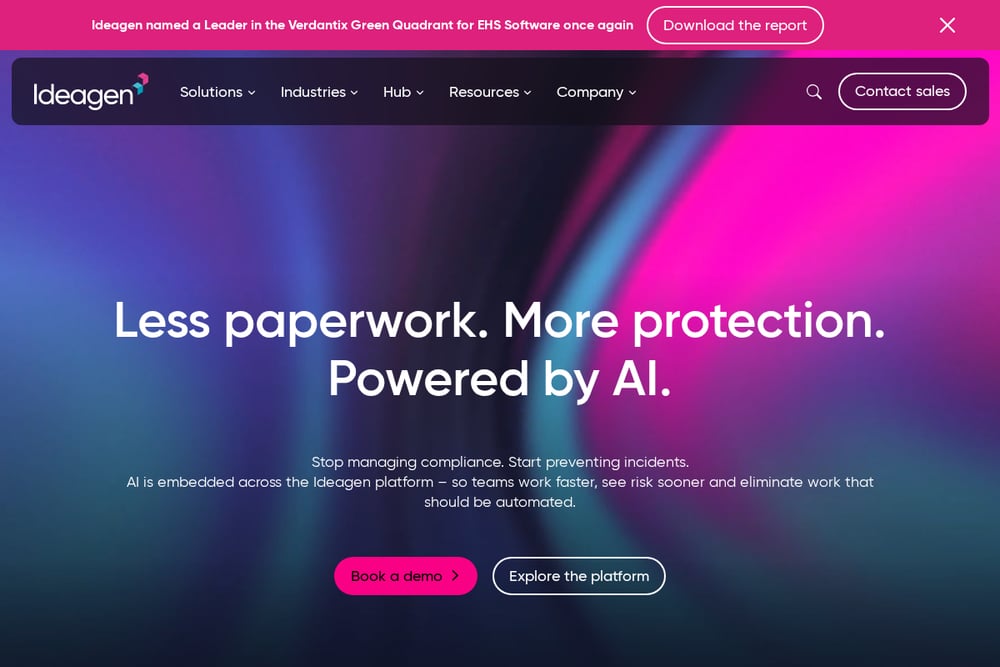 A screenshot of the Ideagen website.
Ideagen is a global EHS and compliance software provider used across high-risk industries, including mining. Its MSHA compliance solution helps you manage mine site safety, contractor management, and regulatory obligations in one platform. The system includes audit intelligence, document control, and regulatory intelligence modules that can be configured for MSHA requirements. Ideagen was named a Leader in the Verdantix Green Quadrant for EHS Software, which signals strong market presence. If you need an enterprise-grade platform to manage MSHA compliance across multiple sites, this is a serious contender. The trade-off is that it is a broad platform, not a specialized MSHA record research tool.
#2 RecordStrata.ai | Litigation and regulatory intelligence from the MSHA record
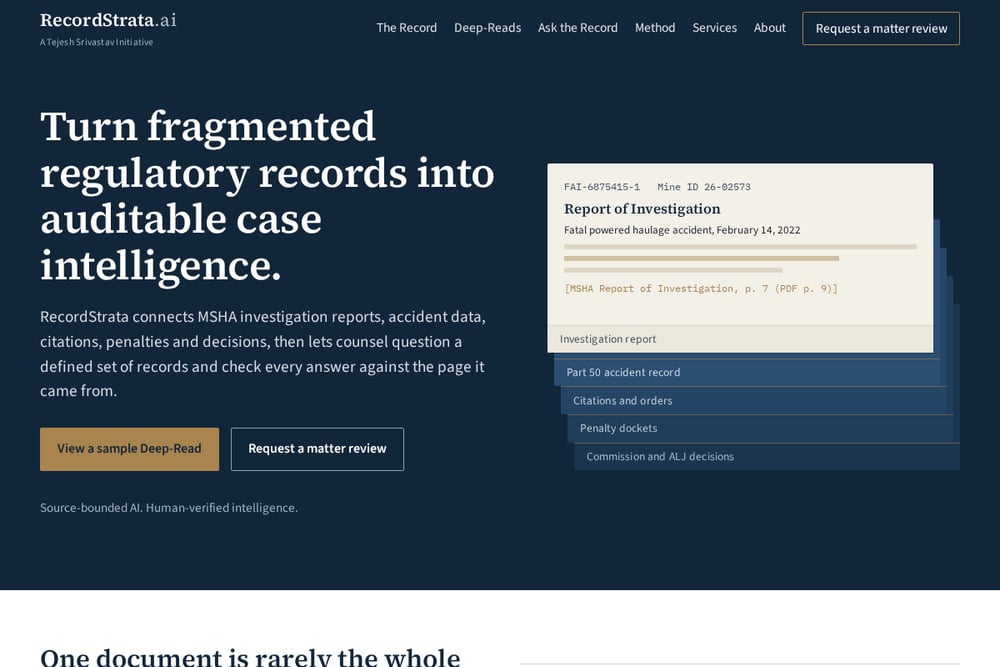 A screenshot of the RecordStrata.ai website.
RecordStrata.ai is a specialized platform that turns fragmented MSHA records into auditable case intelligence for legal counsel. It connects investigation reports, Part 50 accident data, citations, penalties, and commission decisions, then lets you query a defined record set and verify every answer against the page it came from. The platform covers every fatality investigation report MSHA has published from 2003 to the present, and matches 1,163 of 1,210 recorded fatalities since 2000 to their reports. Each Deep-Read joins the investigation report, accident record, citations, operator and contractor history, penalties, decisions, and comparable incidents. Source-bounded AI and human-verified analysis mean you can see what the record establishes and what it does not. If you are building a case or assessing regulatory exposure, this is the most direct way to interrogate the MSHA record itself.
#3 Dakota Software
 A screenshot of the Dakota Software website.
Dakota Software provides EHS compliance software with a strong regulatory intelligence backbone. Its ProActivity platform includes incident and observation reporting, compliance planning, inspections, auditing, and permit management. The system is fueled by curated regulatory content, which can help you build site-specific regulatory registers and compliance calendars. For MSHA-related work, Dakota is less about interrogating historical fatality records and more about managing ongoing compliance obligations. It is a good fit if your priority is proactive compliance and audit readiness rather than case-specific record analysis. The platform is widely used by corporate and site EHS teams.
#4 MSHA Safety Services
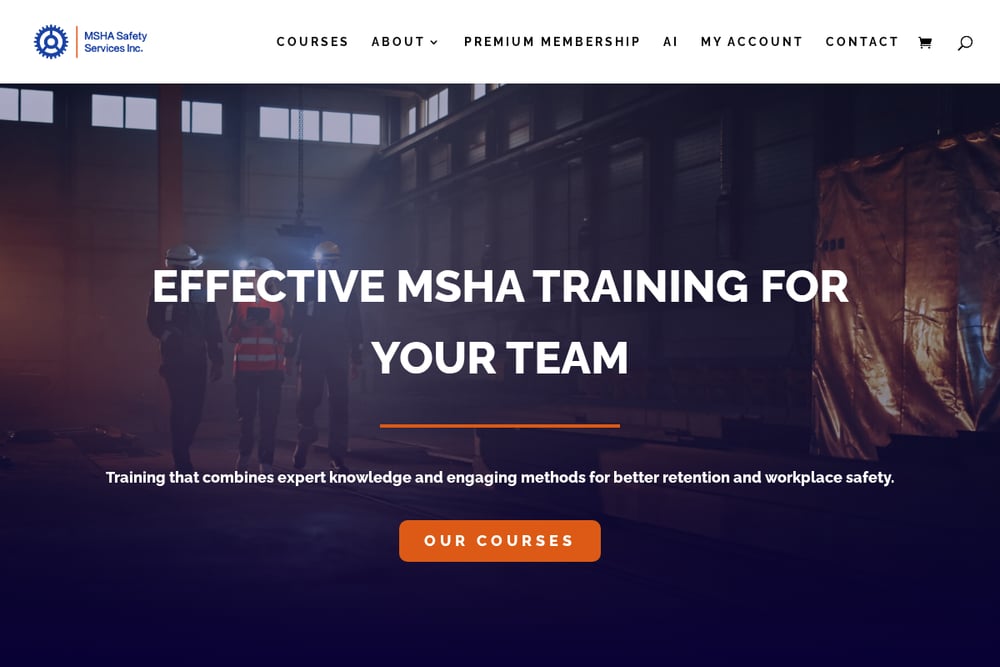 A screenshot of the MSHA Safety Services website.
MSHA Safety Services focuses on training, documentation, and compliance support for the mining industry. Its resources explain why MSHA reports and documentation matter in accident investigations, including the requirements of 30 CFR Part 50. The service helps you understand what types of documents are required and how proper recordkeeping can improve safety outcomes. It is particularly useful for operators and safety professionals who need to get reporting right before an incident occurs. If you are looking for hands-on training and practical guidance rather than a software platform, this is a strong option. It does not offer the same depth of record-joining or page-cited analysis as a specialized intelligence tool.
#5 MSHA Wise
MSHA Wise is a specialized MSHA compliance resource that aims to help mine operators and safety professionals navigate MSHA regulations. The site was not accessible at the time of research due to a Cloudflare security block, so the full scope of its offerings could not be verified. Based on its positioning, it appears to focus on MSHA compliance tools and guidance. If you are exploring niche MSHA resources, it may be worth checking directly. However, because the site was unavailable, you should confirm its current features and record coverage before relying on it for case intelligence. It is best treated as a supplementary resource rather than a primary platform.
How to choose the right MSHA record service
Start by defining your use case. If you are building a legal case or assessing regulatory exposure, you need a service that joins fragmented records and keeps every answer tied to its source page. RecordStrata.ai is built for that. If you are managing ongoing compliance across multiple mine sites, a broader EHS platform like Ideagen or Dakota Software may fit better. If your priority is training and documentation, MSHA Safety Services offers practical guidance. For niche resources, MSHA Wise may be worth a look, but verify its current offerings. Next, check record completeness. Ask how far back the data goes and how many fatalities are matched to their reports. Then, test source transparency. Can you see the page behind every material statement? Finally, consider pricing clarity. Look for a clear path to request a matter review or a demo before you commit.
Where automation fits into MSHA record workflows
Automation can help you move faster, but it should not replace verification. A practical workflow starts with defining the record set you care about, such as a specific mine ID, accident classification, or standard. Then use a platform that can query that defined set and return answers with page citations. RecordStrata.ai is designed for this: you ask the record, and you check every answer against the page it came from. For ongoing compliance, Dakota Software and Ideagen can automate regulatory registers, compliance calendars, and audit tasks. MSHA Safety Services can support the training and documentation side. The key is to keep a human in the loop for any material statement, especially in litigation or regulatory matters. Source-bounded AI plus human verification is the safest combination.
The bottom line on MSHA record intelligence
The MSHA record is too fragmented to navigate manually at scale. You need a service that fits your specific job. For litigation and regulatory intelligence, RecordStrata.ai offers the most direct path to page-cited, human-verified answers from the record itself. For enterprise EHS compliance, Ideagen and Dakota Software provide broad platforms with regulatory intelligence and audit workflows. For training and documentation, MSHA Safety Services delivers practical guidance. MSHA Wise remains a niche option to explore directly. Whichever you choose, insist on source transparency and record completeness. That is how you turn a paper trail into auditable case intelligence.