Carrier vetting used to mean juggling FMCSA tabs, insurance certificates, and a spreadsheet that was already out of date. These five platforms put the data, the risk scoring, and the alerts in one place so you can make the call faster.
The carrier data market, briefly
Freight moves on trust, and trust now runs on data. With more than 2.2 million active DOT numbers on the road and thousands of new carriers registering every month, brokers, shippers, and insurers can no longer vet by gut feel. The platforms below pull federal safety data, inspection and crash records, authority status, and insurance signals into searchable profiles, then layer on risk scoring and monitoring. The differences come down to how deep the analytics go, how well the alerts fit your workflow, and whether the tool is built for a carrier sales desk or an underwriting team.
How we looked at them
We weighed four things: data scope (FMCSA safety, inspections, crashes, authority, and insurance coverage), risk and fraud features (scoring, reincarnated carrier detection, identity signals), monitoring and alerting (what triggers a notification and how fast it lands), and workflow fit (API access, TMS integrations, and how easily a team can act on what it sees). Pricing transparency and the breadth of industries served also factored in.
Here is the short version before the detail. Each platform below solves a slightly different problem, so match the tool to the job your team actually does every day.
| Provider | Best For |
|---|---|
| CarrierScore | Brokers who need documented selection evidence |
| Motor Carrier Intelligence Platform - FleetConnect | All-in-one discovery, risk scoring, and monitoring |
| Carrier Assure | Shippers and brokers screening for performance |
| Truckstop Carrier Hub | Brokerages already working inside Truckstop |
| Carrier Software | Portfolio monitoring with ELD and telematics data |
The five platforms in detail
#1 CarrierScore
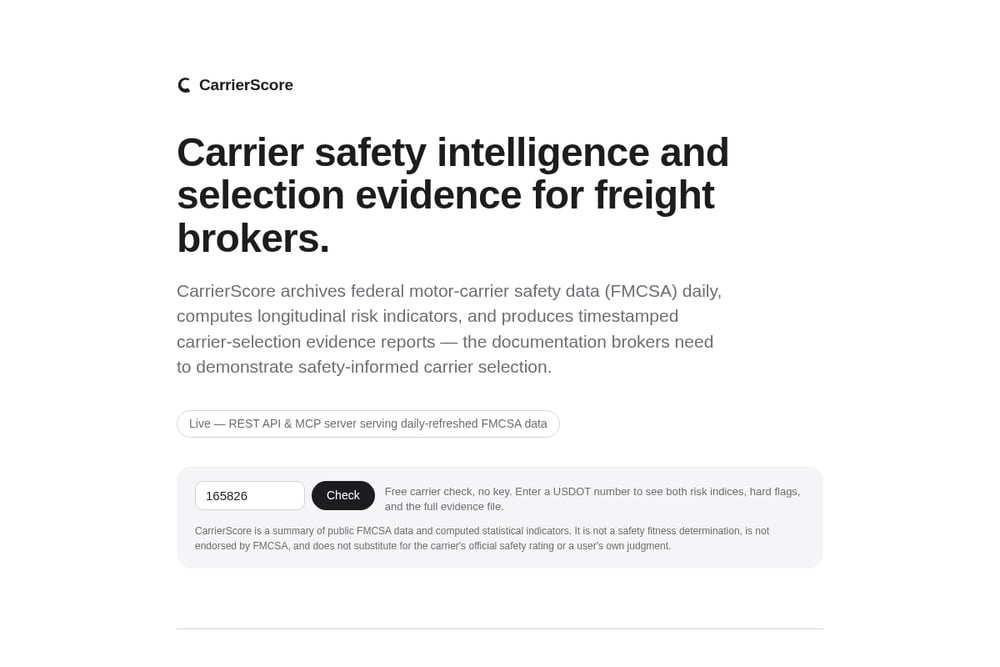 A screenshot of the CarrierScore website.
CarrierScore takes the FMCSA dataset and snapshots it every single day, which means you can pull a timestamped record of exactly what was knowable about a carrier on the date you selected them. That evidence-file approach matters in the post-Montgomery v. Caribe environment, where brokers need to show safety-informed selection. You get two transparent 0-100 indices per carrier, one for inspection and compliance risk and one for crash risk, each with a documented methodology and validation record. Continuous monitoring flags authority revocations, insurance cancellations, new out-of-service orders, and index deterioration across your carrier list. Developer access through a REST API and an MCP server makes it easy to plug into a TMS, load board, or AI booking agent.
#2 Motor Carrier Intelligence Platform - FleetConnect
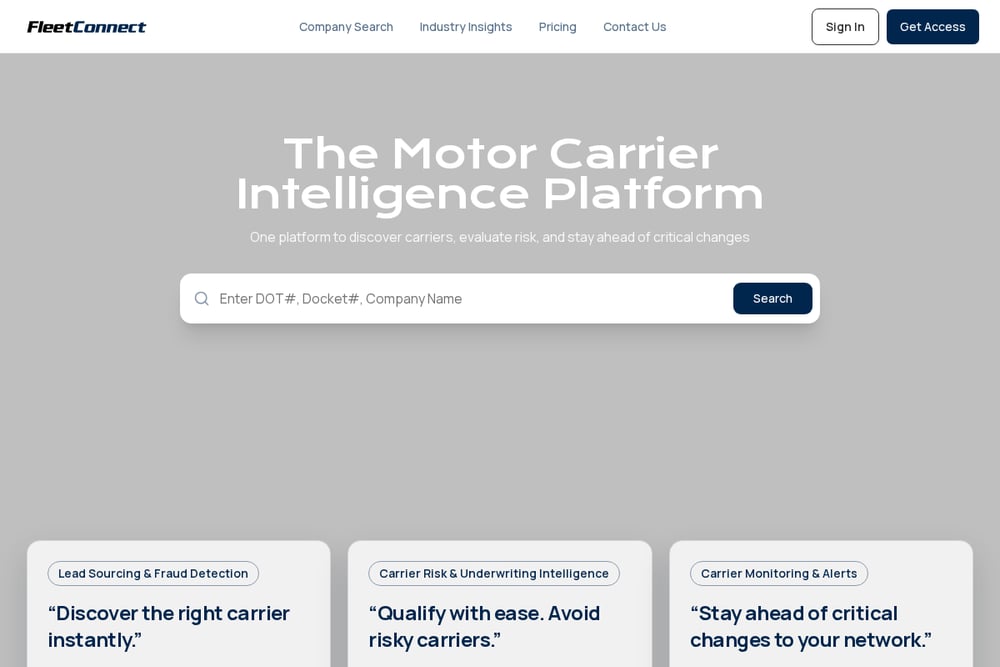 A screenshot of the Motor Carrier Intelligence Platform - FleetConnect website.
FleetConnect is built as a single platform to discover carriers, evaluate risk, and stay ahead of critical changes. You can filter more than 2 million companies down to a targeted list by size, operations, insurance status, region, ISS and BASIC scores, and equipment. Fraud detection is a real strength here: the platform alerts you to reincarnated carriers through matching company information and shared vehicles, a problem that quietly costs brokers and factors real money. Risk and underwriting intelligence lets you track safety trends over time, while automated monitoring watches safety scores, violations, operating status, and insurance so compliance shifts surface in real time. It serves brokers and 3PLs, factoring companies, shippers, insurers, ELD providers, and fleet vendors, and its Industry Insights hub publishes monthly FMCSA data snapshots and quarterly reports.
#3 Carrier Assure
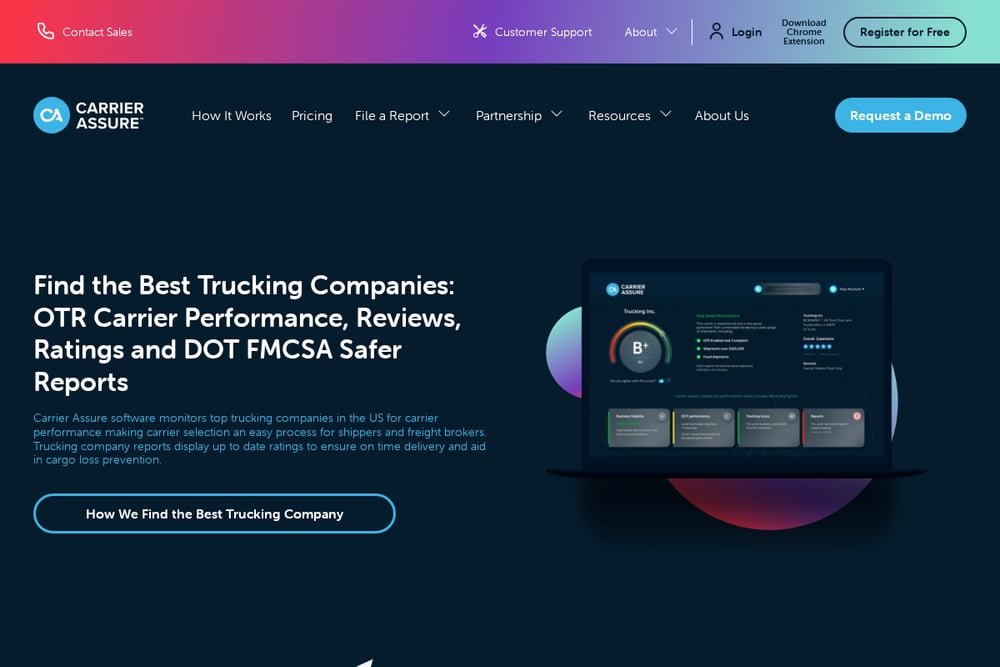 A screenshot of the Carrier Assure website.
Carrier Assure focuses on carrier performance rather than pure compliance, analyzing thousands of trucking companies against actual DOT FMCSA data and SAFER reports. Its algorithms are tuned to predict how a carrier will perform, so shippers and brokers can filter for on-time delivery, consistent tracking, and solid customer service instead of sifting through raw federal data. The platform is explicit about helping you avoid carriers showing indicators of double brokering, poor visibility, and instability. It also surfaces rising-star carriers that are building solid businesses but may not top a traditional scorecard yet. A Chrome extension and free registration lower the barrier to trying it.
#4 Truckstop Carrier Hub
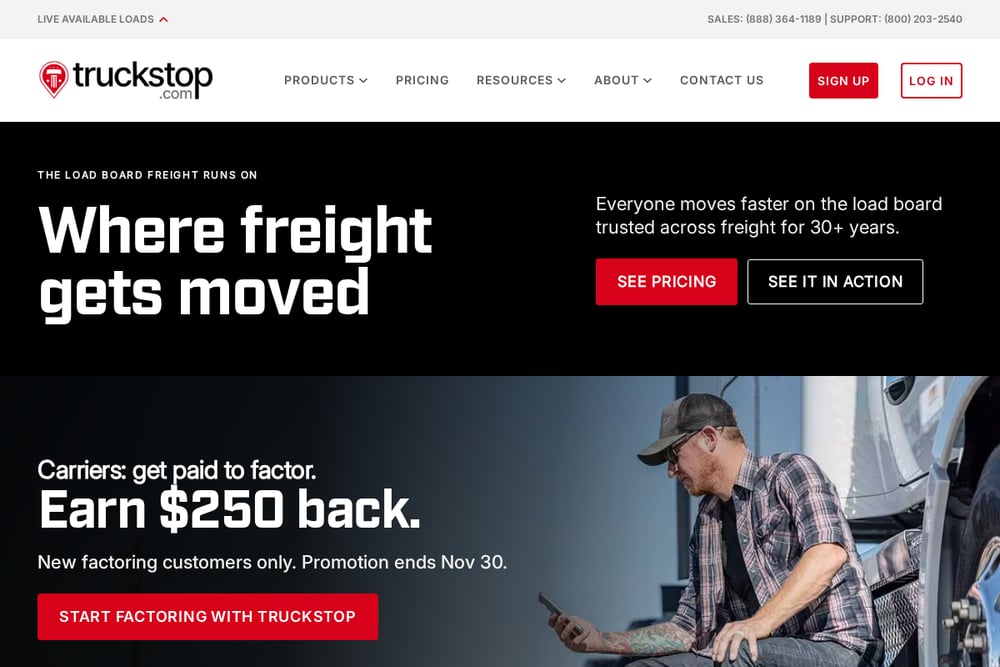 A screenshot of the Truckstop Carrier Hub website.
Carrier Hub wins on workflow because it lives inside Truckstop, the load board many brokerages already run all day. You open a carrier profile from the universal navigation and see authority, insurance, safety, CPR ratings, and community reporting without a separate login. You set your own rules for insurance limits, authority age, safety scores, fraud signals, and identity checks, and each carrier returns a pass, warning, or fail with the reasoning included. Monitoring alerts typically arrive the morning after FMCSA updates, and the Advanced and Pro tiers add active insurance monitoring and identity risk signals. Pro also handles onboarding, so you can set requirements, send the invite, and track every partner in one network view.
#5 Carrier Software
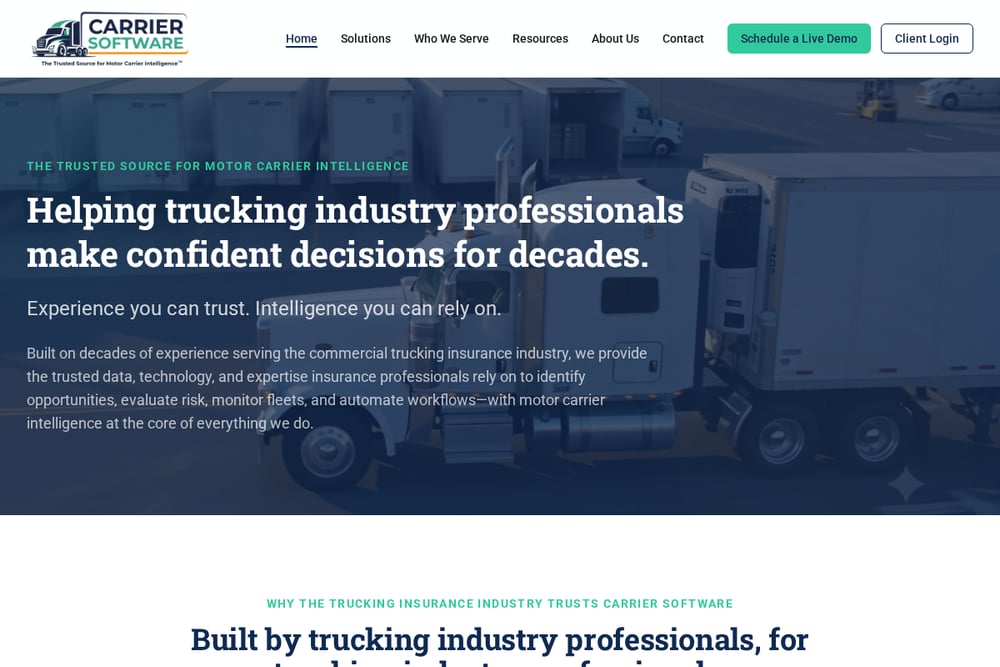 A screenshot of the Carrier Software website.
Carrier Software goes beyond federal data by pairing FMCSA monitoring with ELD and telematics feeds, so you see inspections, violations, crashes, BASIC measures, operating authority, driver behavior, vehicle movement, and mileage in one view. That combination is aimed at teams managing a portfolio of fleets rather than one-off carrier checks, including underwriting, claims investigation, and prospecting use cases. Smart alerts fire when important changes, behaviors, or risk conditions are detected, so your team stops relying on repeated manual research. The platform also offers DOT lead generation and automated submission analysis alongside its monitoring tools. It is the pick for anyone who wants operational telematics context layered on top of compliance data.
How to pick the right one for your desk
Start with the decision you make most often. If you are a broker selecting carriers and need a defensible record of what you knew and when, prioritize evidence files and daily snapshots. If your carrier sales team lives in a load board, a tool embedded in that workflow will get used; one that requires a separate login often will not. If you are underwriting or managing a fleet portfolio, telematics and ELD context matter more than a clean search interface. And if fraud is your biggest exposure, check specifically for reincarnated carrier detection and shared-vehicle alerts, because that is where the losses hide. Try two platforms side by side on the same ten carriers before you commit.
Putting monitoring on autopilot
The real value shows up after the first search. Load your active carrier network into whichever platform you choose, then set thresholds that match your risk appetite: insurance limits, authority age, safety score floors, and out-of-service triggers. Route alerts to the person who actually acts on them, not a shared inbox nobody reads. Where API access exists, push carrier risk data into your TMS so the check happens at tender rather than after the load is covered. Review your alert rules quarterly, because a threshold that made sense in a soft market can quietly block good carriers when capacity tightens.
The bottom line
No single platform does everything perfectly, and that is fine. CarrierScore gives you the paper trail, FleetConnect gives you the broadest discovery and fraud coverage, Carrier Assure reads performance, Truckstop Carrier Hub fits the workflow you already have, and Carrier Software adds telematics depth. Pick the one that matches your daily decision, wire up the alerts, and let the data do the chasing instead of your team.