
Your mood has patterns. You just can't see them yet. These five apps help you spot what lifts you and what drags you down.
The Mood Tracking Landscape
Mood tracking has moved from paper diaries to pocket-sized companions. Millions of people now log a feeling in seconds and get back charts, correlations, and gentle nudges. The category splits into two camps. Some apps are data-first, built for clinical insight and exportable reports. Others are care-first, designed to feel like a calm friend rather than a dashboard. Both matter. If you live with low mood or anxiety, the app you actually open on a hard day beats the one with the prettiest graphs. Privacy is the other dividing line. Some tools keep everything on your device by default. Others sync to the cloud and offer sharing controls. Know which model you want before you commit.
How We Evaluated These Apps
We looked at five factors across every app. First, check-in speed: how fast can you log a mood when you have ten seconds of energy? Second, pattern insight: does the app turn entries into something you can act on? Third, calm design: does the interface reduce pressure or add it? Fourth, sharing and privacy: can you control who sees what, and is data private by default? Fifth, support features: breathing, grounding, reminders, and therapist-friendly exports. Steddy stood out for its ten-second check-in, privacy-first sharing, and gentle tone. Daylio impressed with deep customization and correlation stats. eMoods earned attention for clinical-grade symptom tracking and offline use. Moodfit showed breadth with a customizable toolkit and nervous-system framing. Moodnotes brought CBT-based thought reframing and Apple ecosystem polish.
Here is the quick comparison. Each app serves a different kind of user, so scan for the one that matches your day-to-day needs.
| Provider | Best For |
|---|---|
| Daylio | Data lovers who want deep stats and full customization |
| Steddy: a gentle mood tracker for low mood and anxiety | Anyone with low mood or anxiety who wants gentle, private support |
| eMoods | People managing bipolar disorder or clinical symptom tracking |
| Moodfit | Self-directed learners who want a customizable mental health toolkit |
| Moodnotes | Apple users who want CBT-based thought reframing |
The Five Apps in Detail
#1 Daylio
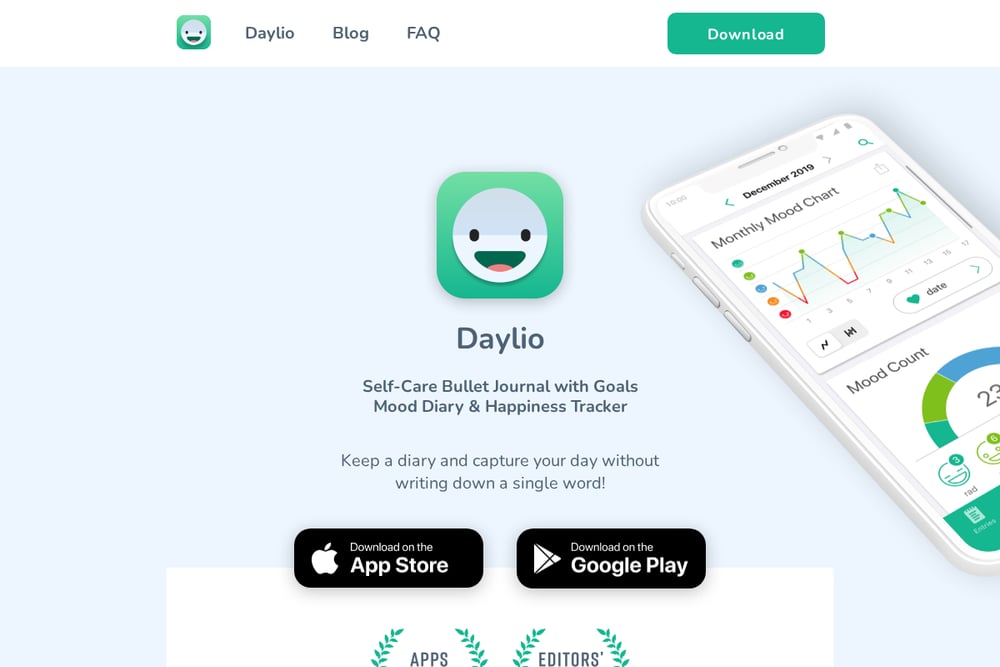 A screenshot of the Daylio website.
Daylio is the veteran of the category, trusted by over 20 million people since 2015. You log an entry in two taps by picking a mood and activities, then the app crunches the data into charts and correlations. It goes far beyond mood lines with a Year in Pixels view, goal tracking, and advanced stats that show what actually moves your numbers. You can add notes, photos, and voice memos if you want a fuller diary. Privacy controls include PIN lock, fingerprint, and Face ID. It is the pick for anyone who loves data and customization.
#2 Steddy: a gentle mood tracker for low mood and anxiety
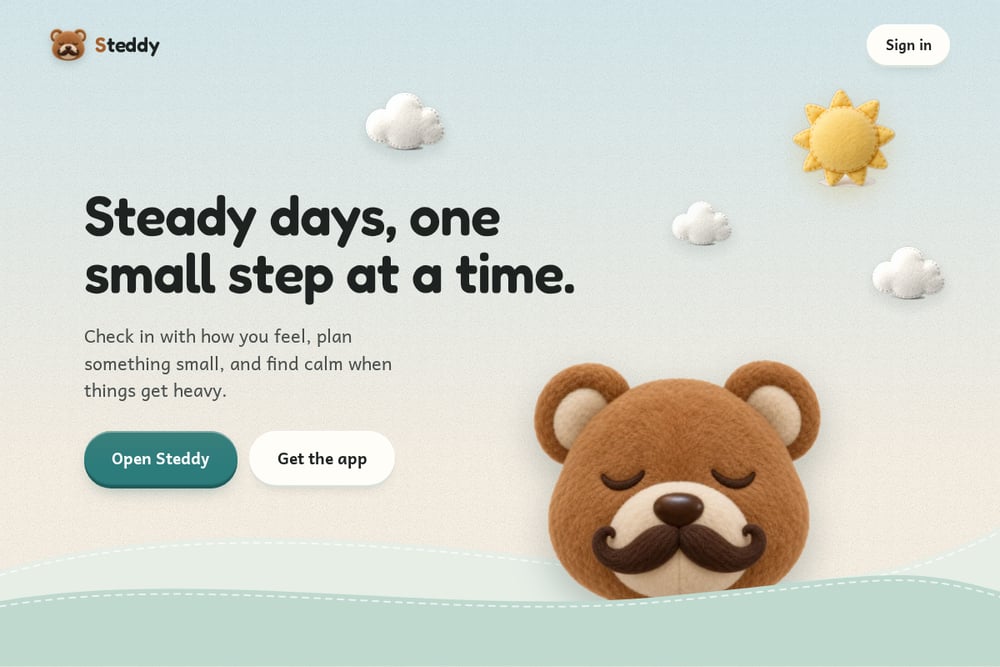 A screenshot of the Steddy website.
Steddy is built for the days when everything feels heavy. You check in with how you feel in about ten seconds by picking a face and adding a word if you like. From there, the app helps you plan one small doable step, find calm through guided breathing and grounding, and untangle a thought by writing it down and looking at it from another side. Sharing is private by default. You can send a quiet rough-day signal to your people or share a summary with your therapist through a private link and PIN, and each person sees only what you pick. Gentle medication reminders track taken, skipped, or not sure with no guilt either way. It is a supportive companion, not a crisis service.
#3 eMoods
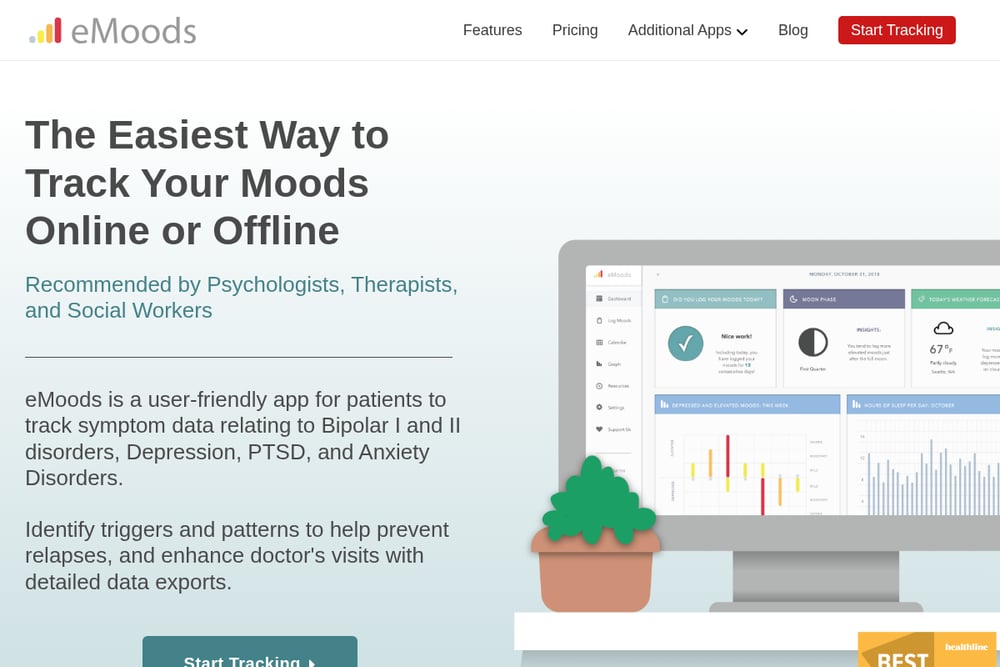 A screenshot of the eMoods website.
eMoods is the clinical option. It is recommended by psychologists, therapists, and social workers for tracking symptoms tied to Bipolar I and II, depression, PTSD, and anxiety disorders. You can log depressed, elevated, and irritated moods all in one day, which matches how real moods actually shift. The app tracks sleep, weight, and medications alongside mood, and it exports detailed reports that make doctor visits more productive. A fully offline classic version keeps everything on your device. The blue-toned design avoids red and green judgments, so there are no right or wrong answers.
#4 Moodfit
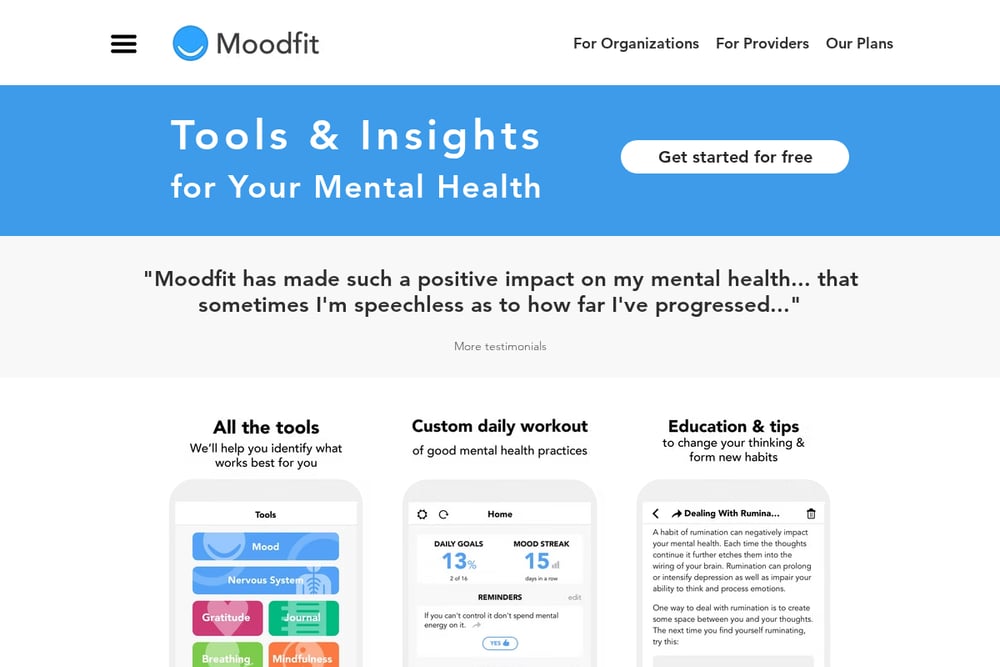 A screenshot of the Moodfit website.
Moodfit frames mental health around the relationship between your thoughts, feelings, and behaviors, all within the context of your nervous system. Instead of one path, it gives you a customizable toolkit so you can target what most affects your mood. You get tools to reduce stress, build daily habits, beat rumination and procrastination, and identify distorted thinking. The app also offers a nervous-system tool for people who feel stuck in patterns they cannot shift. It is a broad, self-directed option for anyone who wants to learn and practice rather than just log.
#5 Moodnotes
 A screenshot of the Moodnotes website.
Moodnotes pairs mood tracking with cognitive behavioral therapy and positive psychology, created by design experts and clinical psychologists. You track your mood, identify triggers, and learn to spot common thinking traps that pull you down. The app includes self-awareness articles written by mental health experts and lets you capture memories with photos. It also supports Apple Watch and iCloud sync, and you can scan your face with the camera to log a mood quickly. Premium unlocks unlimited entries, personal statistics, and deeper insights. It is a polished pick for Apple users who want to work on their thinking habits.
How to Choose Your Mood Tracker
Start with honesty about your energy. If opening an app feels like a chore on a bad day, pick the one with the fastest check-in. Ten seconds matters more than ten features. Next, decide what you want the data to do. If you need reports for a psychiatrist, look for exportable clinical tracking. If you want to see what lifts your mood week to week, look for correlation stats and simple charts. Then check the privacy model. Some apps keep data on your device by default. Others offer selective sharing with therapists or trusted people. Choose the model that matches your comfort level. Finally, consider the tone. A dashboard can feel motivating to one person and cold to another. A gentle companion can feel supportive to one person and too soft to another. There is no universal answer, only the app you will actually open.
Building a Low-Effort Tracking Routine
The best tracking system is the one that runs without willpower. Set a daily reminder at a time you are usually still, like after brushing your teeth or before bed. Link the check-in to an existing habit so you do not have to remember it. Use medication reminders if you take anything regularly, and log taken, skipped, or not sure without judgment. Once a week, spend five minutes reviewing your patterns instead of logging. Look for what lifted you and what drained you. If you share with a therapist, send the summary before your session so the time goes to what matters. Keep the loop small: check in, notice, adjust one thing.
The Bottom Line
There is no single right app here, only the right fit for your brain and your bad days. Daylio rewards data lovers with deep stats and customization. Steddy meets low mood and anxiety with a ten-second check-in, gentle steps, and privacy-first sharing. eMoods serves clinical tracking with offline reliability. Moodfit gives self-directed learners a broad toolkit. Moodnotes brings CBT thought work to Apple users. Pick the one you will open when you are tired, and let the small check-ins do the rest.