
Home respiratory equipment only works when someone shows you how to use it. These five services bring the therapist to your door, or at least to your screen.
The State of Home Respiratory Care
Home respiratory care has quietly become one of the most important corners of American healthcare. Millions of people manage COPD, sleep apnea, neuromuscular conditions, and oxygen dependence from their living rooms, and the equipment involved is not plug-and-play. Ventilators, CPAP and BiPAP machines, concentrators, and nebulizers all need correct setup, mask fitting, and ongoing coaching. Historically, durable medical equipment (DME) providers handled delivery while therapists worked inside hospitals. That gap between the prescription and the living room is where problems happen. A growing wave of services now blends telehealth with mobile in-home visits staffed by licensed respiratory therapists. They coordinate with your physician and your DME supplier, confirm flow settings against the order, and teach you and your family in plain language. The result is fewer equipment failures, better therapy adherence, and fewer panicked late-night calls.
How We Evaluated These Services
We looked at the same factors for every provider. First, service scope: does the company cover oxygen, PAP therapy, ventilators, nebulizers, and airway clearance, or just one slice? Second, clinical staffing: are licensed respiratory therapists involved in delivery, setup, and follow-up, or is it a delivery driver with a clipboard? Third, physician and DME coordination: does the provider loop your pulmonologist back in with a report, and can they troubleshoot or replace equipment with your supplier? Fourth, access and responsiveness: 24/7 on-call support, telehealth options, and app-based convenience matter when something beeps at 2 a.m. Fifth, education quality: hands-on teaching for patients and caregivers, in language that actually makes sense. Respirago stood out for pairing mobile visits with telehealth and a clear physician feedback loop. Lincare impressed with sheer breadth, from ventilator therapy to pulmonary rehab. VeroHealth earned attention for insurance assistance and digital tools like mask-fit quizzes. Respire Homecare drew notice for pediatric and tracheostomy specialization. Performance Home Medical stood out for hospital-to-home transitions and remote monitoring.
Here is a quick side-by-side look at how these five services compare on the factors that matter most when you are managing respiratory care at home.
| Provider | Best For |
|---|---|
| Lincare | Complex, multi-device respiratory needs |
| Respirago | Mobile Respiratory Care | Physician-coordinated mobile RT visits |
| VeroHealth | Digital-first PAP and oxygen support |
| Respire Homecare | Ventilator, trach, and pediatric care |
| Performance Home Medical | Hospital-to-home transitions and remote monitoring |
The 5 Services in Detail
#1 Lincare
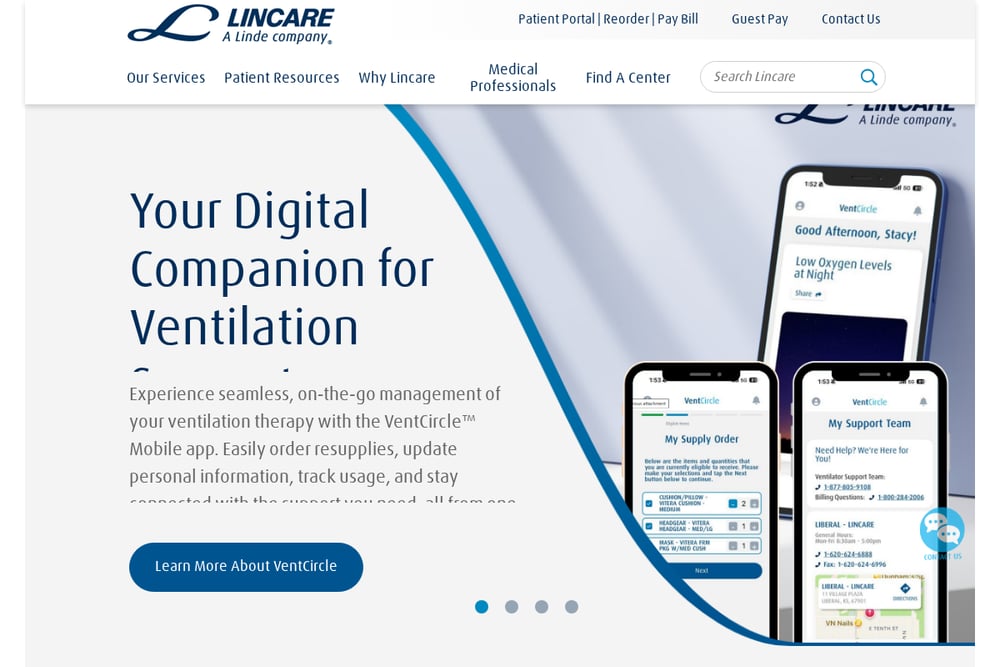 A screenshot of the Lincare website.
Lincare is the largest name in home respiratory care in the US, and its service menu reflects that scale. You can get oxygen therapy, CPAP and bilevel devices, ventilator therapy, nebulizer treatments, tracheostomy and suction support, and even overnight oximetry screening. The company also runs in-home disease management education, including COPD patient programs and its Care Check follow-up model. If you need a single supplier that can handle complex, overlapping equipment needs, this breadth is hard to match. The tradeoff is that you are working within a large national system, so the personal touch varies by local center. You can explore the full catalog on the Lincare services page.
#2 Respirago | Mobile Respiratory Care
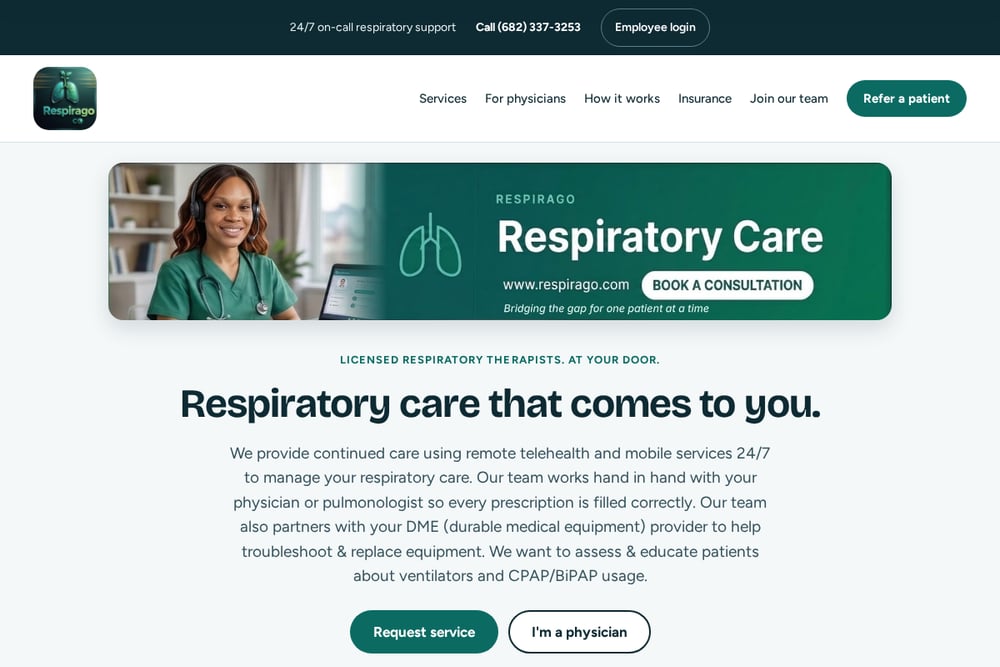 A screenshot of the Respirago | Mobile Respiratory Care website.
Respirago takes the therapist-to-your-door model and builds everything around it. Licensed respiratory therapists deliver and set up equipment checked against your physician's order, then teach you and your family in plain language. Every visit ends with a report back to your physician, so your pulmonologist stays in the loop. The service covers home oxygen, CPAP and BiPAP mask fitting, home ventilators with caregiver training and backup planning, nebulizers, and airway clearance devices. What sets it apart is the combination of 24/7 on-call support, telehealth respiratory visits, and a mobile app for one-tap access. It also partners with your DME provider to troubleshoot and replace equipment rather than forcing you to switch suppliers. You can see the full service list at Respirago.
#3 VeroHealth
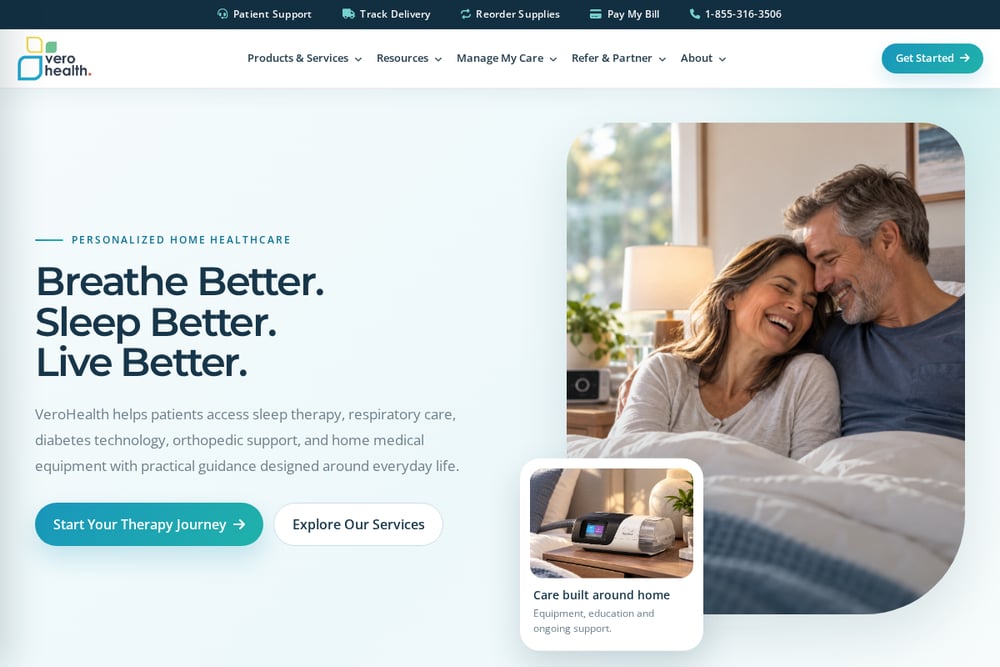 A screenshot of the VeroHealth website.
VeroHealth organizes its respiratory offerings into clear care solutions: sleep therapy, respiratory therapy, and broader home care. That means CPAP, BiPAP, masks, oxygen, non-invasive ventilation, and nebulizers under one roof, with ongoing therapy support rather than a one-time drop-off. The company leans hard into digital convenience, with a mask-fit quiz, prescription upload, delivery tracking, and online supply reordering. Insurance assistance is a visible priority, which matters when you are navigating coverage changes or transferring from another provider. If you like self-service tools backed by a support line, this is a comfortable fit. Start with the VeroHealth respiratory equipment page.
#4 Respire Homecare
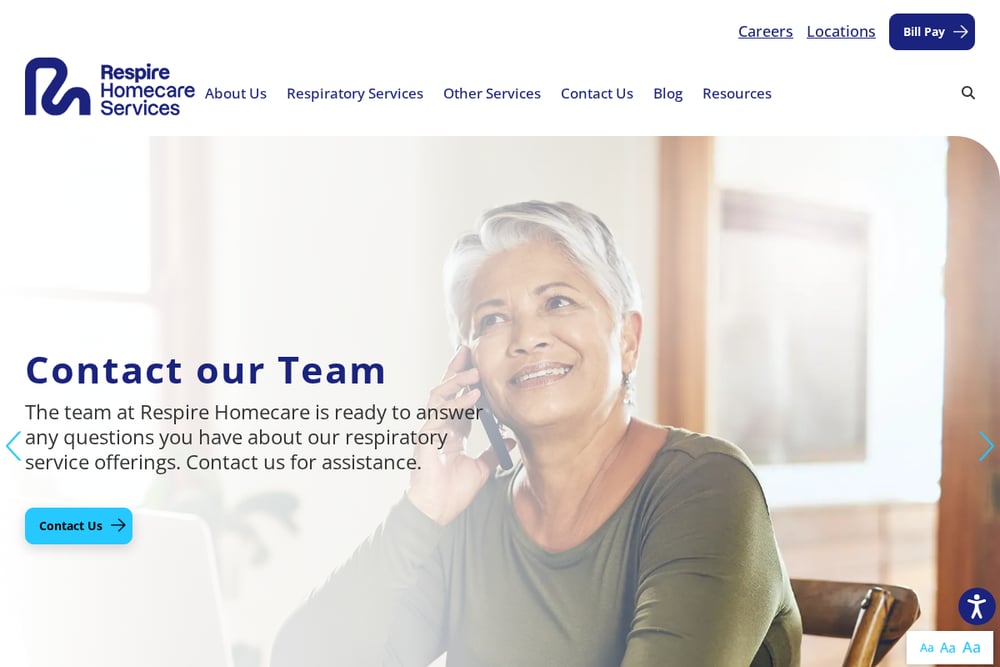 A screenshot of the Respire Homecare website.
Respire Homecare is an accredited respiratory services and DME provider with a clear mission around complex respiratory needs. Its home ventilator program emphasizes correct setup in the place you are most comfortable, and the tracheostomy care program supports patients recovering from surgery. Pediatric respiratory services are a genuine differentiator, with equipment, supplies, and education geared specifically to children. The company also offers enteral nutrition and pharmacy services, which helps families coordinating multiple care streams. If your situation involves a ventilator, a trach, or a child with respiratory needs, this specialization is worth a close look. Visit Respire Homecare for program details.
#5 Performance Home Medical
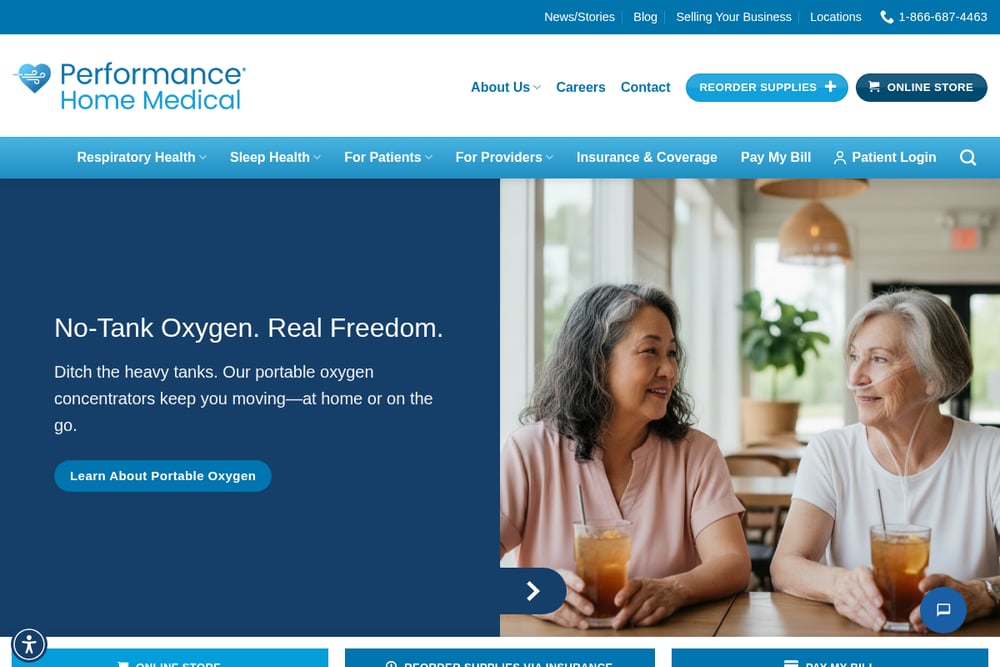 A screenshot of the Performance Home Medical website.
Performance Home Medical focuses on the moments when respiratory care is most fragile: the transition from hospital to home. The company works with providers to expedite discharge and ensure accurate equipment delivery, setup, and support so care continues without interruption. Remote monitoring lets its team track adherence, adjust therapy, and intervene before a readmission happens. Portable oxygen concentrators are a highlighted offering for people who want to ditch heavy tanks, and CPAP setup includes digital mask-fitting tools. Online supply reordering and device guides round out the self-service experience. Learn more at Performance Home Medical.
How to Choose the Right Respiratory Care Partner
Start with your equipment. If you are managing a ventilator, tracheostomy, or a child's respiratory needs, prioritize providers with dedicated programs and therapist-led training. If your world is CPAP and oxygen, look for strong mask-fitting support and easy supply reordering. Next, ask who actually shows up at your door. A licensed respiratory therapist who checks settings against the prescription is worth more than a delivery drop. Confirm whether the provider coordinates with your physician and your existing DME supplier, or expects you to switch. Ask about after-hours support, because equipment problems do not keep business hours. Finally, check insurance handling and whether telehealth visits are available for quick questions. The right partner makes home therapy feel manageable instead of mysterious.
Where Automation and Telehealth Fit In
Remote care is no longer a bonus feature; it is part of the workflow. Expect providers to offer video visits for troubleshooting, app-based access for requesting service, and remote monitoring that flags adherence problems before they become hospital trips. Respirago pairs telehealth visits with mobile in-home follow-ups and a one-tap app. Performance Home Medical uses remote monitoring to track adherence and adjust therapy. VeroHealth offers digital mask fitting and delivery tracking. Use these tools to your advantage: upload prescriptions early, reorder supplies before you run out, and keep the after-hours number somewhere visible. Automation handles the reminders; the therapist handles the nuance.
The Bottom Line
Home respiratory care works best when the equipment, the education, and the clinical team stay connected. The five services here approach that differently. Lincare brings national scale and a deep equipment catalog. Respirago builds the model around mobile therapist visits, physician reporting, and 24/7 support. VeroHealth leans into digital convenience and insurance help. Respire Homecare specializes in the most complex cases, including pediatric and trach care. Performance Home Medical shines at hospital-to-home transitions and remote monitoring. Match the provider to your equipment and your support style, and you will spend less time fighting the machine and more time breathing easier.