Your phone already has a great camera. What it lacks is a teacher. These five resources fill that gap, each in a different way.
The mobile photography learning market at a glance
Smartphone cameras have quietly become the default camera for most people. That shift created a new demand: lessons that assume you are shooting with the device in your pocket, not a bag full of lenses. The market now spans subscription video libraries, free MOOC platforms, university-backed specializations, and small independent shops selling downloadable guides. Pricing models vary just as widely, from free-with-certificate to one-time PDF purchases to monthly subscriptions. The common thread is practicality. Learners want to shoot better photos this week, not study optics for a semester. That is why short lessons, immediate downloads, and topic-specific guides are gaining ground alongside traditional course catalogs.
How we evaluated these resources
We looked at the same factors for every entry. First, scope: does the resource cover light, composition, portraits, travel, night shooting, and editing, or just one slice? Second, format and access: can you start today, and does the material work on a phone screen? Third, pricing clarity: is the cost a one-time payment, a subscription, or a free tier with paid extras? Fourth, practical focus: are the lessons short enough to act on immediately? Fifth, support: is there a human to email when you get stuck? Kaivern stood out for its one-time-payment PDF model and topic-specific guide structure. The Great Courses stood out for its produced video lessons and structured episode list. Alison stood out for zero-cost access. Coursera stood out for its university affiliation and multi-course depth. How to Photograph Your Life stood out for its personal, creator-led teaching style.
Here is the short version before the details. Each entry below serves a different kind of learner, so match the format to how you actually study.
| Provider | Best For |
|---|---|
| The Great Courses - The Complete Guide to Smartphone Photography | Learners who prefer polished video lectures |
| Kaivern | Self-starters who want instant PDF lessons at a one-time price |
| Alison - Mobile Photography | Budget-conscious beginners who want a free start |
| Coursera - Photography Basics and Beyond: From Smartphone to DSLR | Learners who want depth and a university-backed certificate |
| How to Photograph Your Life - Smartphone Course | People who want a personal, creator-led teaching style |
The five resources in detail
#1 The Great Courses - The Complete Guide to Smartphone Photography
 A screenshot of the The Great Courses - The Complete Guide to Smartphone Photography website.
The Great Courses brings its signature produced-video format to smartphone shooting. The Complete Guide to Smartphone Photography runs 20 lessons and is built around the premise that you do not need professional gear to take strong pictures. You get a structured episode list, a guidebook, and transcripts, which makes it easy to follow along or revisit a lesson later. The course is priced as a one-time purchase at around €24.99, and it also appears in the broader Great Courses catalog alongside subjects like art, travel, and professional growth. If you learn best from polished lectures with a clear beginning and end, this format will feel familiar and comfortable.
#2 Kaivern
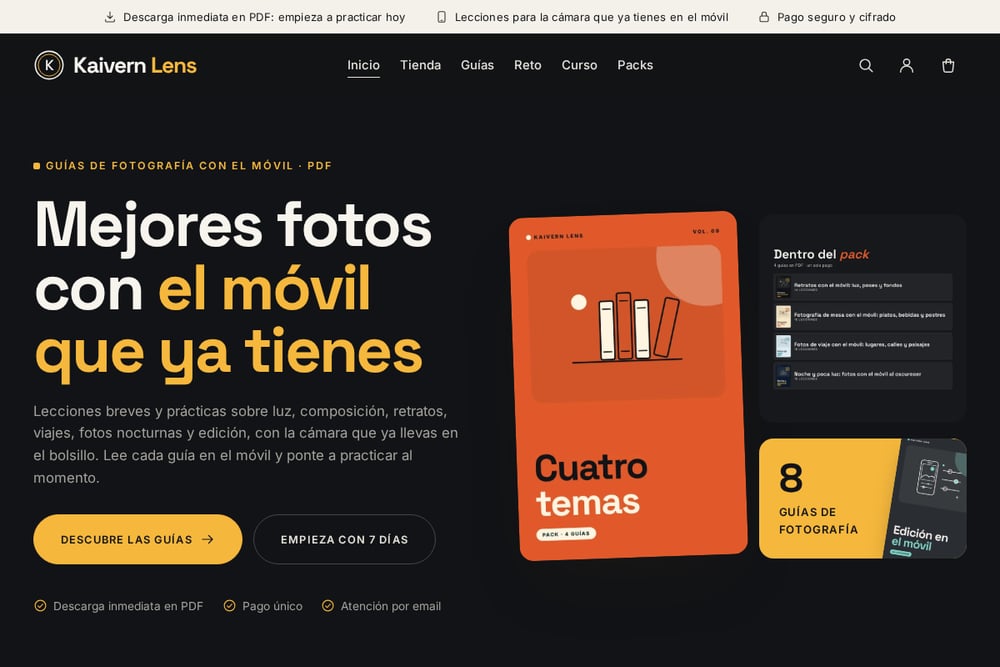 A screenshot of the Kaivern website.
Kaivern sells downloadable PDF guides and courses for people who want to shoot better with the phone they already own. The catalog covers light, composition, portraits, tabletop and food, travel, night and low light, and editing, plus a 30-day challenge and a six-week fundamentals course with 30 lessons. Everything is delivered as an instant PDF download after a one-time payment, so you can read a lesson on your phone and practice the same day. Pricing is transparent: individual guides run from €13.99 to €29.99, a four-guide pack is €39.99, and the complete eight-guide collection is €49.99. Email support is included, with replies promised within two business days. It is a practical, no-subscription option for self-directed learners.
#3 Alison - Mobile Photography
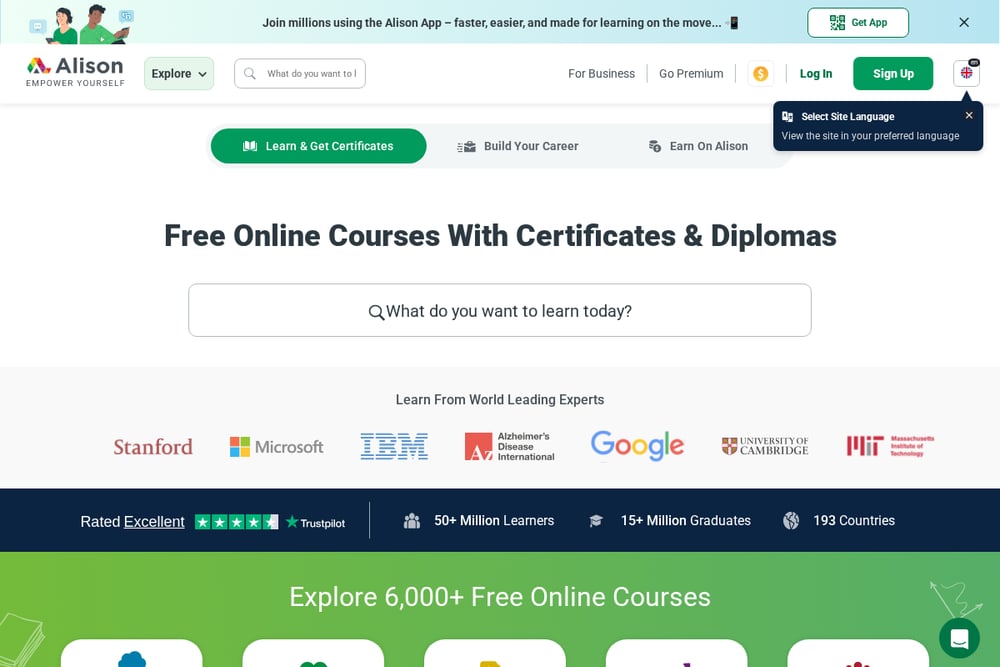 A screenshot of the Alison - Mobile Photography website.
Alison offers a free online course in mobile photography as part of its much larger catalog of thousands of courses. The platform is built for learning on the move, with an app that lets you study from your phone, which fits the subject matter neatly. Because the course sits inside a broad education platform, you also get access to career resources, resumé tools, and certificate options. The trade-off is that the experience is platform-driven rather than photography-driven, so expect a general course structure rather than a boutique photography curriculum. For anyone testing the waters before spending money, the zero-cost entry point is hard to argue with.
#4 Coursera - Photography Basics and Beyond: From Smartphone to DSLR
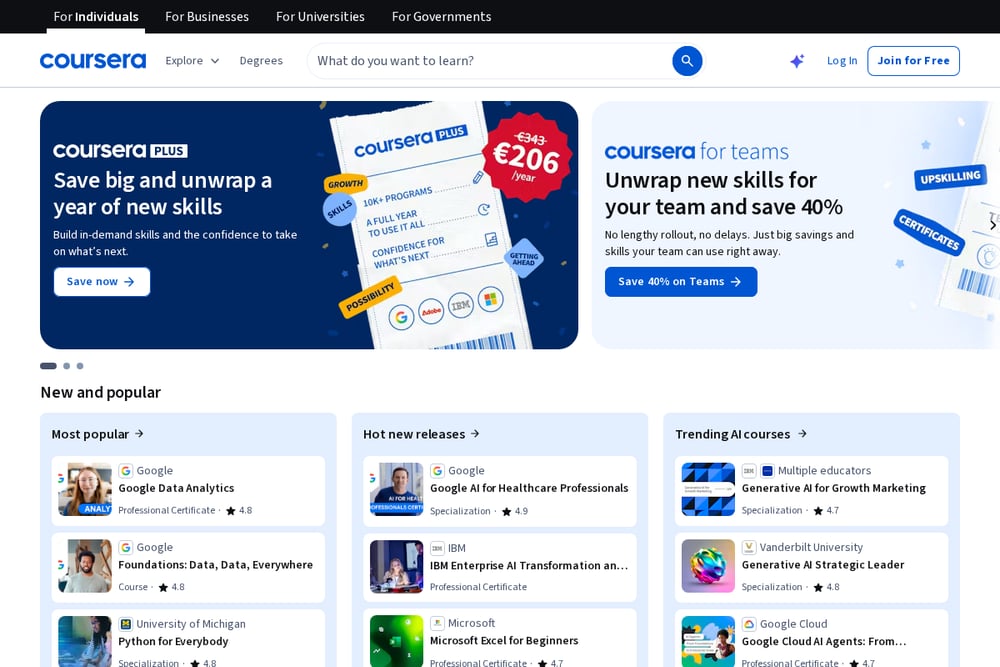 A screenshot of the Coursera - Photography Basics and Beyond: From Smartphone to DSLR website.
Coursera hosts a five-course specialization from Michigan State University that starts with the smartphone and grows toward DSLR and mirrorless work. It covers exposure control, composition fundamentals, and creative concepts, and it has drawn a very large enrollment with strong review scores. The specialization is beginner-friendly and takes roughly three months at about ten hours a week, ending in a capstone project where you build a portfolio and give feedback to fellow learners. You can enroll for free and pay if you want the certificate. This is the deepest academic option on the list, and the right fit if you want a credential alongside the skills.
#5 How to Photograph Your Life - Smartphone Course
How to Photograph Your Life is an independent, creator-led brand built around everyday photography. Its smartphone course sits alongside a body of teaching content aimed at people who want to document their own lives rather than chase professional results. The appeal here is voice: independent creators tend to teach from personal experience, with a warmer and less institutional tone than a university or a large platform. Availability and site reliability can vary for smaller shops, so check the current course page before you buy. If you connect with a teacher's style, a small independent course can be more motivating than a big catalog.
How to choose the right fit for you
Start with your learning style. If you absorb information by watching, a produced video course like The Great Courses will hold your attention. If you prefer reading and doing, a PDF guide you can open on your phone mid-shoot is more useful. Next, look at your budget shape, not just the number. A one-time payment of €49.99 for a full guide collection is a different commitment than a recurring subscription or a free tier that upsells a certificate. Then check the scope. If you mainly shoot food and travel, a topic-specific guide beats a broad survey course. If you want fundamentals plus a credential, a specialization is worth the time. Finally, test the support. Send a question before you buy and see how fast a real person answers. That tells you more than any sales page.
A simple practice workflow you can automate
Learning sticks when practice is scheduled, not improvised. Set a recurring weekly reminder on your phone for a 30-minute photo walk, and pair each session with one lesson from your chosen guide or course. Create a shared album that auto-syncs your shots so you can review them without manual transfers. Use a simple note template to log the lesson topic, the light conditions, and one thing you would change next time. If you are following a structured program like the 30-day challenge or a six-week course, map each lesson to a calendar entry in advance so you never wonder what to practice. Automate the reminders and the album sync, and the only thing left to do is shoot.
The bottom line
There is no single right answer here, only the right format for how you learn. Kaivern suits self-directed shooters who want instant, affordable PDF lessons with no subscription. The Great Courses suits viewers who like polished lectures. Alison is the free on-ramp. Coursera is the deep, credentialed path. How to Photograph Your Life is for people who respond to a personal teaching voice. Pick one, schedule the practice, and give it four weeks. Your phone camera is already good enough. The lessons are what close the gap.