Choosing a technology advisor for mission-critical work is not a casual decision. When systems can't fail, you need a partner who understands the stakes before they recommend a solution.
The State of Mission-Critical Technology Advisory
Public safety, telecommunications, and emergency communications are in the middle of a generational shift. Agencies are moving from legacy land mobile radio and analog-era 911 systems toward NG9-1-1, broadband push-to-talk, and interoperable data environments. That transition creates a specific kind of demand: leaders who can evaluate architecture, procurement, and operations without losing sight of the people answering the calls.
The advisory market has responded. You now see large multidisciplinary consultancies, boutique principal-led firms, and specialist shops that focus almost entirely on 911 and critical communications. Each model has tradeoffs. Big firms bring bench depth and contract vehicles. Boutiques bring senior attention and fewer layers. The right fit depends on whether you need a program managed end to end or a trusted voice in the room for a single high-stakes decision.
What ties these firms together is the operating context. Reliability, interoperability, and mission outcomes matter more than feature lists. A recommendation that looks clean on a slide can fall apart in a dispatch center at 2 a.m. The firms worth knowing are the ones that understand that gap.
How We Evaluated These Firms
We looked at the same factors across every firm so you can compare them on your own terms.
Service scope. Does the firm cover advisory, assessment, procurement, and implementation support, or is it narrower by design? Curling Strategic stands out for a three-tier model that separates ongoing advisory from focused consulting and selective development. Mission Critical Partners shows unusually broad coverage across technology, operations, facilities, and cybersecurity. Critical Insights concentrates on critical communications transitions and executive-level judgement. IXP Corporation pairs consulting with operational experience from running emergency communications centers. 911 Authority emphasizes project management discipline and policy support.
Depth in mission-critical environments. Each firm speaks the language of public safety and reliability. The difference is where the depth sits. Some go deep on NG9-1-1 and CAD. Others focus on TETRA, MCX, and broadband migration. Curling Strategic positions itself around interoperability and mission outcomes across commercial and public-sector work.
Engagement model. Principal-led firms give you senior attention with fewer handoffs. Larger firms give you teams and standardized methodologies. Neither is automatically better. You should know which one your organization can actually absorb.
Clarity of offer. Look at how quickly you can understand what a firm does and how to start. Clear service tiers and plain-language descriptions save weeks of scoping.
Sector fit. A firm with deep 911 experience may be exactly right for a PSAP and less relevant for a commercial infrastructure vendor. Match the firm to your environment, not to a generic ranking.
Here is a quick comparison of the five firms, what each is known for, and who tends to benefit most from the relationship.
| Provider | Best For |
|---|---|
| Mission Critical Partners | Agencies needing end-to-end coverage across many systems |
| Technology Advisory, Consulting & Development | Curling Strategic | Leaders who want senior, independent guidance on complex decisions |
| Critical Insights Ltd | Organizations migrating from TETRA or P25 to MCX |
| IXP Corporation | PSAPs and municipalities planning consolidation or major upgrades |
| 911 Authority LLC | State and local programs needing PM discipline and policy support |
The 5 Firms in Detail
#1 Mission Critical Partners
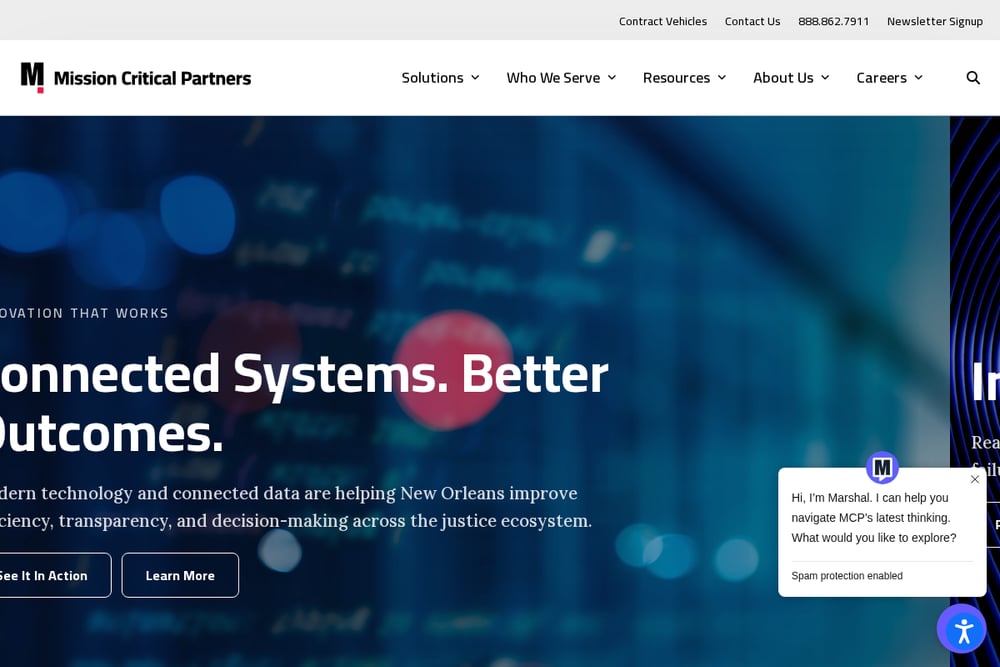 A screenshot of the Mission Critical Partners website.
Mission Critical Partners is the broadest shop on this list. Its technology consulting practice spans CAD, GIS, wireless communications, community broadband, land mobile radio, and cybersecurity governance. You can engage them for strategy and modernization work and stay for managed services like network monitoring and third-party risk management. That range makes them a natural fit for agencies that want one partner across multiple workstreams. The tradeoff is scale: with a large bench comes more layers between you and the people doing the work. If your project touches many systems and stakeholders, that breadth is hard to match.
#2 Technology Advisory, Consulting & Development | Curling Strategic
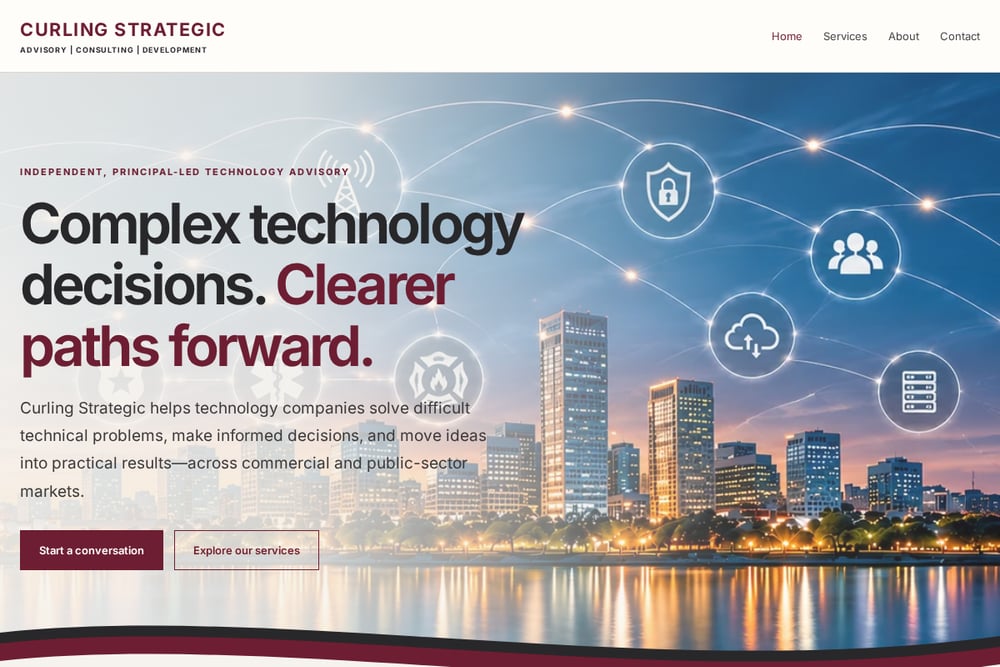 A screenshot of the Technology Advisory, Consulting & Development | Curling Strategic website.
Curling Strategic is an independent, principal-led advisory firm built around a simple idea: understand the environment before recommending the solution. The firm separates its work into three clear engagement types, ongoing advisory for leaders making complex decisions, focused consulting for assessments and architecture evaluation, and selective development tied to a defined scope. That structure is refreshing if you have been burned by open-ended consulting. The principal brings particular depth in telecommunications, mission-critical communications, public safety, and NG9-1-1, with a stated emphasis on reliability, interoperability, and mission outcomes. Because it is principal-led, you get senior attention rather than a rotating cast. It suits organizations that want a trusted voice in the room, not a large program team.
#3 Critical Insights Ltd
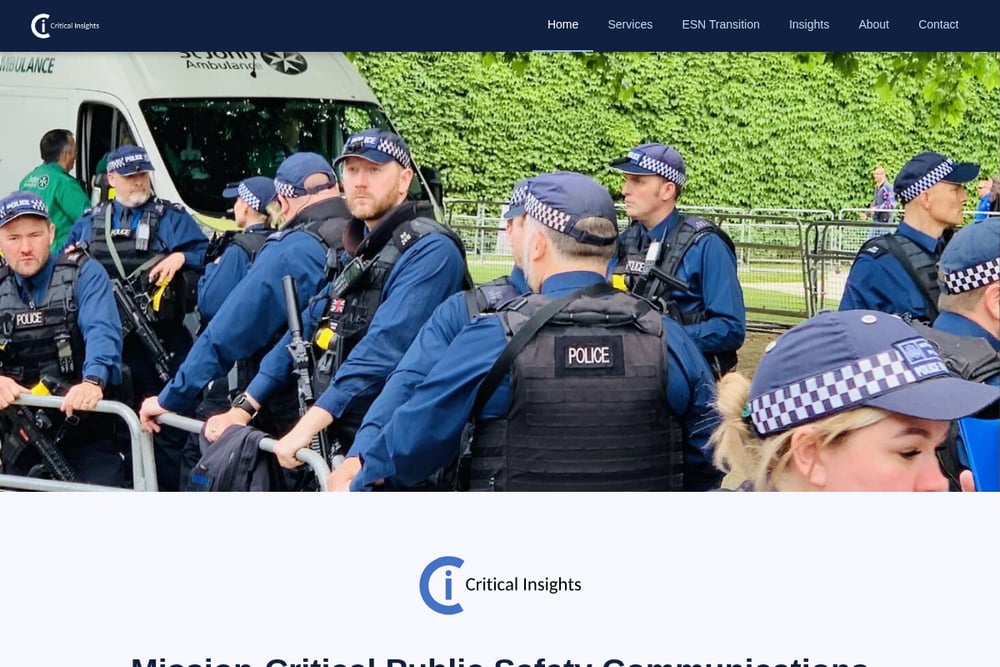 A screenshot of the Critical Insights Ltd website.
Critical Insights focuses tightly on the journey to next-generation broadband critical communications. Its service list reads like a map of the transition itself: TETRA and P25 to MCX migration, coverage and performance validation, bid and procurement support, and programme crisis recovery. The firm advertises more than twenty-five years of international experience, and its engagement model leans toward board and executive advisory where operational credibility is at stake. If your organization is mid-migration and supplier assurances are no longer enough, this is the kind of independent voice you want. The focus is narrow by design, so look elsewhere if you need broad IT or facilities consulting.
#4 IXP Corporation
 A screenshot of the IXP Corporation website.
IXP Corporation brings a practitioner's perspective to 911 consulting. Its services include independent ECC and PSAP operational assessments, regional consolidation feasibility, CAD and NG9-1-1 readiness evaluations, and RFP development with vendor evaluation support. The firm says its consultants work from first-party emergency communications experience rather than generic checklists, and engagements reference NENA and APCO frameworks. Deliverables are built for real governance: executive summaries, cost and staffing scenarios, and roadmaps you can take to a council or board. That makes IXP a strong fit when you need findings that survive public scrutiny.
#5 911 Authority LLC
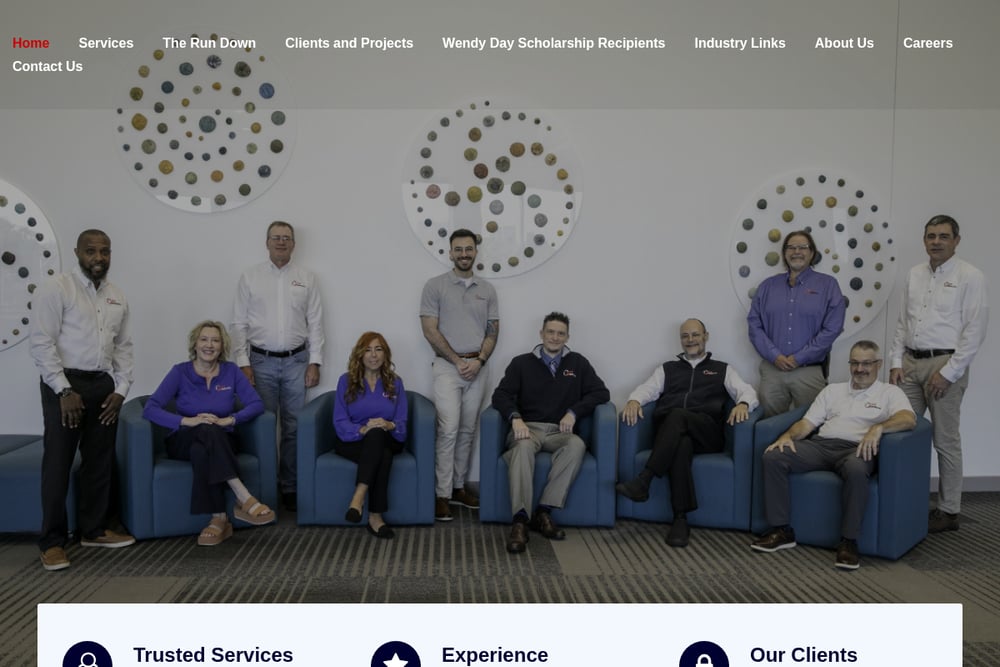 A screenshot of the 911 Authority LLC website.
911 Authority leans on project management discipline as its differentiator. The firm follows PMI methodology for projects and programs, which matters when a 911 initiative has many moving parts and public accountability. Its service mix includes policy support for statutes, regulations, and agency rules, plus feasibility studies that help you build the case with stakeholders and elected officials. The project portfolio shown on its site includes statewide NG9-1-1 procurement and implementation support and federal interoperable communications program work. If your challenge is governance and process as much as technology, this firm speaks that language.
How to Choose the Right Advisor
Start with the decision in front of you. If you need a single high-stakes call evaluated, a principal-led firm like Curling Strategic gives you senior judgement without a large team overhead. If you are running a multi-year modernization across CAD, GIS, radio, and cybersecurity, a broader firm like Mission Critical Partners may absorb more of the load.
Then look at where your risk actually sits. Migrating from TETRA to MCX is a specialized problem, and Critical Insights is built around it. Consolidating PSAPs or preparing an RFP calls for operational assessment experience, which is IXP's home turf. If your gap is governance, policy, and program management, 911 Authority's methodology-first approach fits.
Ask about the engagement model early. Who will you actually work with week to week? How are scope changes handled? What does a deliverable look like? Firms that answer these plainly tend to be easier to work with.
Finally, check sector fit. Mission-critical work rewards people who have sat in the environment. Ask for examples that resemble your operating constraints, not just your technology stack.
Where Automation Fits in the Advisory Workflow
Advisory work is still human work, but automation can sharpen it. A practical workflow looks like this: intake and stakeholder interviews feed a structured assessment; assessment outputs populate a requirements matrix; the matrix drives architecture options and tradeoff analysis; and the final package becomes a roadmap with cost and staffing scenarios.
You can automate the connective tissue. Use a shared repository for interview notes and findings so nothing lives in one person's inbox. Template your assessment frameworks so every engagement covers the same baseline. Generate draft requirement matrices from structured inputs, then have a senior reviewer validate them. Keep the judgement human and let the tooling handle the assembly.
The firms that do this well deliver faster without cutting corners. When you evaluate a partner, ask how they capture and reuse institutional knowledge. It is a good signal of how smoothly your engagement will run.
The Bottom Line
There is no single right advisor for every mission-critical technology decision. The five firms here represent different models: broad multidisciplinary coverage, principal-led independence, deep specialization in critical communications migration, practitioner-based 911 assessment, and methodology-driven program management.
Match the model to your problem. If you want a senior independent voice to help you see the path clearly, Curling Strategic is built for exactly that. If you need a large team across many systems, look at the bigger shops. If your risk is a specific transition or a governance gap, choose the specialist.
Do the homework on engagement style before you sign. The best advisor is the one whose working rhythm fits your organization, and whose questions make your team think more clearly about what comes next.