Finding a therapist who actually gets the intersections of your life can feel like searching for a needle in a haystack. These five Minneapolis practices stand out for meeting people where they are, bodies and all.
The Minneapolis Teletherapy Landscape
Minneapolis has quietly become one of the more interesting therapy markets in the country. The city's dense network of queer community organizations, its strong social-work pipeline, and a post-pandemic shift toward telehealth have produced a wave of practices that blend clinical rigor with liberation-minded values. You'll find solo practitioners and group collectives alike offering somatic work, parts work, gender-affirming care, and relational therapy for chosen family. The result is a market where you can be picky, and you should be. The practices below represent a range of models, from intimate one-therapist shops to multi-clinician collectives, so you can match your needs to the right structure.
How We Evaluated These Practices
We looked at the same factors across every practice. First, service scope: does the practice offer individual, relational, and group formats, or does it specialize narrowly? Second, approach depth: how clearly does the clinician articulate their modality, whether somatic, IFS, brainspotting, or something else? Third, community fit: does the practice name the populations it serves, and does that naming feel specific rather than performative? Fourth, access and logistics: telehealth availability, online payment, new-client status, and how easy it is to request an appointment. Fifth, pricing and consult clarity: whether a free consult is offered and how transparent the practice is about rates. Kinship Therapy Mpls stood out for its explicit anti-oppressive framing and relational scope. Conscious Alchemy stood out for its breadth of modalities and team depth. Authentic Roots Therapy stood out for its somatic specialization and clinician count. Transcend Psychotherapy stood out for its trans and queer focus plus its multiple locations. Cedar Hill Therapy stood out for its sexuality and alternative relationship expertise.
Here's a quick comparison of the five practices, ordered for readability. Each entry notes the format, the core approach, and who it tends to serve well.
| Provider | Best For |
|---|---|
| Conscious Alchemy | Clients who want therapy and psychiatry under one roof |
| Kinship Therapy Mpls - Emma Thompson | Queer, fat, and poly clients seeking somatic parts work |
| Authentic Roots Therapy | Somatic-focused clients who want a large clinician roster |
| Transcend Psychotherapy | Trans and gender-questioning clients needing affirming care |
| Cedar Hill Therapy | Clients exploring sexuality, kink, and alternative relationships |
The Five Practices in Detail
#1 Conscious Alchemy
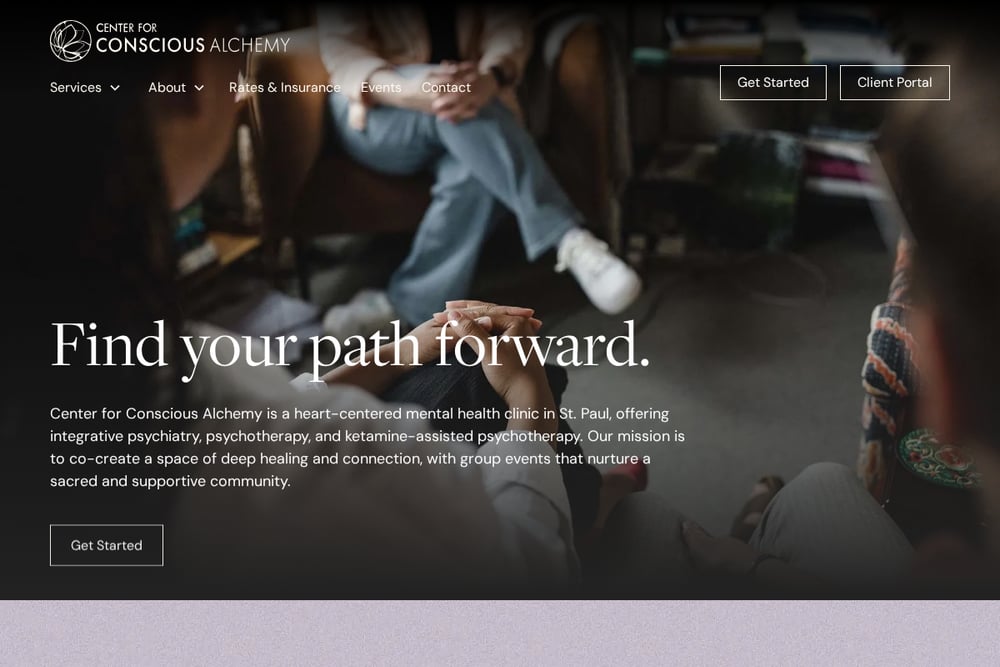 A screenshot of the Conscious Alchemy website.
Conscious Alchemy runs a full-service psychotherapy and psychiatry operation with a team of licensed clinicians, which means you can access talk therapy, medication management, and even ketamine-assisted work under one roof. Their therapy page emphasizes a compassionate, collaborative, trauma-informed stance, and they explicitly list IFS and parts work, mind-body somatic practices, and relational therapy among their methods. That combination makes them a strong fit if you want the option to add psychiatric support without switching practices. They also name LGBTQIA+ identity exploration and body image concerns as specialties, which signals real familiarity with the populations many Minneapolis clients are searching for. The tradeoff is that you're working with a group rather than a single clinician, so fit depends on the specific therapist you're matched with.
#2 Kinship Therapy Mpls - Emma Thompson
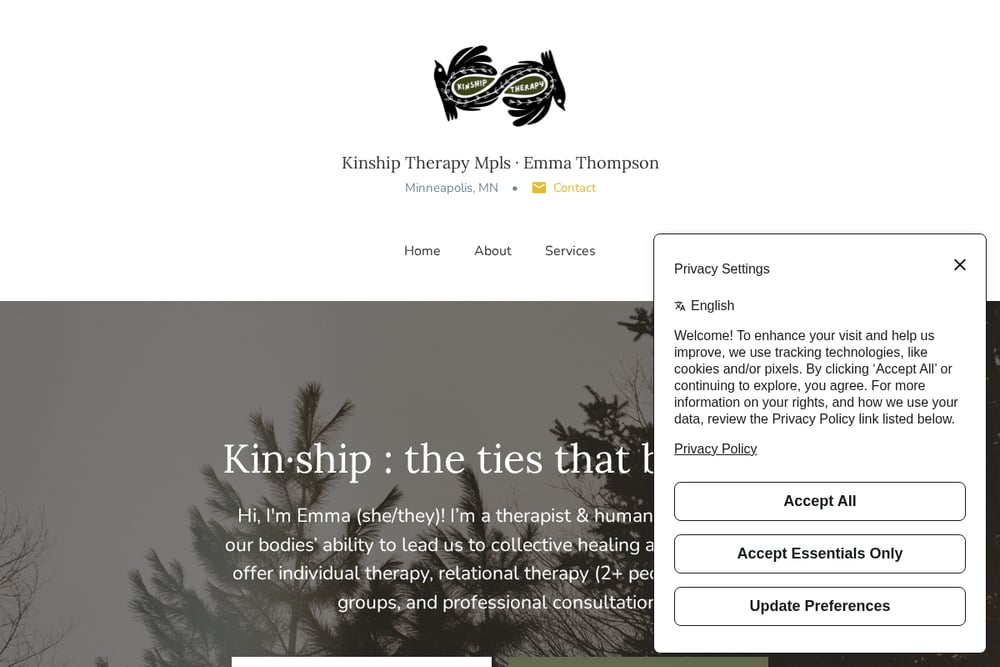 A screenshot of the Kinship Therapy Mpls - Emma Thompson website.
Kinship Therapy Mpls is the solo practice of Emma Thompson (she/they), a Minneapolis therapist whose work centers anti-oppressive, somatic, and intersectional approaches. Emma offers individual therapy, relational therapy for two or more people, support groups, and professional consultation, all via telehealth. The practice explicitly welcomes LGBTQIA+ and queer clients, fat clients, and people in poly and non-traditional relationship structures, and Emma's about page grounds that welcome in stated values like fat liberation, disability justice, and relationship anarchy. The clinical approach blends somatic parts work, IFS, brainspotting, and mindfulness-based methods, with a client-led and sex-positive frame. If you've struggled to find a therapist who treats your body as trustworthy rather than suspect, this is the practice built for that. A free consult is available to see whether the fit works.
#3 Authentic Roots Therapy
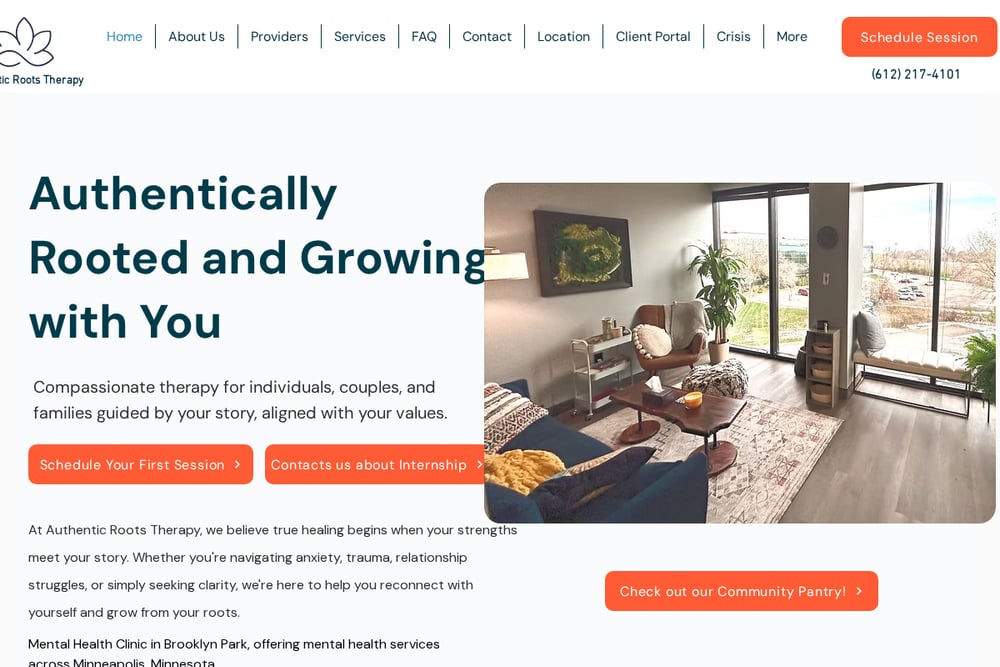 A screenshot of the Authentic Roots Therapy website.
Authentic Roots Therapy is a collective of licensed independent therapists based in Brooklyn Park and serving the Minneapolis and northwest metro area. Several of their clinicians hold specific training in somatic psychology, and their somatic therapy page does an unusually good job explaining why body-based work matters, framing trauma responses as nervous-system events rather than purely cognitive ones. They offer somatic therapy, group therapy, couples therapy, and trauma therapy, giving you multiple entry points depending on what you're carrying. The size of the roster means you have real choice in clinician fit, though it also means the experience varies by provider. If you want a somatic specialist and don't mind a short drive or a telehealth session, this is a solid option.
#4 Transcend Psychotherapy
Transcend Psychotherapy is a group practice with locations in Uptown and Loring Park plus a virtual-only option, and its stated focus is serving all people with particular attention to transgender and queer community members. Their gender care offering spans the full arc from questioning identity through transition support, including gender affirmation surgery letters and advocacy with medical providers. They also name trauma and complex PTSD, including trauma from systemic oppression, as a core specialty, alongside neurodivergence-affirming care. The practice includes providers who work with children, adolescents, and adults, plus various forms of relational therapy. If you want a practice that has clearly thought through the logistics of trans care in a clinical setting, this one shows its work.
#5 Cedar Hill Therapy
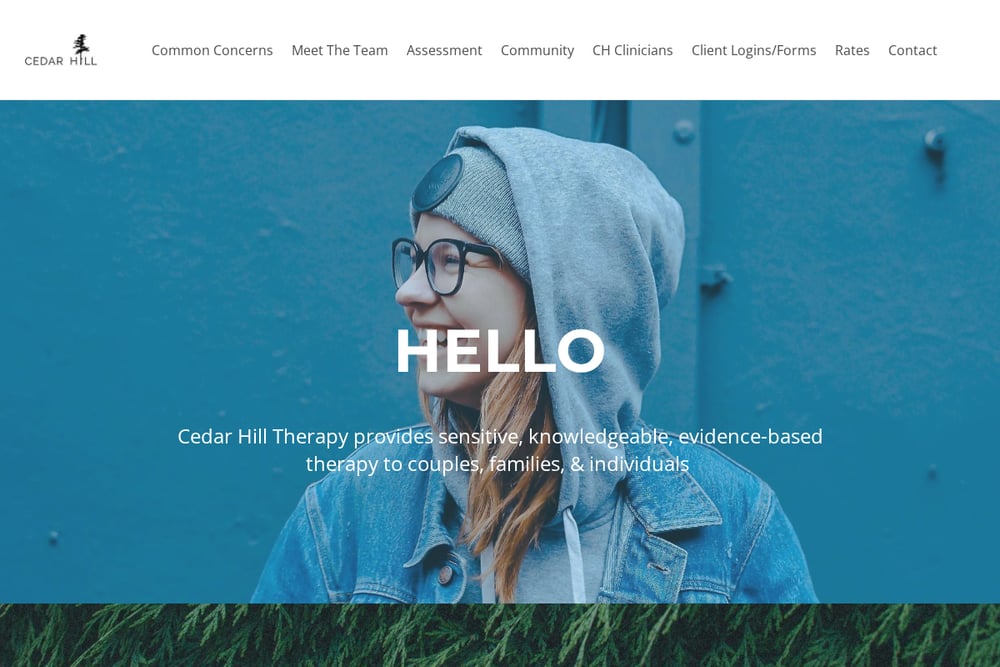 A screenshot of the Cedar Hill Therapy website.
Cedar Hill Therapy describes itself as providing sensitive, knowledgeable, evidence-based therapy to couples, families, and individuals, with a clear specialization in sexuality and intersectional identity. Their common concerns list reads like a roadmap for anyone navigating alternative relationship structures, covering non-traditional sexual expression, kink and BDSM, desire discrepancies, and new family or relationship configurations. They also address complex and developmental trauma, LGBTQIA and gender non-conforming concerns, and body image issues. The practice offers individual and relational therapy plus assessment and dietetics services, which is an unusual combination that could suit someone wanting integrated care around body and identity. If your therapy goals sit at the intersection of sex, identity, and relationships, their framing will likely resonate.
How to Choose the Right Fit
Start with format. If you want to work with one consistent clinician and value a single relational thread, a solo practice like Kinship Therapy Mpls may suit you better than a group. If you want options, a collective gives you more chances to find a match. Next, check the modality. Somatic work, IFS, brainspotting, and EMDR are not interchangeable, and the practice should name what they actually use. Then look at who they say they serve. Specificity matters. A practice that names fat liberation, relationship anarchy, or gender-affirming surgery letters is telling you something concrete about its competence. Finally, test the logistics. Telehealth availability, online payment, new-client status, and whether a free consult is offered all affect whether you'll actually start. Book the consult. You're interviewing them as much as they're assessing you.
Where Automation Fits Into Your Search
You can streamline the therapist hunt without outsourcing the judgment call. Set up a simple tracking sheet with columns for practice name, modality, format, telehealth, new-client status, and consult booked. Use a browser bookmark folder or a read-later tool to save each practice's services page so you're not re-searching. If a practice offers a client portal, create the account early so scheduling and paperwork don't become a bottleneck once you decide. Set a calendar reminder to follow up on consult requests after three business days. And if you're comparing multiple practices, a shared note with your top three questions keeps every consult consistent. The automation handles the admin; you handle the fit.
The Bottom Line
Minneapolis gives you real choice, and that's a good problem to have. The five practices here cover a meaningful range: Conscious Alchemy for integrated therapy and psychiatry, Kinship Therapy Mpls for anti-oppressive somatic and relational work with a solo clinician, Authentic Roots Therapy for somatic specialization at scale, Transcend Psychotherapy for trans-affirming care with multiple locations, and Cedar Hill Therapy for sexuality and alternative relationship expertise. Your job is to match the practice's stated values and modalities to what you actually need, then book a consult and see how it feels. The right therapist is the one who makes it easier to take up space.