Your world lives or dies on tick rate, and tick rate lives on single-core speed. Here are five New York hosts that actually understand that.
What New York Minecraft hosting looks like right now
Minecraft hosting has quietly split into two camps. On one side you have big multi-game platforms that rent cloud instances and pack as many customers onto each machine as the RAM allows. On the other, a smaller wave of operators running dedicated bare-metal boxes with fast Ryzen chips and selling only as much as the hardware can honestly carry. New York matters because it sits on the East Coast backbone, so a well-peered datacenter there gives low ping from Virginia to Montreal. The hardware conversation has also narrowed: Minecraft's main game loop runs on one thread, so a 5.7 GHz core beats a pile of slow ones every time.
How we looked at each provider
We weighed four things. Hardware honesty, meaning whether the listed CPU and RAM are dedicated or shared and oversold. Panel quality, including modpack installs, backups, and player controls. Pricing clarity, so you can see what each tier actually gets you without a calculator. And local fit, which covers datacenter location, peering, and whether support comes from a person who knows the machine. No provider got points for marketing language.
Here is the short version before the detail. Each entry below covers who the host is built for, what the hardware looks like, and where it falls short.
| Provider | Best For |
|---|---|
| QONZER | Players who want a large, established platform with global reach |
| chimaekhost: Minecraft hosting in New York | Modpack groups who want dedicated hardware and a real human on support |
| Prism Nodes | Groups who want flexible per-GB pricing and a modern panel |
| GameSphere Hosting | Communities that want enterprise-grade infrastructure and peering |
| MintServers | Groups who hop between multiple games on one plan |
The five providers, in order
#1 QONZER
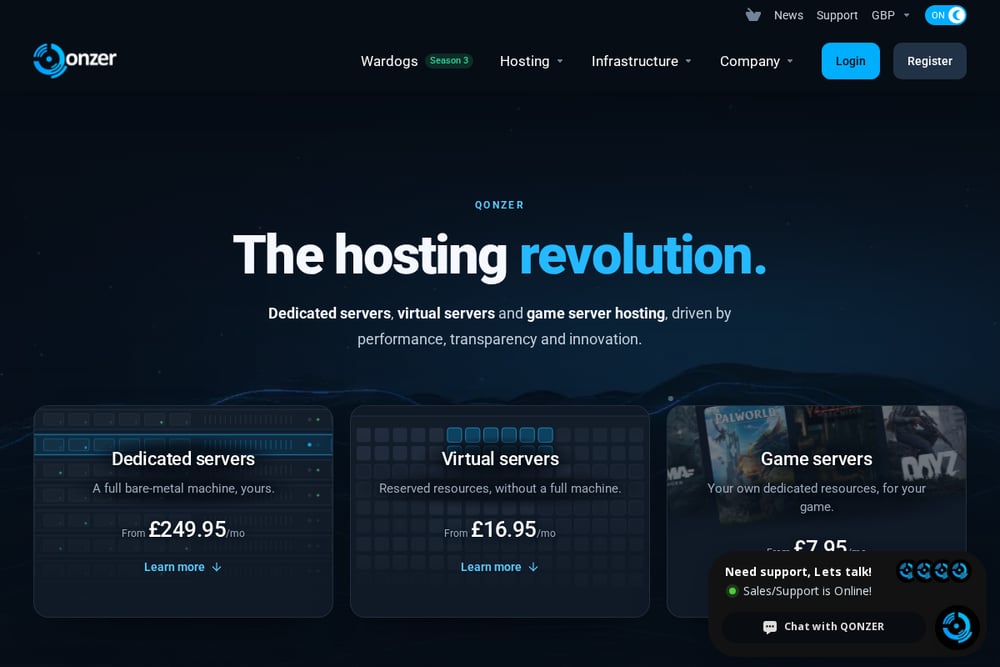 A screenshot of the QONZER website.
QONZER runs Minecraft servers out of Equinix NY7 at JFK on AMD Ryzen 9 7950X and 9950X hardware, and it publishes a latency tester so you can check your ping before you pay. Its qGuard DDoS protection and in-house qPanel give you a familiar, polished control surface. Pricing starts around £12.95 per month with roughly a ten-minute deploy, and the same account can spin up bare-metal or virtual servers if you outgrow a game plan. The tradeoff is scale: you are one customer among many on a large multi-game platform, so support is a ticket queue rather than a named operator. If you want a big, established host with a global network, this is the safe pick.
#2 chimaekhost: Minecraft hosting in New York
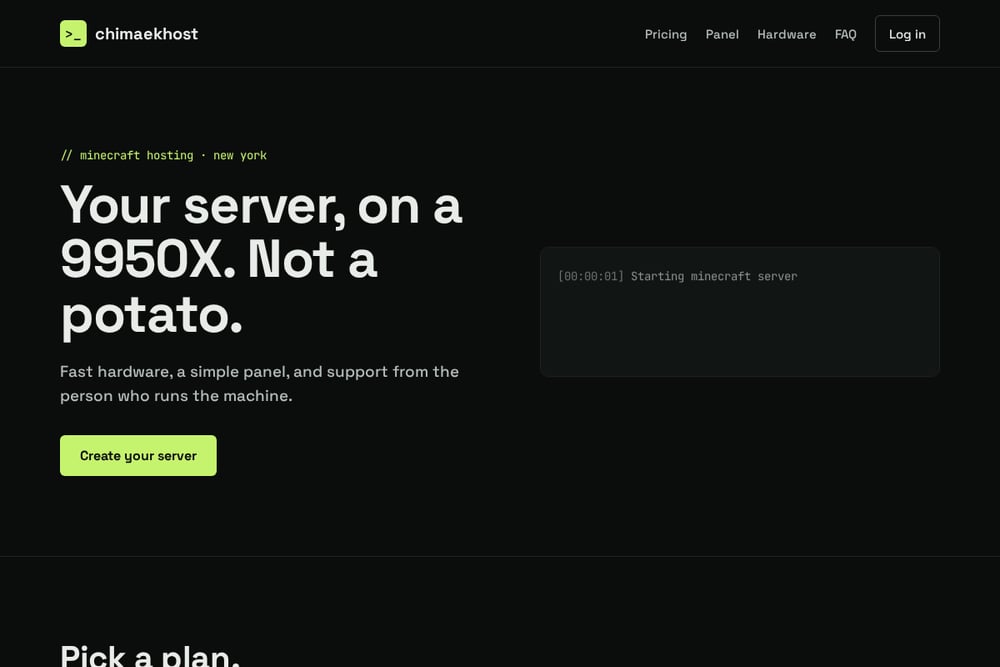 A screenshot of the chimaekhost: Minecraft hosting in New York website.
chimaekhost is the specialist in this list, and it shows. Every server sits on one dedicated New York machine with an AMD Ryzen 9 9950X, 192 GB of DDR5, and NVMe Gen 4 storage, and the operator explicitly does not oversell it. Plans run from a $10 Lite tier with 4 GB up to a $42 Heavy tier with 16 GB, and every plan can be split into up to four separate servers. The panel is built for Minecraft specifically: one-click modpacks, a live color-coded console, player OP and inventory tools, scheduled backups, and full file access over SFTP. Support comes from the person who runs the hardware, which is a rare thing at this price. If you run Fabric or a heavy modpack for a small group, this is the one to beat.
#3 Prism Nodes
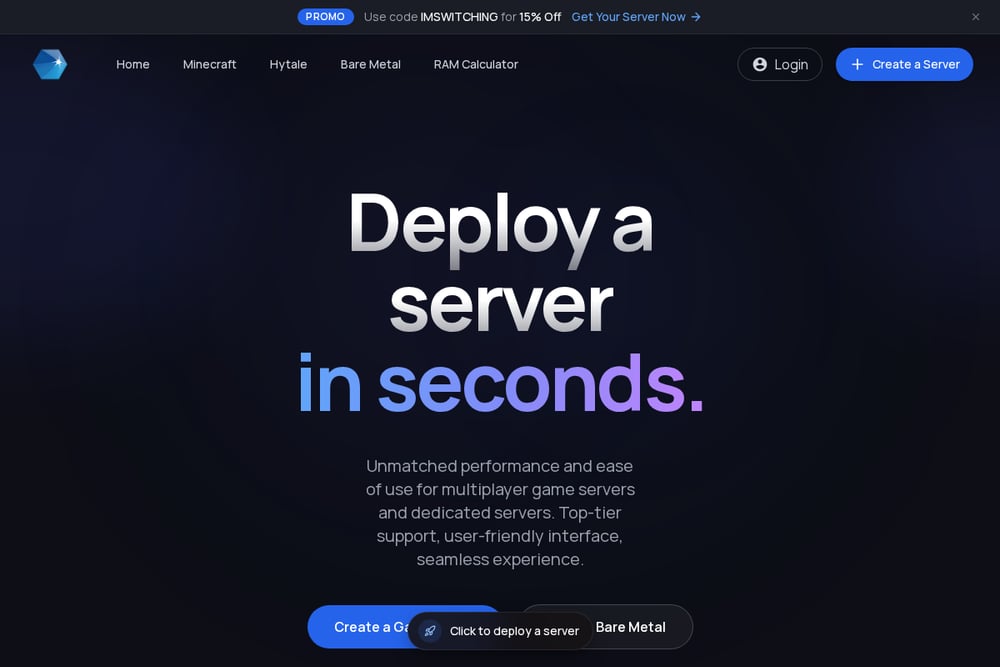 A screenshot of the Prism Nodes website.
Prism Nodes was built by former server owners, and that background shows in the feature list: server splitting, one-click installers, and subdomain setups are all standard. You choose between a performance tier on Ryzen 9 9950X at $2.50 per GB of RAM and a basic tier on Ryzen 9 7900 at $1.50 per GB, with New York among its US Northeast locations. It advertises 99.99% uptime and terabit-scale DDoS protection through GlobalSecureLayer. The per-gigabyte pricing makes it easy to scale a plan up or down as your player count shifts. It is a strong middle ground between a faceless cloud host and a one-person shop.
#4 GameSphere Hosting
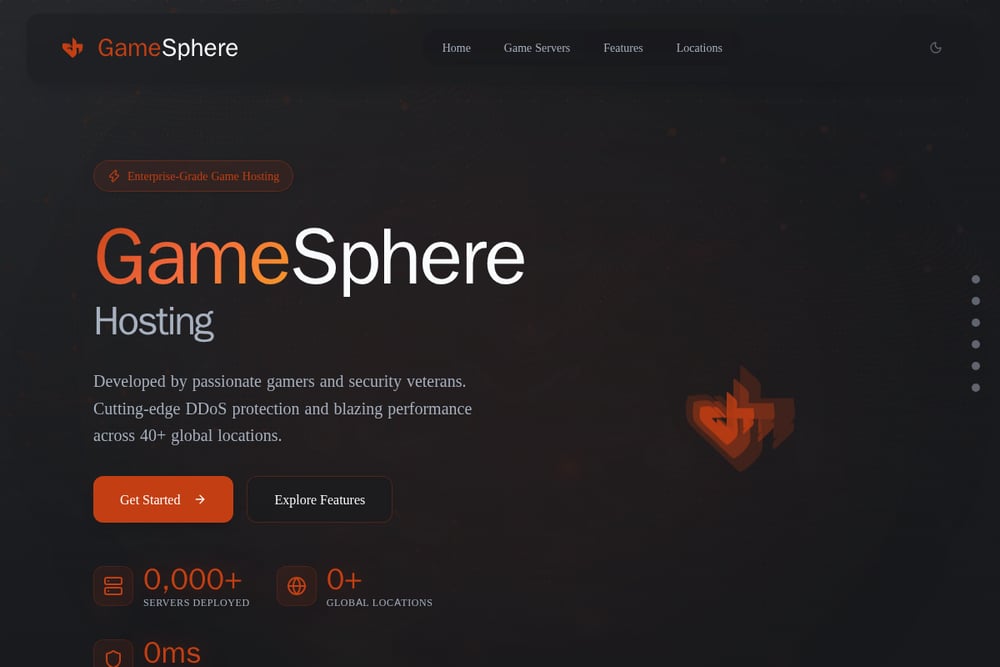 A screenshot of the GameSphere Hosting website.
GameSphere goes hard on infrastructure credentials. Its New York servers run on bare-metal Ryzen 9 9950X3D chips inside Equinix NY4 at 60 Hudson Street, with 128 MB of 3D V-Cache, DDR5 6000 MHz ECC memory, and NVMe in RAID 1. It peers directly at NYIIX and DE-CIX New York and advertises 17+ Tbps of inline DDoS scrubbing at the local edge, plus a long list of compliance certifications. Pricing is slot-based from €0.40 per slot, which suits communities that think in player counts rather than gigabytes. The 3D V-Cache is genuinely useful for modded Minecraft, where large working sets benefit from the extra cache. It is the most enterprise-flavored option here.
#5 MintServers
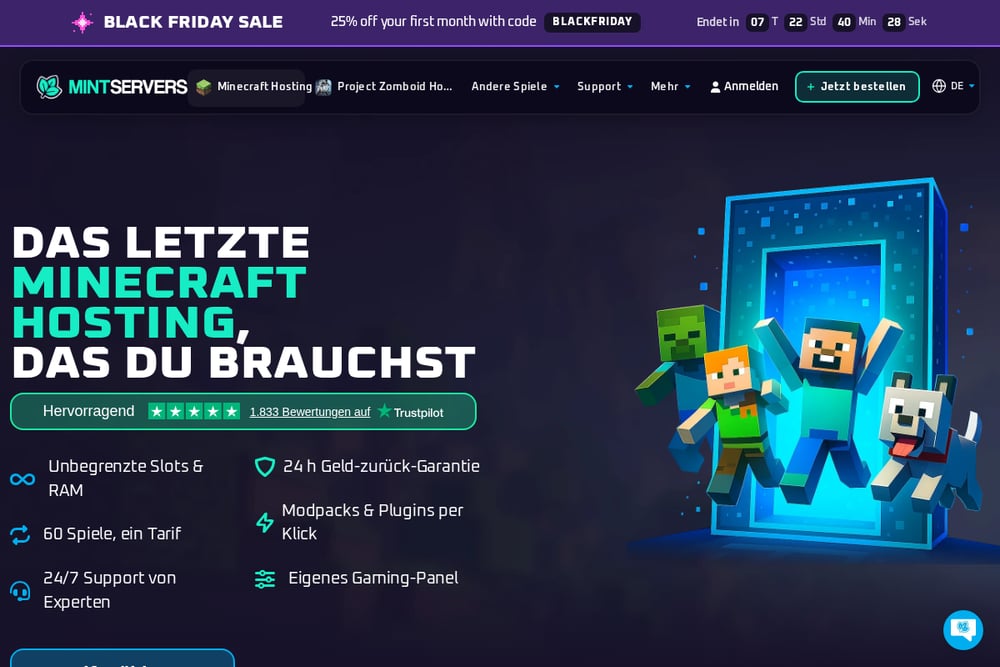 A screenshot of the MintServers website.
MintServers takes a different angle: one server that can swap between 60 games at no extra cost, Minecraft included. Its MintPanel is built in-house and aimed at beginners, with a knowledgebase, setup guides, and Minecraft-specific tools for status, ping, MOTD, and crash fixes. New York is one of its hosting locations, and it carries a 4.9 Trustpilot rating with live status pages for each node. If your group drifts between Minecraft, Valheim, and Palworld, the flexibility is hard to argue with. The catch is that game-swapping breadth usually means less specialization in any single title.
How to pick the right host for your world
Start with your modpack. Vanilla and Paper will run happily on 4 to 6 GB, but a big Fabric or Forge pack with dozens of mods wants 10 GB or more, and that pushes you toward the higher tiers. Next, ask whether the RAM is dedicated or shared. A host that sells more memory than the machine physically has is overselling, and you will feel it at peak hours. Then check the panel: can you install a modpack in one click, restore a backup without a ticket, and see who is online right now? Finally, test your ping to New York before you commit. A fast CPU in a datacenter you route badly to is still a laggy server.
A simple workflow for a smoother server
Set scheduled backups to run daily and keep at least one off-machine copy. Use the panel's one-click modpack installer instead of uploading jars by hand, so version mismatches do not break your launch. If your plan supports server splitting, put your creative world and your survival world on separate instances so a heavy redstone build does not drag down the other. Whitelist the server and hand out OP sparingly. Then watch the live console for the first week, because tick warnings and chunk-load spikes show up there long before players complain.
The bottom line
New York has no shortage of Minecraft hosts, but they are not the same product. QONZER gives you scale and a global network. chimaekhost gives you one fast machine, honest resource limits, and the operator on the other end of support. Prism Nodes and GameSphere compete on hardware specs and peering, while MintServers wins on flexibility across games. Match the host to how you actually play, and your server will stay smooth long after the novelty wears off.