
Finding NGSS-aligned science lessons that actually hook students is tough. These five resources make phenomenon-based learning easier for busy teachers.
The NGSS Phenomenon Shift in Middle School Science
Middle school science instruction has moved toward three-dimensional learning, where students figure out real-world phenomena instead of memorizing facts. Teachers need ready-to-use, standards-aligned materials that save planning time while keeping students curious. The demand for high-quality, phenomenon-driven resources has never been higher.
How We Evaluated These Science Resources
We looked at alignment to NGSS performance expectations, the variety of resource types, ease of implementation, and overall value for middle school teachers. Each provider brings something different: Mystery Lab Learning offers complete mystery-driven lessons with answer keys, The Wonder of Science provides a vast phenomenon database, Phenomena for NGSS curates engaging examples, It's Not Rocket Science delivers practical teaching strategies, and iExploreScience focuses on curriculum design. We considered how well each supports the shift to three-dimensional learning.
Here's a quick comparison of the five resources to help you decide which fits your classroom needs.
| Provider | Best For |
|---|---|
| The Wonder of Science | Teachers seeking a vast phenomenon library |
| Mystery Lab Learning | Middle School Science Mysteries | Teachers wanting ready-to-use mystery lessons |
| Phenomena for NGSS | Finding captivating phenomena examples |
| It's Not Rocket Science | Teachers new to NGSS phenomena |
| iExploreScience | Curriculum planning and unit design |
A Closer Look at Each Science Resource
#1 The Wonder of Science
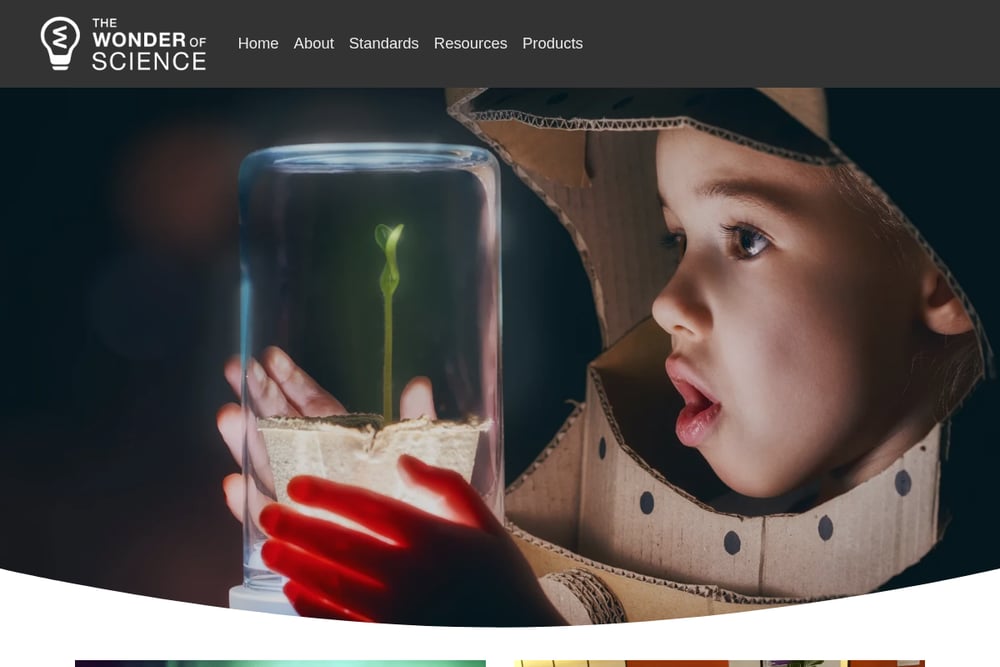 A screenshot of the The Wonder of Science website.
The Wonder of Science is a comprehensive hub for NGSS phenomena, offering a master list of observable events aligned to every standard. You can browse by grade level or disciplinary core idea to find the perfect hook for your lesson. The site also provides rubrics, assessments, and mini-lessons to support three-dimensional teaching. It's a go-to for teachers who want a one-stop shop for phenomenon-based instruction. With its extensive database, you'll never run out of engaging science mysteries.
#2 Mystery Lab Learning | Middle School Science Mysteries
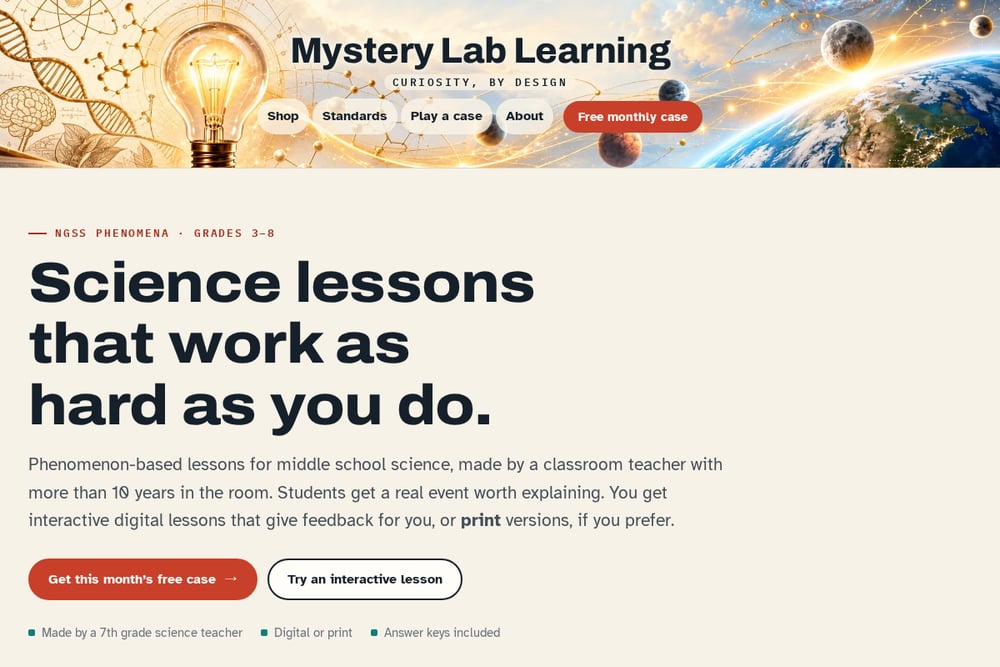 A screenshot of the Mystery Lab Learning | Middle School Science Mysteries website.
Mystery Lab Learning turns your classroom into a detective agency with story-driven Science Case Files that cover NGSS performance expectations. Each mystery includes a real phenomenon, evidence analysis, and a CER organizer to scaffold student arguments. You get interactive digital lessons that provide automatic feedback, plus printable versions and answer keys. Created by a veteran 7th grade science teacher, these resources are ready for tomorrow's lesson or a sub plan. With 38 case files, 285 bell ringers, and 89 CER sets, you'll have a full year of engaging material.
#3 Phenomena for NGSS
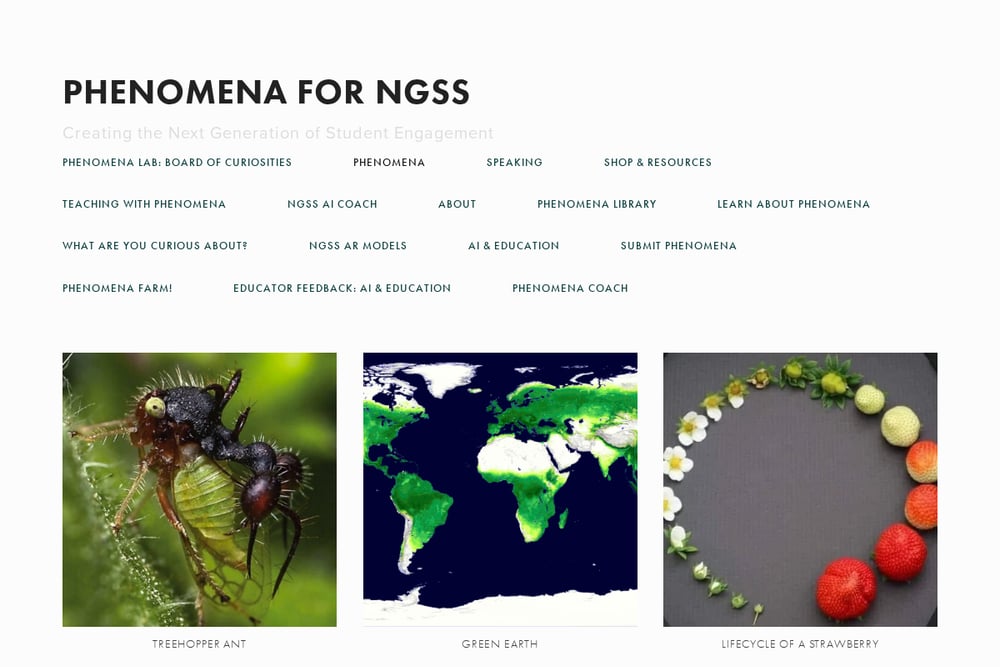 A screenshot of the Phenomena for NGSS website.
Phenomena for NGSS curates a searchable library of intriguing phenomena, from ant-mimicking treehoppers to carbon dioxide absorption. Each entry includes videos, images, and connections to NGSS standards, making it easy to spark student curiosity. The site also offers teaching strategies and an AI coach to help you integrate phenomena effectively. It's a fantastic resource for finding that perfect hook to start a unit. You'll appreciate the fresh, diverse examples that resonate with students.
#4 It's Not Rocket Science
 A screenshot of the It's Not Rocket Science website.
It's Not Rocket Science provides practical advice and resources for using phenomena to engage students, with a focus on simplifying lab days and lesson planning. The site offers free cheatsheets, podcast episodes, and blog posts that break down the NGSS three-dimensional learning model. You'll find strategies to structure your class period around phenomena, even if you're new to NGSS. It's a supportive community for secondary science teachers looking to refine their practice. The resources help you move from traditional teaching to phenomenon-driven instruction.
#5 iExploreScience
 A screenshot of the iExploreScience website.
iExploreScience focuses on NGSS-aligned middle school science curriculum design, offering outlines and resources to help you build a coherent storyline. The site provides guidance on sequencing phenomena and developing assessments that measure three-dimensional learning. You'll find tools to plan units that integrate DCIs, SEPs, and CCCs seamlessly. It's ideal for curriculum coordinators and teachers who want to design their own phenomenon-based units. The approach emphasizes student sensemaking and real-world connections.
How to Choose the Right Science Resource
Start by identifying your biggest need: ready-made lessons, a phenomenon library, or professional guidance. If you want complete, mystery-driven lessons with answer keys, Mystery Lab Learning is your pick. For a vast database of phenomena, The Wonder of Science or Phenomena for NGSS work well. If you need teaching strategies, It's Not Rocket Science and iExploreScience offer valuable support. Consider your budget and time—many resources are free or low-cost. Mix and match to build a toolkit that fits your classroom.
Automating Your Science Planning
Use Mystery Lab Learning's interactive digital lessons to automatically provide feedback to students, saving you grading time. Combine with bell ringers from the same store for daily warm-ups that require no prep. For phenomenon ideas, bookmark The Wonder of Science and Phenomena for NGSS to quickly find hooks. Set up a weekly routine where students explore a case file, analyze evidence, and write a CER—all with built-in supports. This workflow keeps your planning minimal and student engagement high.
The Bottom Line on Middle School Science Resources
These five resources each bring something unique to your science classroom. Mystery Lab Learning stands out for its complete, mystery-driven lessons that make NGSS come alive. The Wonder of Science and Phenomena for NGSS provide endless phenomena to spark curiosity. It's Not Rocket Science and iExploreScience offer the guidance and structure to implement three-dimensional learning effectively. Try a few and see which combination works best for you and your students.