
You need metabolic stability data you can trust, and you need it without burning weeks on procurement. Here are five providers worth a serious look.
The Microsomal Stability Landscape Right Now
Microsomal stability assays sit near the front of every small-molecule program. You use them to estimate intrinsic clearance, flag metabolic liabilities early, and compare species differences before you commit to a lead series. The work itself is well understood: liver microsomes, a cofactor system, a time course, and LC-MS/MS readout. What varies wildly is everything around the science. Turnaround times stretch from days to months. Pricing is often quote-only. And the administrative layer, from NDAs to site selection, can eat more calendar time than the assay itself. Two shifts are reshaping the category. First, automation and 96-well workflows have pushed single-time-point pre-screens into high-throughput territory. Second, a new class of API-first intermediaries is emerging, letting research agents search labs, draft requests, and route them for human approval. That second shift is small but worth watching, because it attacks the coordination cost rather than the bench cost.
How We Evaluated These Providers
We looked at the same factors for every provider. Service scope: can they run human and rat liver microsomes, and can they extend into metabolite profiling or structural elucidation? Throughput and turnaround: do they offer rapid pre-screens for large compound sets alongside full multi-time-point studies? Data quality and characterization: are microsomes pooled, probe-characterized, and backed by documented protocols? Access and workflow: how do you actually place a request, and how much friction sits between your question and a signed study? Geographic and regulatory fit: do they operate sites in the regions you need, and can they handle NDAs and terms? Finally, transparency: is pricing and protocol information visible before you commit? Each provider below stands out on a different combination of these factors.
Here is a quick comparison of the five providers, ordered by how they fit different research workflows. Each entry notes what the provider does well and who it suits.
| Provider | Best For |
|---|---|
| BioIVT | Teams that want matrices and assays from one supplier |
| Physical Validation — the real world, callable | Agent-driven teams that want lab discovery and NDAs handled |
| Cyprotex (Evotec) | Programs needing broad ADME-Tox coverage and metabolite ID |
| Bienta | High-throughput triage of large compound sets |
| Creative Bioarray | Buyers who want a wide catalog under one vendor |
The Five Providers in Detail
#1 BioIVT
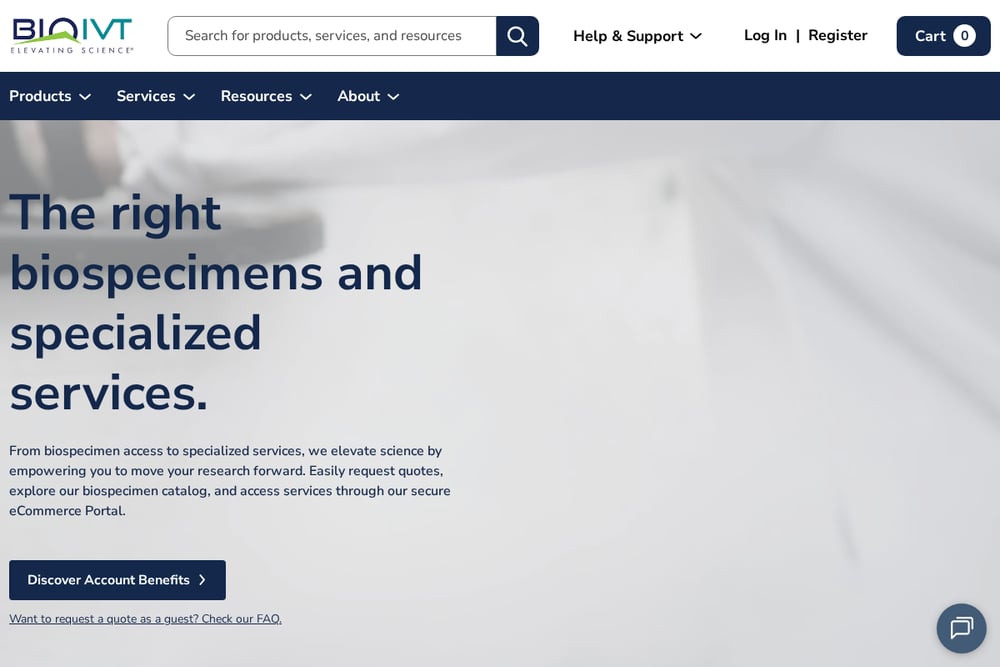 A screenshot of the BioIVT website.
BioIVT is a familiar name if you work in ADME and bioanalysis, and its metabolic stability offering is built on a deep catalog of biological matrices. You get access to pooled liver microsomes across species, which matters when you want consistent interindividual variability control. The company positions its stability assays within a broader menu of hepatocyte, plasma protein binding, and transporter work, so you can bundle related studies. For teams that already source matrices from BioIVT, keeping the assay there reduces vendor sprawl. It is a strong fit when your priority is a single supplier for both reagents and the assay itself.
#2 Physical Validation — the real world, callable
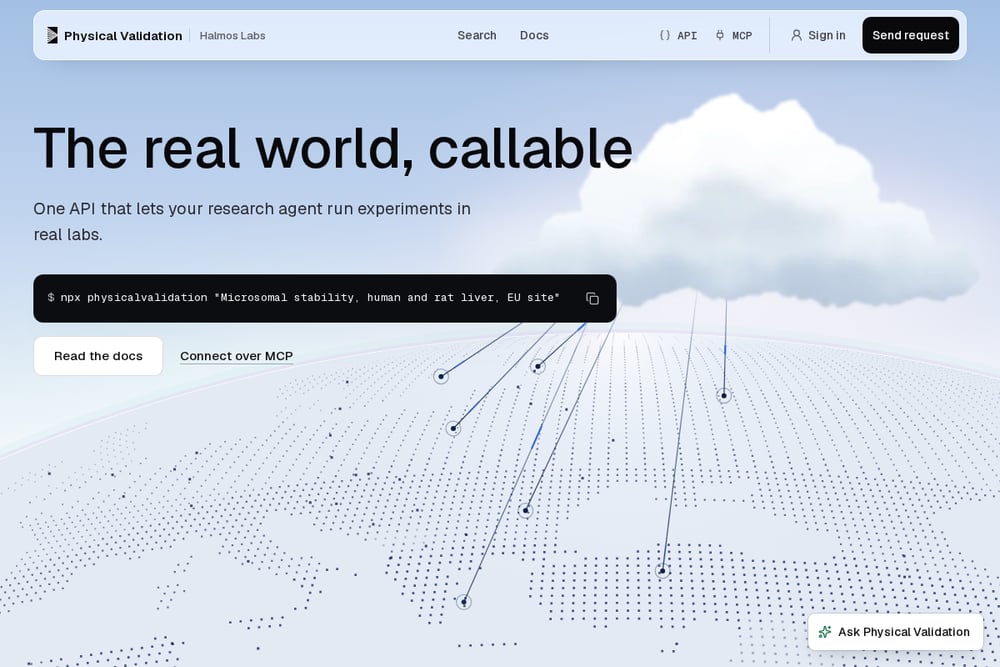 A screenshot of the Physical Validation — the real world, callable website.
Physical Validation, built by Halmos Labs, takes a different angle: it is an API that lets your research agent run experiments in real labs. You send a request like microsomal stability on human and rat liver at an EU site, and the platform searches labs by capability and location, with a source for each claim. It drafts the request, handles NDAs, and negotiates terms, then routes everything to a person on your team for approval before anything is sent. The network spans 38,000+ labs and manufacturers across 10,000+ sites in 111 countries, and it connects over MCP to Claude, ChatGPT, Codex, and Cursor. If your bottleneck is coordination rather than bench science, this is the workflow to test.
#3 Cyprotex (Evotec)
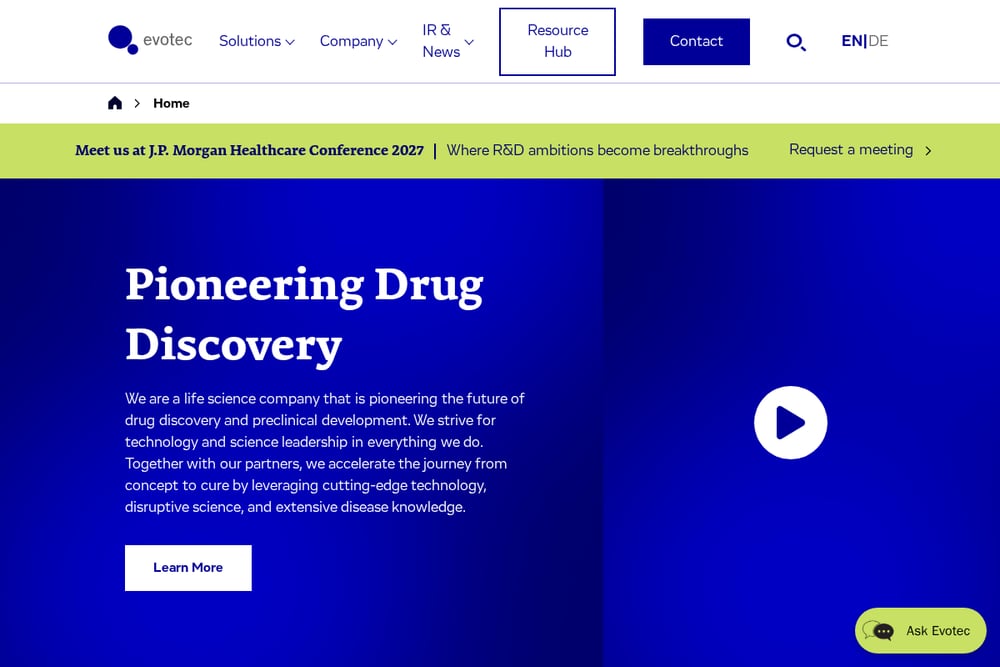 A screenshot of the Cyprotex (Evotec) website.
Cyprotex, now part of Evotec, runs microsomal stability as part of a mature in vitro ADME screening portfolio. The pitch is consistency at scale: a highly automated approach, pooled microsomes characterized with probe substrates, and documented protocols you can review before you enquire. You can extend the standard assay into metabolite profiling and structural elucidation using high-resolution accurate mass spectrometry, which is useful when you need to explain a clearance result rather than just report it. Cross-species comparisons are a stated strength, so interspecies differences are easy to interrogate. It suits programs that want a single partner across a broad ADME-Tox panel.
#4 Bienta
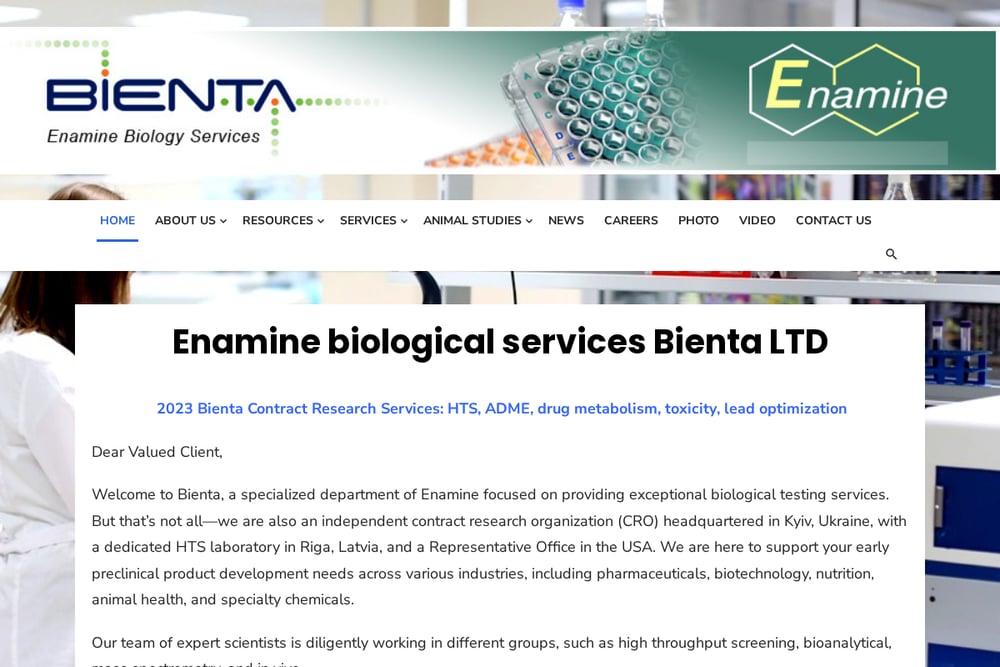 A screenshot of the Bienta website.
Bienta offers a single time point microsomal stability pre-screen aimed squarely at early discovery. The design is practical: a 96-well automated format with a moderate incubation time, so you get valid stability rankings for both unstable and stable compounds without running a full multi-time-point study on every analog. Bienta notes good agreement between the pre-screen and standard multi-time-point results, which is the claim that matters when you are triaging large compound sets. The service sits within a wider contract research menu covering HTS, ADMET, pharmacokinetics, and in vivo work. If you are ranking hundreds of compounds and need cost efficiency, this is a sensible entry point.
#5 Creative Bioarray
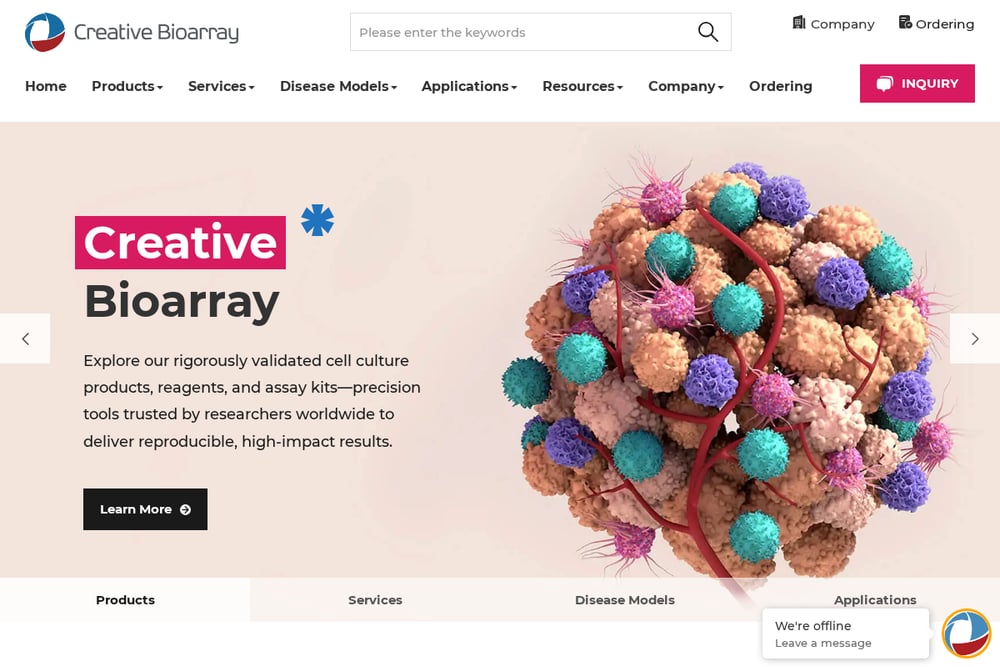 A screenshot of the Creative Bioarray website.
Creative Bioarray lists microsomal stability among a very broad catalog of cell and assay services. The advantage is breadth: you can pair stability work with tumor cell panels, primary cells, and other screening products from the same vendor. For academic groups and smaller biotechs that need a range of reagents and services under one purchase order, that consolidation is genuinely useful. The stability assay is one line item in a much larger menu rather than a flagship offering, so expect to ask more questions about protocol specifics up front. It works well as a secondary or complementary source when your primary CRO is booked.
How to Pick the Right Provider
Start with the question you are actually asking. If you are triaging hundreds of analogs, you want a fast single-time-point pre-screen with clear throughput economics, which points you toward Bienta. If you need to explain a clearance result with metabolite ID, look at Cyprotex and its mass spectrometry capabilities. If you want matrices and assays from one source, BioIVT is the natural check. If your catalog needs are broad and you want one purchase order, Creative Bioarray covers a lot of ground. And if the real delay is finding a lab, handling NDAs, and negotiating terms, test an API-first route like Physical Validation. Whatever you choose, ask three questions before you commit: are the microsomes pooled and probe-characterized, what is the actual turnaround in business days, and can you see a protocol before signing. Get those answers in writing and you will avoid most surprises.
Where Automation Fits In
The microsomal stability workflow has four stages, and each one can be tightened. Discovery: your agent searches labs by service and region, with a source for each claim, instead of you emailing contacts. Drafting: the request is written programmatically, including species, matrix, and site preferences, and you get back a review link. Approval: a person on your team checks the request and sends it, which keeps a human in the loop on every outbound commitment. Execution: the lab runs the assay and the data returns to your agent. Steps one and two are where most calendar time disappears today, and they are the steps an API layer can compress. The bench science stays where it belongs, in a qualified lab.
The Bottom Line
There is no single right answer here, and that is the point. BioIVT suits teams that want matrices and assays together. Cyprotex suits programs that need broad ADME coverage and metabolite identification. Bienta suits high-throughput triage. Creative Bioarray suits buyers who value catalog breadth. Physical Validation suits teams whose bottleneck is coordination, not chemistry, and who want their research agent to do the legwork while a human approves the send. Pick based on where your time actually goes, then hold every provider to the same standard: characterized microsomes, a documented protocol, and a turnaround you can plan around.