
Moving a Microsoft estate between tenants is where good intentions go to die. These five partners know how to get your mailboxes, sites, and identities across without breaking your business.
The State of Microsoft 365 Migration Services
Microsoft 365 tenant-to-tenant migrations have quietly become one of the most in-demand IT projects in the US. Acquisitions, divestitures, and reorgs keep pushing enterprises to consolidate tenants, and the workloads involved are anything but simple. Identity moves first, content second, endpoints last. Microsoft's own Migration Orchestrator handles mailboxes, OneDrive, and Teams chats, but it leaves SharePoint sites, Teams channels, Intune, and Power Platform to you. That gap is why so many organizations bring in a partner. The market splits into three camps: deep Microsoft specialists who live inside the ecosystem, regional managed service providers who bundle migration into ongoing IT support, and hybrid firms that blend both. Your choice depends on how complex your estate is and how much you want to hand off after cutover.
How We Evaluated These Partners
We looked at the same factors for every firm on this list. First, service scope: does the partner cover the full migration lifecycle, from discovery and identity through coexistence, cutover, and post-migration managed services? Second, Microsoft depth: certifications, partner status, and how long they have worked inside the ecosystem. Third, workload coverage: whether they handle the hard parts like SharePoint, Teams channels, Power Platform, and Intune, not just mailboxes. Fourth, proof: published case studies, named client outcomes, and documented methodology. Fifth, fit: whether the firm serves enterprises, mid-market, or regional SMBs, and how clearly they communicate their approach. Each partner below stood out on different factors, and the right one for you depends on where your estate is most complicated.
Here is a quick look at how these five partners compare on focus, coverage, and the type of organization they serve best.
| Provider | Best For |
|---|---|
| Netwoven | Complex M&A and reorg migrations across the full Microsoft estate |
| IT Services, Cloud Migration & AI Solutions | Krish Services Group | Enterprises wanting migration plus ongoing managed cloud and AI services |
| EPC Group | Large-scale M&A migrations needing documented methodology and runbooks |
| Stability Networks | Regional SMBs wanting migration bundled with managed IT support |
| OrlanTech | Mid-market firms wanting migration inside a broader IT and AI roadmap |
The Five Partners in Detail
#1 Netwoven
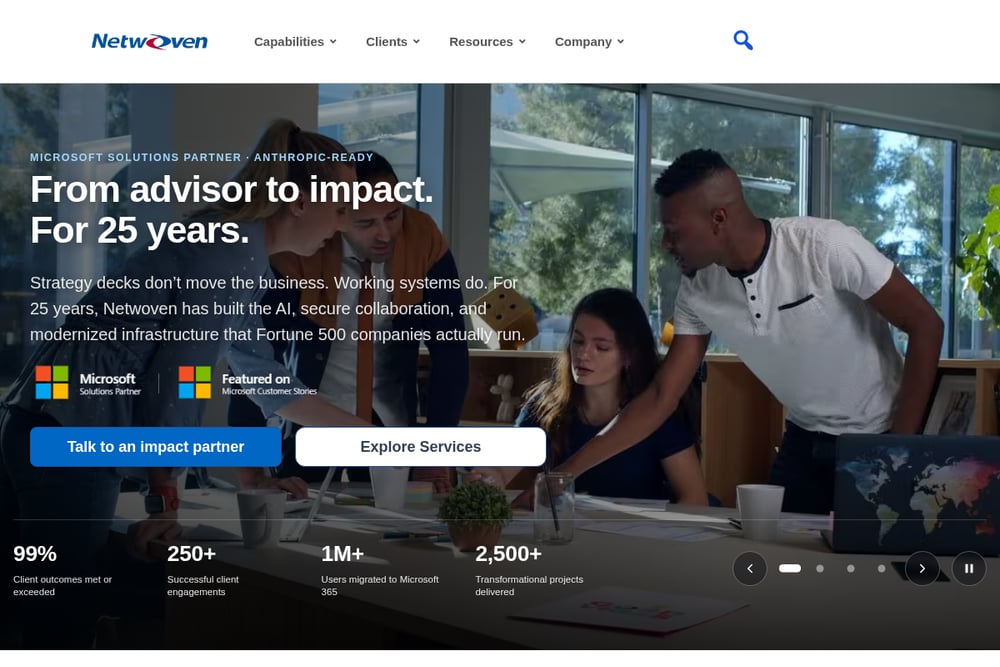 A screenshot of the Netwoven website.
Netwoven has spent 25 years in the Microsoft ecosystem and more than 16 years running Microsoft 365 migrations, which shows in how they structure an engagement. Their tenant-to-tenant practice is built around one accountable partner covering discovery, engineering, transition, and validated acceptance across Exchange, Entra ID, SharePoint, Teams, Power Platform, Azure, and Fabric. They are Gartner-recognized and lean heavily into M&A and reorganization scenarios where coexistence and cutover sequencing decide whether the project succeeds. If your migration touches every workload and you want a single team owning the whole transition, this is the profile to study. Their tenant-to-tenant migration page lays out the workload coverage clearly.
#2 IT Services, Cloud Migration & AI Solutions | Krish Services Group
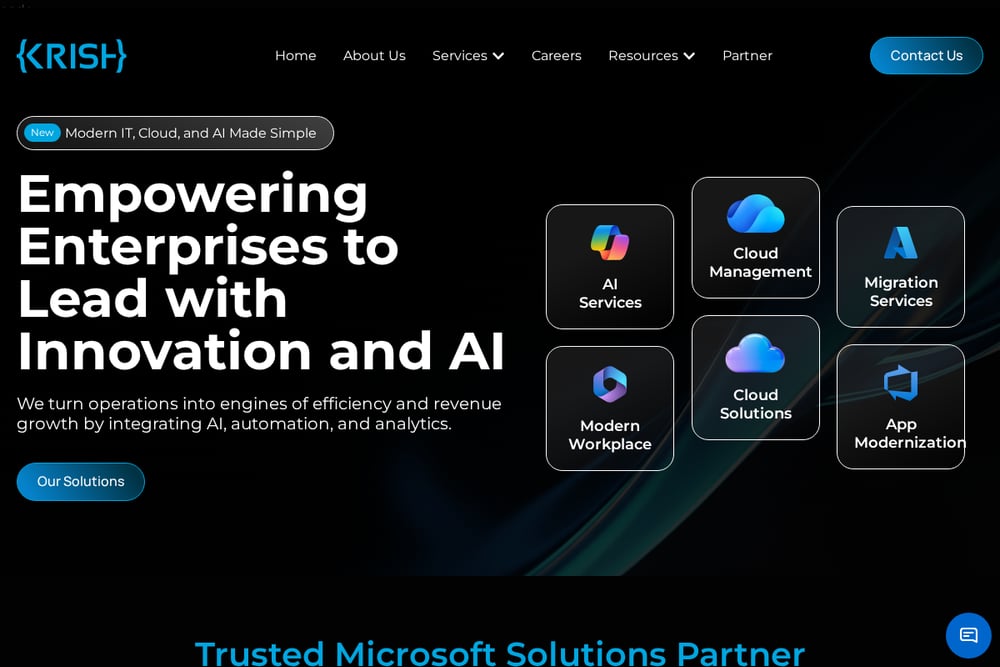 A screenshot of the IT Services, Cloud Migration & AI Solutions | Krish Services Group website.
Krish Services Group is a Microsoft Solutions Partner that positions itself as a full-stack digital transformation shop rather than a one-trick migration vendor. Their service catalog runs from tenant-to-tenant, on-prem to cloud, and cloud-to-cloud migrations through M365 deployment, SharePoint development, Power Platform, app modernization, DevOps, cybersecurity, and AI Copilot enablement. That breadth matters after cutover, because the same team that moves your data can also run your managed cloud services, backup, and disaster recovery. Their published case study on a post-acquisition M365 consolidation for a US pet care company covers 14 TB of business data moved from Google Workspace, which is exactly the kind of messy, real-world scenario you want a partner to have handled before. They also document Azure managed services work reducing cloud incident resolution time for a global IT solutions provider. If you want migration plus an ongoing managed relationship, start with their Microsoft 365 migration services.
#3 EPC Group
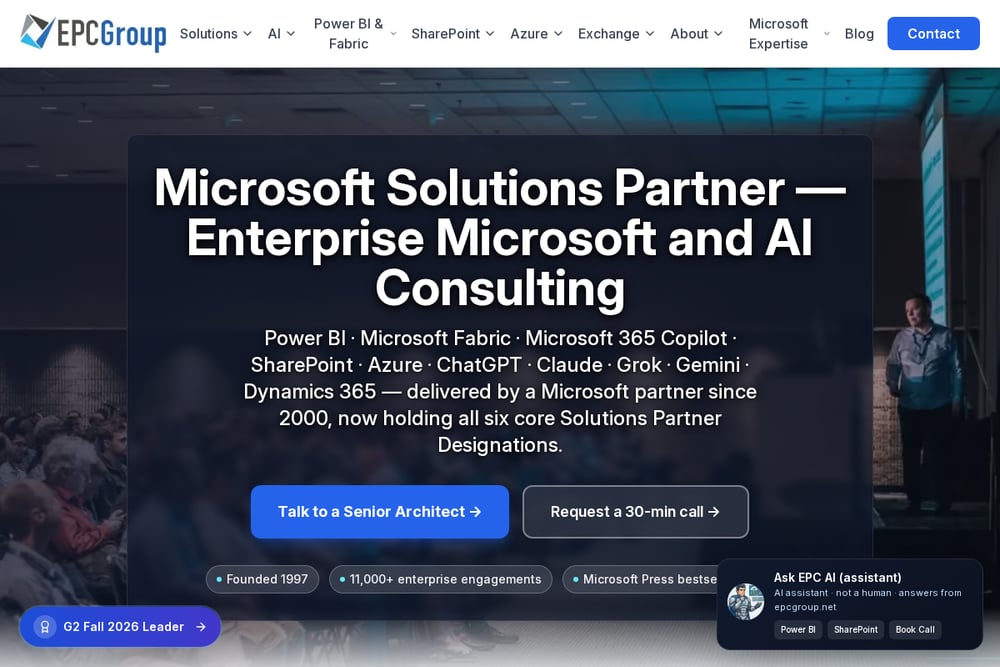 A screenshot of the EPC Group website.
EPC Group publishes some of the most detailed migration guidance in the market, and their 2026 tenant-to-tenant guide is a masterclass in the failure modes that sink projects. They report 216+ M&A tenant migrations covering 1.83 million users, and they are candid about what Microsoft's tooling does and does not do. Their methodology is identity-first: move identity, then content, then endpoints, with a documented cutover runbook and explicit phase owners. They flag the traps most firms gloss over, including hold policies blocking mailbox and OneDrive migrations and the licensing add-ons required for cross-tenant user data moves. Read their complete 2026 migration guide before you scope anything. If you want a partner who has seen the edge cases, this is a strong fit.
#4 Stability Networks
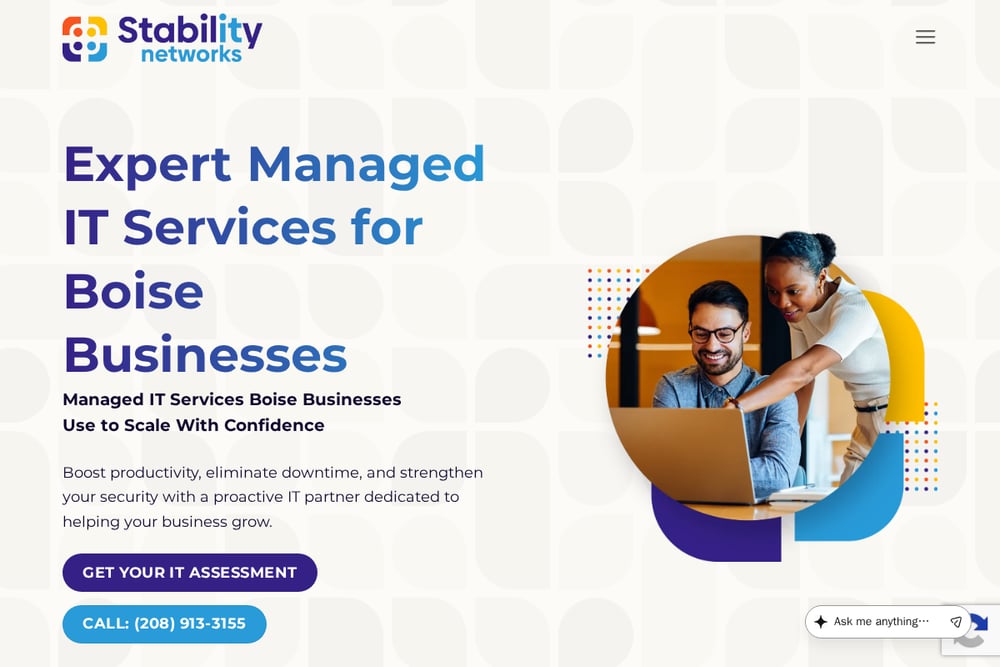 A screenshot of the Stability Networks website.
Stability Networks approaches migration as part of a broader managed IT relationship, which suits organizations that want one provider for both the project and the day-to-day. Their Microsoft 365 practice covers migrations, Power Platform, SharePoint development, and collaboration tooling, backed by managed IT, cybersecurity, and backup and disaster recovery services. They serve businesses across the Treasure Valley and Intermountain West, with locations spanning Idaho and Utah, so regional proximity and local support are part of the value. Their guidance on partnering with an MSP for Office 365 management reflects a practical, co-managed mindset rather than a pure project shop. If you are a regional business that wants a familiar team handling migration and ongoing support, this profile fits.
#5 OrlanTech
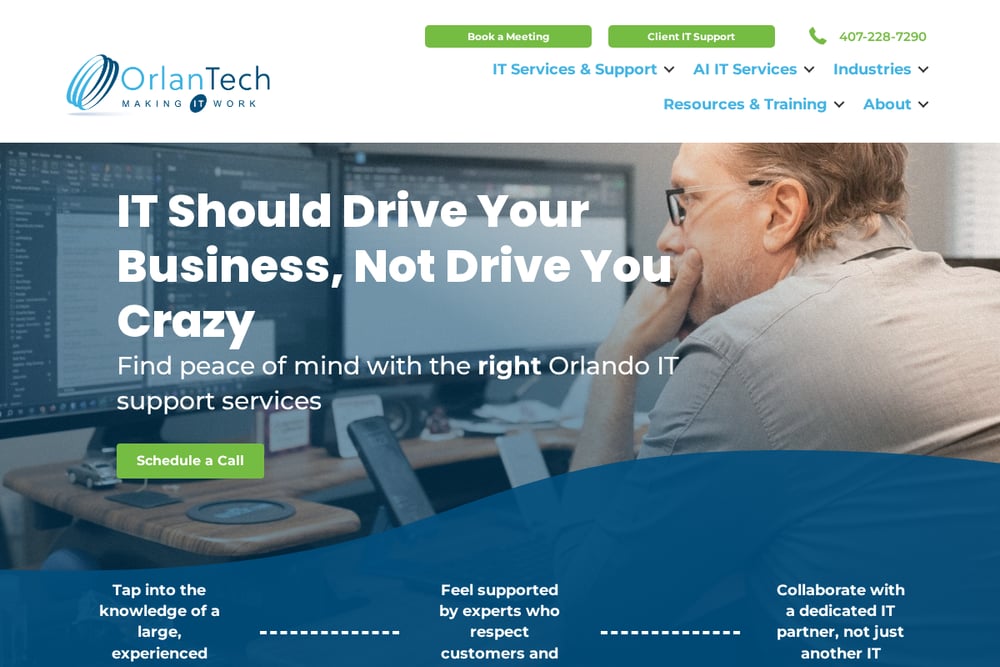 A screenshot of the OrlanTech website.
OrlanTech blends managed IT, cloud solutions, and AI services with a clear Microsoft 365 migration practice, aimed at organizations that want strategic guidance alongside execution. Their service mix includes co-managed IT, cybersecurity, infrastructure-as-a-service, and AI productivity and Copilot enablement, which means migration sits inside a larger roadmap rather than standing alone. They publish practical resources like security checklists and readiness assessments, and they serve industries including professional services, legal, finance, construction, nonprofits, manufacturing, and healthcare. Their explainer on how Microsoft 365 migration works with a managed service provider is a useful primer for teams new to the process. If you want a partner who frames migration as one step in a broader IT and AI strategy, this is worth a conversation.
How to Choose the Right Migration Partner
Start with your estate, not the vendor list. Map every workload you need moved: mailboxes, OneDrive, SharePoint sites, Teams channels, Intune, Power Platform, and any custom apps. Then ask each partner which of those they handle natively and which they outsource. Next, ask about identity. A partner who treats identity as an afterthought will leave you with orphaned accounts and broken permissions. Ask for a cutover runbook and a coexistence plan before you sign anything. Then check the licensing math, because cross-tenant user data migration and SharePoint site moves carry separate fees that can surprise you. Finally, decide whether you want a project vendor or a long-term managed partner. If you plan to hand off cloud operations, backup, and AI enablement after cutover, weight firms with managed services depth. If you just need the move done cleanly, weight methodology and migration volume.
Where Automation Fits in Your Migration
Automation will not replace a migration architect, but it will save you weeks. Use Microsoft's Migration Orchestrator for the workloads it supports: Exchange mailboxes, OneDrive, and Teams chats and meetings. Automate identity provisioning in the target tenant with scripts or a provisioning tool so every user object exists before content moves. Build a pre-migration remediation pass that flags mailboxes and OneDrive accounts under hold policies, since those block migration entirely. Automate your coexistence routing so mail and calendar flow correctly during the transition window. Then automate post-cutover validation: mailbox counts, OneDrive file totals, SharePoint site inventories, and Teams membership checks. Document every automated step in your runbook so your team can rerun it if something fails. The partners above all lean on automation, but they pair it with human judgment at cutover, and you should too.
The Bottom Line
Your migration will succeed or fail on preparation, not tooling. The five partners here each bring something different: Netwoven for full-estate M&A coverage, Krish Services Group for migration plus ongoing managed cloud and AI services, EPC Group for documented methodology at scale, Stability Networks for regional managed IT, and OrlanTech for migration inside a broader IT and AI roadmap. Match the partner to the shape of your estate and the relationship you want after cutover. Then insist on a runbook, a coexistence plan, and a clear licensing estimate before anyone touches your data. Do that, and your tenant move becomes a project you close out, not one that drags on for quarters.