You train your body at practice and in the weight room. But if your mind isn't prepared for the moments that matter, all that physical work can unravel under pressure. Here are five mental performance coaching services worth knowing.
The Mental Performance Coaching Landscape
Mental performance coaching has moved from the fringes of sport science into the mainstream. Athletes at every level now work on confidence, focus, pressure regulation, and reset routines with the same intent they bring to strength and conditioning. The field spans large academies with decades of methodology to solo practitioners who coach remotely. What unites them is a shared premise: mental skills are trainable, and they compound with repetition.
How We Evaluated These Services
We looked at service scope, clarity of what is actually trained, delivery format, and how well each provider fits athletes who want practical tools rather than theory. We also considered accessibility, including remote options and how easy it is to understand the offer before you commit. Pricing transparency and the coach's background factored in as well. The detail on each business lives in its description below.
Here is a quick look at the five services, ordered for readability. Each entry notes who it suits best so you can scan fast and dig into the ones that match your situation.
| Provider | Best For |
|---|---|
| IMG Academy Mental Performance Coaching | Athletes who want a structured, academy-backed framework |
| Anchored — Mental Performance Coaching | Athletes who want practical, repeatable mental tools |
| Peak Performance Sports | Athletes who want decades of sport-specific coaching experience |
| Mental Performance Sports | Teams and athletes who want flexible remote or group programs |
| Elite Mental Performance | Competitive athletes who want a certified consultant and former college athlete |
The Five Services in Detail
#1 IMG Academy Mental Performance Coaching
 A screenshot of the IMG Academy Mental Performance Coaching website.
IMG Academy brings four decades of sport science into a structured mental performance program built on five pillars: confidence, resilience, focus, commitment, and handling pressure. The academy frames confidence as something built in the daily grind of repetition and consistency, not something you wait to feel. You get a framework for shifting attention, resetting after distraction, and developing action plans you can trust in high-pressure moments. It also offers a free, research-backed mental performance assessment so you can see where you stand before you start. This is a strong fit if you want a proven, institutional blueprint and the resources of a large academy behind it.
#2 Anchored — Mental Performance Coaching
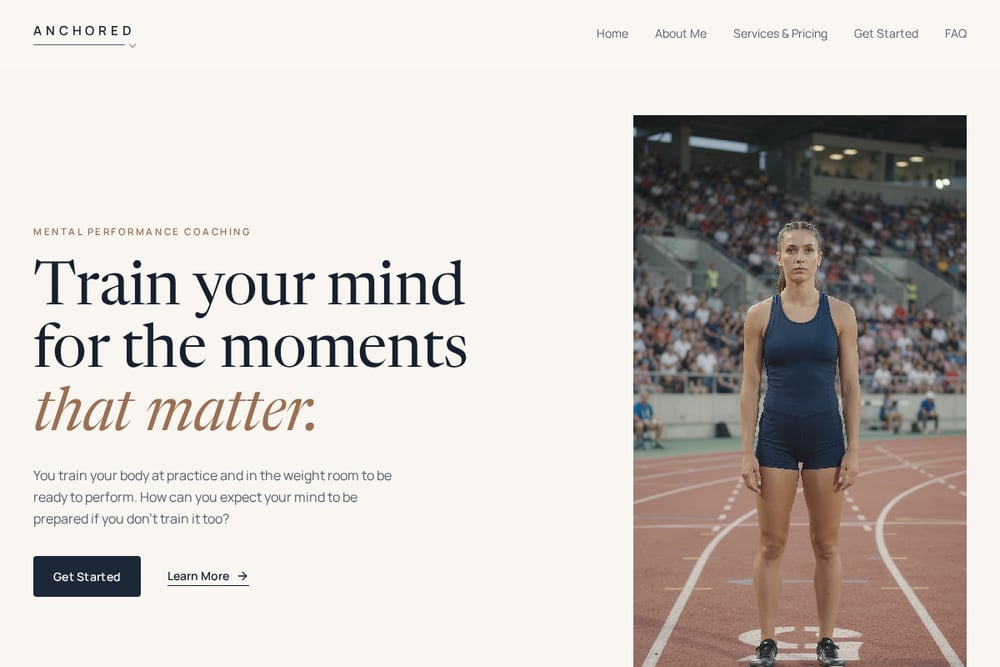 A screenshot of the Anchored — Mental Performance Coaching website.
Anchored is a focused, service-based practice led by Gabby that trains the mental skills athletes actually use between the lines. The work centers on confidence, pressure regulation, attention and focus, reset and respond, and performance routines. What stands out is the practicality: you build confidence through preparation, evidence, and repeatable habits, and you learn to regulate your body and mind when stress rises. Routines draw on breathing, imagery, cue words, and self-talk, so you leave with tools you can run in competition rather than concepts to admire. Anchored is clear that its services are educational and performance-based, not clinical counseling, which keeps the scope honest and easy to understand.
#3 Peak Performance Sports
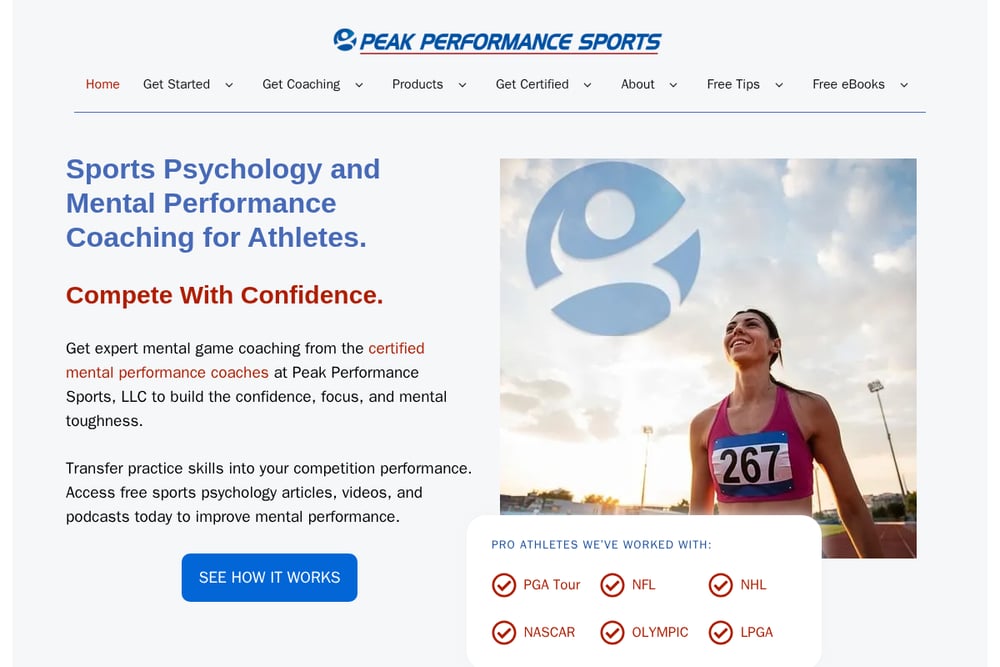 A screenshot of the Peak Performance Sports website.
Peak Performance Sports has been coaching athletes in sport psychology for more than 40 years, working with junior through pro competitors across 35-plus sports. Sessions run one-on-one by video conference, and the site notes that research supports virtual coaching as equally effective as in-person work. The focus is on confidence, focus, composure, practice efficiency, and pre-performance routines, with strategies you apply before and during competition. There is no long-term commitment required, which lowers the barrier if you want to test the fit. It suits athletes who value a long track record and a wide range of sport-specific experience.
#4 Mental Performance Sports
 A screenshot of the Mental Performance Sports website.
Mental Performance Sports uses goal setting, visualization, and mindset training to help athletes, coaches, and teams perform under pressure and over time. The offer includes one-on-one coaching in person or remote with customized plans, plus a fully remote self-paced virtual program for athletes who want flexibility. Team services start with an assessment of the group's mindset, then move into sessions on confidence, composure, and mental toughness shaped by coach input and athlete feedback. Follow-up sessions and performance-building routines are part of the long-term approach. It is a good match if you want team-level support or a self-paced remote option.
#5 Elite Mental Performance
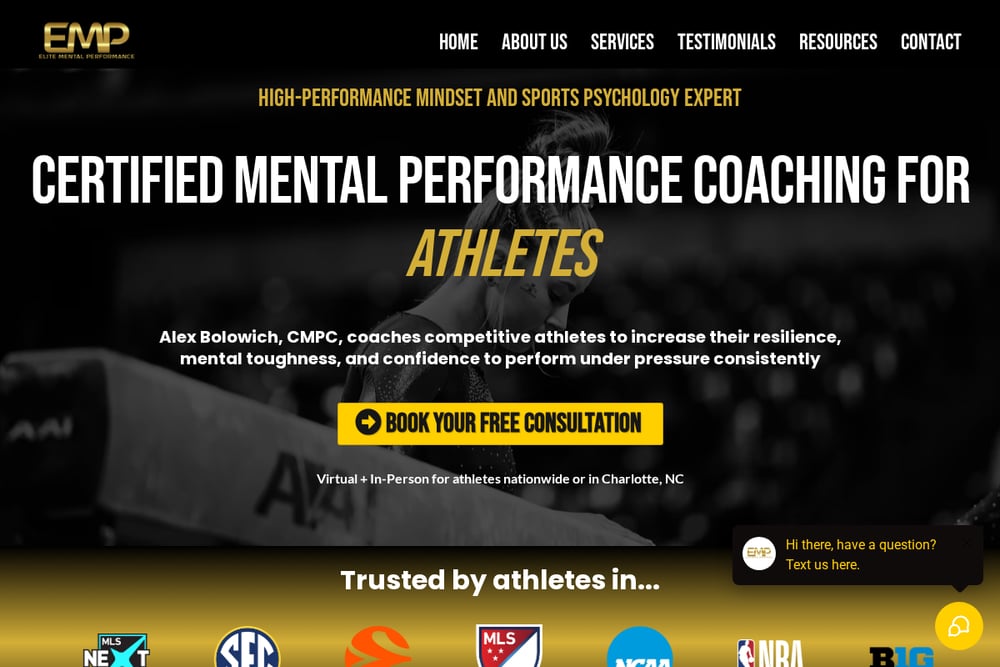 A screenshot of the Elite Mental Performance website.
Elite Mental Performance is led by Alex Bolowich, a Certified Mental Performance Consultant and former NCAA Division 1 soccer player. The practice coaches competitive athletes to build resilience, mental toughness, and confidence that holds up under pressure. Sessions are available virtually and in person for athletes nationwide or in the Charlotte, NC area. The approach emphasizes foundational mental skills: being present in the moment, bouncing back from setbacks, and making your mental game work for you rather than against you. Testimonials from athletes across sports point to gains that carry into life beyond competition. It fits athletes who want a certified consultant with a competitor's perspective.
How to Choose the Right Mental Performance Coach
Start with what you actually want to train. If you need a repeatable routine for pressure moments, look for a coach who teaches specific tools like breathing, cue words, and reset processes. If you want a broad framework, an academy-style program may fit better. Check the delivery format next: remote one-on-one, self-paced, or team-based each suit different schedules and budgets. Read how clearly the provider describes its scope, especially whether it is performance coaching or clinical care. Finally, consider the coach's background and whether their experience matches your sport and level.
Building Your Mental Performance Routine
You do not need a complicated system to start. Pick one skill, such as a pre-performance breathing routine, and attach it to something you already do before every practice. Log how you felt and what you noticed in a simple note on your phone. After two weeks, review the notes and adjust the cue or timing. Layer in a reset routine for mistakes next, then a confidence habit built on evidence from your training. Repeat the cycle each month. The goal is a small set of tools you can run without thinking when the pressure rises.
The Bottom Line
Mental performance coaching works when the tools are practical and you actually use them. The five services here range from an academy blueprint to focused solo practices, and each has a clear strength. Match the provider to the skill you want to build and the format you will stick with. Then treat the mental work like your physical training: repeat it, review it, and trust it when it counts.