
Finding a MEMS fabrication partner that actually wants your prototype work feels impossible right now. Most big foundries have quietly stopped taking small-batch, custom, or non-standard jobs — but a handful of US shops still do.
Why Prototype-Scale MEMS Fabrication Became So Hard to Place
Commercial foundries chased volume, and prototype work got squeezed out. Minimums climbed, lead times stretched, and custom geometries became nearly impossible to place. That left a gap for researchers, startups, and R&D teams who need a few wafers, not a few thousand. The shops filling that gap combine cleanroom infrastructure with PhD-level process engineering and the flexibility to handle design iterations between runs. You are not just buying wafer time — you are buying access to people who can adapt a process when your device changes. That distinction matters more than any single tool in the fab.
How We Evaluated These MEMS Fabrication Partners
We looked at service scope, prototype friendliness, process flexibility, and how clearly each provider communicates what they actually do. Academic Fab stood out for explicitly welcoming non-standard materials, geometry changes, and design iterations that production foundries avoid, plus a newly added BaTiO₃ ferroelectric wafer processing line. Rogue Valley Microdevices stood out for its ITAR-registered status and deep library of MEMS process guides covering everything from TMAH versus KOH etch to metal lift-off. ISS Foundry Services stood out for no minimum lot sizes, no setup costs, and a decade of experience with over 100 MEMS and nanotechnology companies. Atomica stood out for its 150 mm and 200 mm toolset and a platform approach that carries devices from prototype into production. Science Corporation stood out for its neural engineering focus and a foundry built around advanced microfabrication developed for medical technologies.
Here is a quick look at five US MEMS fabrication partners, what each one does well, and who each one fits.
| Provider | Best For |
|---|---|
| Rogue Valley Microdevices | ITAR-sensitive MEMS programs needing a wide process menu |
| Academic Fab - MEMS Fabrication Service | Prototype-stage devices that will change between runs |
| ISS Foundry Services | Small-batch and single-step work with no minimums |
| Atomica | Custom MEMS programs with a path to production |
| Science Corporation | Medical and neural engineering MEMS development |
The 5 MEMS Fabrication Partners in Detail
#1 Rogue Valley Microdevices
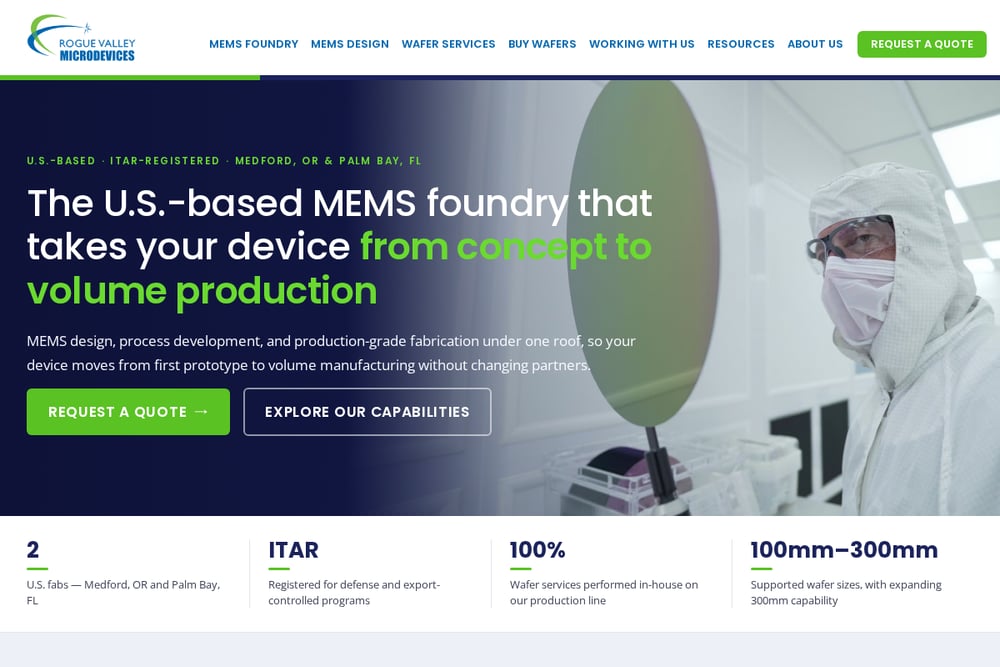 A screenshot of the Rogue Valley Microdevices website.
Rogue Valley Microdevices runs an ITAR-registered MEMS foundry with a broad process menu. You get thin film deposition, photolithography, wet and dry etch, metal lift-off, thermal oxidation, LPCVD silicon nitride, PECVD films, PVD metal and dielectric films, and undoped polysilicon. The company publishes a deep set of MEMS process guides — thermal oxide versus PECVD oxide, TMAH versus KOH silicon etch, DRIE versus silicon wet etch — which is genuinely useful when you are choosing a process path. If your work touches defense, aerospace, or any ITAR-sensitive application, that registration alone can make them the practical choice. Their case studies span eMagin, Biological Dynamics, and Nanomedical, showing range across display, diagnostic, and biomedical devices.
#2 Academic Fab - MEMS Fabrication Service
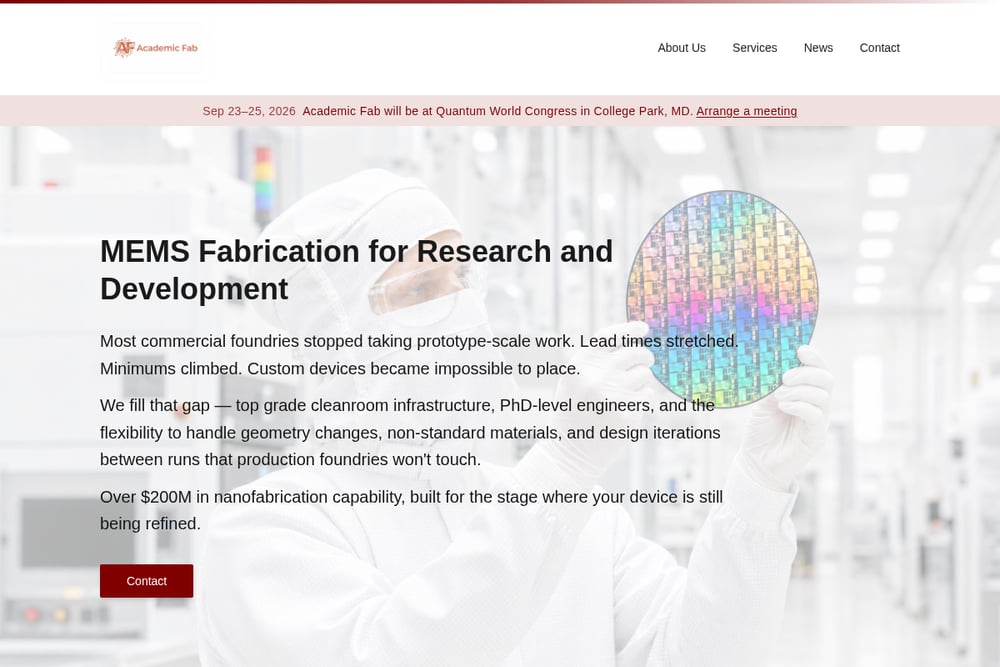 A screenshot of the Academic Fab - MEMS Fabrication Service website.
Academic Fab built its pitch around the exact problem most R&D teams face: commercial foundries stopped taking prototype-scale work. The company offers silicon MEMS, microfluidics, 3D printing, and ion implantation on 2 to 6 inch wafers, backed by over $200M in nanofabrication capability and PhD-level engineers. What sets them apart is flexibility — geometry changes, non-standard materials, and design iterations between runs that production foundries will not touch. They recently added BaTiO₃ ferroelectric wafer processing for silicon photonics and electro-optic devices, which signals they are actively expanding into emerging material systems. If your device is still being refined and you need a partner who expects it to change, this is the fit.
#3 ISS Foundry Services
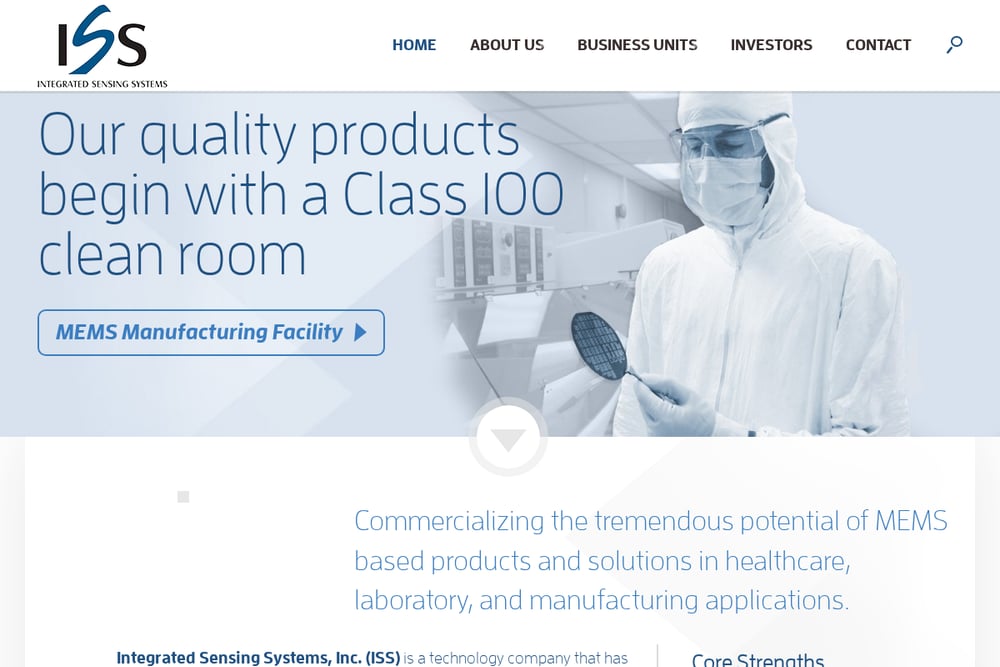 A screenshot of the ISS Foundry Services website.
ISS Foundry Services has spent over a decade partnering with more than 100 MEMS and nanotechnology companies worldwide. The division handles everything from single-step wafer processing to prototype development to full manufacturing, plus technical consulting. They run silicon, glass, and ceramic substrates on standard 4 inch and 6 inch wafers, with some 8 inch capability. The standout detail for small teams: no minimum lot sizes and no setup costs. That removes two of the biggest barriers that push prototype work out of larger foundries. Their dissolved wafer processing expertise and turnkey product development — design, electronics, packaging, process, manufacturing — make them a strong fit if you want one partner across the whole path.
#4 Atomica
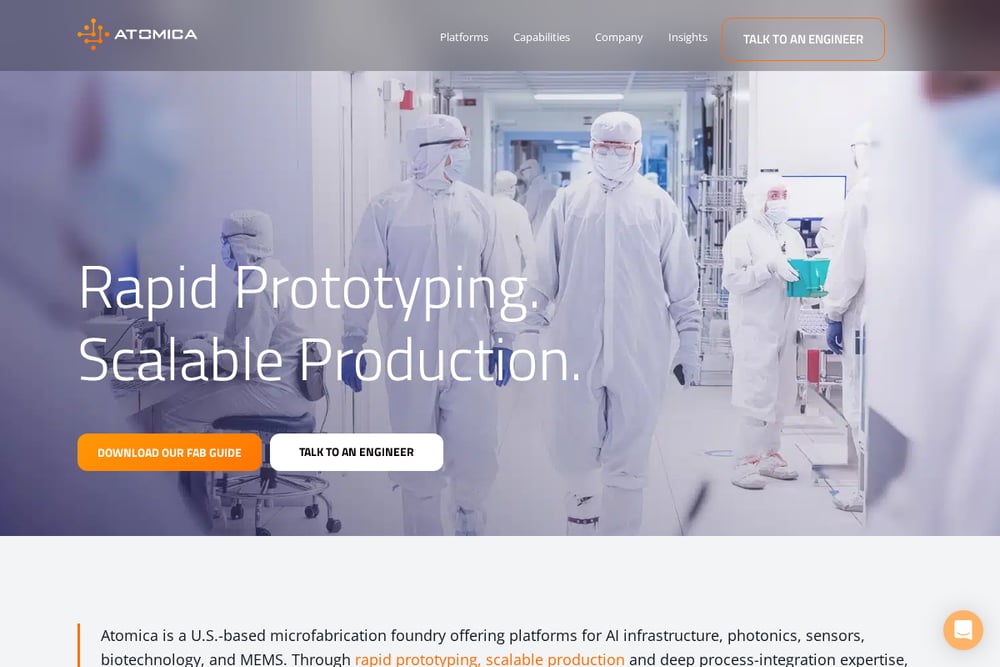 A screenshot of the Atomica website.
Atomica develops and manufactures complex MEMS devices that need custom structures, materials, and process integration. The company pairs deep MEMS engineering experience with a 150 mm and 200 mm toolset and production-ready infrastructure, so devices can move from prototype into production without changing partners. Their platform approach covers optical control — micromirrors, comb-drive actuators, diaphragms, tunable membranes, microlenses — plus sensing, biotechnology, thermal management, and integration. They draw on shared building blocks like actuators, diaphragms, interconnects, and wafer-level packaging, then adapt them to your device and develop additional process steps where needed. If your roadmap includes scaling, that continuity is worth a lot.
#5 Science Corporation
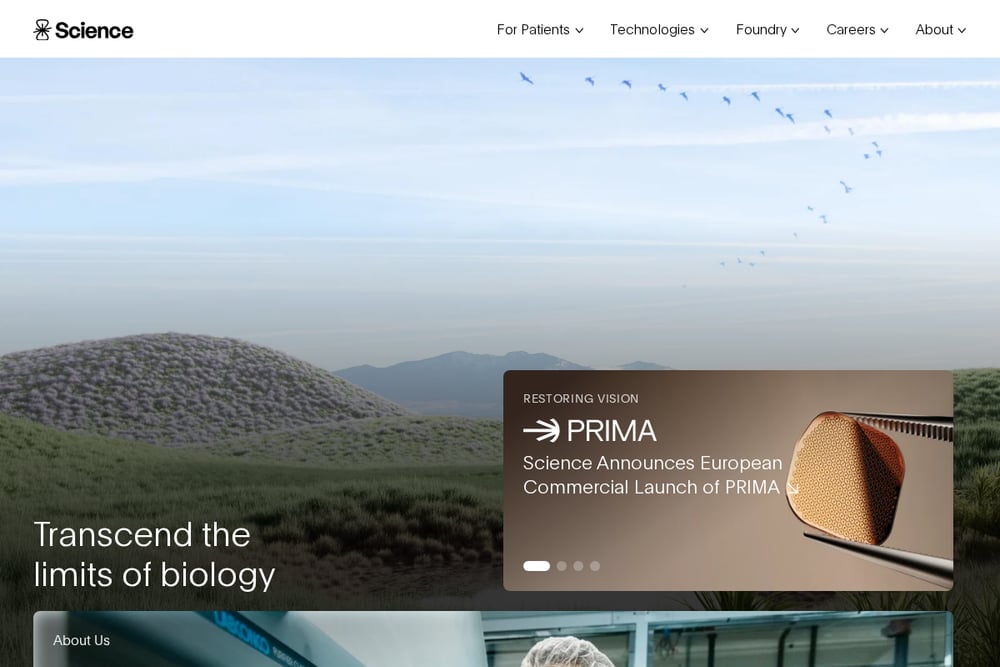 A screenshot of the Science Corporation website.
Science Corporation brings a medical technology background to MEMS fabrication. Its foundry offers MEMS process development and wafer fabrication, built on microfabrication capabilities the company developed for its own advanced medical technologies. The neural engineering toolkit — headstages, probes, and related building blocks — is available to outside teams, which is unusual and useful if your work sits near bioelectronics or neural interfaces. You also get access to a team that has taken devices through clinical-stage development, not just lab demos. If your MEMS work touches medical devices, implants, or neural engineering, this is a partner worth a serious conversation.
How to Choose the Right MEMS Fabrication Partner
Start with your stage, not your wishlist. If your device is still changing between runs, prioritize flexibility over tool count — Academic Fab and ISS Foundry Services both lean into that. If you need ITAR compliance, Rogue Valley Microdevices is the obvious starting point. If you already know you will scale, Atomica's 150 mm and 200 mm infrastructure plus platform approach can save you a painful transition later. If your application is medical or neural, Science Corporation's background is directly relevant. Then ask three questions of every partner: What is your minimum lot size? How do you handle a process change mid-project? Who actually runs my wafers? The answers will tell you more than any capability list.
Where Automation Fits in Your Fabrication Workflow
You will not automate a cleanroom run, but you can automate everything around it. Keep your process travelers, run sheets, and metrology data in one shared system so design iterations do not get lost between you and your fab partner. Set up automated alerts when a run step completes or a measurement drifts outside spec. Use version control for mask layouts and process recipes so you can trace exactly what changed between runs. When you are comparing quotes, template your RFQ so each foundry answers the same questions — minimums, setup costs, wafer sizes, materials, turnaround. That structure makes the comparison honest and saves weeks of back-and-forth.
The Bottom Line on US MEMS Fabrication Partners
The US MEMS fabrication market split into two camps: shops that want volume and shops that still want your prototype. The five partners here sit firmly in the second camp, each with a different strength. Rogue Valley Microdevices brings ITAR registration and a deep process library. Academic Fab brings explicit flexibility for non-standard materials and design iterations, plus new BaTiO₃ ferroelectric wafer processing. ISS Foundry Services brings no minimums and no setup costs. Atomica brings a production-ready 150 mm and 200 mm path. Science Corporation brings a medical and neural engineering foundation. Match the partner to your stage, ask the hard questions up front, and you will place the work that everyone else turned away.