
You don't need another firehose of papers. You need evidence that reaches the bedside. Here are five tools that actually help.
The New Evidence Stack for US Clinicians
Medical knowledge doubles faster than any human can track. You are expected to practise on the latest evidence, yet the latest evidence is buried in thousands of PubMed abstracts, guidelines, and trial registries. That gap is now being filled by AI-assisted research platforms. They search, summarise, and grade the literature so you can spend less time digging and more time deciding. The five tools below take different routes to the same goal: getting trustworthy evidence into your hands quickly.
How We Evaluated These Tools
We looked at five factors. First, scope: does the tool cover the specialties you actually work in? Second, evidence grading: does it tell you how strong the evidence is, not just what it says? Third, workflow fit: can you use it between patients, on a phone, without a research librarian? Fourth, pricing clarity: is the free tier genuinely useful, and is the paid tier transparent? Fifth, verification and trust: does it respect the line between research and clinical use? Each tool below stands out on a different combination of these factors.
Here is a quick look at how the five tools compare on scope, evidence grading, and pricing model.
| Provider | Best For |
|---|---|
| OpenEvidence | Fast, cited answers at the point of care |
| Web of Medicine: Latest Medical Research and Evidence Wiki | Evidence-graded summaries and a self-updating wiki |
| Consensus | Broad literature surveys and evidence synthesis |
| PubMed.ai | Structured research reports from PubMed |
| EvidenceHunt | Continuous evidence monitoring for teams |
The Five Tools in Detail
#1 OpenEvidence
OpenEvidence has become the default AI search layer for many US clinicians. It answers natural-language clinical questions with cited, peer-reviewed sources and is free for verified healthcare professionals. The interface is fast and built for point-of-care use, so you can ask a question between patients and get a referenced answer in seconds. It draws on a broad corpus of medical literature and clinical guidelines. If you want a single place to start most clinical questions, this is it.
#2 Web of Medicine: Latest Medical Research and Evidence Wiki
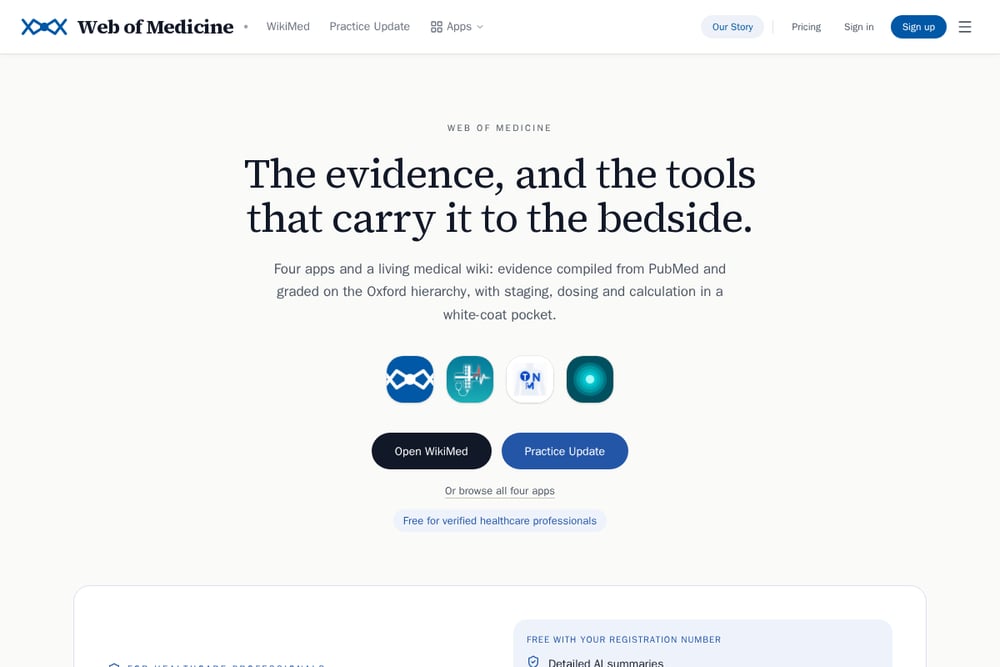 A screenshot of the Web of Medicine: Latest Medical Research and Evidence Wiki website.
Web of Medicine is a living medical wiki and a suite of AI tools built for verified healthcare professionals. It compiles topics on demand from PubMed, grades every claim on the Oxford hierarchy, and cites each source. You get structured AI summaries, two-voice AI podcasts, video abstracts, and an Ask AI literature search that ranks results by evidence level. Verification is instant with your NPI, GMC, NMC, or national council number, and the AI tools are free once you are verified. Ad-free access is $4.99 a month, and only WikiMed topic creation stays paid.
#3 Consensus
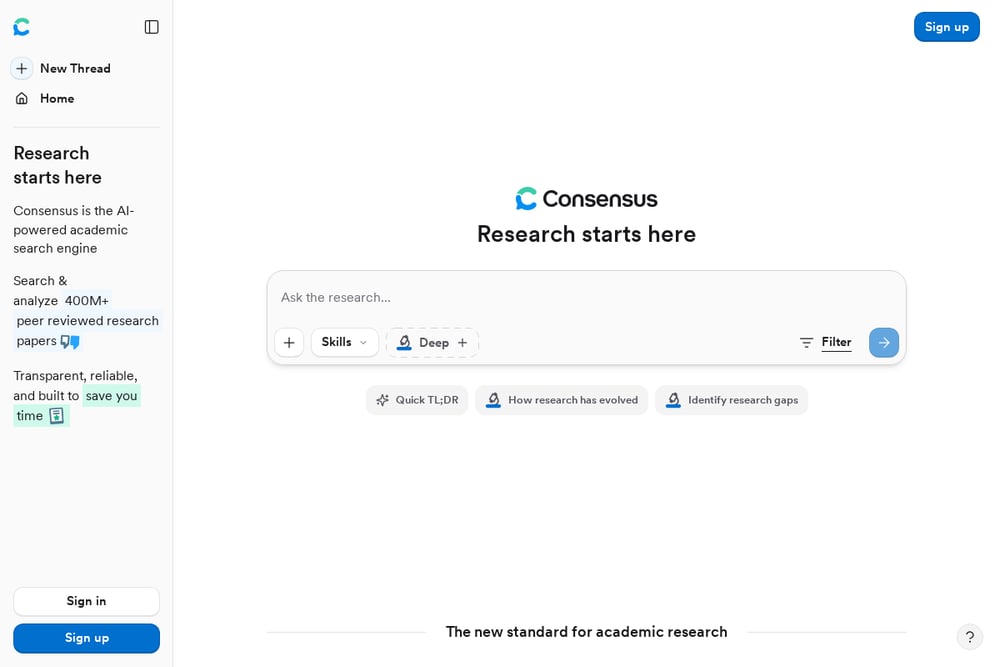 A screenshot of the Consensus website.
Consensus is an AI-powered academic search engine that draws on hundreds of millions of peer-reviewed papers. It is used daily at top research institutions and by millions of researchers, students, and clinicians. The Medical mode narrows results to high-quality medical sources, including clinical guidelines and top medical journals. You can run deep searches, build comparison tables, and draft reports without losing academic rigour. It is a strong choice when you need to survey a body of literature, not just answer one question.
#4 PubMed.ai
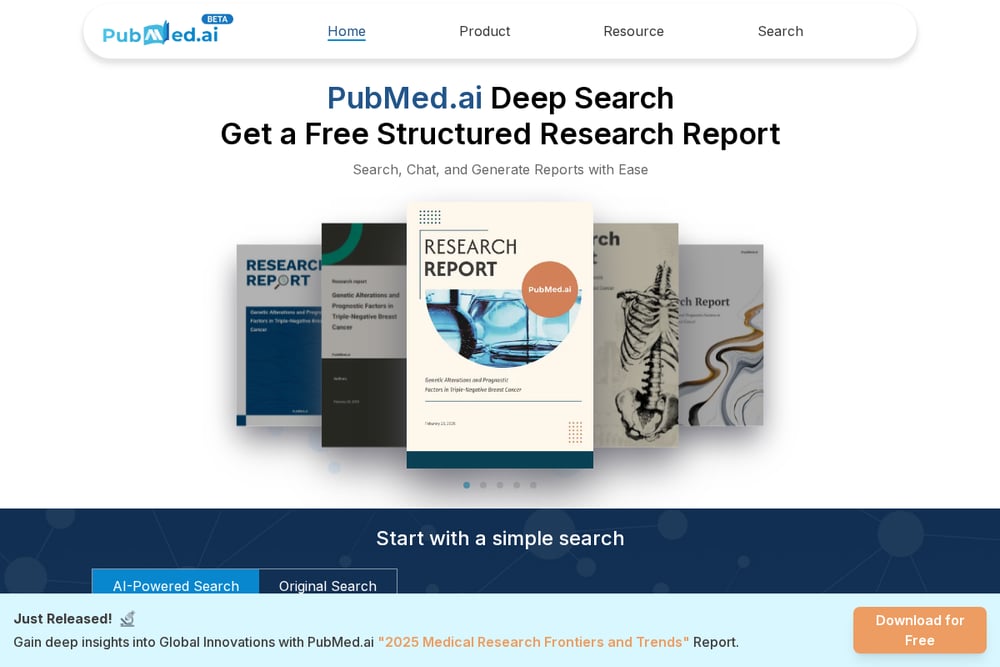 A screenshot of the PubMed.ai website.
PubMed.ai is an AI-assisted literature search tool that helps you find and explore biomedical research. It optimises search queries, summarises key findings, and lets you chat with the literature to understand a topic. The interface is built for efficiency in literature review and academic reference. It is explicit that its content is for research purposes and not intended for clinical use. If you are doing a focused review and want a structured research report, this is a practical option.
#5 EvidenceHunt
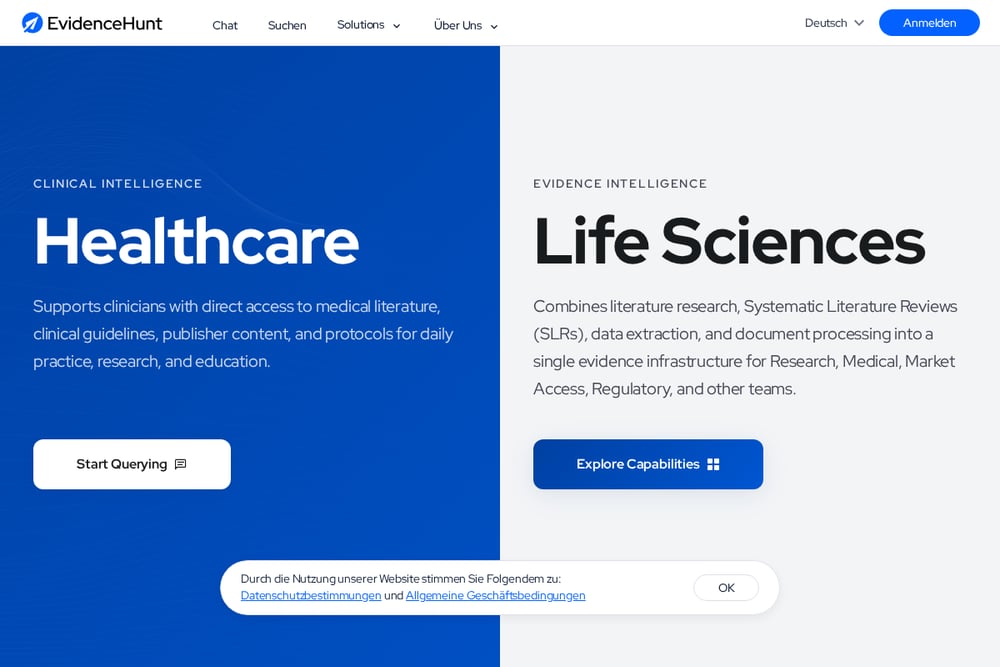 A screenshot of the EvidenceHunt website.
EvidenceHunt connects medical literature, publisher content, national guidelines, and internal protocols into a single intelligence layer. It supports clinicians with direct access to evidence for daily practice, research, and education. For organisations, it offers systematic literature reviews, evidence monitoring, and structured data extraction. It is trusted by over 90,000 professionals, including teams in life sciences and healthcare. If you need to monitor a specialty or run a formal review, this is a serious platform.
How to Choose the Right Tool for Your Practice
Start with your most common question. If you need a quick, cited answer during a consult, prioritise speed and point-of-care design. If you are building a topic page or teaching, look for evidence grading and citation depth. If you are running a literature review, check whether the tool can expand search terms and handle conflicting evidence. If you work in a team, look for monitoring and collaboration features. And always check the free tier: several of these tools are free for verified clinicians, which changes the calculus entirely.
Where Automation Fits
Automation should not replace your judgement. It should remove the busywork. Use AI search to build the PubMed query and rank results by evidence level. Use summaries to screen papers before you read the full text. Use podcasts and video abstracts to stay current on trials you would otherwise miss. Then apply your clinical context to decide what actually changes your practice. The goal is a workflow where the evidence finds you, not the other way around.
The Bottom Line
The evidence base is growing faster than any of us can read. These five tools each solve a different part of that problem. OpenEvidence gives you fast, cited answers. Web of Medicine gives you a graded, self-updating wiki with AI tools that are free for verified professionals. Consensus gives you breadth for literature surveys. PubMed.ai gives you structured reports. EvidenceHunt gives you continuous monitoring for teams. Pick the one that fits your workflow, verify your credentials, and let the evidence come to you.