Coding errors cost you time, money, and audit headaches. These five medical coding assistants help you get the claim right the first time.
The State of AI Medical Coding in 2026
Medical coding has become the bottleneck nobody trained for. You finish the visit, then spend the evening translating clinical nuance into ICD-10, CPT, and E&M codes. One wrong digit triggers a denial. One vague note invites an audit.
AI coding tools are moving into that gap. Some read the note in real time and suggest codes as you document. Others validate codes after the fact. The strongest tools do three things: propose codes from plain language, check them against official tables, and explain the reasoning so you can confirm with confidence.
Adoption is accelerating because the economics are obvious. Cleaner claims mean faster reimbursement and fewer rework cycles. The question is no longer whether to use a coding assistant. It is which one fits your workflow, your specialty, and your compliance posture.
How We Evaluated These Coding Assistants
We looked at five factors across every tool. First, service scope: does it handle diagnosis codes only, or also procedures, E&M levels, and quality codes? Second, transparency: does it explain why a code was suggested, or just hand you a list? Third, privacy and compliance: how are patient identifiers handled before data reaches the AI? Fourth, workflow fit: does it integrate with your EHR, or does it live in a separate tab? Fifth, clarity of access: can you understand pricing and onboarding without a sales call?
Codey Health stood out for plain-language reasoning and identifier stripping before AI processing. OmniMD stood out for bundling coding inside a broader revenue cycle suite. Corti stood out for developer-friendly connectors and sovereign cloud infrastructure. CureMD stood out for its long track record and unified platform. LucasAI stood out for real-time CPT, CPT II, ICD-10, and E&M suggestions during documentation.
Here is a quick comparison of the five coding assistants, from physician-first reasoning tools to full revenue cycle platforms.
| Provider | Best For |
|---|---|
| OmniMD AI Medical Coder | Practices wanting coding bundled with full RCM |
| Codey Health | Physicians who want explained, verified diagnosis codes |
| Corti Medical Coding Connector | Developers building custom coding agents |
| CureMD AI Medical Coding | Established practices on a unified EHR platform |
| LucasAI Medical Coding | Real-time coding during ambient documentation |
The Five Coding Assistants in Detail
#1 OmniMD AI Medical Coder
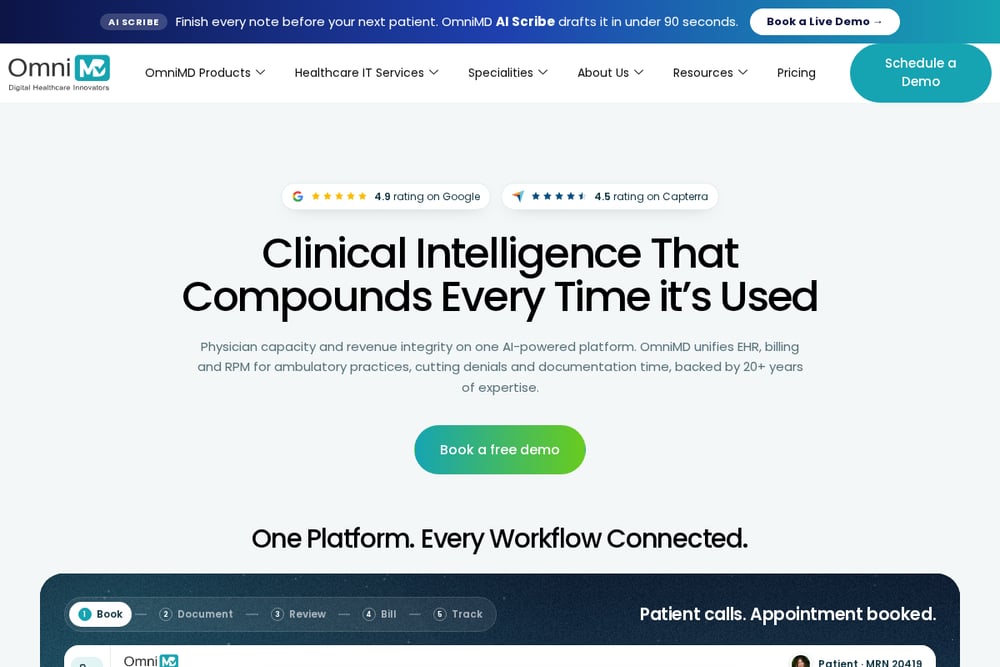 A screenshot of the OmniMD AI Medical Coder website.
OmniMD positions its AI Medical Coder inside a full revenue cycle management stack. That means coding suggestions feed directly into claim accuracy, denial resolution, and AR prioritization. If you already run OmniMD's EHR or billing tools, the coder slots in without a new vendor relationship. The platform also includes predictive claim accuracy and payer behavior modeling, which helps you see problems before they become denials. It is a strong fit for practices that want coding and billing under one roof. You can explore the broader suite at OmniMD.
#2 Codey Health
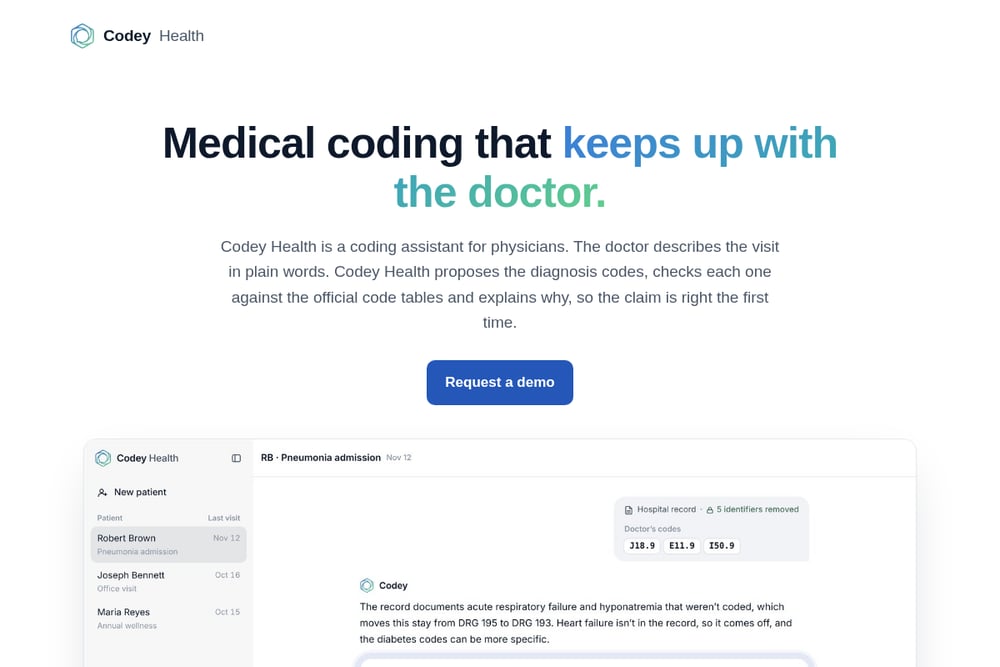 A screenshot of the Codey Health website.
Codey Health takes a physician-first approach. You describe the visit in plain words, and it proposes diagnosis codes, checks each one against official tables, and explains why. In the US, every code is verified against ICD-10-CM; in Korea, against KCD-9. The privacy design is notable: names and identifiers are removed before anything reaches the AI. That matters if you are cautious about patient data leaving your practice. Codey Health is in early access for practices and hospitals in the US and Korea, so you can request a demo at Codey Health and see the reasoning firsthand.
#3 Corti Medical Coding Connector
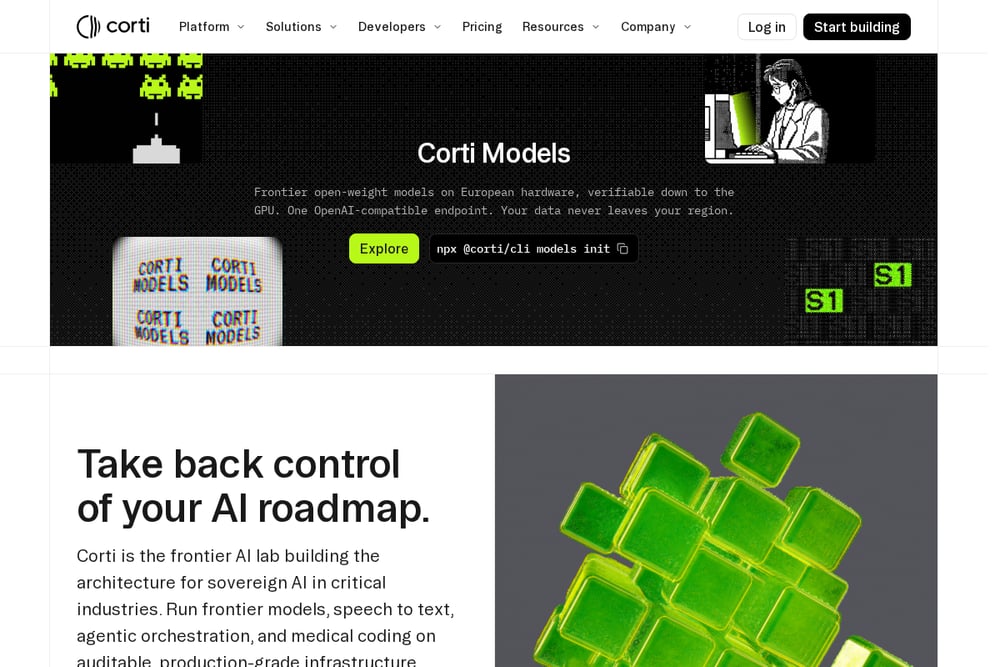 A screenshot of the Corti Medical Coding Connector website.
Corti offers a Medical Coding Connector inside its agentic framework. It analyzes clinical documentation and assigns ICD-10, CPT, and HCPCS codes, even when notes are incomplete or ambiguous. The connector can generate initial suggestions, validate existing codes, and fill documentation gaps. Because it is built for developers, it fits teams building custom coding agents on Corti's infrastructure. Sovereign cloud and compliance features make it attractive for regulated environments. Learn more at Corti.
#4 CureMD AI Medical Coding
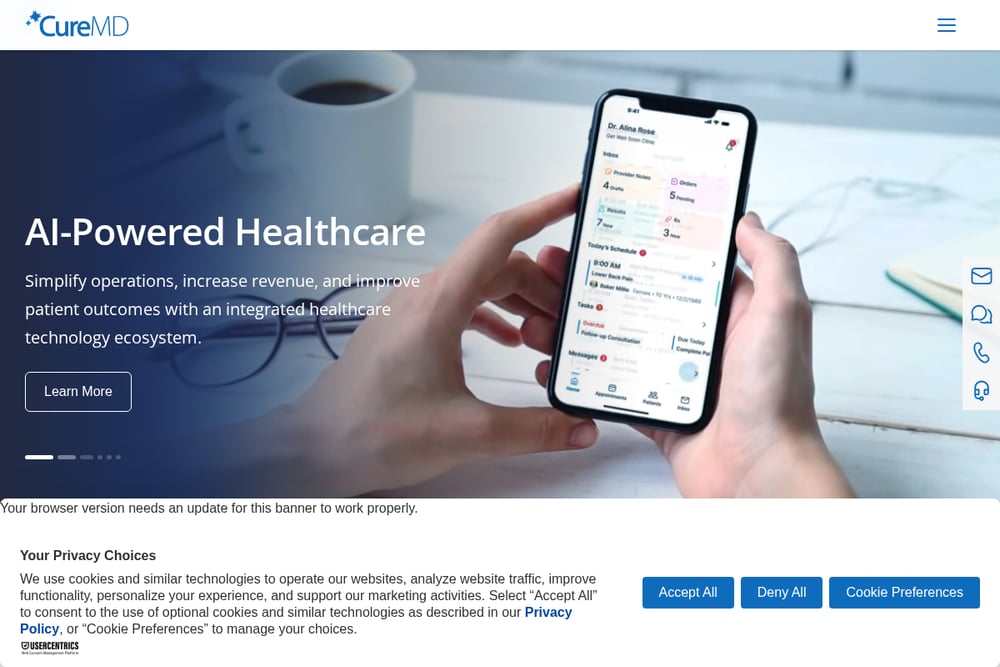 A screenshot of the CureMD AI Medical Coding website.
CureMD brings 29-plus years of healthcare technology experience to AI coding. Its AI Coder delivers real-time ICD-10 and CPT suggestions within a unified platform that includes EHR, practice management, and billing. That integration means coding suggestions can flow into the same system where you document and bill. For practices already on CureMD, the coder is a natural extension rather than a bolt-on. It is a solid choice if you value an established vendor with a broad footprint. See the platform at CureMD.
#5 LucasAI Medical Coding
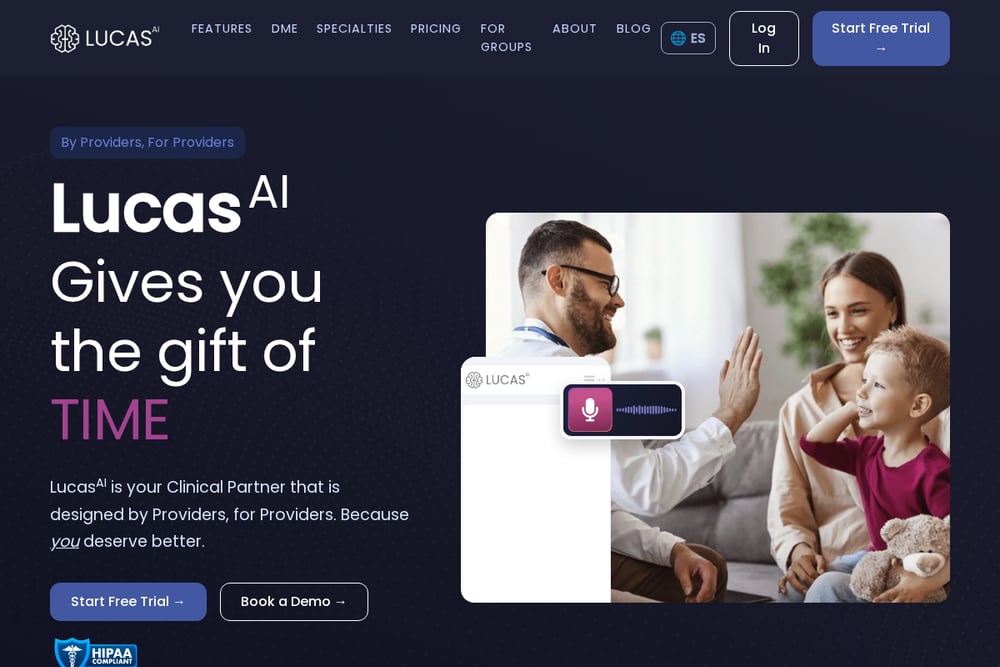 A screenshot of the LucasAI Medical Coding website.
LucasAI codes the encounter as you document it. It suggests CPT, CPT II, ICD-10, and the right E&M level in real time, so coding happens while the clinical detail is fresh. The pitch is revenue capture and audit-defensible charts, not just note generation. Many ambient scribes stop at the note; LucasAI continues into coding. That makes it appealing if you already use or are considering an ambient documentation workflow. Explore it at LucasAI.
How to Choose the Right Coding Assistant
Start with your biggest pain point. If denials are killing you, prioritize a tool that validates codes against official tables and explains the reasoning. If documentation time is the issue, look for real-time suggestions during the visit.
Next, check the privacy model. Ask exactly what patient data leaves your system and when identifiers are removed. If you operate in a regulated environment, sovereign cloud and compliance certifications matter.
Then consider workflow fit. A coding assistant that lives in a separate tab adds friction. One that integrates with your EHR or billing system saves clicks. Finally, ask about access. Early access programs can be a good way to test fit before committing, but confirm timelines and support.
Where Automation Fits in Your Coding Workflow
Automation works best when it removes the repetitive parts and leaves the judgment to you. A practical workflow looks like this: you describe or document the visit, the assistant proposes codes, you review the plain-language reasons, and you confirm or adjust. The confirmed codes flow into your claim.
Behind the scenes, the assistant checks each code against official tables and flags mismatches. That check is the safety net. It catches the typo before the payer does. Over time, the patterns in your confirmations can inform templates and documentation habits, reducing future errors. The goal is not to remove you from coding. It is to make the first pass accurate so you spend less time on rework.
The Bottom Line
The right coding assistant depends on where you feel the most friction. If you want explained, verified diagnosis codes with privacy built in, Codey Health is worth a demo. If you need coding inside a full revenue cycle suite, OmniMD and CureMD are strong options. If you are building custom agents, Corti gives you the connectors. If you want real-time coding during documentation, LucasAI fits that workflow.
Test one or two against your actual charts. The tool that saves you the most rework is the one you will keep using.