
You want a career at sea, but the right training provider can make or break your first credential. Here are five US maritime academies worth knowing before you enroll.
The State of US Maritime Training
Maritime training in the US is built around STCW compliance, USCG approvals, and hands-on sea time. Whether you are aiming for deck, engine, or safety certification, the right academy gets you credentialed and job-ready. Demand for trained mariners remains strong across commercial shipping, offshore energy, and yachting. The schools below each take a different path to get you there.
How We Evaluated These Academies
We looked at course breadth, USCG and STCW alignment, delivery format, and how clearly each school explains its enrollment path. Sea Marine Hub stands out for its structured deck, engine, and safety tracks aimed at international maritime careers. Sea School is known for its USCG-approved STCW Basic Training and strong Southeast US footprint. MITAGS brings simulation-heavy programs and apprenticeship routes for serious career progression. Maritime Professional Training offers year-round scheduling and a full-service private school model. Maritime Institute delivers boot-camp style credentialing that bundles TWIC, MMC, and STCW into one intensive month.
Here is a quick look at each academy and who it serves best.
| Provider | Best For |
|---|---|
| Sea School | Entry-level mariners seeking USCG-approved STCW Basic Training |
| Academy for Marine Services - Sea Marine Hub | Students seeking a full deck-to-officer training pathway |
| MITAGS | Career-focused mariners pursuing advanced credentials and simulation training |
| Maritime Professional Training (MPT) | Mariners who need flexible scheduling and a wide course catalog |
| Maritime Institute | Career changers who want a fast, bundled credentialing program |
The Five Academies in Focus
#1 Sea School
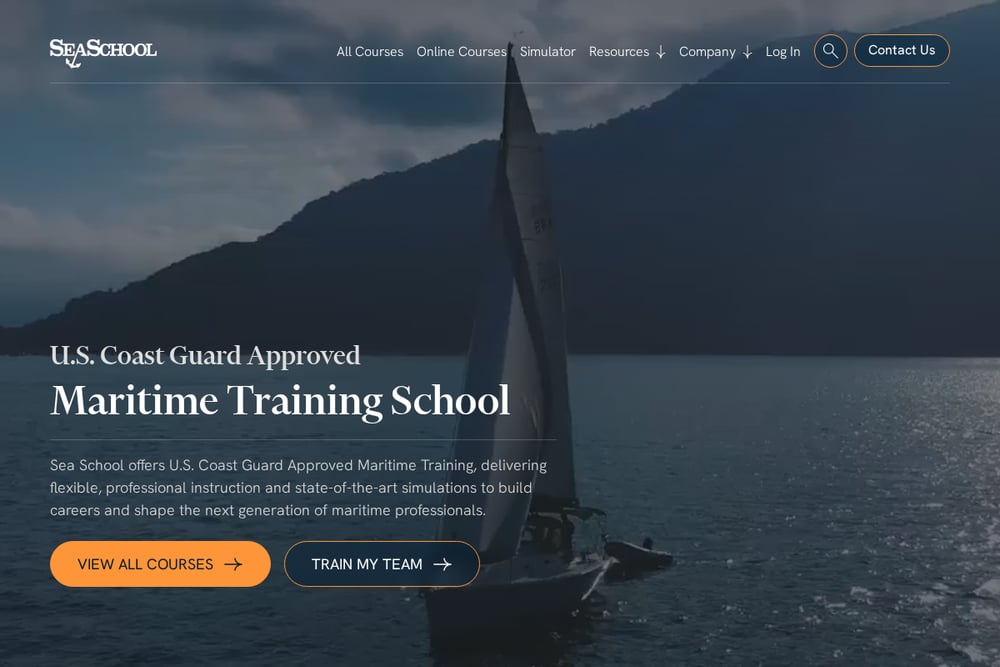 A screenshot of the Sea School website.
Sea School is one of the most recognized names in US mariner training, with USCG-approved STCW Basic Safety Training delivered across multiple Southeast locations. Their five-day, 40-hour format covers all four elements of basic training and is designed for people with no prior sea experience. You get classroom instruction plus practical drills, and the school reports more than 50,000 mariners trained. If you want a proven, widely accepted entry credential, this is a strong starting point. Their course page lays out duration, schedule, and approval details clearly.
#2 Academy for Marine Services - Sea Marine Hub
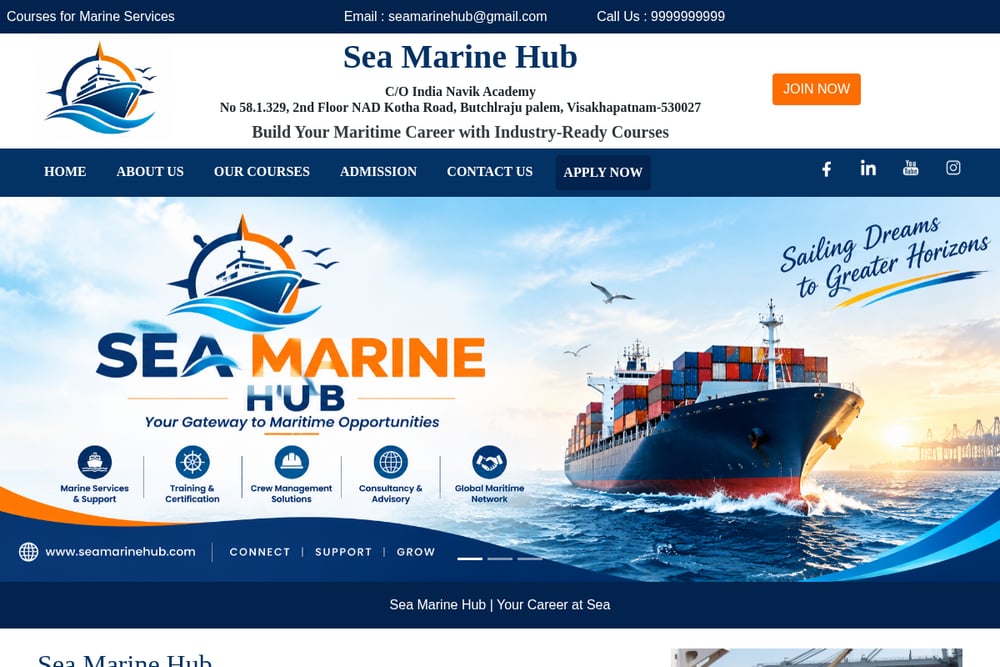 A screenshot of the Academy for Marine Services - Sea Marine Hub website.
Sea Marine Hub positions itself as a career-building maritime academy with courses spanning deck, engine, and safety disciplines. Their catalog includes Deck Rating and Engine Rating programs, a Diploma in Nautical Science for officer-track candidates, and STCW safety modules like Personal Survival Techniques and Fire Prevention. The site also lists advanced deck courses such as Officer of the Watch, Bridge Resource Management, and GMDSS Training. What stands out is the end-to-end framing: they speak to vessel owners, ship managers, and offshore operators as well as individual students. If you want a single hub that maps from entry-level ratings to officer progression, this is worth a close look.
#3 MITAGS
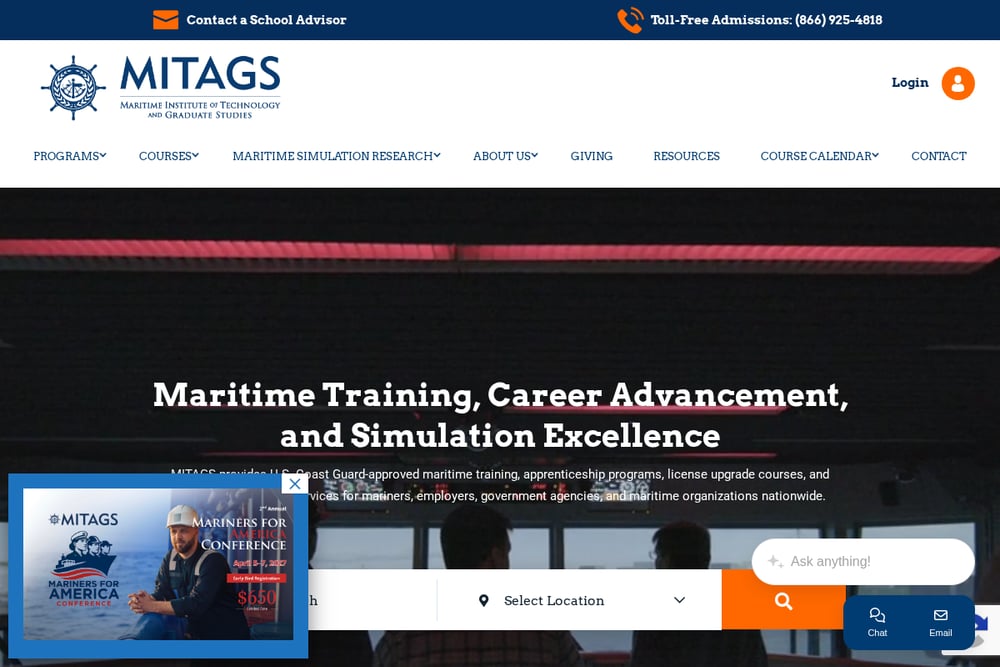 A screenshot of the MITAGS website.
MITAGS is a heavyweight in maritime simulation and professional development, offering STCW Basic Training alongside apprenticeship and mate-to-master programs. Their course catalog includes tug and barge training, state pilot courses, and global wind organization modules. The STCW Basic Training covers firefighting, personal survival, and other required elements with a blend of classroom and field instruction. MITAGS also invests in research and simulation technology, which shows in the depth of their advanced courses. If you are planning a long-term career ladder rather than a single certificate, their program structure is built for that.
#4 Maritime Professional Training (MPT)
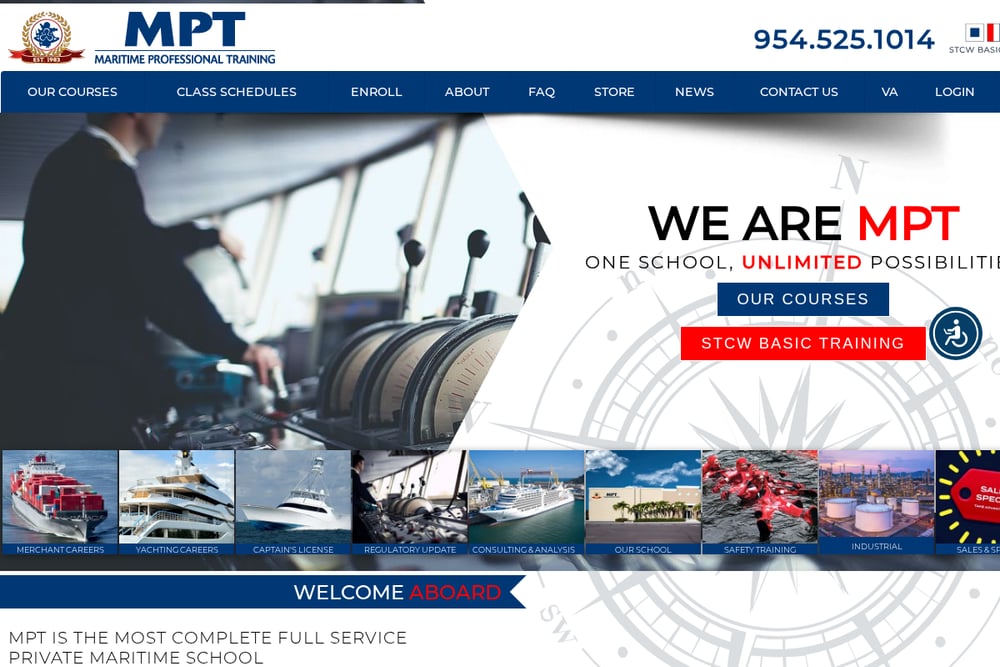 A screenshot of the Maritime Professional Training (MPT) website.
MPT describes itself as the most complete full-service private maritime school in the country and has been training mariners since 1983. Their STCW Basic Safety Training is offered in original, refresher, and revalidation formats, with classes running all year. They also provide captain's license programs, dynamic positioning courses, and access to advanced simulators at their S.M.A.R.T. Center. The Fort Lauderdale location and housing options make it practical for out-of-town students. If scheduling flexibility and a broad course menu matter to you, MPT is a solid fit.
#5 Maritime Institute
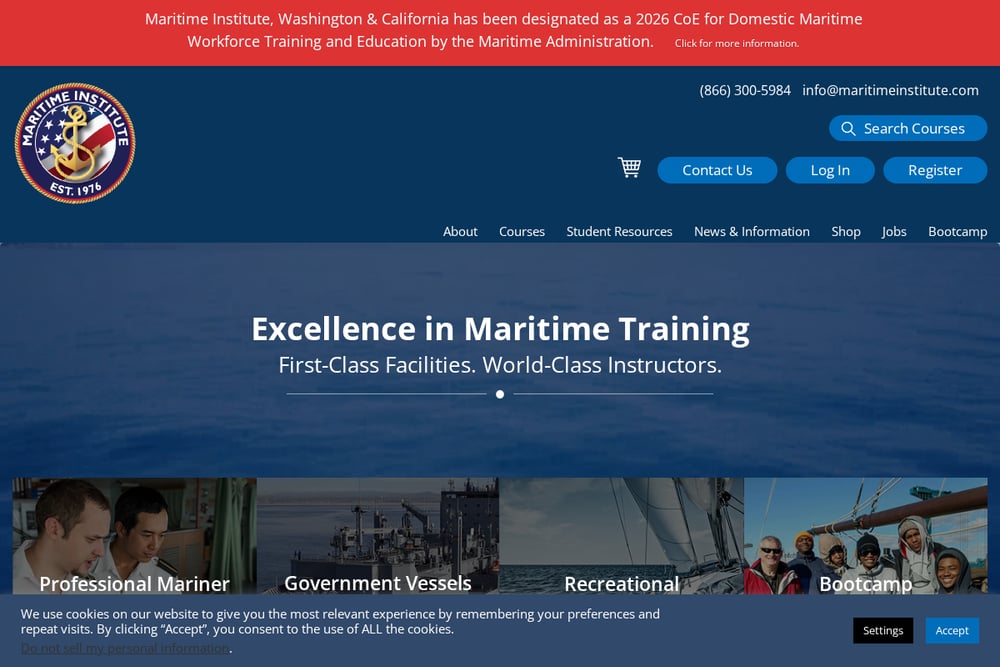 A screenshot of the Maritime Institute website.
Maritime Institute runs a Maritime Boot Camp designed to produce fully credentialed entry-level mariners in about a month. The program bundles TWIC, MMC, and STCW-95 rating into one intensive schedule, with classroom hours typically running 7:30am to 4pm, Monday through Friday. Basic Training covers firefighting, personal survival techniques, and personal safety in a USCG-certified format. They also offer professional deck and engineering courses plus online options. If you want a fast, structured on-ramp to your first maritime job, this boot-camp model is built for exactly that.
How to Choose the Right Maritime Academy
Start with your end goal. If you need a basic entry credential, look for USCG-approved STCW Basic Training with a schedule that fits your life. If you are aiming for officer ranks, check whether the school offers a progression path from rating to watchkeeper. Consider location and housing, because hands-on drills require you to be on site. Ask about simulator access, instructor backgrounds, and whether the certificate is recognized by the employers you are targeting. Finally, compare total cost including travel and lodging, not just tuition.
Streamlining Your Training Research
You can save time by building a simple comparison sheet with columns for course length, USCG approval, STCW elements covered, location, and total cost. Pull the details from each academy's course page and update it as you shortlist. Set calendar reminders for enrollment deadlines and medical certificate timelines, since these often gate your start date. If you are comparing multiple schools, a shared document with your top three choices keeps the decision focused.
The Bottom Line
The right maritime academy depends on where you are starting and where you want to go. Sea School and Maritime Institute are strong for entry-level credentialing, with the latter bundling TWIC and MMC into a single month. Sea Marine Hub offers a broad deck-to-officer pathway that suits students planning a long career at sea. MITAGS and MPT serve mariners who want advanced simulation, flexible scheduling, and a deep course catalog. Pick the one that matches your timeline, budget, and career target, then commit to the training.