Your technology should quietly do its job, not become the emergency that eats your week. These five managed IT providers are worth knowing if you want support that feels planned instead of panicked.
The managed IT landscape right now
Managed IT has moved well past break-fix repairs. Organizations now expect proactive monitoring, patch discipline, backup oversight, and documentation that survives staff turnover. The strongest providers act as either a full outsourced department or a co-managed partner, and they translate technical activity into plain-language reporting you can budget around.
How we looked at each provider
We compared service scope, clarity of agreements, help desk responsiveness, documentation practices, security fundamentals like patching and access control, and how well each provider fits organizations that need either full or co-managed support. Pricing transparency and reporting quality also mattered, because surprises at renewal time are the opposite of managed.
Here is the short version before the detail: five providers, each with a different center of gravity. Read the summaries, then dig into the one that matches how your team actually works.
| Provider | Best For |
|---|---|
| BEMA Services | Established Houston businesses wanting one vendor for IT and telecom |
| ICATALYST | Managed IT Services | Organizations that want documented standards and audit-ready reporting |
| Managed Solution | Microsoft-heavy environments that want help desk plus cloud and security depth |
| NexusTek | Security-conscious organizations needing 24/7 support and compliance depth |
| Dataprise | Growing organizations that need broad infrastructure and security coverage |
The five providers in detail
#1 BEMA Services
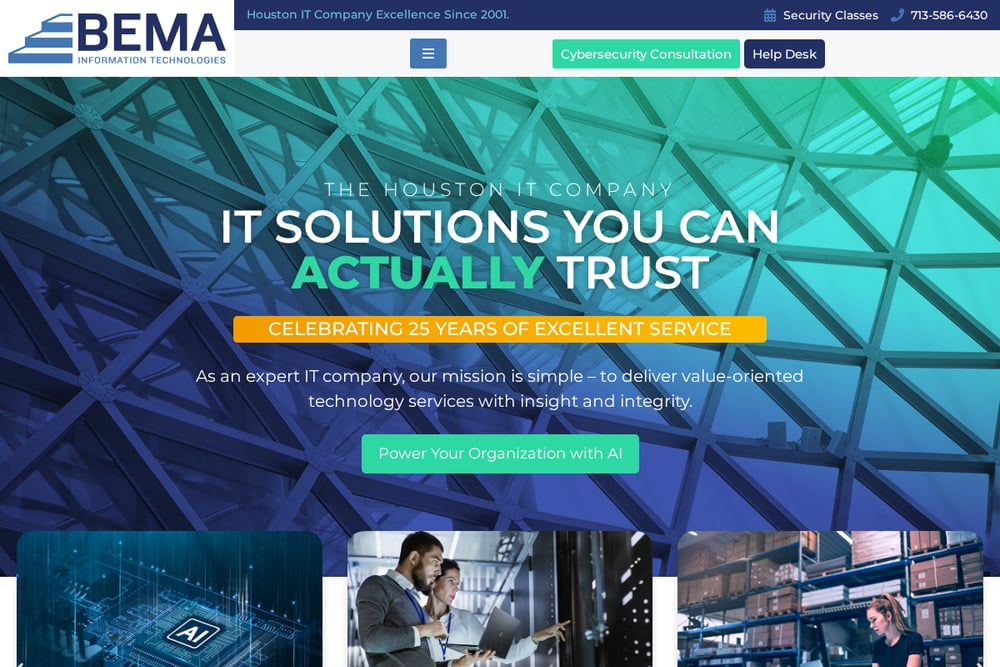 A screenshot of the BEMA Services website.
BEMA has been serving Houston-area businesses since 2001, and that longevity shows in a broad menu that runs from managed IT and cybersecurity to VoIP, Microsoft 365, and a private AI platform. The pitch is straightforward: flat monthly pricing, remote monitoring, and technicians on call for hardware and software issues. You get the peace of mind of an established local provider with deep bench strength. It is a solid fit if you want one vendor for IT support and telecom. See the full service list on the BEMA managed IT page.
#2 ICATALYST | Managed IT Services
 A screenshot of the ICATALYST | Managed IT Services website.
ICATALYST builds your IT around written standards, which is a refreshing change from providers who improvise. Patch compliance is reported monthly with exceptions explained, password and multifactor policies are applied before optional projects, and offboarding checklists are signed on a leaver's last day. Every client gets a written service agreement, a technology roadmap, and a named account lead. Quarterly business reviews turn ticket trends, device age, and open risks into plain-language reporting you can budget from. It works as a full outsourced department or a co-managed partner, and the documentation discipline is the differentiator. Start with the core capabilities on the ICATALYST site.
#3 Managed Solution
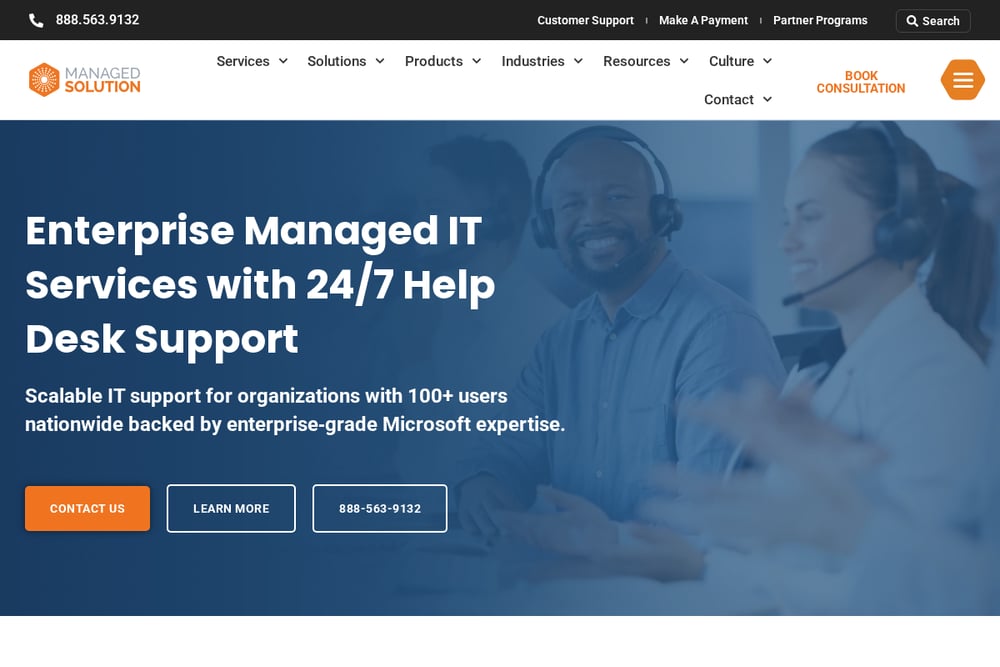 A screenshot of the Managed Solution website.
Managed Solution leans hard into Microsoft, with consulting, security, Azure cloud, and Entra ID and Intune migration services alongside its help desk and co-managed offerings. The catalog is deep: network monitoring, zero touch deployment, compliance management, and business process automation. If your stack is Microsoft-centric, this is a natural conversation. The help desk sits inside a broader services menu, so you can grow into security and automation work without changing vendors. Explore the IT help desk services page for the support side.
#4 NexusTek
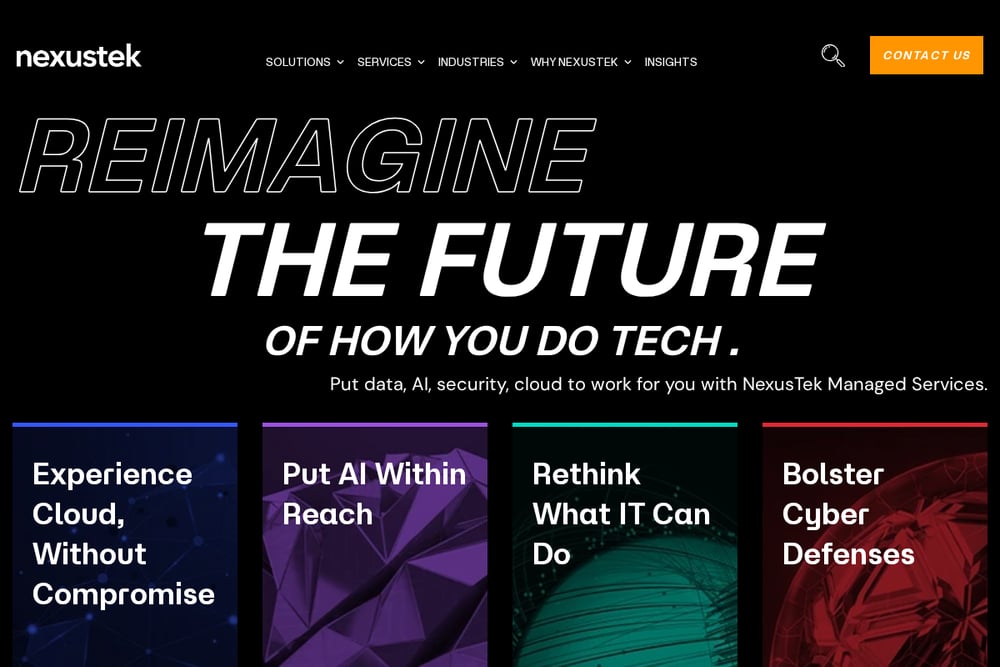 A screenshot of the NexusTek website.
NexusTek positions its managed IT around a resilient foundation and a 24/7 help desk, with specialists handling everything from everyday issues to complex challenges. The company pairs managed services with managed detection and response, AI email security, private cloud, and CMMC 2.0 support. Industry pages cover private equity, healthcare, manufacturing, and more, which helps if you want a provider that already knows your compliance context. It is a strong option when uptime and security operations need to live under one roof. The managed IT services page lays out the full scope.
#5 Dataprise
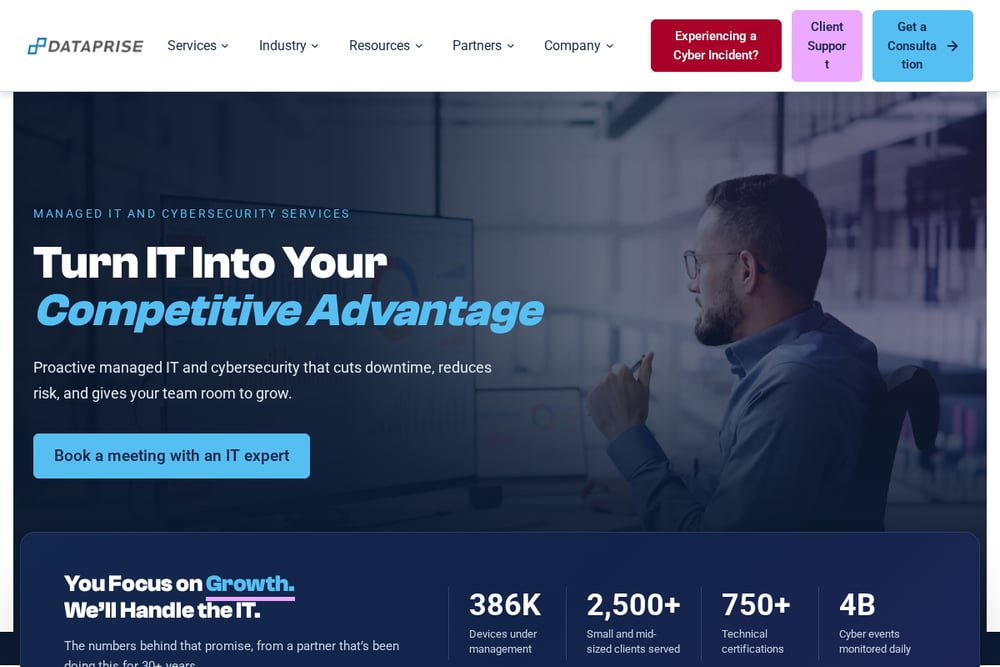 A screenshot of the Dataprise website.
Dataprise offers proactive managed IT for performance, security, and growth, with co-managed or fully managed options. The service catalog is unusually wide, spanning infrastructure, cloud hosting, backup and disaster recovery, unified endpoint management, SOC services, and incident response. Field services and M&A support round out the offering for organizations in transition. Industry coverage includes financial services, healthcare, legal, government, and nonprofits. If you need a provider that can scale with a growing or changing business, this is worth a look. See the managed IT services page for the full picture.
How to choose without regret
Start with what you actually have, not what you wish you had. Ask each provider how they document your environment, how they report patch compliance, and who your named contact will be. Get the service agreement in writing and read the exclusions. If you have an internal team, confirm the co-managed model and where responsibilities split. Ask for a sample quarterly review so you can see whether the reporting is plain language or jargon. Finally, check how they handle offboarding and access reviews, because those are the moments where sloppy providers show their true colors.
Where automation fits into the workflow
Good managed IT automates the boring, repeatable work so humans can handle the exceptions. Patching runs on a schedule and reports compliance monthly. Asset inventories reconcile against monitoring data. Access is granted by role and reviewed quarterly. Backups are verified, not just scheduled. Offboarding checklists fire on a leaver's last day and get signed. When those loops run automatically, your quarterly review becomes a conversation about risk and budget instead of a scramble to reconstruct what happened.
The bottom line
There is no single winner here, because the right provider depends on your stack, your compliance load, and whether you have an internal team. BEMA suits established local businesses wanting one vendor. ICATALYST stands out for documented standards and audit-ready reporting. Managed Solution fits Microsoft-centric environments. NexusTek brings 24/7 support and security operations. Dataprise scales across broad infrastructure and transition work. Pick the one whose operating rhythm matches yours, and get the agreement in writing.