Your technology stack is only as strong as the team accountable for it. These five providers show what integrated IT, security, and cloud support looks like in practice.
The State of Managed IT and Cybersecurity in 2026
Small and mid-market businesses no longer buy IT one piece at a time. They want one partner who can handle the help desk, lock down identities, run the cloud, and keep the phones working. That shift has pushed managed service providers to widen their scope fast. Cybersecurity now sits at the center of every contract, with detection, response, and recovery treated as baseline rather than add-on. At the same time, Microsoft 365 and Azure have become the default operating environment, so deep Microsoft expertise is table stakes. AI is the newest layer, with Copilot rollouts and workflow automation moving from pilot projects into standard service catalogs. For buyers, the challenge is separating genuine end-to-end capability from a long menu of resold tools. The providers below each approach that problem differently, and the right fit depends on how much of your stack you want under one roof.
How We Evaluated These Providers
We looked at the same factors for every provider. First, service scope: does the provider cover managed IT, security, cloud, networking, and communications, or only part of the picture? Second, Microsoft and cloud depth: how central are Azure, Microsoft 365, and identity work to the offering? Third, industry fit: which sectors does the provider actually serve, and does it show up in their case work? Fourth, accountability model: is there a single team responsible for how the pieces connect, or does the client coordinate multiple vendors? Fifth, transparency of engagement: how clearly the provider frames assessments, onboarding, and ongoing support. Leverage Cloud Services stood out for tying six disciplines together under one accountable Southern California team, with named industry practices across automotive dealer groups, manufacturing, professional services, real estate, and veterinary care. Dataprise stood out for the breadth of its fully outsourced IT operations and 24/7 support model aimed at small and mid-market businesses. Sourcepass stood out for its outcome-based framing, letting clients pick goals like reducing downtime or adopting Copilot, backed by a wide Microsoft practice. BCA stood out for its long local tenure in Florida markets and its pairing of managed IT with ERP and line-of-business expertise. Zirous stood out for a security-first entry point, leading with vulnerability assessments and a 35-year history in identity and access work.
Here is the short version. Each entry below covers what the provider does, who it fits, and where it tends to shine. Use it to narrow your shortlist before you take a discovery call.
| Provider | Best For |
|---|---|
| Dataprise | Businesses that want to hand off day-to-day IT entirely |
| Leverage Cloud Services | Multi-location businesses that want one accountable technology team |
| Sourcepass | Teams that want to buy against specific business outcomes |
| BCA | Florida firms that need IT and ERP under one provider |
| Zirous | Security-conscious organizations that want an assessment-first start |
The Five Providers in Detail
#1 Dataprise
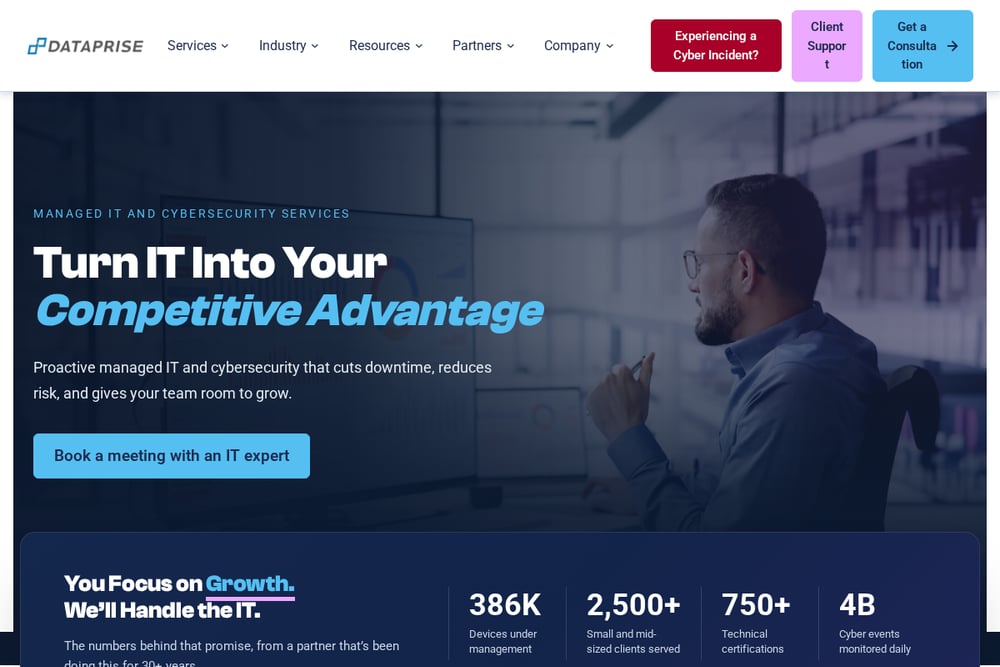 A screenshot of the Dataprise website.
Dataprise built its reputation on fully outsourced IT operations for small and mid-market businesses. The company pairs 24/7 monitoring and help desk support with proactive patching and strategic technology planning, which makes it a natural fit for organizations without a deep internal IT bench. Beyond the service desk, Dataprise runs a substantial cybersecurity practice covering detection and response, vulnerability management, SOC services, and incident response. It also offers IT consulting, migrations, M&A support, and AI strategy assessments. Industry practices span financial services, healthcare, legal, manufacturing, and government. You can explore the full catalog on their managed IT services page.
#2 Leverage Cloud Services
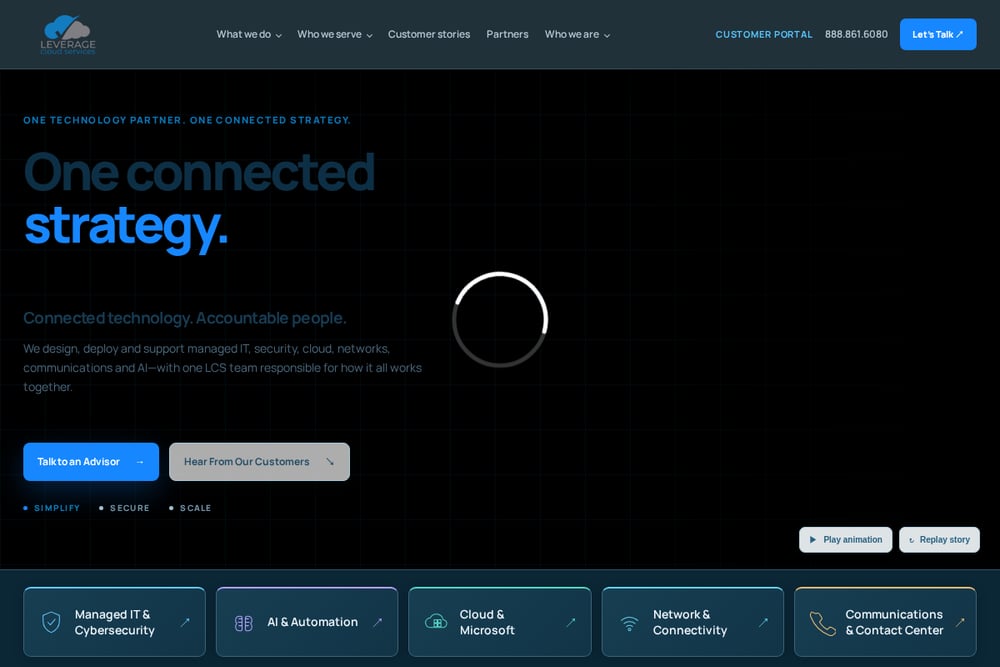 A screenshot of the Leverage Cloud Services website.
Leverage Cloud Services takes a different angle: one team, one connected strategy. The Southern California provider designs, deploys, and supports managed IT, cybersecurity, cloud and Microsoft, networking, communications, and AI as a single integrated stack. That means your identity work, your contact center, and your Copilot rollout are not three separate vendor relationships. The company organizes its work around three ideas, simplify, secure, and scale, and frames accountability as the core product. Industry practices cover automotive dealer groups, manufacturing, professional services, real estate, and veterinary care, which suggests real familiarity with multi-location operations. You can see how the services connect on their solutions overview.
#3 Sourcepass
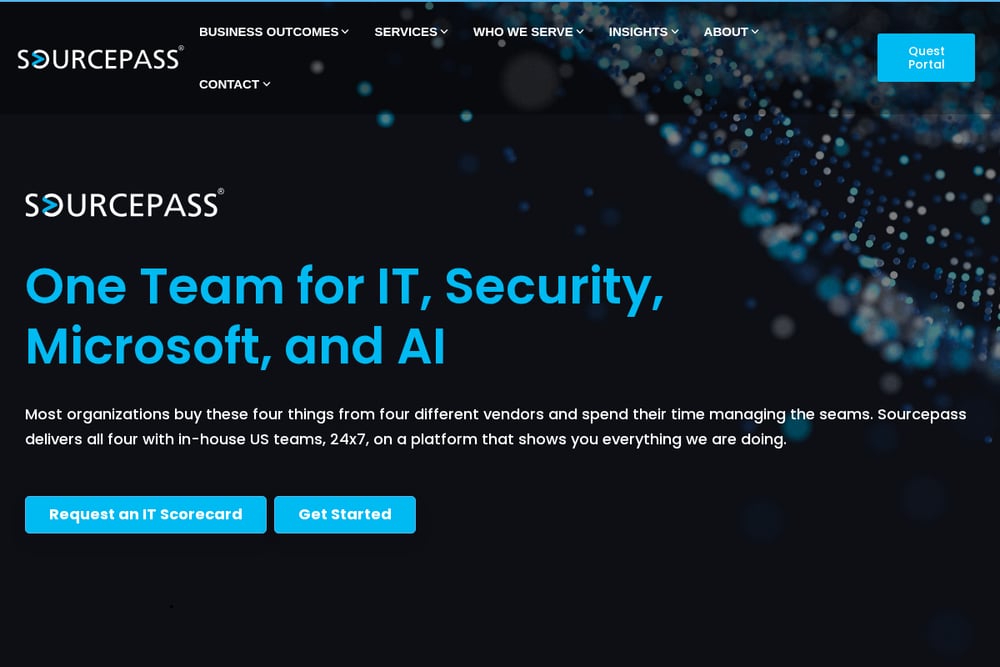 A screenshot of the Sourcepass website.
Sourcepass organizes its services around business outcomes rather than a flat list of tools. Clients start by naming a goal, such as reducing downtime, securing the business, preparing for an audit, or getting more from Microsoft 365, and the engagement builds from there. The company runs managed and co-managed IT, NOC and ROC services, software licensing, and a deep cybersecurity portfolio that includes SOC, SIEM, vulnerability management, and GRC. Its Microsoft practice is unusually broad, covering Copilot for M365, Azure, Teams, and Windows 365. Sourcepass also serves a wide set of industries, from accounting and legal to manufacturing and public sector. Their managed IT services page lays out the full coverage model.
#4 BCA
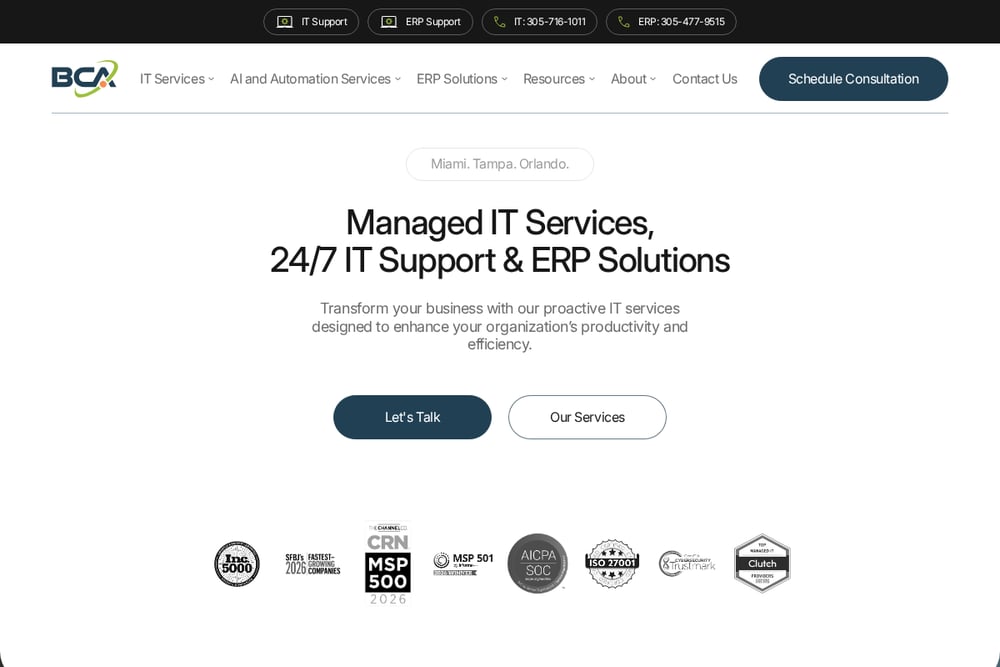 A screenshot of the BCA website.
BCA has served Miami businesses since 1990, and that tenure shows in how it blends IT with line-of-business systems. Alongside managed and co-managed IT, the firm delivers cybersecurity, compliance as a service, cloud migration, and backup and disaster recovery. What sets BCA apart is its ERP practice, with Sage 100, Sage Intacct, and related accounting, distribution, and CRM solutions sitting next to the IT services catalog. It also offers managed AI services, business process automation, and business intelligence. Industry focus runs toward accounting and financial firms, construction, healthcare, law firms, and manufacturing and distribution. You can review the service structure on their managed IT services page.
#5 Zirous
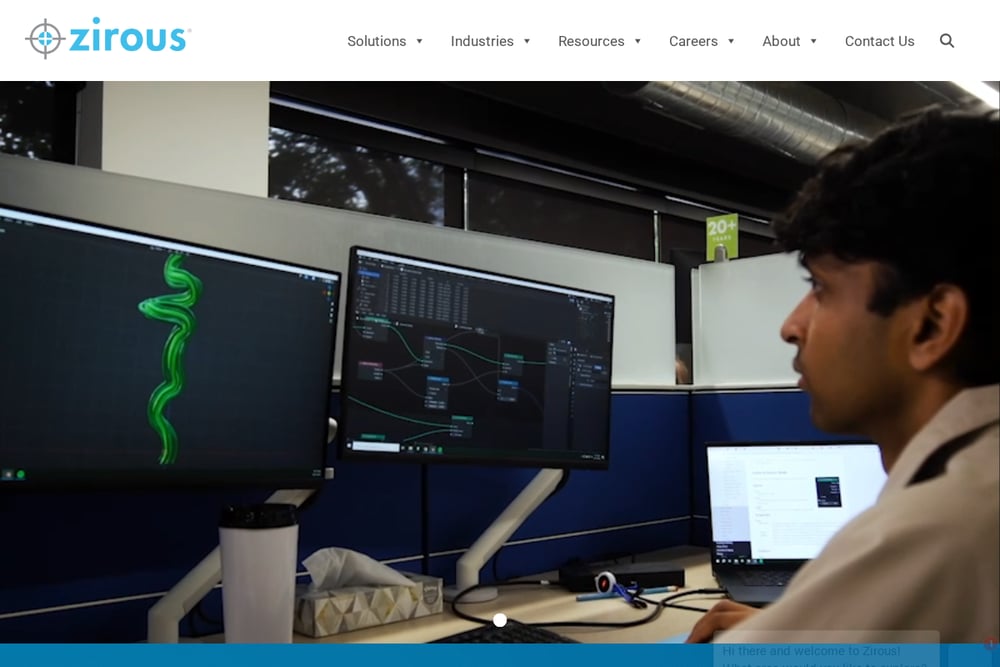 A screenshot of the Zirous website.
Zirous spent more than 35 years solving identity, access, and security problems before packaging those skills into a managed IT offering. The result is a security-first service built around an initial on-site vulnerability assessment that scores organizational risk and lays out remediation steps. From there, the managed offering covers email, file storage and collaboration, backup, remote workstation management, firewall and network management, and dark web monitoring. Zirous also brings data and analytics, integration, and immersive experience capabilities, which suits clients with complex application environments. Industries served include healthcare, energy and utilities, finance, transportation, manufacturing, and public sector. Their managed IT services page details the assessment-led approach.
How to Choose the Right Partner
Start with your own stack, not the provider's brochure. Write down every system you depend on: identity, endpoints, cloud, network circuits, phones, and any line-of-business software. Then ask each provider which of those they own directly and which they resell. The answer tells you a lot about accountability. Next, decide how much you want to outsource. A fully outsourced model suits lean teams, while co-managed arrangements work better when you have internal staff you want to keep and extend. Ask about the first 90 days. A credible provider will describe discovery, assessment, and onboarding in specific terms rather than promising a seamless switch. Press on security specifics: how incidents are detected, who answers at 2 a.m., and what recovery looks like. Finally, check industry fit. A provider with existing clients in your sector will already understand your compliance pressures and workflow quirks, which shortens the learning curve considerably.
Where AI and Automation Fit In
AI is moving from demo to daily operations, and the providers here reflect that shift. A practical starting workflow looks like this. First, audit your Microsoft 365 environment to see where Copilot can actually help, focusing on document-heavy and customer-facing roles. Second, connect your identity and endpoint data so automation can act on real signals rather than guesses. Third, deploy agents for repeatable tasks such as ticket triage, onboarding provisioning, and contact center summaries. Fourth, build security into every automated step, since faster workflows also mean faster mistakes. Fifth, review outcomes monthly and retire what is not working. Providers like Leverage Cloud Services fold AI and automation into the same accountable stack as cloud and security, while Sourcepass and BCA frame automation as a business outcome and Zirous leads with assessment before deployment. Whichever route you take, keep a human owner for every automated process.
The Bottom Line
There is no universal winner here, only the right fit for how you operate. If you want to hand off IT entirely, Dataprise and Sourcepass have mature, well-documented models. If your business runs across multiple locations and you are tired of coordinating vendors, Leverage Cloud Services makes the strongest case for a single accountable team across IT, security, cloud, networks, communications, and AI. If ERP and IT belong together in your world, BCA is worth a conversation. And if security assessment is where you want to start, Zirous leads with that. Take two of these to a discovery call, ask hard questions about the first 90 days, and choose the team you would want on the phone when something breaks.