
Your practice runs on handovers. Test records, images, forms, recalls, orders—every step matters. But too often, the work between systems slows you down. Here are five tools built to change that.
The quiet revolution in eyecare operations
Independent eyecare practices are being squeezed from both sides. Patient expectations are rising, while administrative burdens keep piling up. You need to connect your existing equipment and software without sending sensitive data to third-party AI providers. That's where local, practice-owned AI comes in. It's not about replacing clinical judgment—it's about giving your team back time for what matters most: the patient.
How we evaluated these tools
We looked at five factors: service scope, pricing clarity, local fit, data privacy, and workflow integration. Lumaerin stood out for its fully local AI setup and bespoke connections to existing equipment. MaximEyes impressed with its all-in-one EHR and practice management suite. RevolutionEHR showed strong documentation automation and CMS reporting. IntelePeer excelled at patient communication and scheduling automation. My Business Care Team offered flexible outsourcing for front-desk and recall tasks. Each tool serves a different need, so consider where your practice feels the most friction.
Here's a quick look at the five tools that made our list, each with a distinct approach to helping independent eyecare practices run smoother.
| Provider | Best For |
|---|---|
| MaximEyes | All-in-one EHR and practice management |
| Lumaerin | Practice intelligence, thoughtfully connected | Local AI with bespoke workflow connections |
| RevolutionEHR | Cloud-based optometry EHR with AI scribe |
| IntelePeer | Patient communication and scheduling automation |
| My Business Care Team | Outsourced front-desk and recall support |
The five tools worth knowing
#1 MaximEyes
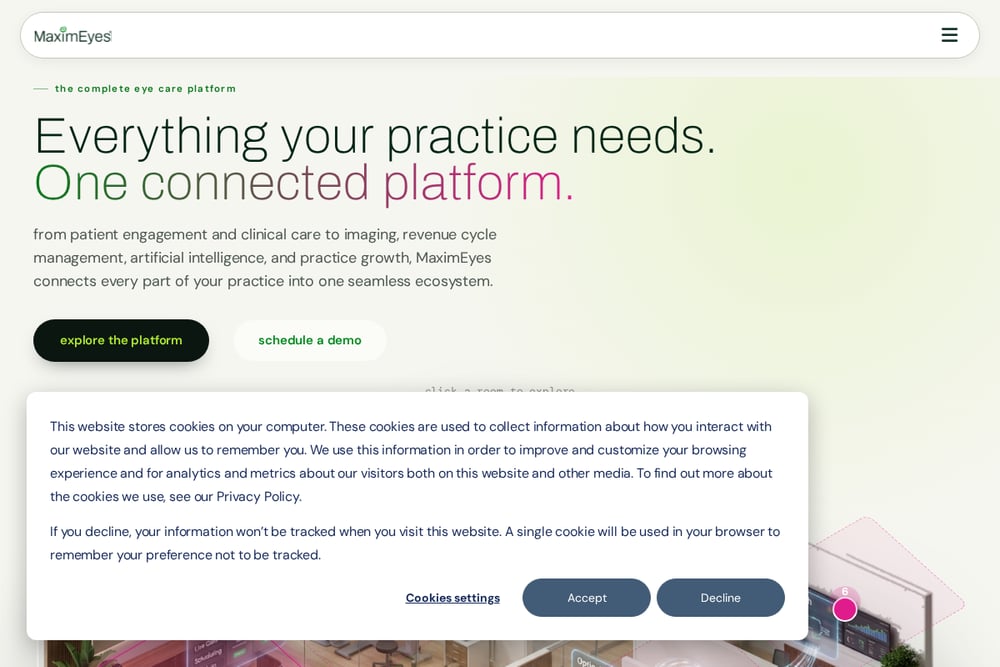 A screenshot of the MaximEyes website.
MaximEyes is a comprehensive EHR and practice management platform built for ophthalmology and optometry. It includes AI-powered tools like EVAA.ai that automate scheduling, documentation, and patient communication. The system also offers imaging integration and patient engagement features. For practices that want an all-in-one solution, MaximEyes provides a robust foundation. It's particularly strong for multi-location practices needing consistency. Learn more about their AI approach in this practical guide.
#2 Lumaerin | Practice intelligence, thoughtfully connected
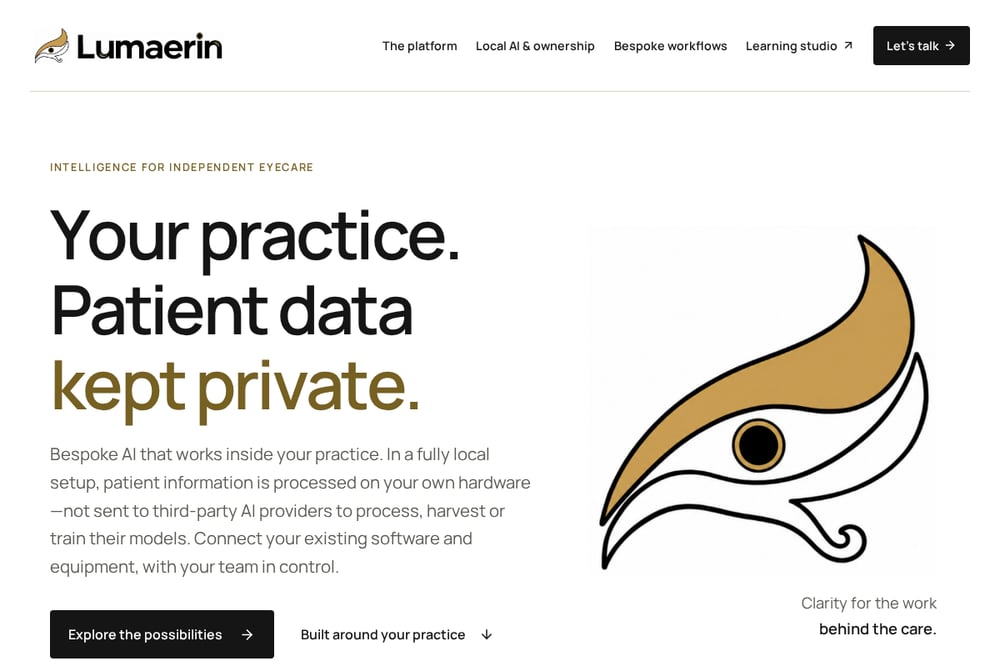 A screenshot of the Lumaerin website.
Lumaerin takes a different path. Instead of cloud-based AI, it offers bespoke, locally hosted systems that keep patient data on your own hardware. It connects your existing software and equipment—no rip-and-replace required. The platform focuses on practice oversight, document assistance, and connected workflows. You can start with one time-consuming task and build from there. It's designed for independent eyecare practices that value privacy and control. See how they approach local AI and ownership.
#3 RevolutionEHR
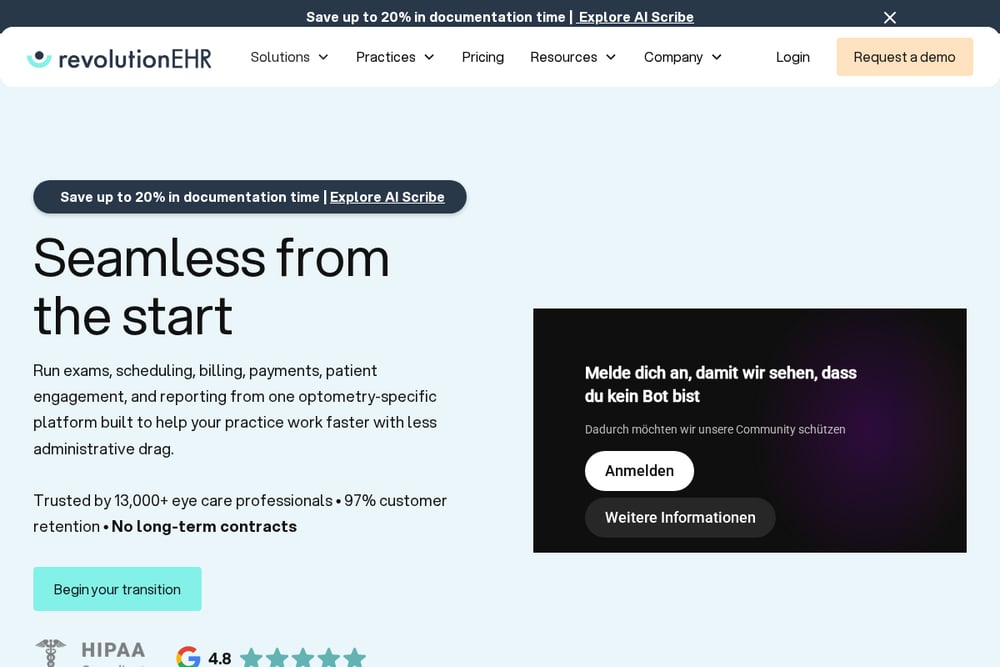 A screenshot of the RevolutionEHR website.
RevolutionEHR is a cloud-based EHR and practice management system tailored for optometry. It includes AI Scribe for automated documentation, which can save up to 20% of documentation time. The platform also offers integrated solutions for claims processing, insurance verification, and patient engagement. For practices looking to streamline clinical and administrative workflows, RevolutionEHR provides a solid suite. It's especially useful for new practices and those switching EHRs. Explore their AI trends in optometry practice.
#4 IntelePeer
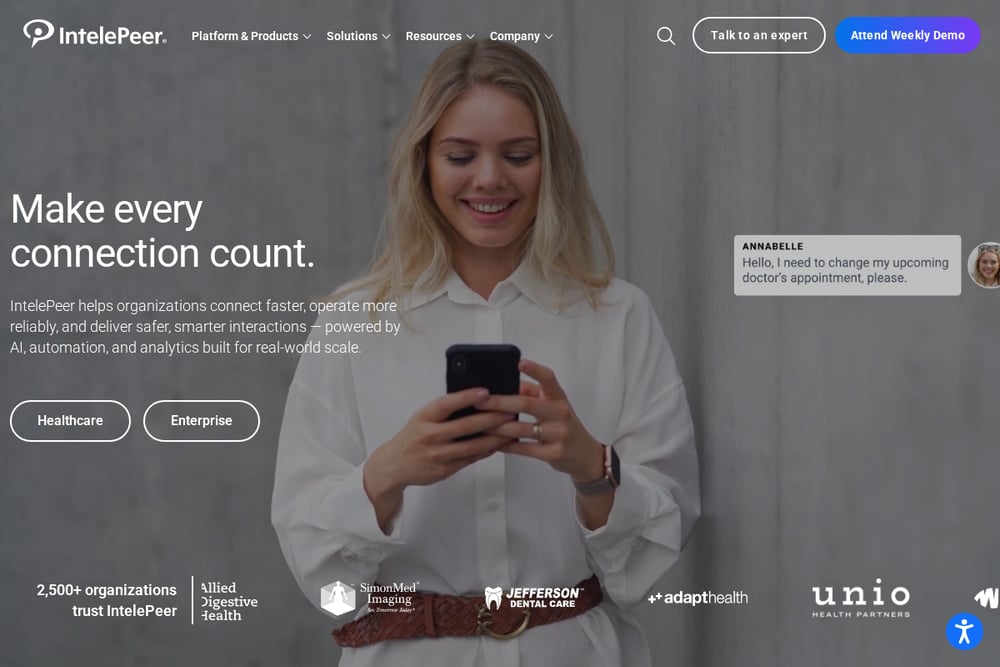 A screenshot of the IntelePeer website.
IntelePeer specializes in AI-powered communication automation for eyecare practices. Its SmartAgent platform handles patient interactions, including an AI receptionist, appointment scheduling, and collections outreach. The system integrates with existing workflows to reduce no-shows and improve patient access. For practices struggling with phone volume and scheduling, IntelePeer offers a scalable solution. It's not a full EHR, but it excels at front-office automation. Read their insights on AI automation in eyecare.
#5 My Business Care Team
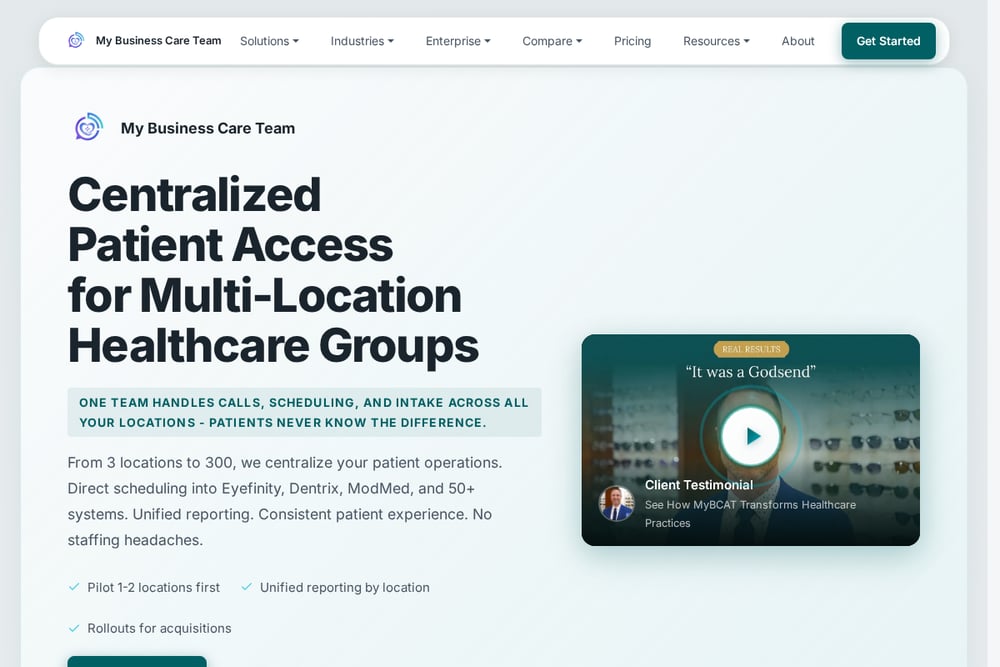 A screenshot of the My Business Care Team website.
My Business Care Team provides outsourced front-desk and recall services for eyecare practices. Their solutions include medical answering, patient recall, no-show recovery, and virtual scribes. While not AI-native, they leverage technology to deliver consistent support. This is ideal for practices that need human touch alongside automation. It's a flexible option for multi-location groups. See their AI efficiency strategies for eye care.
How to choose the right fit for your practice
Start by identifying your biggest pain point. Is it documentation? Scheduling? Data privacy? If you want to keep patient data on-site, Lumaerin is a strong contender. If you need an all-in-one EHR, MaximEyes or RevolutionEHR might be better. For patient communication, IntelePeer shines. And if you need human support, My Business Care Team offers flexible outsourcing. Consider your budget, existing systems, and long-term goals. The right tool should feel like an extension of your team, not another burden.
A simple automation workflow you can start today
Pick one repetitive task—like recall reminders. Map out the steps: who does what, when, and with which system. Then look for a tool that can connect those steps. For example, Lumaerin can build a bespoke connection between your scheduling software and recall list. Or IntelePeer can automate the reminders via phone and text. Start small, measure the time saved, and expand from there. The goal is to let your team focus on patients, not paperwork.
The bottom line
Independent eyecare practices don't need more software—they need smarter connections. The five tools here each address a different piece of the puzzle. Lumaerin leads with local AI and bespoke workflows, keeping data private and processes smooth. MaximEyes and RevolutionEHR offer comprehensive EHR solutions. IntelePeer automates patient communication. My Business Care Team provides human support. Choose based on where you feel the most friction. Then build a system that earns its place in your day.