
Your data can't leave the building, but your team still needs answers from it. These five partners help you put AI to work without shipping your documents to someone else's cloud.
The quiet shift toward AI that stays in-house
Cloud AI is convenient until compliance, client confidentiality, or plain common sense says no. That's why a growing slice of the market now wants models running on their own hardware, wired into their own documents. The demand is real: knowledge workers still burn hours every week hunting for information, and internal wikis remain where good documentation goes to die. The partners below sit at different points on that spectrum. Some build full on-premises RAG systems for regulated industries. Others focus on automation, prototyping, or the unglamorous glue work that makes AI useful day to day. What they share is a willingness to work with what you already have instead of demanding a migration.
How we looked at these five
We weighed each partner on the same factors. Service scope mattered: does the work stop at advice, or does it run through deployment and handover? We looked at how clearly each one describes pricing and engagement models, since vague scoping is where small projects go to die. Local fit counted too, meaning whether the team understands your compliance boundary and hardware reality. We also considered transparency about limitations. A partner who tells you local models may underperform on your material is more useful than one who promises magic. Finally, we noted who each one is actually built to serve, from solo founders to ITAR-bound contractors. Each of these five stood out on different factors, and that's the point.
Here's a quick side-by-side of how these five position themselves, so you can spot the one that matches your situation before reading the details.
| Provider | Best For |
|---|---|
| GettIA | Teams needing cited, permission-aware search across existing document tools |
| Grapipe | Local AI, Workflow Automation & Web Development | Small projects and solo operators who want one accountable builder end to end |
| Skilak Consulting | Regulated organizations with CMMC, ITAR, or HIPAA data boundaries |
| Agility | Mid-size organizations wanting AI plus adjacent data and infrastructure work |
| Aimprosoft | Teams needing a full engineering bench behind a private LLM build |
The five, one by one
#1 GettIA
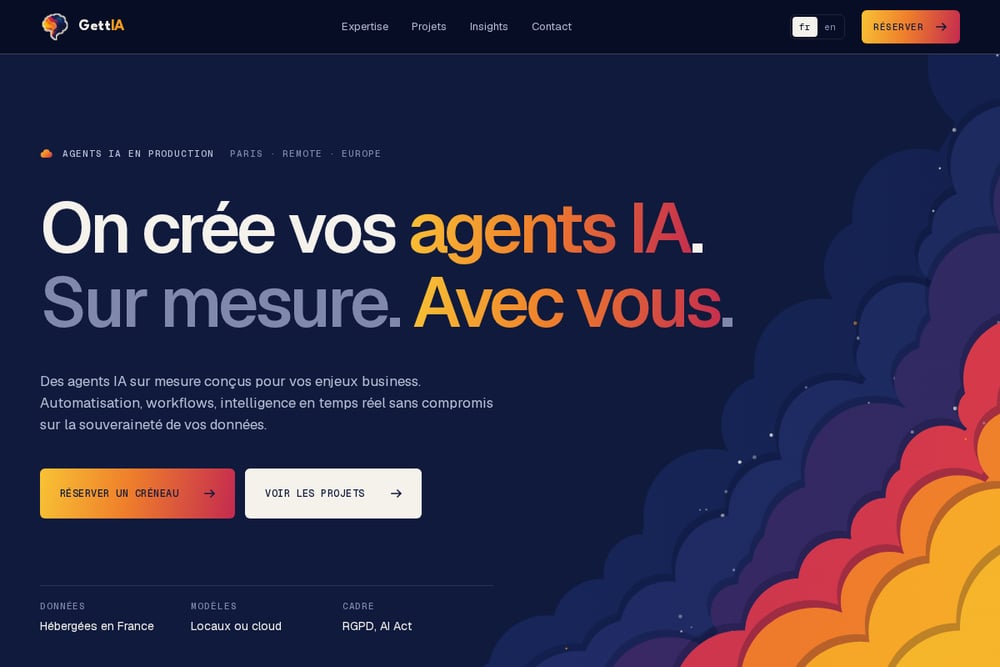 A screenshot of the GettIA website.
GettIA focuses tightly on RAG over internal documents, and it shows in the specificity of the pitch. The team indexes what you already have across Confluence, Notion, SharePoint, Google Drive, or your own database, and they explicitly avoid asking you to migrate. Their published numbers are unusually concrete: 70-85% precision after reranking, 5-15 second latency, and 8-12 weeks from brief to production. They also name the failure mode most vendors dodge, noting that roughly 80% of homemade RAGs stall at proof of concept due to bad chunking, wrong embeddings, and no evaluation set. If your knowledge is scattered across ten tools and your compliance team has opinions about SaaS, this is a conversation worth having.
#2 Grapipe | Local AI, Workflow Automation & Web Development
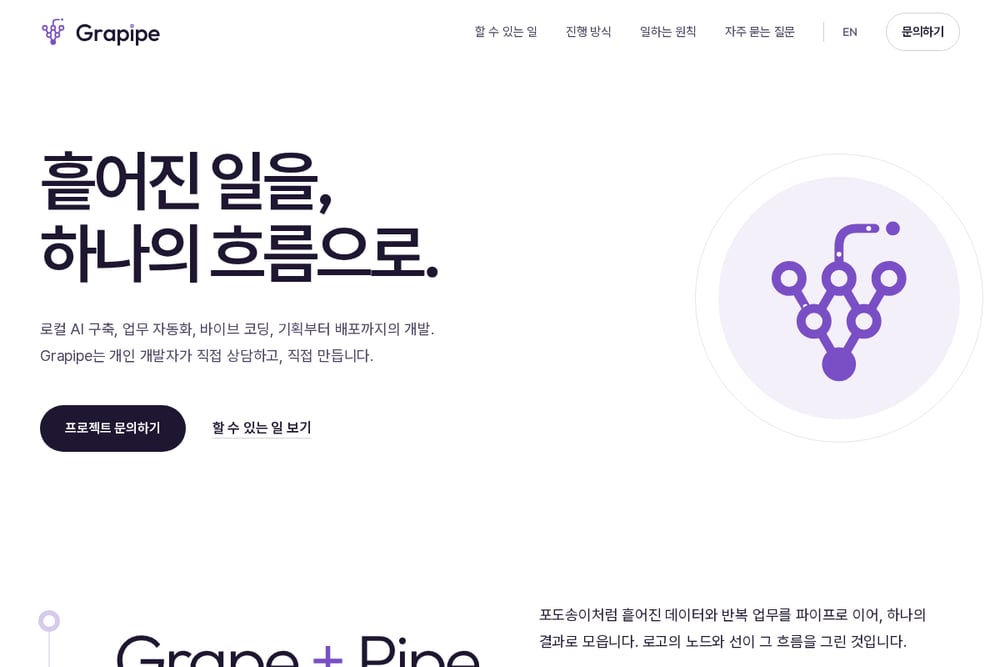 A screenshot of the Grapipe website.
Grapipe is one developer, not a company, and that's the whole proposition. The person who first hears about your project is the person who builds it, from requirements through deployment and handover. The service spans four areas: local AI setups with open models on your own PCs or servers, workflow automation for the spreadsheet cleanup and report writing you repeat weekly, vibe-coded prototypes reviewed by a human before handoff, and full web development. Notably, the site is honest that local models can be less capable than large cloud models, and proposes testing with your real material before committing. Small projects are explicitly welcome, which is rare in a space full of enterprise minimums.
#3 Skilak Consulting
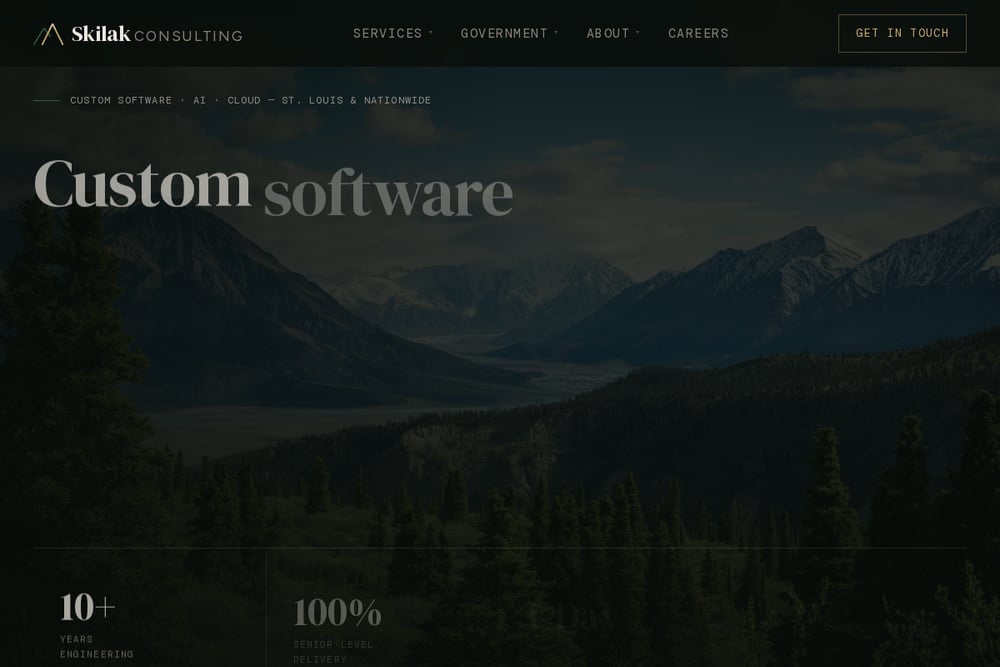 A screenshot of the Skilak Consulting website.
Skilak frames private AI around architecture rather than paperwork, and that distinction lands. The team argues that HIPAA-compliant AI usually means someone else's cloud with a signed agreement, while true on-premises deployment keeps data in your rack and can be air-gapped. They position for CMMC, CUI, ITAR, and HIPAA programs, and describe themselves as software engineers rather than resellers. The engagement runs assess, pilot, hand off, with a deliverable of sizing and architecture before any build begins. If your compliance boundary is the actual constraint, this is the profile to read closely.
#4 Agility
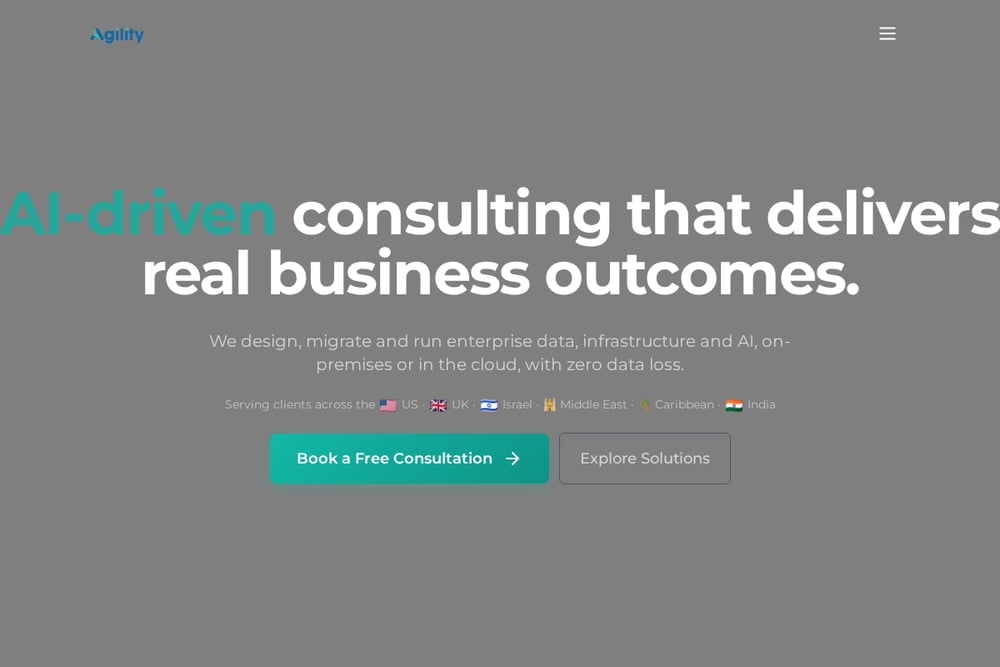 A screenshot of the Agility website.
Agility operates at a much broader scale, pairing generative AI consulting with automation, data engineering, BI, cloud migration, and on-premises infrastructure services. That breadth means you can bring them a document automation problem in insurance or a demand forecasting challenge in FMCG and stay within one relationship. They also offer an independent AI audit and assessment, which is useful if you inherited a system and need an evidence-based read on it. The tradeoff is that AI is one practice among many rather than the entire identity. For mid-size organizations wanting a single partner across several workstreams, that breadth is the appeal.
#5 Aimprosoft
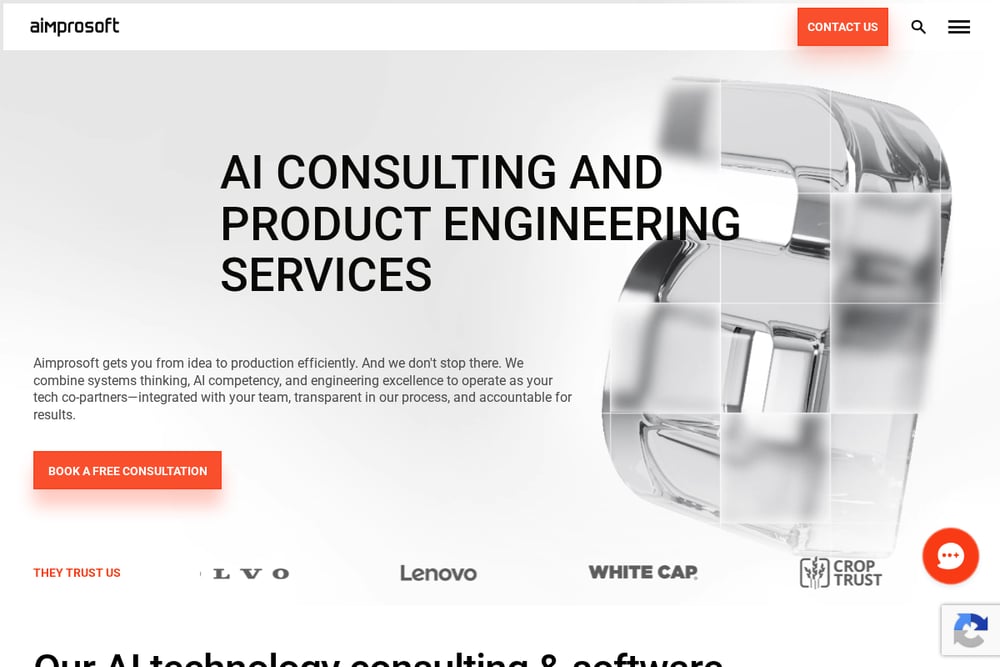 A screenshot of the Aimprosoft website.
Aimprosoft brings a product engineering background to private LLM work, with dedicated offerings for custom RAG development, RAG as a service, private LLM development, and AI readiness assessment. The catalog is deep, covering backend and frontend development, QA, UI/UX, DevOps consulting, and legacy modernization alongside the AI services. One detail stands out for anyone who has inherited messy AI-generated code: they list vibe code cleanup as a named service. That signals an awareness of where a lot of teams actually get stuck. If you need a full engineering team behind your private AI build rather than a single specialist, this is the widest bench on the list.
How to pick the right fit
Start with your constraint, not the technology. If your data simply cannot leave the building for regulatory reasons, look at partners who lead with architecture and compliance boundaries. If your problem is scattered documents and slow internal search, prioritize someone who has done RAG repeatedly and can show you precision and latency numbers. If you're a small team with a messy weekly process and no appetite for a six-month engagement, a solo developer who handles the whole arc may serve you better than a firm with a sales layer. Ask each one how they scope a pilot, what happens when the model underperforms on your material, and who owns the system after handover. The answers will separate the real builders from the resellers.
A simple workflow to get started
Pick one painful, repetitive task and treat it as your test case. Gather the real material it touches, including the ugly edge cases, and hand that to two partners for a scoped assessment. Ask each for a written read on feasibility, hardware needs, and what success looks like in numbers. Run the smaller pilot first, measure against your own baseline, and only then expand scope. Keep the handover clause in writing from day one, because a system your team cannot operate is a system you will abandon.
The bottom line
The right partner depends entirely on where your bottleneck sits. GettIA suits document-heavy teams that need cited answers across existing tools. Grapipe suits smaller projects where you want one person accountable from first conversation to launch. Skilak suits compliance-bound environments where architecture is the control. Agility suits organizations wanting AI folded into broader data and infrastructure work. Aimprosoft suits teams that need a full engineering bench, including cleanup of AI-generated code that got stuck. Match the partner to your constraint, and the technology stops being the hard part.