
You want to mix live shows with confidence, not just collect another certificate. These five US-based programs give you real skills, real feedback, and a clear path from faders to front of house.
The State of Live Sound Education
Live sound engineering has moved from shadowing at local venues to structured online training that fits around gig schedules. You no longer need to relocate or spend years in a traditional trade school to learn gain structure, monitor mixing, and system tuning. Today's programs range from self-paced video libraries to mentor-led apprenticeships and accredited college courses. The best options blend practical rig time with personalized feedback, so you build muscle memory instead of just watching someone else turn knobs. Whether you are a worship volunteer, a touring hopeful, or a studio engineer adding live skills, there is a course built for your budget and learning style.
How We Evaluated These Programs
We looked at five factors that matter to working learners. First, curriculum depth: does the course cover EQ, dynamics, monitor world, and system design, or just the basics? Second, hands-on access: are you mixing real or simulated sources, or only watching lectures? Third, instructor experience: have the teachers actually run live shows at a professional level? Fourth, pricing clarity and format: can you find tuition, schedule, and refund details without a sales call? Fifth, support and community: do you get feedback on your mixes, a student network, or mentor check-ins? Each program below stands out in different areas. Practical Live Sound Engineering Essentials shines for personalized, non-cookie-cutter instruction. ProAudioEXP delivers a deep video library from a touring veteran. The Production Academy offers on-demand resources with AI search. Recording Connection places you inside a real studio with a mentor. Berklee Online brings accredited college rigor and a recognized name.
Here is a quick look at how these five live sound programs compare on format, focus, and who they serve best.
| Provider | Best For |
|---|---|
| ProAudioEXP | Self-paced learners who want a touring veteran's playbook |
| Practical Live Sound Engineering Essentials | Aspiring engineers who want personalized, practical coaching |
| The Production Academy | Working engineers who need fast, searchable answers on the job |
| Recording Connection | Hands-on learners who want a studio apprenticeship |
| Berklee Online | Students who want accredited college credit and a prestigious name |
The 5 Live Sound Engineering Courses Worth Knowing
#1 ProAudioEXP
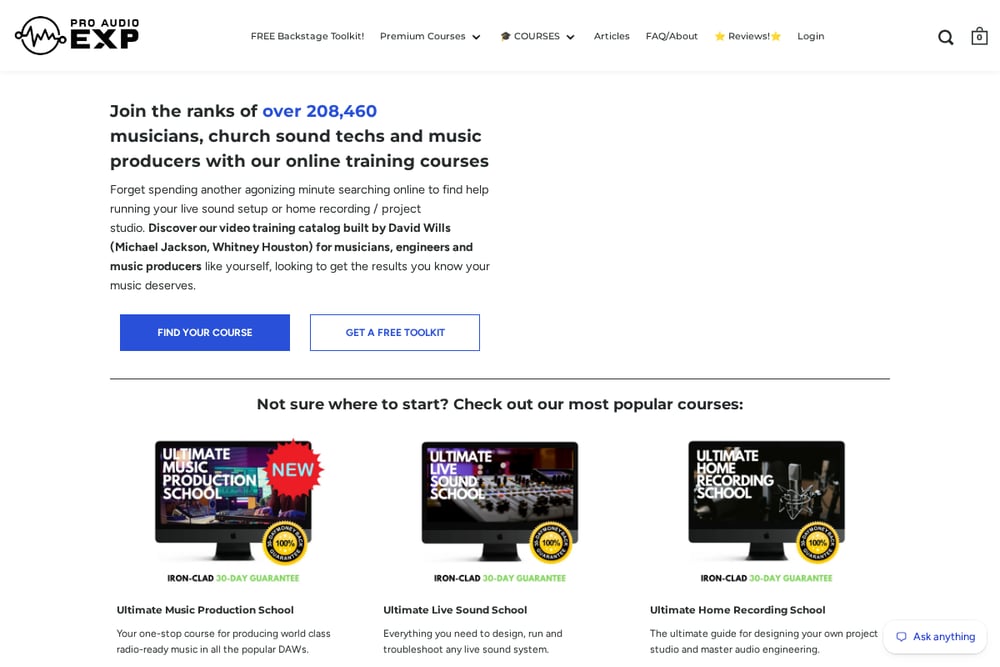 A screenshot of the ProAudioEXP website.
ProAudioEXP's Ultimate Live Sound School is built by David Wills, a 30-year veteran who has mixed for Whitney Houston, Michael Jackson, and Diana Ross. The course promises to help you design, troubleshoot, and run any live sound system, with a focus on fixing common problems fast. You get a structured video curriculum that covers consoles, speakers, and signal flow, plus a free Backstage Toolkit to sample the teaching style. It is a strong fit if you want a proven, self-paced system from someone who has been in the trenches. The program also includes access to a private community and regular updates.
#2 Practical Live Sound Engineering Essentials
 A screenshot of the Practical Live Sound Engineering Essentials website.
Jaremon's Practical Live Sound Engineering Essentials is an online course that treats your learning path as unique, not cookie-cutter. The program pairs real expertise with hands-on learning, so you practice EQ, monitor ringing, and room tuning instead of just watching theory. You get personalized instruction that adapts to your goals, whether you are mixing your first club show or moving up to larger venues. The course emphasizes tactile skills like walking the room and ringing out wedges, turning abstract concepts into muscle memory. If you are tired of generic programs that promise everything and deliver little, this is worth a close look.
#3 The Production Academy
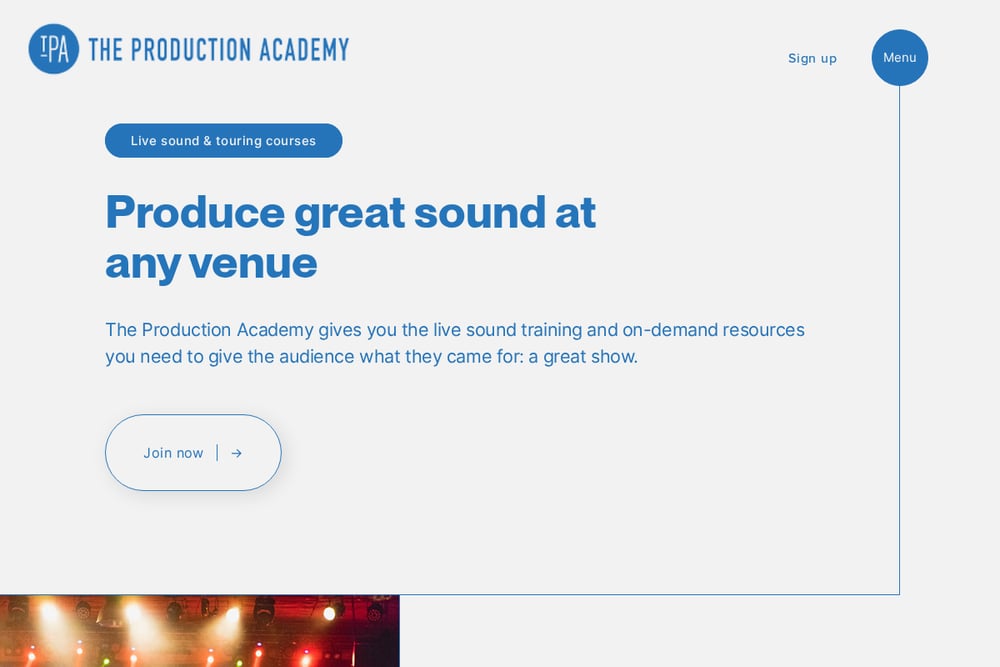 A screenshot of The Production Academy website.
The Production Academy offers live sound and touring courses designed to help you produce great sound at any venue. The curriculum is created by a seasoned engineer who has mixed Grammy-winning artists, and it covers venue acoustics, equipment fundamentals, and live show workflow. One standout feature is an AI-powered learning platform that instantly searches the entire curriculum to surface the exact answer you need during a gig. You also get on-demand support and a focus on adapting to different rooms, from houses of worship to sold-out arenas. It is a smart choice if you want quick, searchable answers alongside structured lessons.
#4 Recording Connection
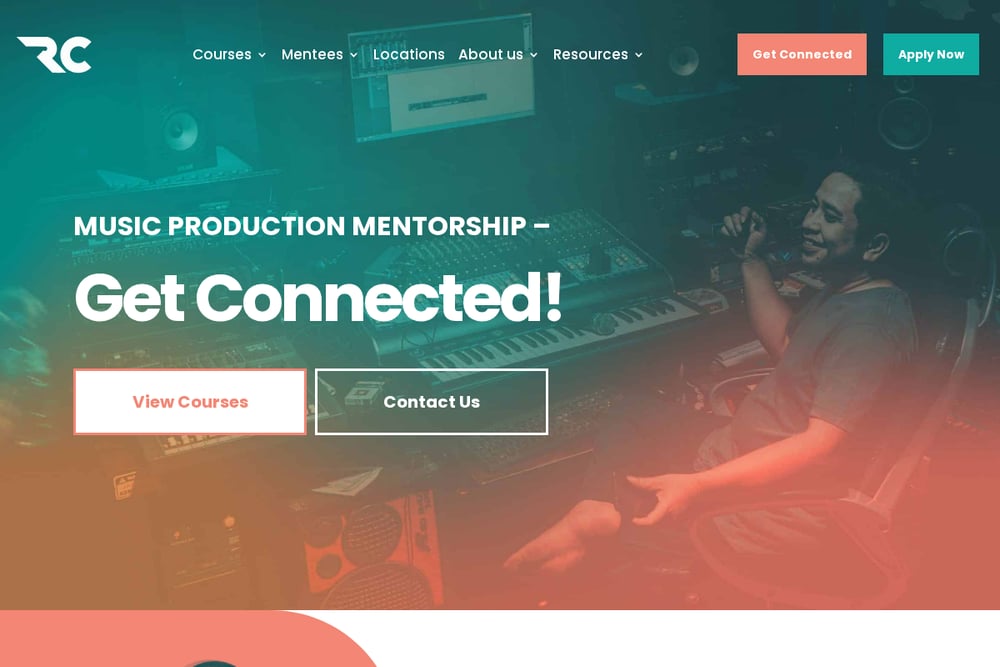 A screenshot of the Recording Connection website.
Recording Connection's Live Sound Engineering Program places you directly with a mentor in a professional studio, so you learn on real consoles, mics, and speakers from day one. The mentor-apprentice model builds on what you already know and prepares you for front-of-house or monitor world roles. You cover electronics, digital audio, Pro Tools, connectivity, and mixing console operation in a real-world environment. The program also emphasizes job placement support and industry connections, which can be valuable if you want to work in live events. It is a more immersive, time-intensive route than purely online courses.
#5 Berklee Online
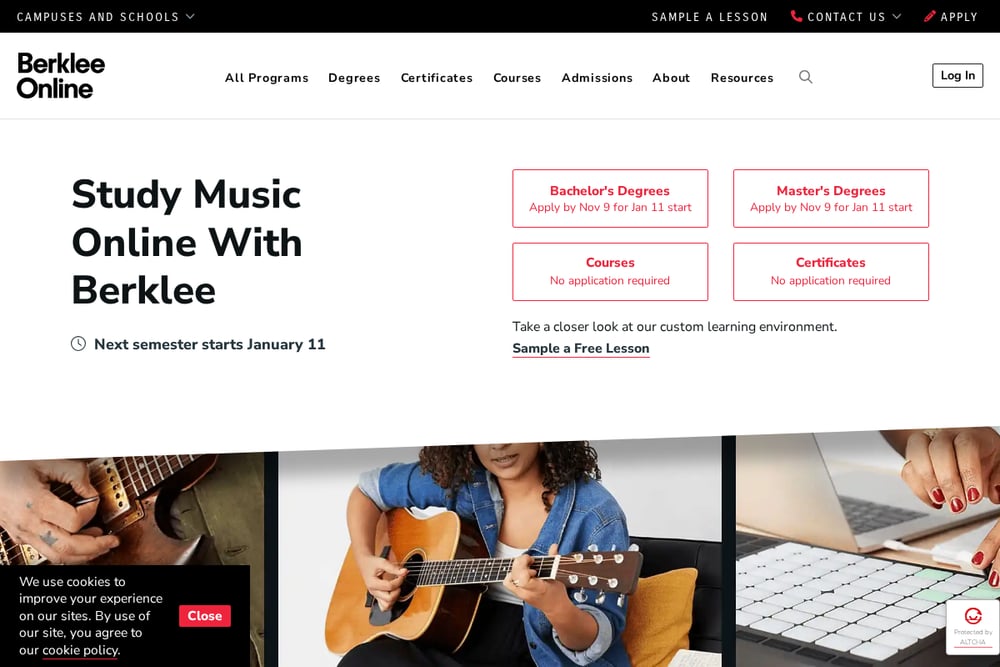 A screenshot of the Berklee Online website.
Berklee Online's Live Event Sound Engineering and Concert Production 101 course brings accredited college instruction to your laptop. You learn from Berklee faculty and earn credits that count toward certificates or degrees, which can matter if you want a formal credential. The course covers live event sound engineering and concert production fundamentals, with the same rigor as Berklee's on-campus offerings. Enrollment windows and tuition are clearly published, and financial aid may be available. It is ideal if you want a recognized name on your resume and a structured academic path.
How to Choose the Right Live Sound Course
Start by defining your goal. If you want to mix your first open mic, a self-paced video course with practical drills may be enough. If you aim to tour or work in houses of worship, look for mentor feedback and real console time. Check the format: do you learn best with deadlines and classmates, or on your own schedule? Look at the instructor's actual live credits, not just their studio work. Read the refund policy and preview lessons before you buy. Finally, consider your budget and whether you need a certificate for your resume. The right course is the one you will actually finish and apply at your next gig.
Automating Your Practice and Gig Prep
You can use simple automation to reinforce what you learn in any of these courses. Create a checklist template for load-in, soundcheck, and show close, then duplicate it for every gig. Set up a notes app with tags for EQ moves, feedback frequencies, and room quirks so you build a personal knowledge base. Use a calendar reminder to review one lesson or practice one skill each week. If you record your mixes, store them in a folder with the venue name and date, then compare them over time. These small systems turn course material into repeatable habits that stick.
The Bottom Line on Live Sound Education
You do not need a decade of shadowing to become a capable live sound engineer. The five programs here give you different paths: ProAudioEXP for a veteran's self-paced playbook, Practical Live Sound Engineering Essentials for personalized hands-on coaching, The Production Academy for searchable on-demand support, Recording Connection for a studio apprenticeship, and Berklee Online for accredited college credit. Pick the one that matches how you learn and where you want to work. Then commit to practice, show up to gigs, and keep refining your ear. Your next show will sound better because of it.