
You want to speak English with confidence, not just pass a quiz. These five live online programs put real conversation practice at the center of your learning.
The Live Online English Market in 2026
Live online English instruction has moved from a niche supplement to a mainstream way to learn. Learners now expect certified teachers, small groups or one-to-one sessions, and schedules that fit real life across time zones. The market splits into three broad camps: global platforms with huge content libraries, accredited institutions with structured curricula, and conversation-first schools that prioritize speaking time above all else. Pricing models range from monthly subscriptions to per-lesson packages, and level coverage typically spans A1 to C2 on the CEFR scale. For US-based learners, the deciding factors are usually teacher quality, how much you actually speak in class, and whether the program supports your specific goal, whether that is everyday fluency, business communication, or exam preparation.
How We Evaluated These Programs
We looked at the same factors for every provider. Service scope: does the program cover everyday English, business English, and exam prep across all CEFR levels? Teacher credentials: are instructors certified, and do they specialize in live instruction? Format flexibility: can you choose small groups, private lessons, or both, and does scheduling work across time zones? Pricing clarity: is the cost structure easy to understand before you commit? Learner support: do you get a level test, a personalized plan, and feedback on your progress? Each program below stood out in different areas. FluencyLeap impressed with its conversation-first design and clear four-step onboarding. EF English Live stood out for its scale and breadth of content. Lingu distinguished itself with a blended model of AI tools and human teachers. British Council LearnEnglish brought institutional credibility and a deep free resource library. Live English focused tightly on speaking speed for professionals who already understand English but freeze when they speak.
Here is a quick look at the five programs, ordered for this roundup. Each one serves a different kind of learner, so scan the summaries and then dig into the full write-ups below.
| Provider | Best For |
|---|---|
| EF English Live | Learners who want a large catalog and round-the-clock live class options |
| FluencyLeap — Leap into fluent English | Learners who want conversation-first lessons with a clear path from beginner to advanced |
| Lingu | Self-directed learners who want AI practice plus optional live teacher sessions |
| British Council LearnEnglish | Learners who value accredited instruction and a deep free resource library |
| Live English | Professionals who understand English but need to speak it faster and more naturally |
The Five Programs in Detail
#1 EF English Live
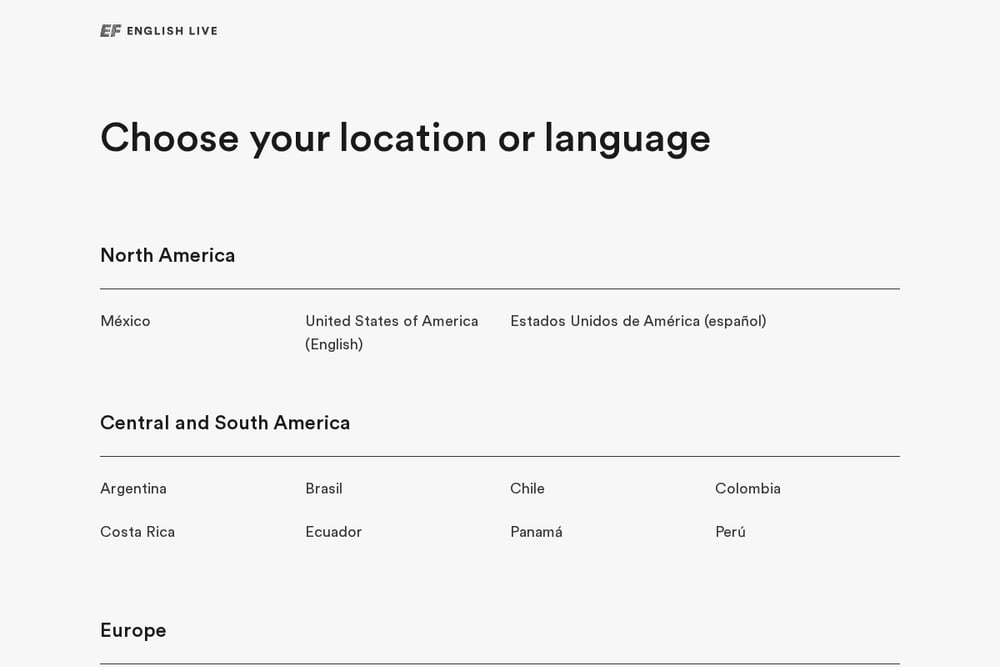 A screenshot of the EF English Live website.
EF English Live is one of the largest online English schools in the world, and its scale shows in the breadth of its course catalog. You get access to live classes around the clock, plus a substantial library of self-study material covering grammar, vocabulary, and real-world topics. The program serves career-focused learners well, with dedicated business English content and practical lessons on emails, meetings, and workplace communication. Its global teacher network means you can usually find a class time that fits your schedule, even if you are in the US and studying around a full-time job. If you want variety and volume, this is a strong place to start.
#2 FluencyLeap — Leap into fluent English
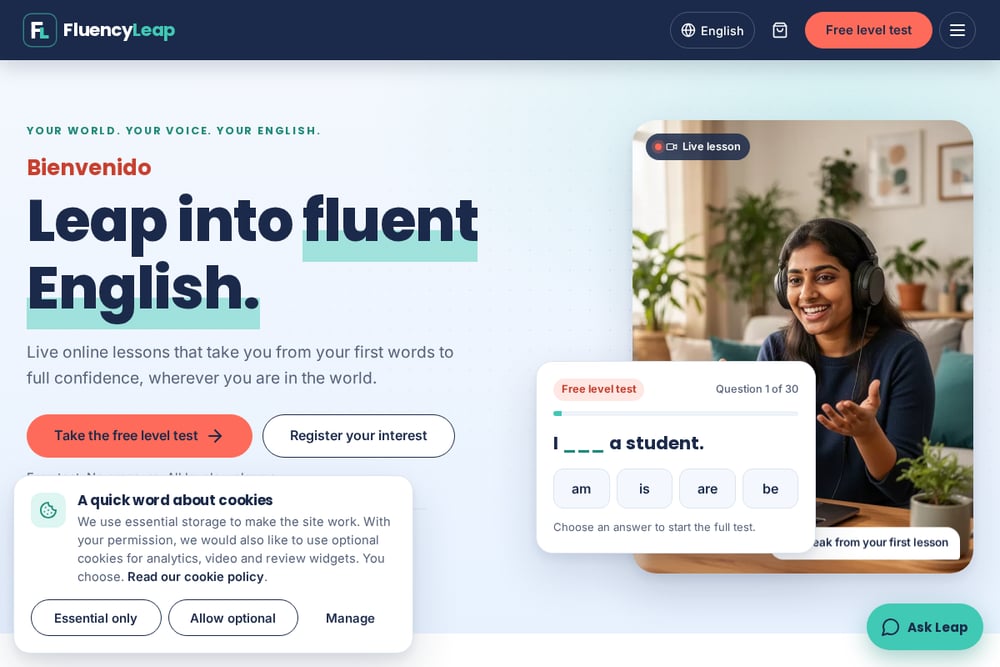 A screenshot of the FluencyLeap website.
FluencyLeap is built around a simple idea: you learn to speak by speaking. The program offers live small-group and private lessons for every level from A1 to C2, with certified teachers and a schedule that adapts to your time zone. Its onboarding is refreshingly clear. You take a free level test, get a learning plan matched to your goals, meet your teacher in a live class, and track your progress as you go. Courses cover everyday English, business English for meetings and interviews, and exam preparation for IELTS, TOEFL, and Cambridge. Learners from more than 40 countries use the platform, and every level finishes with a certificate of completion. If you want real conversations and personal feedback from your very first lesson, this is the one to watch.
#3 Lingu
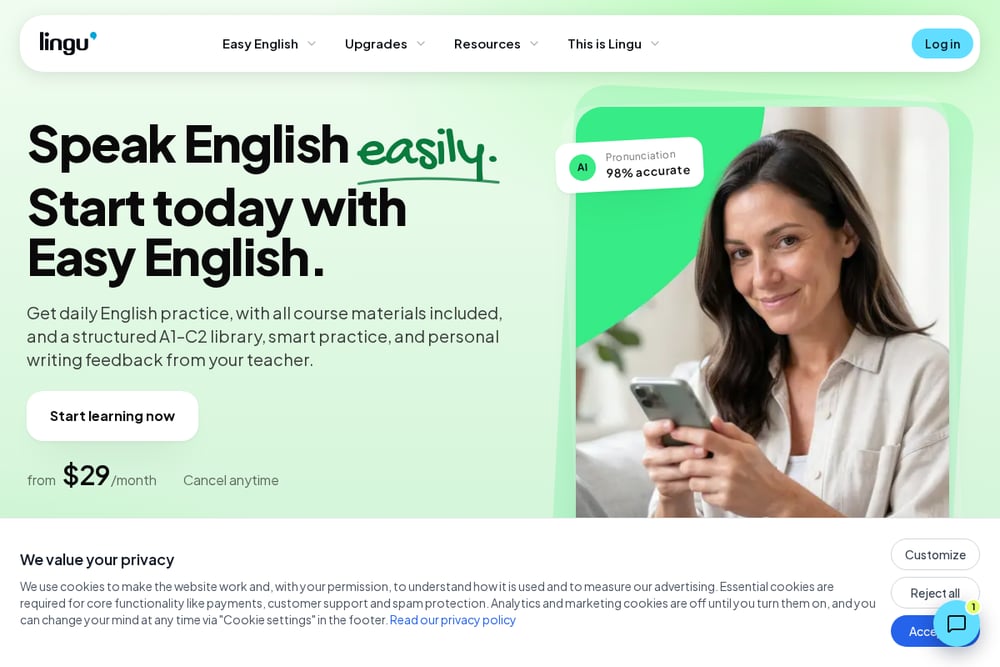 A screenshot of the Lingu website.
Lingu blends structured self-study with live teacher support, which makes it a good fit if you like to practice on your own schedule and then check in with a human. The platform offers a structured A1 to C2 library, smart practice tools, and personal writing feedback from qualified teachers. Its AI pronunciation tool gives you phoneme-level feedback, and the game-based practice keeps vocabulary and grammar work from feeling like a chore. Live teacher-led sessions are available when you want them, and the subscription model keeps costs predictable. Founded in 2008 and headquartered in Stavanger, Norway, Lingu has built a reputation for combining modern learning tools with real human guidance. It suits learners who want flexibility without giving up access to teachers.
#4 British Council LearnEnglish
The British Council brings decades of English teaching expertise to its online offerings, and its live classes carry that institutional weight. You get access to structured courses, a free level test, and a massive library of free resources organized by CEFR level, from A1 listening exercises to C1 grammar references. The live online classes are taught by qualified teachers and follow a curriculum designed by the organization behind the world's most recognized English proficiency standards. It is a strong choice if you value accreditation and a methodical approach to progress. The trade-off is that the experience can feel more academic than conversational, so it rewards learners who are comfortable with a structured pace.
#5 Live English
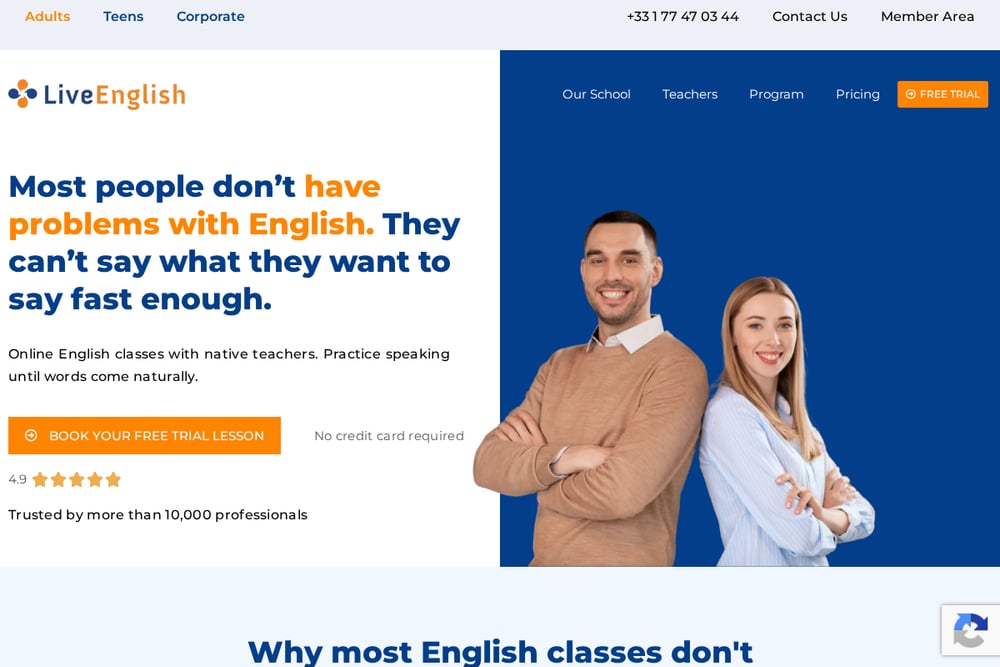 A screenshot of the Live English website.
Live English targets a specific pain point: professionals who understand English well but cannot speak it fast enough in real conversations. The school's philosophy is speaking first, and its lessons are built around conversation rather than grammar drills. Teachers are native English speakers trained to help learners who already read and write comfortably but freeze in meetings or interviews. The program offers a free trial lesson with no credit card required, which lets you test the format before committing. It serves adults, teens, and corporate clients, with a focus on building the speed and automaticity that fluent speech requires. If your goal is to stop translating in your head and start responding in real time, this program is designed for exactly that.
How to Choose the Right Program for You
Start with your goal, not the brand. If you need everyday fluency and want to speak from day one, prioritize programs with small-group or one-to-one live lessons and a clear level test. If you are preparing for IELTS, TOEFL, or Cambridge, check that the provider offers dedicated exam prep with a structured plan. If you are learning for work, look for business English content that covers meetings, interviews, and professional writing. Next, think about your schedule. A program with teachers across time zones will be easier to stick with than one that only offers classes at inconvenient hours. Finally, check the pricing model. Subscriptions, per-lesson packages, and free trials all change how you commit, so pick the structure that matches how you like to learn. A free level test is a low-risk first step with almost every provider on this list.
Where Automation Fits Into Your Learning
Automation will not replace a live teacher, but it can make your practice time more effective. Use AI pronunciation tools to get instant feedback on tricky sounds between lessons. Let smart vocabulary apps schedule your review sessions so you see new words at the right intervals. Record your live classes and revisit them during the week to reinforce what you covered. Set calendar reminders for your lessons and block out fifteen minutes a day for speaking practice, even if it is just talking to yourself. The goal is to remove friction from your routine so that the only thing you have to focus on is showing up and speaking. Programs like Lingu build some of this automation directly into their platform, while others leave it to you to assemble your own toolkit.
The Bottom Line
There is no single program that fits every learner, and that is a good thing. EF English Live gives you scale and variety. FluencyLeap gives you a conversation-first path with clear steps from your first words to full confidence. Lingu gives you a blend of AI practice and human feedback. British Council LearnEnglish gives you accreditation and a deep free library. Live English gives you a focused sprint toward speaking speed. Pick the one that matches your goal, your schedule, and your budget, then commit to showing up. Fluency starts with a single conversation, and every program on this list is built to get you into one.