
You want stories you don't just watch, but step inside. These five studios are shaping how live-action interactive storytelling feels in the US right now.
Where Live-Action Interactive Storytelling Stands
Interactive storytelling has moved well past the screen. Audiences now expect to be inside the narrative, whether that means walking through a scene, wearing a headset, or following clues across a real space. Studios in this space blend film craft, game design, and theater into one discipline. The result is a market split between scrappy creative collectives and heavyweight visual effects houses. Small studios bring agility and intimacy. Large ones bring spectacle and technical firepower. Both matter, and the right pick depends on what kind of story you're trying to tell.
How We Looked at Each Studio
We weighed each studio on the same factors. Service scope mattered, from single experiences to full multi-day productions. So did creative approach, meaning whether the work leans live-action, AR, VR, or mixed reality. We also considered production maturity, since some studios are shipping their first project while others have decades of credits. Pricing and contact clarity got a look too, because you need to know how to start a conversation. Finally, we factored in local fit and how well each studio serves the audience or client it's built for. Each studio stood out in different ways across these factors.
Here's a quick side-by-side to help you orient before the deeper dive. Each entry below covers what the studio does, who it suits, and how to reach out.
| Provider | Best For |
|---|---|
| Interwoven Immersive | Brand activations and immersive theater events |
| GreenEyesLabs | First-person narrative experiences |
| Hinge | AR, VR, and social activations |
| Lucasfilm Interactive Experiences | Large-scale premium branded experiences |
| Industrial Light & Magic Immersive Entertainment | Cutting-edge mixed reality production |
The Five Studios in Detail
#1 Interwoven Immersive
 A screenshot of the Interwoven Immersive website.
Interwoven Immersive is a female-owned, Los Angeles-based collective that pulls together the right creative team for each job. Their range is wide, spanning alternate reality games, actor-based immersive experiences, scavenger hunts, escape rooms, and multi-day adventures. The founders bring serious pedigree, including senior production work at Meow Wolf and XR projects at Meta and Microsoft. That mix means you get narrative and puzzle-driven live-action theater built around your event or brand. If you want a collaborative partner who can scale from a single experience to something sprawling, this is a strong place to start.
#2 GreenEyesLabs
 A screenshot of the GreenEyesLabs website.
GreenEyesLabs makes live-action interactive stories seen through your own eyes. That first-person framing is the whole pitch, and it's a compelling one. The studio is small and focused, with its first story currently in production. You won't find a bloated service menu here, just a clear creative vision and a direct line in. Reach out at hello@greeneyeslabs.com to talk about what they're building. For anyone curious about intimate, perspective-driven storytelling, this is one to watch early.
#3 Hinge
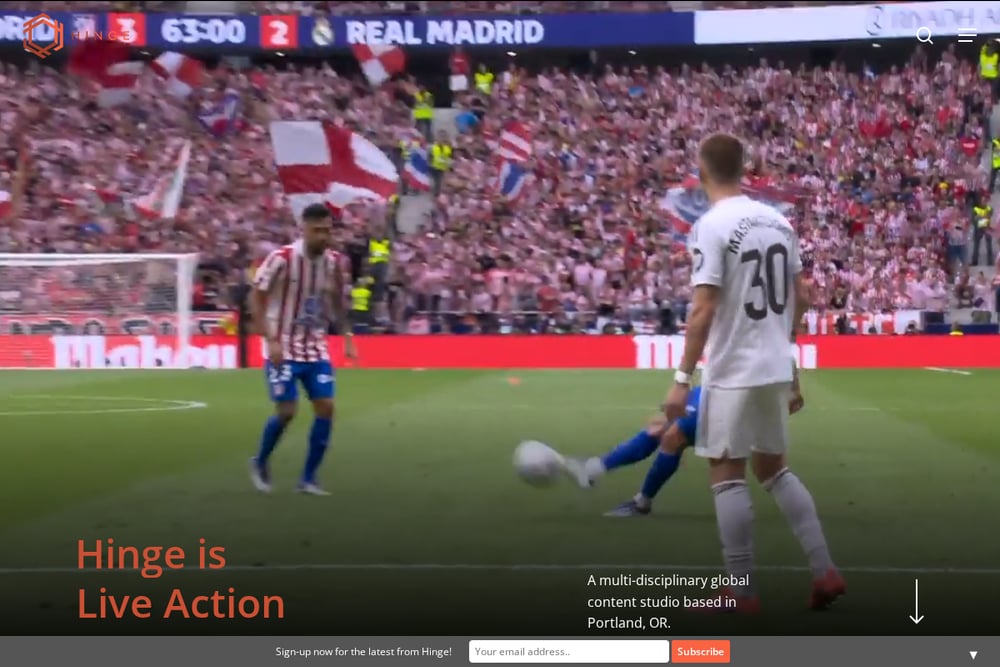 A screenshot of the Hinge website.
Hinge treats interactive storytelling as a broad canvas, folding in augmented reality, virtual reality, and online gaming. The studio has built AR proof-of-concept apps for brands like Converse, Purell, and Kohler, plus a VR forest therapy experience. They're also certified Snapchat Lens Creative Partners, which means social AR filters are squarely in their wheelhouse. Their award-winning Travel Oregon work shows they can turn a place into a playable story. If your story needs a digital or retail activation layer, Hinge covers that ground well.
#4 Lucasfilm Interactive Experiences
 A screenshot of the Lucasfilm website.
Lucasfilm's interactive arm sits inside one of the most storied names in visual storytelling. The team produces premium interactive experiences across VR, AR, theme parks, and pop-up installations. Credits include the Emmy-winning What If…? – An Immersive Story, Vader Immortal, and the Oscar-winning CARNE y ARENA collaboration with Alejandro G. Iñárritu. The through-line is best-in-class visuals, sound, and narrative at a scale few can match. This is the choice when the story needs spectacle and a household-name level of polish.
#5 Industrial Light & Magic Immersive Entertainment
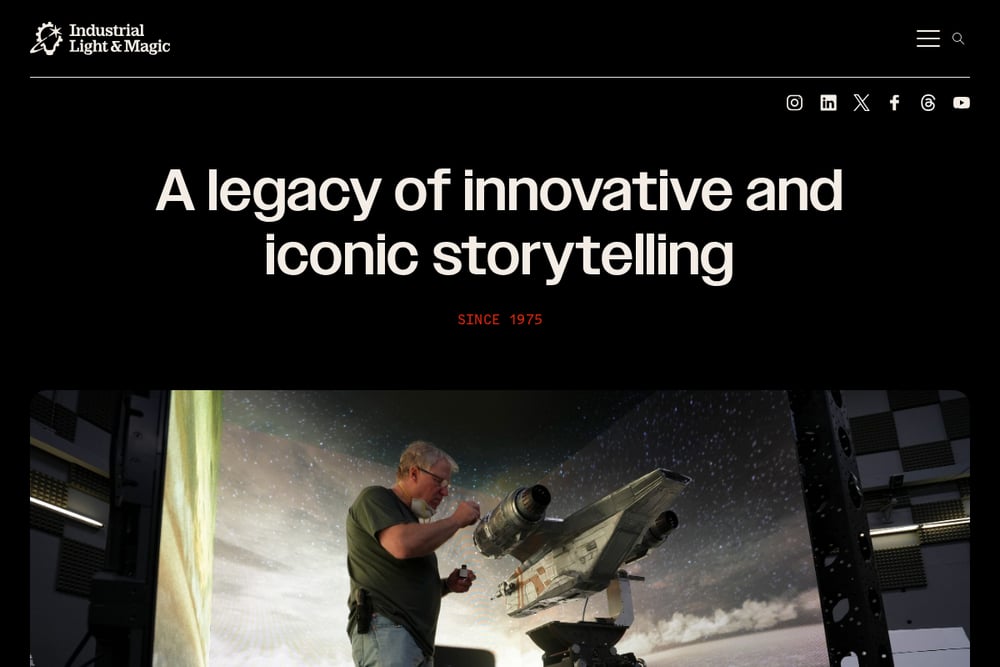 A screenshot of the Industrial Light & Magic website.
ILM's immersive division pushes the technical edge of experiential storytelling. The team built Star Wars: Beyond Victory, a mixed reality playset for Meta Quest, and What If…? – An Immersive Story for Apple Vision Pro. They also produced Postcard from Earth for the MSG Sphere, captured on a bespoke 316-megapixel camera system. Real-time character work at D23 let fans speak directly with Rocket Raccoon via markerless mocap. When your project demands bleeding-edge production craft, this is the deep bench you call.
How to Pick the Right Studio
Start with the format. If you want people physically moving through a story, look at collectives built for live events. If the story lives on a headset or a phone, lean toward studios with AR and VR credits. Next, match scale to ambition. A first-person narrative project doesn't need a visual effects giant, and a theme park installation shouldn't go to a two-person shop. Ask about production maturity and timeline, especially if a studio is early in its journey. Finally, check how easy it is to start a conversation. A clear contact path tells you a lot about how a studio works.
Where Automation Fits In
You can streamline the front end of any interactive project without touching the creative core. Use a shared intake form to collect client goals, audience, budget range, and format preferences in one place. Route those responses into a simple project tracker so nothing gets lost between calls. Automate scheduling for discovery conversations and send a short prep brief beforehand. For audience testing, set up automated feedback capture during playtests and pipe results into a dashboard. Keep the storytelling human and let the logistics run themselves.
The Bottom Line
Live-action interactive storytelling is a young, fast-moving field, and that's exactly why it's worth knowing who's building in it. You've got collectives that assemble the perfect team per project, a focused newcomer with a first-person vision, digital studios fluent in AR and VR, and heavyweight houses that deliver spectacle at scale. Match the studio to the story you want to tell, not the other way around. Start with format, then scale, then chemistry. Do that, and you'll find the right partner for the experience you're imagining.