You already record the podcast. The problem is nobody sees the good parts. These five services turn long conversations into clips your LinkedIn audience will actually watch.
Why clip services are having a moment
B2B buyers now scroll LinkedIn before they ever book a call. A single well-cut clip can show how you think, answer a client question, or explain a decision in under 60 seconds. That is why podcasters and consultants are outsourcing the edit instead of learning a timeline editor. The market splits into two camps: full production shops that handle the whole show, and focused clip shops that only do short-form. Knowing which camp you need saves you money.
How these five were evaluated
Every service was looked at on four things: how clearly the scope and pricing are stated, whether the output is built for LinkedIn specifically or just generic vertical video, how much of the process you have to manage yourself, and how easy it is to start without a long contract. Turnaround and the quality of the captioning and framing also mattered. The detail on each one lives in its description below.
Here is the short version before the deep dive. Each entry below is a different shape of service, so match it to how much of the work you want to hand over.
| Provider | Best For |
|---|---|
| SoSo Media | Podcasters who want clips bundled with full production |
| Heartland Clip Co. — LinkedIn clips for business podcasters | B2B consultants and podcasters who want a low-cost LinkedIn-first pilot |
| StartupCookie | B2B SaaS teams with a backlog of webinars and founder footage |
| Podigy | Consultants who want a long-term podcast partner tied to pipeline |
| Truth Work Media | Businesses that want video recording and distribution handled end to end |
The five, in detail
#1 SoSo Media
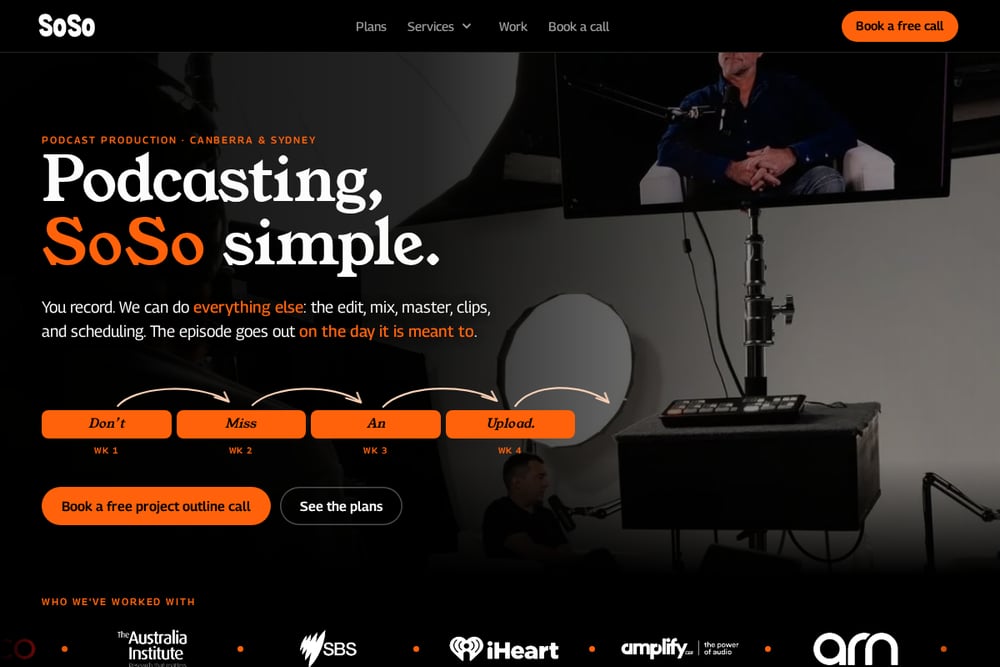 A screenshot of the SoSo Media website.
SoSo Media treats short vertical content as one piece of a full podcast operation. You can hand over editing, video podcast production, or just the clips, which makes it a strong fit if you want one vendor for the whole show. Their process is refreshingly clear: they send you a list of clippable moments, you tick the ones you want, and they cut, caption, and end-card each one. Clips arrive alongside the episode, which is the only time they are actually useful. The tradeoff is that one-off clip sets are quoted after a call, so you will not see a number until you talk to them.
#2 Heartland Clip Co. — LinkedIn clips for business podcasters
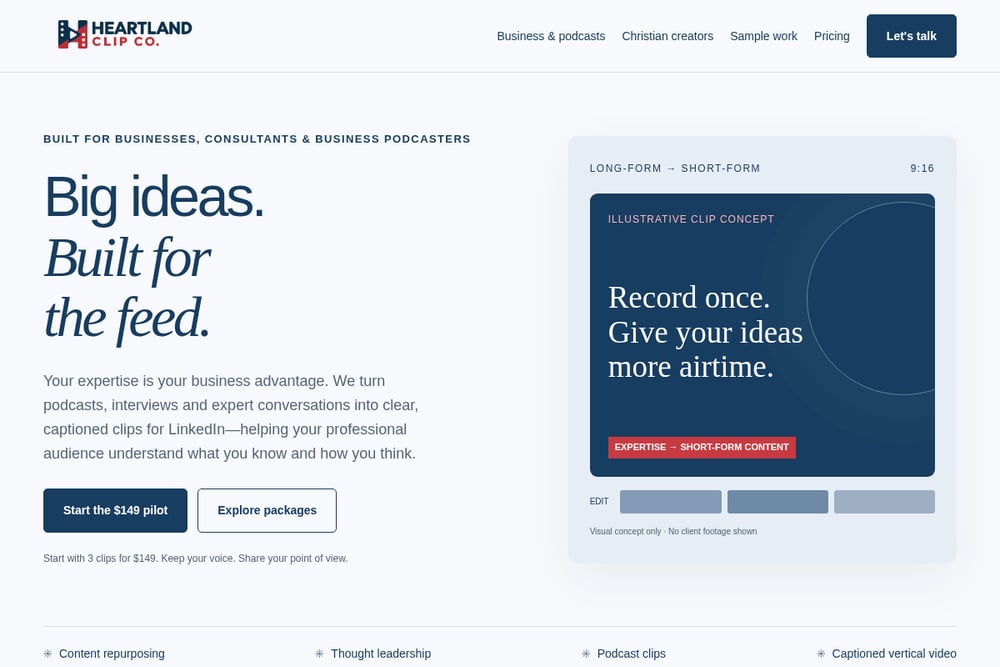 A screenshot of the Heartland Clip Co. — LinkedIn clips for business podcasters website.
Heartland Clip Co. is the most focused option on this list, and that focus is the point. They take podcasts, interviews, and expert conversations and turn them into captioned vertical clips built for the LinkedIn feed, not for every platform at once. You start with a $149 pilot for three clips, which is the lowest-risk way to test a clip service without committing to a retainer. Their process is built around preserving your voice: they find the moments that stand on their own, cut thoughtfully, and send each clip with a suggested opening and post caption for your approval before anything goes live. They also serve Christian creators, churches, and ministries alongside B2B consultants and business podcasters. If your audience is professional and your goal is thought leadership, this is the shortest path from recording to published clip.
#3 StartupCookie
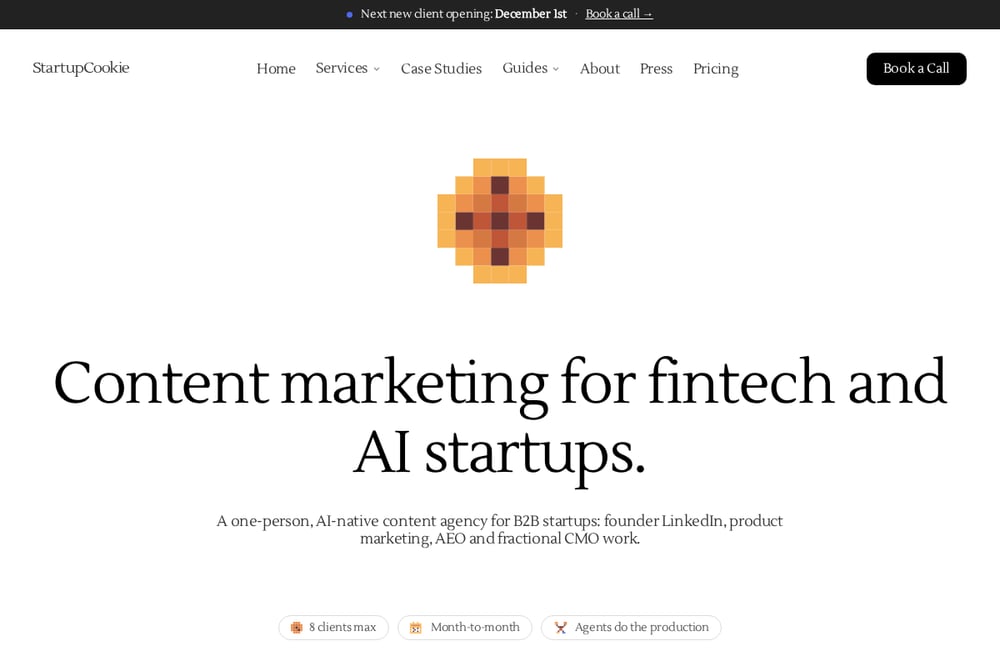 A screenshot of the StartupCookie website.
StartupCookie is built for B2B SaaS teams sitting on a drive full of webinars, demos, and founder talks. They cut short-form clips for LinkedIn and YouTube Shorts, but they also handle full episode edits and YouTube packaging like titles, thumbnails, and chapters. The pitch is one recording, a month of content, and the plans are month-to-month with no long contracts. If your founder records easily but nobody has time to cut and caption, this is a natural fit. It is less specialized than a pure clip shop, so expect a broader scope rather than a laser focus on LinkedIn.
#4 Podigy
 A screenshot of the Podigy website.
Podigy positions itself around pipeline, not reach, and that framing runs through everything they do. They handle the whole podcast operation with a dedicated editor, a typical five-day turnaround, and month-to-month terms. Their case studies lean on sales outcomes like shorter cycles and higher close rates on podcast-sourced leads, which appeals to consultants who need to justify the spend. Clips are part of the package rather than the headline, so this is a fit if you want a long-term production partner. If you only need short-form, you will be paying for more than you use.
#5 Truth Work Media
Truth Work Media records your podcast on video and handles the distribution that follows. They set up your YouTube channel, upload episodes and Shorts, and cut around a dozen pieces of social content from a single episode. They also publish niche service pages for tax firms, financial advisors, real estate, and nonprofits, which tells you they understand regulated and relationship-driven industries. The model works best if you want someone to run the whole media operation rather than just hand you clip files. If you already have footage and only need the edit, this is more than you need.
How to pick the right one for your show
Start with one question: do you want a clip vendor or a production partner? If you already have recordings and just need short-form output, a focused clip shop gets you there faster and cheaper. If you are still figuring out recording, hosting, and distribution, a full production shop saves you from stitching together three vendors. Next, check the pricing model. A fixed pilot price tells you exactly what you are buying, while quoted-after-a-call pricing means you need to book time before you know the number. Finally, look at where the clips are built to live. A service that designs for LinkedIn first will frame, caption, and hook differently than one optimizing for TikTok. Match the platform to where your buyers actually are.
Where automation fits into your clip workflow
You do not need to automate the creative judgment, but you can automate everything around it. Record your episode as usual and let your editor handle the cut. Use a shared folder or review link so approvals happen in one place instead of an email thread. Schedule approved clips through your social tool so a single episode feeds several weeks of posts. Keep a simple log of which clips drove profile visits and inbound messages, and feed that back into the next batch of moment selection. The goal is a repeatable loop: record once, approve a handful of clips, publish on a rhythm, and review what worked.
The bottom line
Your expertise is not the bottleneck. The edit is. Any of these five can get your ideas out of the recording and into the feed, but they solve different problems. If you want to test the waters on LinkedIn with minimal risk, start with a small pilot and judge the clips on whether they sound like you. If you want the whole show handled, pick a production partner and commit to a rhythm. Either way, the businesses that win on LinkedIn are the ones that publish consistently, not the ones with the best equipment.