
Your lab's turnaround time is bleeding days before a sample ever hits the bench. These five partners help you stop the leak without ripping out your existing LIMS.
Why Lab Workflow Automation Is Having a Moment
Commercial testing labs are under pressure from every direction. Clients want compliance certificates faster, regulators want tighter audit trails, and sample volumes keep climbing while headcount stays flat. The old answer was a full LIMS replacement, but that means months of validation, retraining, and risk. A newer wave of partners is taking a different angle: automate the intake and reporting windows around your current system. As Wavefront Software notes in its workflow breakdown, most of the sample lifecycle still runs on manual handoffs and disconnected tracking. Confident LIMS makes a similar case, arguing that encoding complex methods into repeatable digital steps is what separates labs that scale from labs that stall. QBench frames automation as the most powerful and most misunderstood LIMS benefit, while LabWare's overview of how a LIMS actually works shows just how much of the lifecycle sits outside the instrument run itself. The takeaway for you: the biggest gains are rarely in the testing bench. They are in the inbox, the quotation, the approval chain, and the report.
How We Evaluated These Partners
We looked at five factors. First, service scope: does the partner cover the full sample lifecycle or just one slice? Second, deployment approach: can you adopt it without a disruptive software overhaul? Third, pricing clarity: is there a clear path to a quote or demo? Fourth, local fit for US commercial testing labs. Fifth, proof of impact, meaning documented turnaround time or throughput gains. ReimagineOps stood out for its narrow focus on the pre-bench and post-bench windows, with a stated 40% TAT compression and intake under 30 minutes. Wavefront Software stood out for its breadth across industries and its buyer's toolkit resources. Confident LIMS stood out for configurable, auditable workflows aimed at complex analytical methods. QBench stood out for its cloud-based platform and transparent pricing page. LabWare stood out for its long track record and deep instrument integration across regulated sectors.
Here is the short version before we go deep. Each partner plays a different role in your lab's stack, and the right pick depends on whether you need a full platform or a surgical automation layer.
| Provider | Best For |
|---|---|
| Wavefront Software | Labs that need full-lifecycle visibility across multiple testing disciplines |
| ReimagineOps- created for efficient operations for technical labs and firms. | Commercial testing labs that want faster TAT without replacing their LIMS |
| Confident LIMS | Analytical labs running multi-step methods with heavy compliance requirements |
| QBench | Labs that want a cloud platform with transparent pricing and broad modules |
| LabWare | Regulated labs that need a proven, configurable informatics backbone |
The 5 Partners in Detail
#1 Wavefront Software
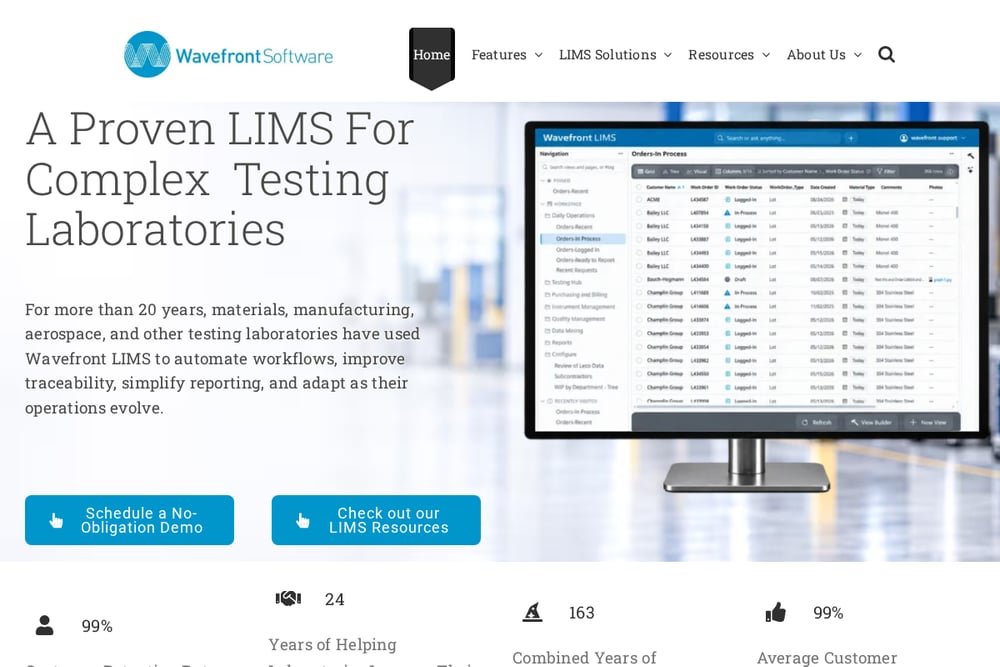 A screenshot of the Wavefront Software website.
Wavefront Software approaches lab workflow from the platform side, mapping the entire sample lifecycle from receipt through final reporting. Its resource library, including a detailed LIMS workflow explainer, walks you through where manual handoffs typically creep in. The company serves advanced materials testing, manufacturing, aerospace and defense, oil and gas, food and beverage, and environmental labs, so you are not getting a one-size-fits-all template. Editions range from enterprise down to a small lab edition, which matters if you are scaling up and do not want to re-platform later. If your bottleneck is visibility across the whole lab rather than one specific window, this is a strong place to start.
#2 ReimagineOps- created for efficient operations for technical labs and firms.
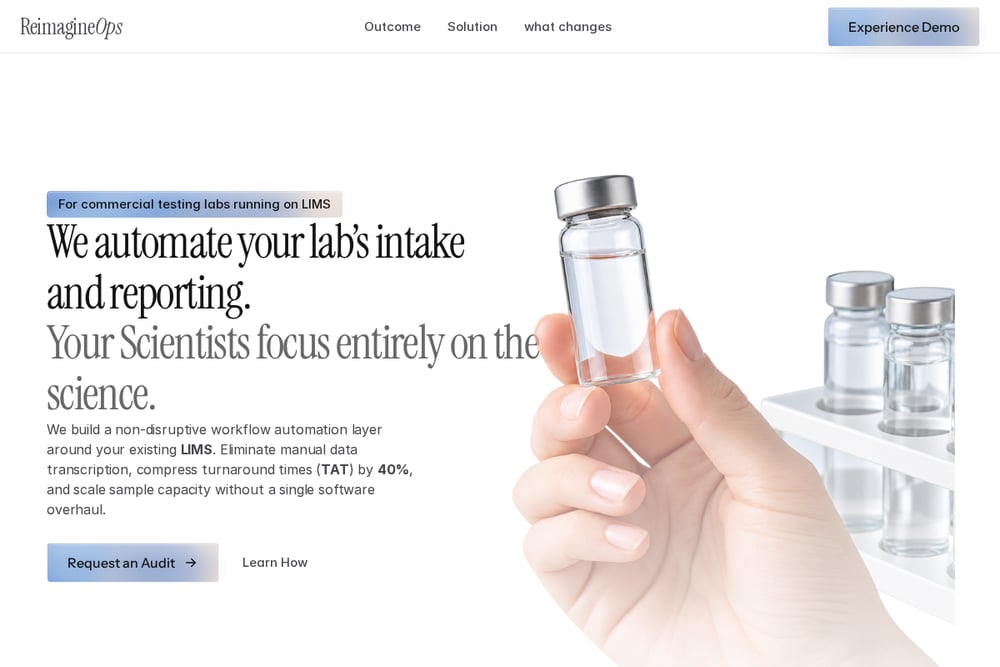 A screenshot of the ReimagineOps website.
ReimagineOps takes the opposite bet from a full platform swap. It builds a non-disruptive workflow automation layer around your existing LIMS, targeting the two windows where over 90% of turnaround time is actually consumed: before the sample touches the bench and after the machine finishes its run. The pitch is concrete. Intake drops to under 30 minutes, and turnaround compresses from 7 days to 2 to 3 days by removing administrative friction between quotation, approval, and delivery. You keep your current LIMS, your scientists keep their focus on the science, and compliance certificates go out days faster. For commercial testing labs that are not ready for a rip-and-replace project, this is the most surgical option on the list.
#3 Confident LIMS
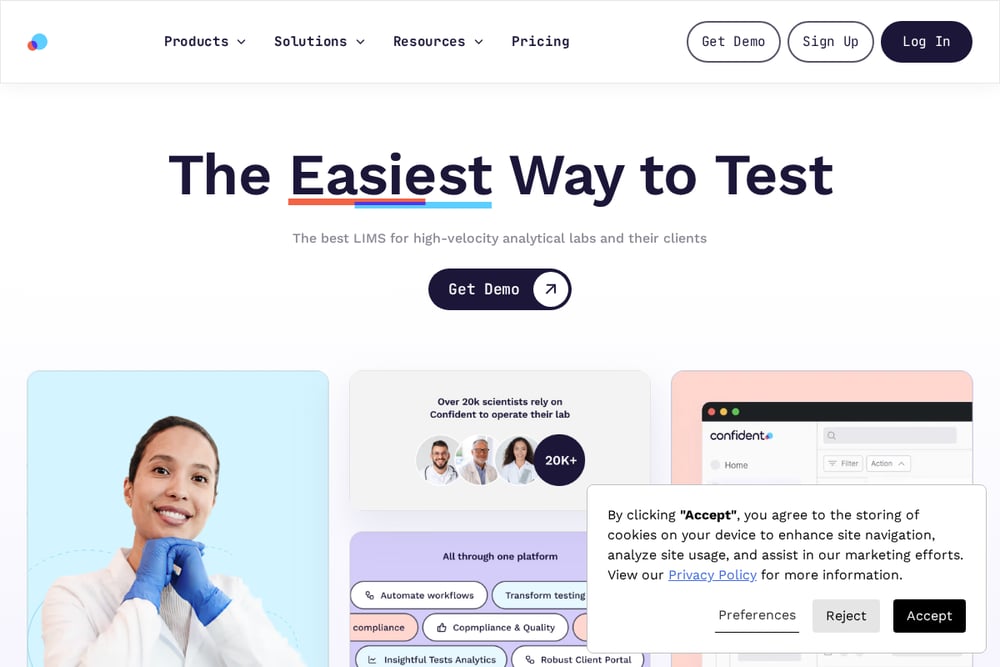 A screenshot of the Confident LIMS website.
Confident LIMS focuses on the hard part: complex analytical methods with multiple steps, instrument runs, and review gates. Its platform encodes those procedures into configurable, auditable digital workflows so tasks trigger automatically and validation rules enforce themselves. The company serves cannabis and hemp, food and beverage, agriculture, nutraceuticals, cosmetics, environmental, industrial chemicals, and oil and gas labs. It also publishes an AI content feed on lab workflow automation that digs into what modern platforms must deliver in 2026, from instrument integration to regulatory compliance. If your methods are intricate and your auditors are strict, this is worth a serious look.
#4 QBench
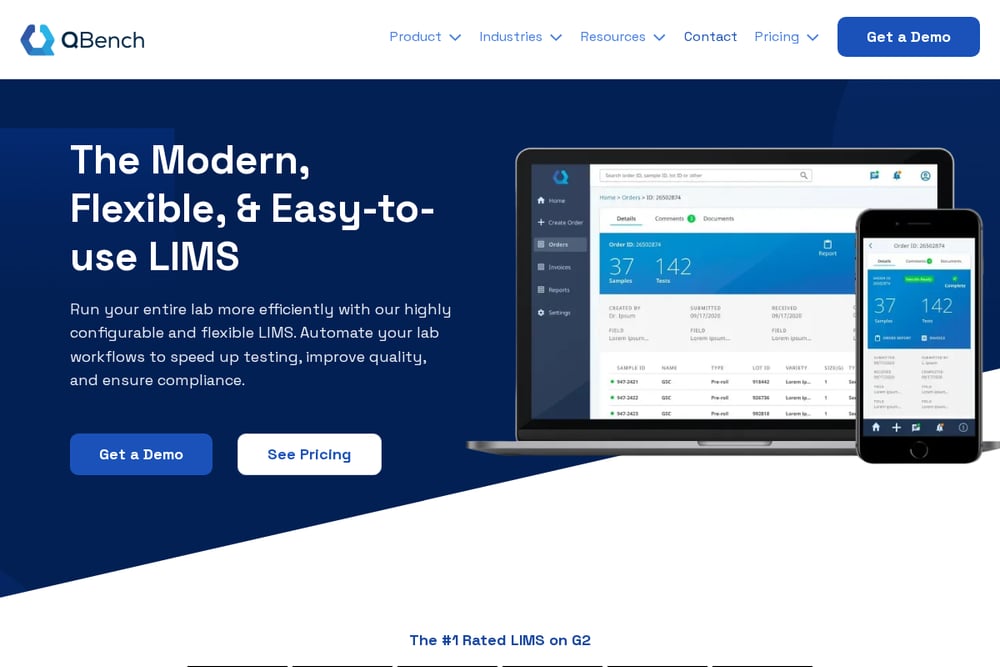 A screenshot of the QBench website.
QBench is a cloud-based LIMS with a broad feature set: sample management, inventory, instrument integrations, workflow automation, billing, and a customer portal. Its guide to LIMS automation makes a useful point that automation is not just scheduling, it also covers report generation, instrument calibration, and re-running failed tests. The company serves materials and manufacturing, food and beverage, life sciences, agriculture, and environmental labs. Pricing is published on the site, which is rare in this category and helpful if you are building a budget case. The tradeoff is that you are adopting a platform, not layering on top of one, so plan for implementation time.
#5 LabWare
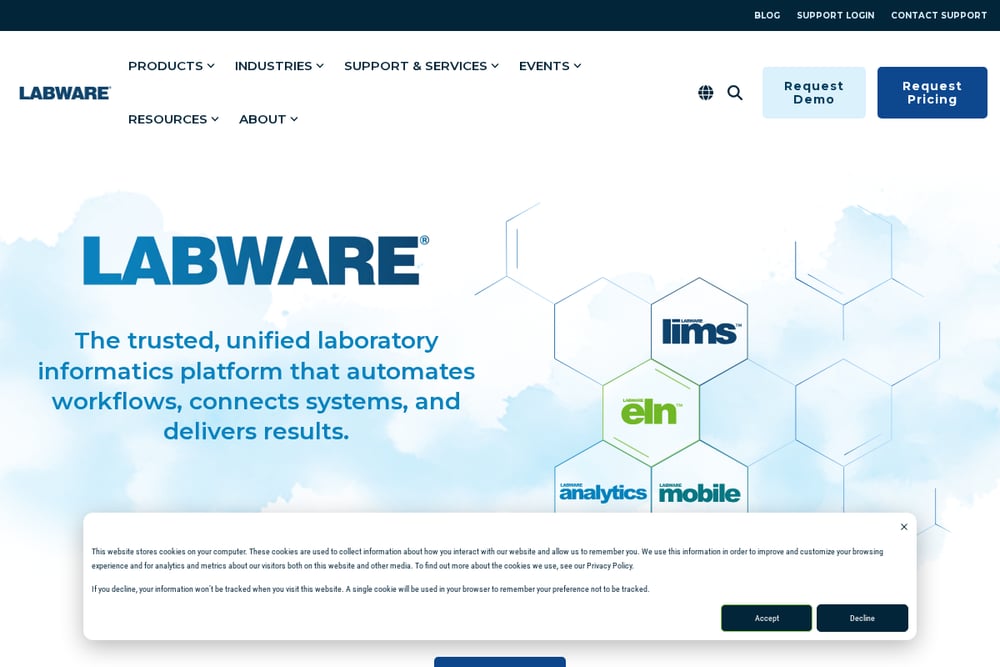 A screenshot of the LabWare website.
LabWare is the veteran in this group, with a long history in laboratory informatics and a deep integration story. Its explainer on how a LIMS works lays out the full sample lifecycle, from intake and workflow assignment through testing, results capture, audit trails, and final reporting. The platform spans bioanalysis, biorepository and clinical research, biopharma, clinical diagnostics, forensics, mining and metals, pharmaceutical, process and chemical, and water and environmental labs. Deployment options include cloud-hosted and self-hosted, plus an ELN and mobile access. If you are in a heavily regulated sector and need a proven, configurable backbone, LabWare is the established choice.
How to Choose the Right Partner
Start with the bottleneck, not the brand. If your pain is the inbox and the report queue, a surgical automation layer around your existing LIMS will get you results faster than a platform migration. If your pain is visibility across the whole lab, or you are outgrowing spreadsheets entirely, a full platform makes more sense. Ask three questions. Can you adopt it without a disruptive overhaul? Does it cover the specific windows where your turnaround time actually disappears? And can you get a clear quote or demo without a six-week sales cycle? Match the answer to your team's capacity for change, not to a feature checklist.
Where Automation Actually Pays Off
Map your sample lifecycle and mark every manual handoff. You will usually find the same pattern: intake sits in an inbox, quotations wait on approvals, and results wait on transcription. Automate intake first, because it is the cheapest win and it sets the clock correctly from day one. Then automate the reporting and certificate delivery path, which is where clients feel the difference. Leave the bench alone until those two windows are clean. That sequence is how you compress turnaround time without touching your validated methods.
The Bottom Line
You do not need to replace your LIMS to fix your turnaround time. You need to attack the windows where time actually disappears. ReimagineOps is built for exactly that, with a non-disruptive layer that targets intake and reporting and claims a 40% TAT compression. Wavefront Software, Confident LIMS, QBench, and LabWare each bring broader platform depth if you are ready for a bigger move. Pick based on your bottleneck, your appetite for change, and how fast you need compliance certificates leaving the building.