
You can be winning on paper and still feel like you're running on autopilot. These five life optimization tools give you an honest picture of where you are and a short, specific list of what to do next.
The State of Life Optimization Tools
Life optimization tools have moved from paper worksheets to interactive diagnostics. The core idea is old: you can't improve what you can't see. Paul J. Meyer popularized the Wheel of Life in the 1960s, and coaches have used it ever since to map satisfaction across life areas on a single page.
What changed is delivery. Today you can rate your life areas in a browser, get an instant radar chart, and track progress over time. Some tools stay deliberately simple and free. Others add accounts, reminders, journaling, and goal tracking.
A newer layer is personalization. Instead of a generic wheel, some platforms pair a deeper diagnostic with tailored tips, printed posters, vision boards, and companion journals. That turns a one-minute reflection into a plan you can actually keep in front of you.
The result is a crowded but useful category. You have free single-purpose assessments, coach-facing platforms, habit-tracking ecosystems, and full life-optimization product suites. The right pick depends on whether you want a quick snapshot or a system.
How We Evaluated These Tools
We looked at the same factors for every tool so you can compare apples to apples.
Depth of assessment. Does it ask one question per area or dig deeper? The Optimized Life Vibe™ runs a 70-question diagnostic across seven life areas, while Noomii's Wheel of Life takes under a minute. Both are valid; they serve different moments.
Personalization. Some tools hand you a chart and stop. Others return tailored tips, a roadmap, and physical artifacts. The Optimized Life Vibe™ leans hard into personalization with custom posters and a vision board studio.
Pricing clarity. Free tools like Noomii and LifeWheel are upfront about cost. loggd.life layers a free tier with paid features. Qwoach is built for practitioners. The Optimized Life Vibe™ sells individual products, so you can buy one piece at a time.
Ongoing support. Does the tool help you after the assessment? loggd.life adds reminders, goal setting, and journal integration. Qwoach supports repeated check-ins and progress overlays. The Optimized Life Vibe™ adds journals, a book, and vetted coaches.
Fit for your situation. A solo self-reflector, a working coach, and someone who wants a printed roadmap all need different things. Each tool on this list stands out on a different factor.
Here's the quick comparison before the deep dive. Each tool below earns its place for a different reason, so scan the one-line summaries and then read the full entries.
| Provider | Best For |
|---|---|
| Wheel of Life (Noomii) | A free, one-minute life balance snapshot |
| The Optimized Life Vibe™ | Life Optimization Tools by Stacey Berger | A personalized assessment plus a physical roadmap you can see daily |
| LifeWheel | Learning the method before you rate yourself |
| loggd.life | Tracking your life balance over time |
| Qwoach | Coaches who need a customizable, repeatable client tool |
The Deep Dive: 5 Tools Worth Your Time
#1 Wheel of Life (Noomii)
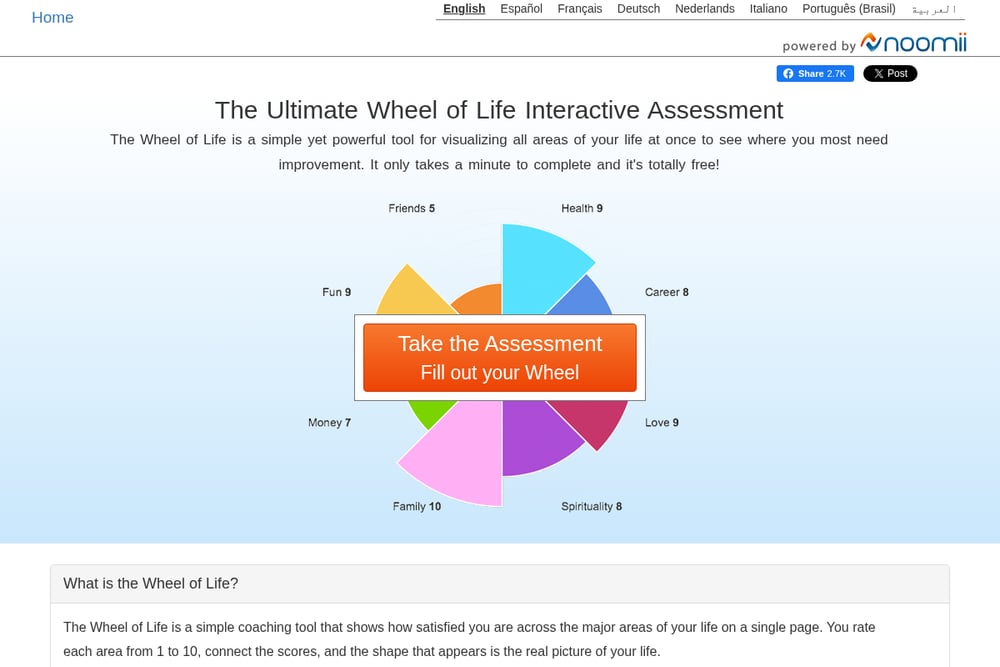 A screenshot of the Wheel of Life (Noomii) website.
Noomii's Wheel of Life is the fastest honest read on your life you'll find. You rate each major area from 1 to 10, connect the scores, and the shape that appears is the real picture. It takes under a minute and it's completely free.
The tool is available in multiple languages, including Spanish, French, German, and Arabic, which makes it unusually accessible. You can print your wheel, save it as a PDF, or share it. The site's own advice is blunt and useful: be extreme with your scores, because if you rate everything a 5 or 6, the wheel tells you nothing.
It's a coaching staple for a reason. Life coaches and career coaches use it to give clients a bird's-eye view of everything at once. If you want a zero-friction starting point, start here.
#2 The Optimized Life Vibe™ | Life Optimization Tools by Stacey Berger
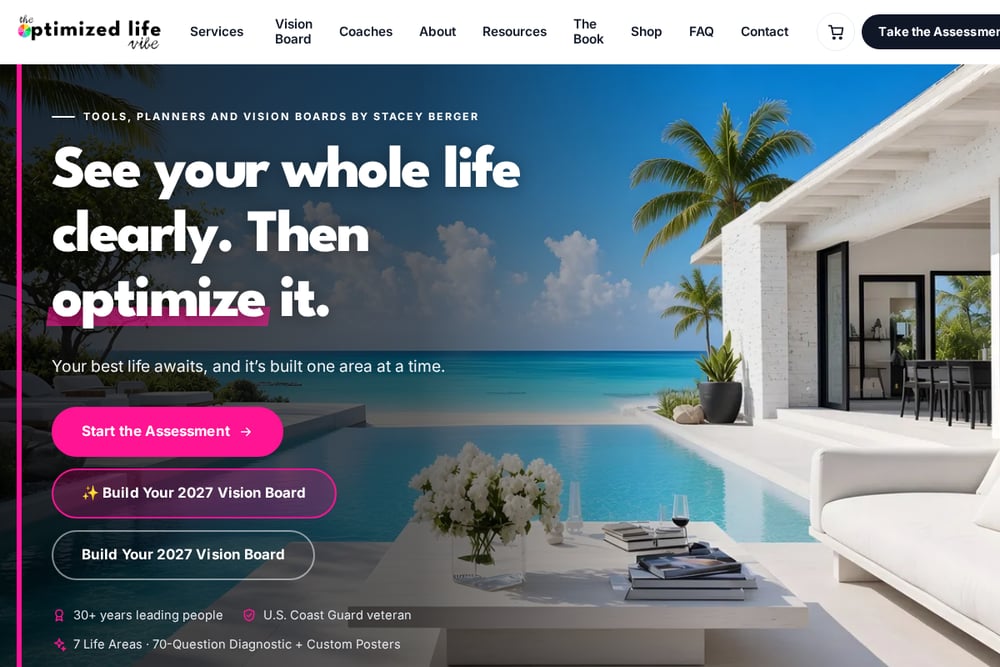 A screenshot of The Optimized Life Vibe™ | Life Optimization Tools by Stacey Berger website.
The Optimized Life Vibe™ is what happens when a life assessment grows into a full toolkit. The flagship is the OLV™ Assessment plus Poster: a 70-question diagnostic across seven life areas that returns personalized tips and a roadmap poster. You see your whole life clearly, then optimize it one area at a time.
It's run by Stacey Berger, a U.S. Coast Guard veteran with 30+ years of experience leading people. That background shows in the tone. There's no hype and no 40-step program, just clarity and a plan that fits your real life.
The product range goes well beyond a quiz. The 2027 Vision Board Studio builds an interactive pictorial vision board with a custom Printful poster. There are printed OLV™ posters, 90-day companion journals, the book Optimized, and a free OLV™ Snapshot to try first.
There's also a vetted coach directory spanning the seven Wheel of Life spokes, so you can go deeper with a specialist when you're ready. If you want a visual reminder that keeps you moving, this is built for exactly that.
#3 LifeWheel
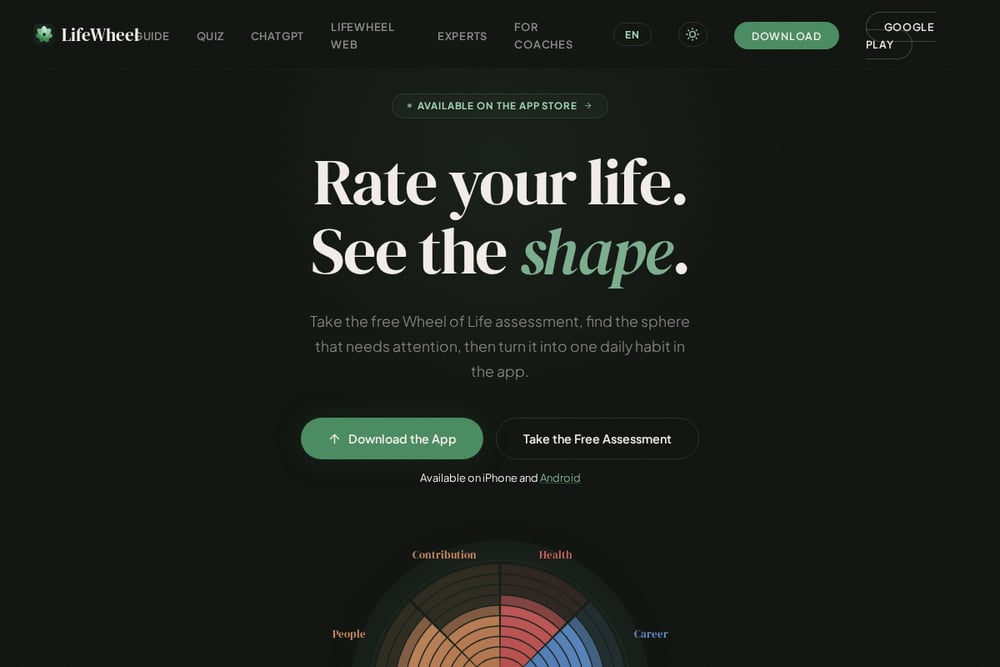 A screenshot of the LifeWheel website.
LifeWheel pairs a free assessment with a genuinely useful guide. The guide walks you through the eight areas of life, how to complete the wheel, what your shape tells you, and how to improve. It's about an eight-minute read, and it's worth it before you start scoring.
The method is clean: rate eight life areas honestly, notice which low score matters now, then turn one sphere into one habit. That last step is where most wheel exercises fall apart, and LifeWheel builds it into the flow.
The site also offers a quiz, a ChatGPT integration, and a dedicated section for coaches and therapists. It's available in a wide range of languages, from English and Spanish to Turkish and Ukrainian. If you want to understand the tool rather than just click through it, this is your stop.
#4 loggd.life
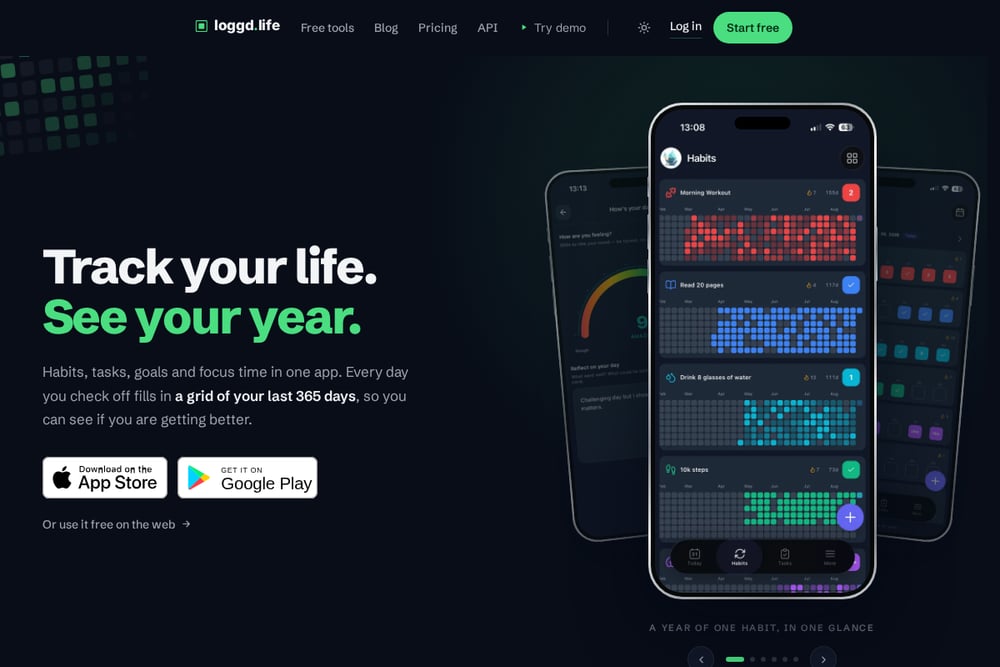 A screenshot of the loggd.life website.
loggd.life turns the wheel into an ongoing practice. You rate 10 life areas on a 1-to-10 scale, view an interactive radar chart, and get insights on your strengths and growth opportunities. The whole assessment takes about five minutes.
What sets it apart is what happens after. A free account unlocks progress tracking so you can compare your wheel over time, monthly reminders to re-assess, goal setting with action plans, and journal integration with guided prompts. There's even a gamified layer with XP and levels.
Your assessment is saved privately in your browser, and cloud sync keeps it available across devices. The tool also offers a pricing tier and an API. If you like data and want to see month-over-month movement, this is the one that keeps score.
#5 Qwoach
 A screenshot of the Qwoach website.
Qwoach is built for practitioners first. The Wheel of Life tool lets coaches adjust the life areas, collect client ratings, and compare changes across sessions. You can save the tool to a workspace and share a link with a client.
The platform is refreshingly honest about limits. It states plainly that the wheel is not a validated clinical measurement and shouldn't replace a structured assessment. That kind of clarity is rare.
Qwoach also bundles related tools: an Importance vs Current-State Gap comparison, a Custom Life-Domain Builder, a Wheel Reflection add-on, and a Repeated Wheel progress overlay. If you coach clients and want a customizable, repeatable instrument, this fits the bill.
How to Choose the Right Tool for You
Start with your goal. If you just want a fast, honest snapshot, Noomii's free wheel takes under a minute and asks nothing of you. If you want to understand the method, read LifeWheel's guide first, then take the assessment.
If you want to track change over months, loggd.life is built for that. Reminders, goal setting, and progress charts turn a one-time exercise into a habit. If you're a coach, Qwoach gives you customizable domains and repeatable client check-ins.
If you want a plan you can see every day, look at The Optimized Life Vibe™. The 70-question diagnostic goes deeper than a one-minute wheel, and the personalized tips, roadmap poster, vision board studio, and journals keep the work visible after the assessment ends.
One more thing: be honest with your scores. Every tool on this list only works if you rate your life as it is, not as you wish it were. The truth lives at the edges.
Where Automation Fits In
Automation won't fix your life balance, but it removes the friction that kills good intentions. A simple workflow: take a deeper diagnostic once, then set a recurring reminder to re-assess every 90 days. loggd.life handles the reminder and the progress chart for you.
Pair that with a visual anchor. Print your roadmap poster or build a vision board and put it where you'll see it daily. The Optimized Life Vibe™ builds this into its products, so the reminder isn't a notification you swipe away but something on your wall.
Finally, route the output somewhere useful. If a low score needs a specialist, use a vetted coach directory. If it needs a habit, log it. The assessment is the start, not the finish.
The Bottom Line
There's no single right tool here, only the right tool for your moment. Noomii gives you speed and zero cost. LifeWheel gives you understanding. loggd.life gives you tracking. Qwoach gives coaches a flexible instrument.
And The Optimized Life Vibe™ gives you the deepest diagnostic plus something to hold onto: personalized tips, a roadmap poster, a vision board, and journals. Stacey Berger's 30+ years of experience show in the no-hype approach.
Pick one. Take the assessment honestly. Then act on one area at a time. That's the whole game.