
Career transitions are rarely just about landing a new job. They are about rebuilding your identity, your confidence, and your sense of direction. Here are five coaching practices worth knowing if you are ready to make a move.
The State of Virtual Life and Career Coaching
Life and career coaching has moved almost entirely online. That shift means you are no longer limited to whoever happens to practice in your zip code. You can work with a transition specialist in another state, meet over video, and keep momentum between sessions by email or shared documents.
The demand is real. Professionals in mid-career, academics rethinking their path, and leaders stepping into bigger roles all want structured support rather than generic advice. The practices below sit at that intersection of personal growth and career strategy.
What separates a good fit from a bad one is rarely the coach's credentials alone. It is whether their process matches the kind of change you are actually trying to make.
How We Evaluated These Practices
We looked at the same factors across every practice. First, service scope: does the coach handle personal growth, career transitions, and leadership development, or only one slice? Second, delivery format: are sessions virtual, one-on-one, and easy to book?
Third, clarity of process. Some practices spell out a defined journey with assessments and weekly accountability. Others keep it flexible and conversational. Both work, but you should know which you are buying.
Fourth, accessibility. We noted how easy it is to request information, book an intro session, or understand what happens next. Finally, specialization. A coach who focuses on midlife professionals or unhappy academics may serve that audience better than a generalist.
What stood out for each practice is noted below. No single factor decides the outcome for you.
Here is a quick comparison of the five practices, ordered for readability. Each entry notes who the practice tends to serve and what kind of engagement you can expect.
| Provider | Best For |
|---|---|
| Allison Task Life Coaching | Professionals outgrowing a successful but unfulfilling career |
| Strata Health Advisory Group | People who want holistic one-on-one coaching across growth and career |
| Walk of Life Coaching | Job seekers who want recruiter-informed strategy and negotiation help |
| Transitioning Your Life | Academics and mid-career professionals navigating a major change |
| Caroline Adams Coaching | Career changers working through money mindset and clarity blocks |
The 5 Practices in Detail
#1 Allison Task Life Coaching
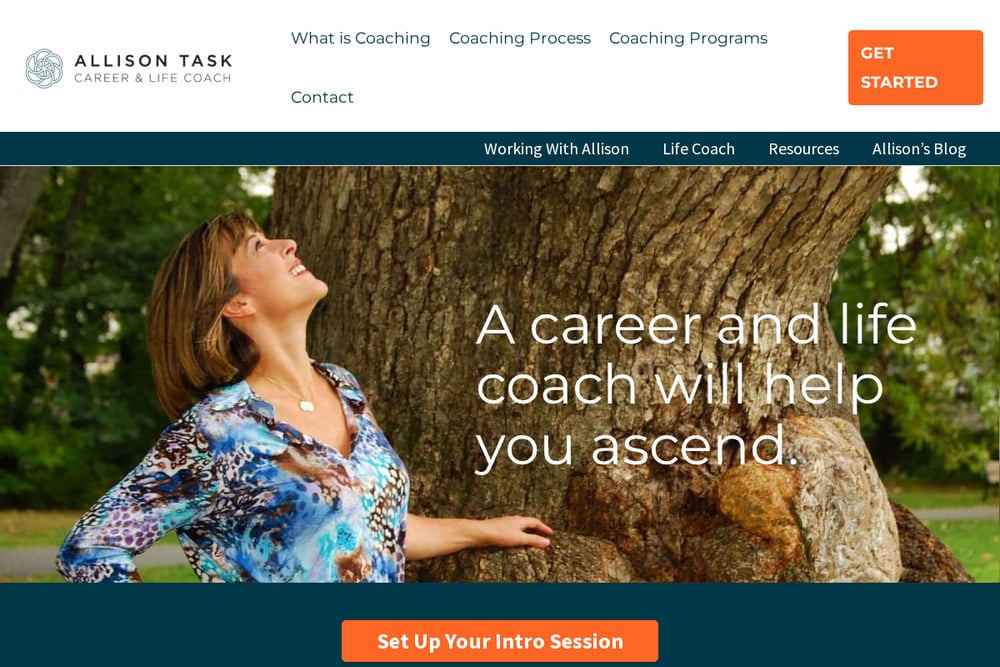 A screenshot of the Allison Task Life Coaching website.
Allison Task frames her work around the idea that your career can feel like a jacket that no longer fits. If you are good at your job but feel malaise, her transition coaching starts by assessing and prioritizing your values. From there, you build a vision of the future you want and get support pursuing it. Her site lays out a clear coaching process, sample contract, and intro session so you know what you are signing up for. She also covers adjacent territory like career, midlife, and values coaching, which helps if your transition touches more than one area. Learn more about her approach on the transition coach page.
#2 Strata Health Advisory Group
 A screenshot of the Strata Health Advisory Group website.
Strata Health Advisory Group, led by Stephanie, offers professional life coaching through virtual one-on-one sessions. The focus spans personal growth, goal achievement, career transitions, leadership development, and accountability. That breadth matters if your career move is tangled up with confidence, habits, or leadership questions rather than just a job search. The site is built on Squarespace and keeps things simple: an about page, a contact page, and a book-now option. You can request information directly by email at stephanie@stratahealthadvisory.com. If you want a straightforward, relationship-driven coaching engagement without a lot of program packaging, this is worth a conversation.
#3 Walk of Life Coaching
 A screenshot of the Walk of Life Coaching website.
Walk of Life Coaching, founded by Shannon Houde, brings a recruiter's lens to career transition. The practice pairs 1:1 coaching with group programs and a defined whole-journey framework. If you are stuck in a job search or unsure where you fit, the pitch is tailored guidance on positioning, personal branding, and salary negotiation. The site highlights a trial session so you can test the fit before committing. Client stories and hiring outcomes are featured prominently, which helps you gauge whether the approach matches your goals. It suits people who want structure and market-facing tactics alongside reflection.
#4 Transitioning Your Life
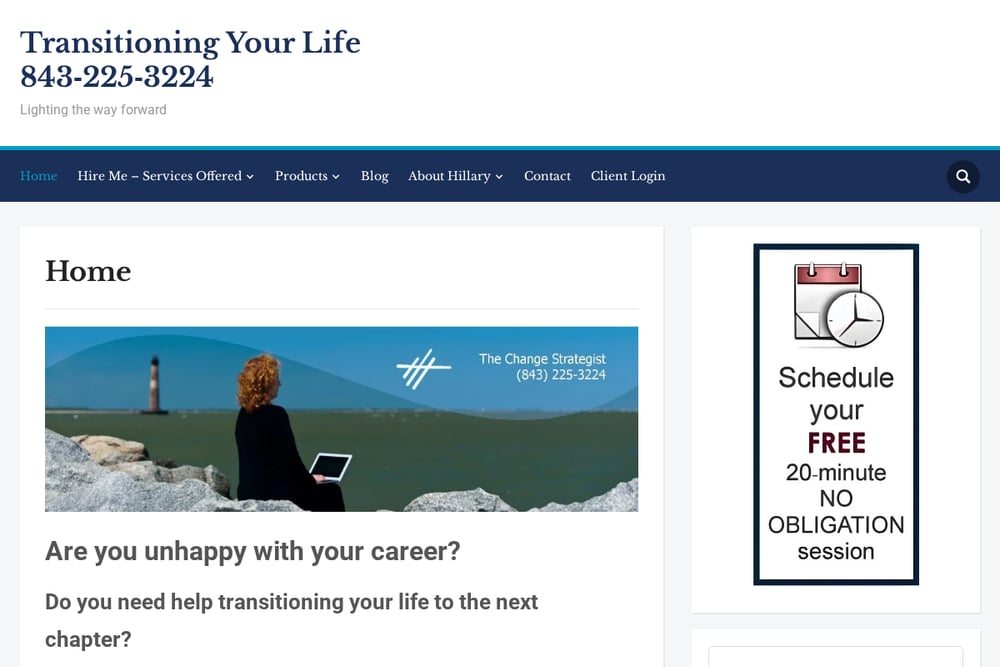 A screenshot of the Transitioning Your Life website.
Transitioning Your Life, run by Hillary, speaks directly to two audiences: unhappy academics and mid-life professionals considering a career change. The practice emphasizes weekly sessions, accountability, and practical tools for managing change with resilience. Services extend into focus coaching, getting organized, and help with writing, which is useful if your transition involves academic job materials or a heavy writing load. Hillary offers a complimentary call so you can discuss how the process works before committing. The tone is warm and low-pressure, aimed at people who find the first outreach step difficult. Case studies and testimonials give you a sense of the working relationship.
#5 Caroline Adams Coaching
Caroline Adams Coaching blends career transition work with money mindset and organizational change consulting. Her writing breaks the coaching relationship into clear areas of support, from clearing practical and mental clutter to holding onto your vision when doubt creeps in. If you are great at dreaming big but struggle to execute, or great at action but unsure what will actually make you happy, the framing will resonate. The practice offers 1-on-1 coaching, group coaching, and courses, so you can choose your level of structure. Money mindset resources are a distinctive add-on for anyone whose career leap is tangled up with financial fear.
How to Choose the Right Coach for Your Transition
Start with the type of change you are making. If you are leaving a role that looks good on paper but feels wrong, a values-driven transition coach fits. If you are actively job hunting, prioritize someone with recruiting or negotiation experience.
Next, decide how much structure you want. Some practices offer defined programs with weekly accountability. Others are more open-ended and conversational. Neither is better, but mismatched expectations waste time and money.
Then check the logistics. Confirm that sessions are virtual, one-on-one, and available in your time zone. Ask about pricing and session cadence before you book. A free intro call is the fastest way to test chemistry.
Finally, look for specialization that matches you. Coaches who work with academics, midlife professionals, or leaders will ask sharper questions because they have seen your situation before.
Where Automation Fits in a Coaching Practice
Coaching is human work, but the admin around it does not have to be. A simple workflow keeps you focused on clients.
Start with an intake form that captures goals, timeline, and preferred session times. Route submissions to your email and calendar automatically. Use a booking link so prospects can grab an intro call without back-and-forth.
After each session, send a templated recap email with action items and the next meeting link. Store notes in one shared document per client. Set reminders for follow-ups and check-ins.
For marketing, schedule posts and newsletter sends in batches. Track inquiries in a simple pipeline so no request goes unanswered. The goal is less time on logistics and more time in conversation.
The Bottom Line
The right coach is the one whose process matches your moment. If you are outgrowing a successful career, look for values-driven transition work. If you need a job and a negotiation strategy, choose a recruiter-informed practice.
Strata Health Advisory Group stands out for its broad, relationship-first approach to personal growth, career transitions, and leadership development through virtual one-on-one sessions. The others bring sharper specialization, from academic transitions to money mindset.
Book an intro call with two or three practices. Ask how they structure the work and what accountability looks like. The conversation itself will tell you a lot.