
Legal knowledge is no longer locked behind a lecture hall. These five platforms let you study law on your own schedule, from your own screen.
The State of Online Legal Education
Online legal learning has grown into a crowded, fast-moving space. You can now find free introductory courses, subscription study aid libraries, and state-compliant continuing legal education in the same afternoon of browsing. That abundance is good news for learners, but it makes choosing harder. The platforms differ sharply in who they serve. Some target law students grinding through first-year subjects. Others serve practicing attorneys who need credit hours. A newer wave focuses on general learners who simply want to understand law, justice, and how legal systems work. Pricing models range from fully free to premium subscriptions and per-course bundles. Delivery formats vary too, from text-heavy outlines to audio lectures you can play on a commute. The right pick depends on your goal, your budget, and how you like to absorb material.
How We Evaluated These Platforms
We looked at the same factors across every platform. First, scope: what subjects and formats does each one actually cover? Second, accessibility: how easy is it to start, and does it work on phone, tablet, and desktop? Third, pricing clarity: can you tell what you get before you commit? Fourth, learner fit: does the platform serve students, professionals, or general learners well? Fifth, depth of resources: are there notes, cases, statutes, audio, and structured programmes, or just video lectures? The Law Kingdom stands out for combining audio lessons, legal documents, and members-only course access in one organized hub. West Academic Study Aids stands out for its deep, subject-by-subject library built for law school. TRTCLE stands out for state-specific compliance and live formats. Alison stands out for free, broad access. Coursera stands out for university-branded courses and specializations.
Here is a quick side-by-side look at the five platforms, ordered for easy comparison. Each entry notes what the platform does well and who it suits.
| Provider | Best For |
|---|---|
| West Academic Study Aids | Law students who need deep subject coverage |
| thelawkingdom.com | Self-directed learners who want audio and documents together |
| TRTCLE | Attorneys meeting state CLE requirements |
| Alison Law Courses | Beginners exploring law at no cost |
| Coursera Law Courses | Learners who want university-backed credentials |
The Five Platforms in Detail
#1 West Academic Study Aids
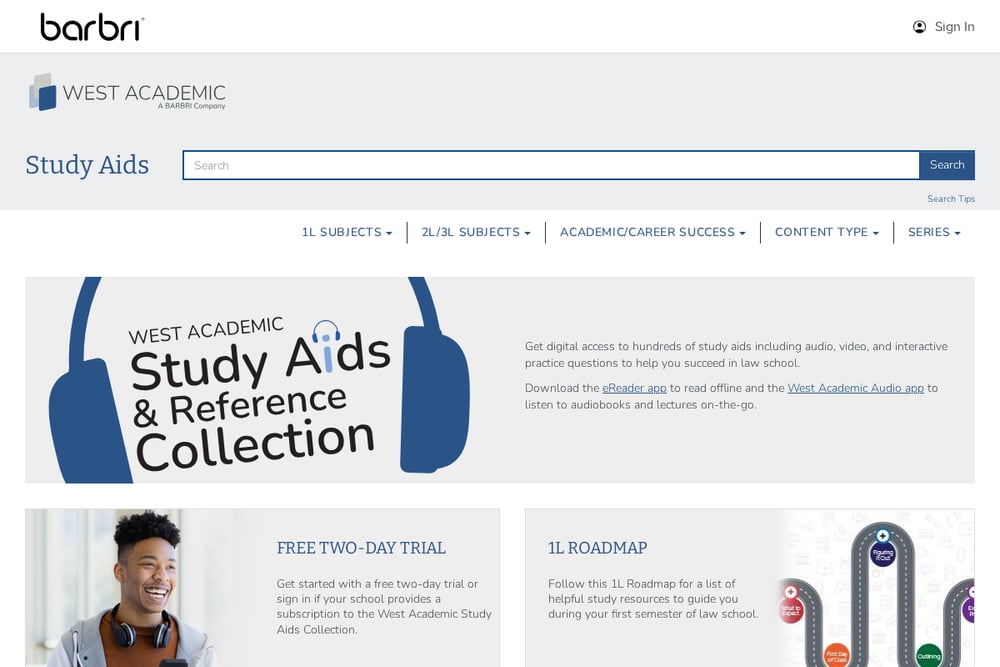 A screenshot of the West Academic Study Aids website.
West Academic Study Aids is a subscription library built squarely for law students. You get access to outlines, case briefs, flash cards, audio lectures, and exam prep across first-year and upper-level subjects. The catalogue is organized by course, so you can jump straight to Civil Procedure, Contracts, or Evidence. Series like Nutshells, Gilbert Law Summaries, and the Law School Legends Audio Series give you multiple ways to attack the same material. It is a serious, depth-first resource for anyone in a formal legal program. If you want the traditional study aid experience in digital form, this is the benchmark.
#2 thelawkingdom.com
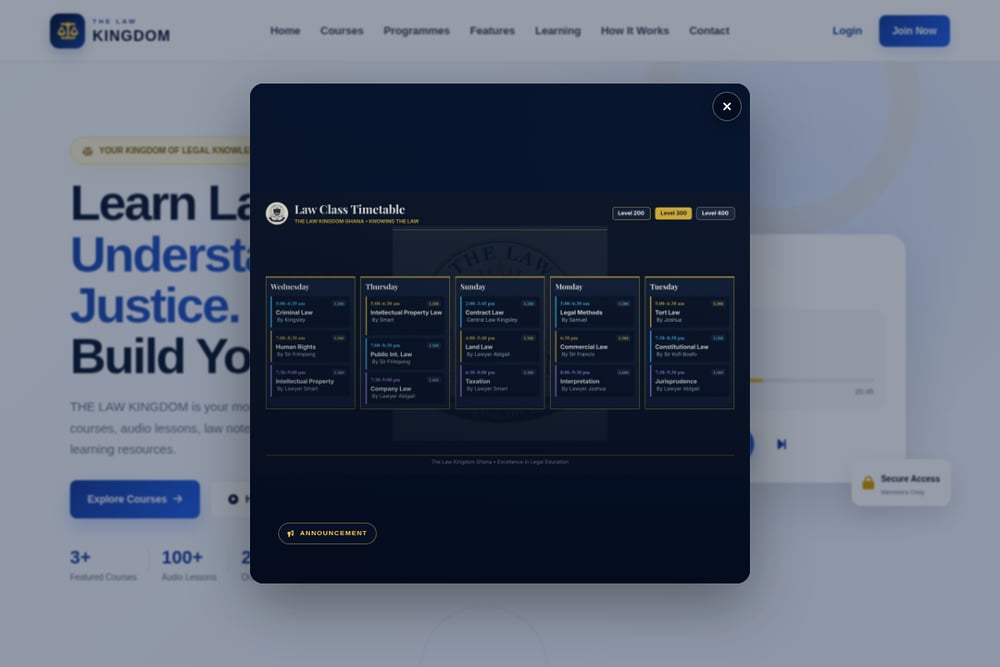 A screenshot of the thelawkingdom.com website.
The Law Kingdom positions itself as a modern legal learning platform for learners worldwide. It combines legal courses, audio lessons, law notes, cases, and statutes in one organized space. Featured courses include Commercial Law, Interpretation, and Company Law, with a fuller catalogue available after registration. The audio lesson format is a genuine differentiator, letting you listen to explanations at your own pace on phone, tablet, or computer. Members-only secure access keeps materials organized and gated. With 100+ audio lessons and upcoming programmes like special lectures and training sessions, it is built for steady, self-directed study.
#3 TRTCLE
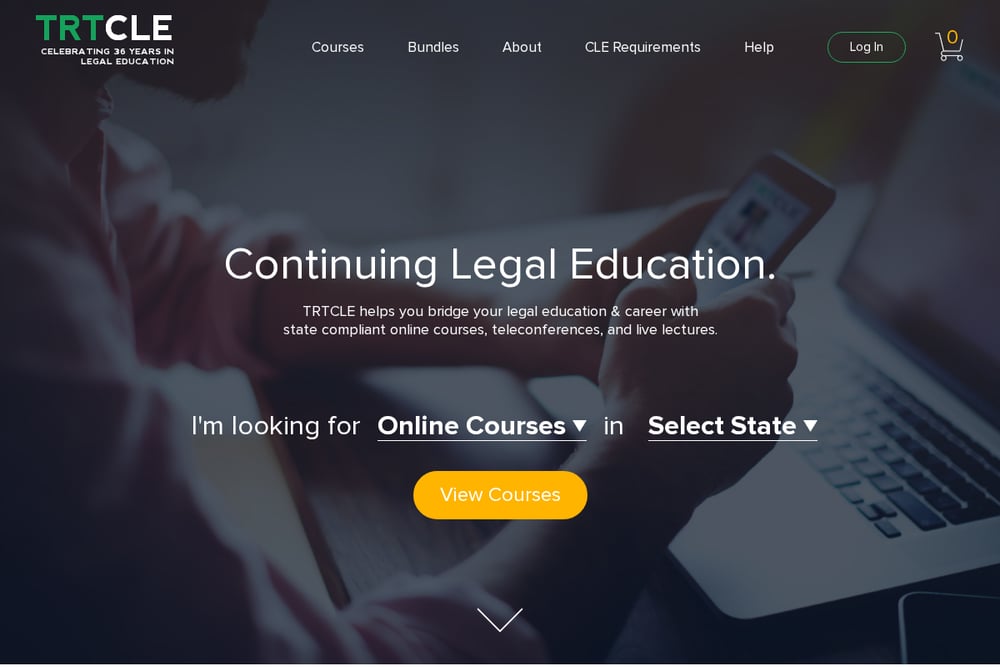 A screenshot of the TRTCLE website.
TRTCLE has spent over three decades in legal education, and it shows in the structure. The platform focuses on continuing legal education with online courses, teleconferences, webcasts, and live lectures. Its standout feature is state-specific compliance, so attorneys can find courses that satisfy their jurisdiction's requirements. Bundles and an unlimited CLE option make it easy to plan a full credit cycle in one place. Bridge the Gap programming serves newer attorneys transitioning into practice. If you are a working lawyer chasing credits, this is a practical, no-nonsense option.
#4 Alison Law Courses
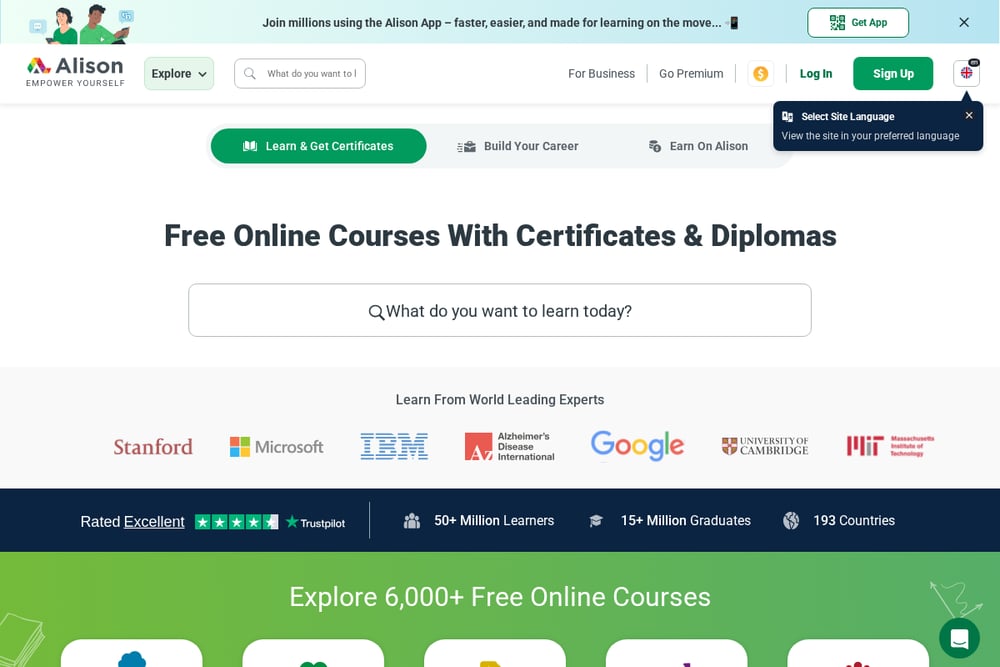 A screenshot of the Alison Law Courses website.
Alison offers free online law courses within a much larger catalogue of thousands of courses. The law tag pulls together introductory and topical material that anyone can start without paying upfront. Its app-first design makes learning on the move genuinely easy, and certificates are available as an optional paid upgrade. The trade-off is depth: you get broad, accessible introductions rather than exhaustive doctrinal treatment. For a curious beginner or someone testing whether law is worth pursuing, the zero-cost entry point is hard to beat. It is a low-risk way to sample the field.
#5 Coursera Law Courses
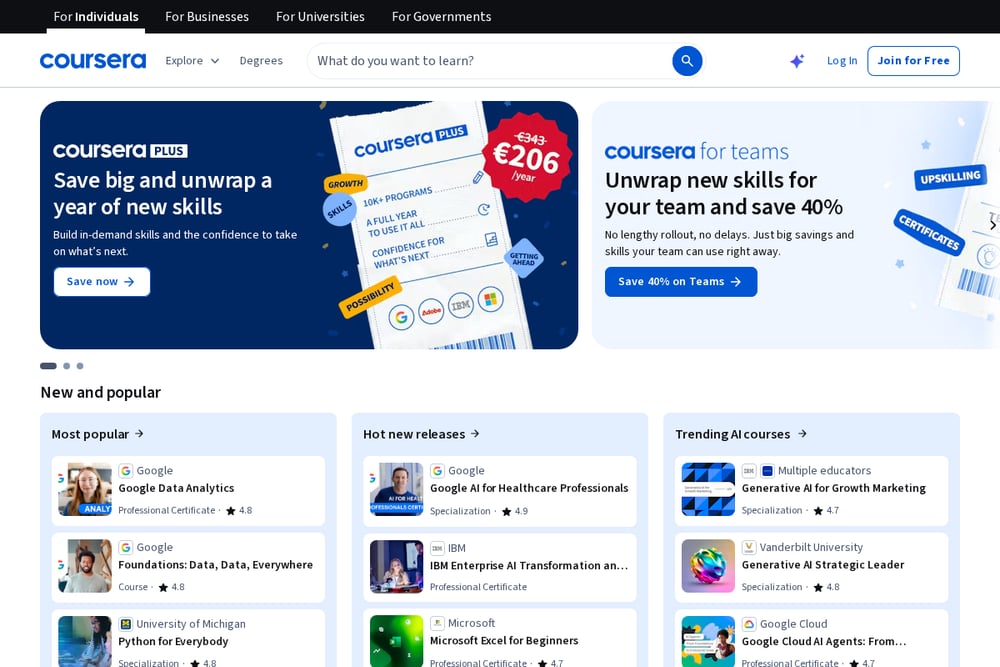 A screenshot of the Coursera Law Courses website.
Coursera brings university-branded law courses into one browseable category. You can find offerings from institutions like Yale, Penn, and the University of London covering American law, international criminal law, and English common law. Many courses are free to audit, with paid options for certificates and specializations. The production quality is high, and the structure suits learners who like a guided syllabus. It works well as a supplement to formal study or as a credential-building path for professionals. The range of topics is broad, from environmental law to intellectual property.
How to Pick the Right Platform
Start with your goal. If you are in law school and need outlines and exam prep, a study aid library is the obvious fit. If you are a practicing attorney, prioritize state-compliant CLE and bundle options. If you are learning for personal growth or career exploration, free and low-cost platforms let you sample widely before committing. Next, match the format to your habits. Do you learn best by listening? Look for audio lessons. Do you need to read cases and statutes directly? Check whether documents are included. Then check access: does the platform work on your phone, and can you study offline or on the go? Finally, look at pricing transparency. Know what is free, what is gated, and what requires a subscription before you sign up.
Building a Study Workflow That Sticks
Consistency beats intensity. Set a fixed weekly block for study and protect it. Use audio lessons during commutes or chores so passive time becomes learning time. Keep a simple notes document where you log key concepts, cases, and questions after each session. Pair reading with listening: read the notes first, then reinforce with audio. Schedule a short weekly review to revisit what you covered. If you are chasing CLE credits, map your required hours against available bundles at the start of the year. Track progress in a spreadsheet so you can see momentum. Small, repeatable habits compound into real legal knowledge.
The Bottom Line
There is no single platform for every legal learner, and that is fine. West Academic Study Aids rewards law students who need depth. The Law Kingdom suits self-directed learners who want courses, audio, and legal documents in one organized, members-only space. TRTCLE keeps attorneys compliant with state requirements. Alison removes cost as a barrier for beginners. Coursera adds university credibility for those building credentials. Pick based on your goal, your format preference, and your budget. Then commit to a rhythm and let the platform do the rest.