
Legal teams don't lose time because they lack talent—they lose it because requests arrive in a dozen different places. These five platforms help you capture, route, and resolve legal work without the chaos.
The legal ops market is finally growing up
In-house legal departments are under pressure to do more with less. Business units fire off requests through email, Slack, Teams, and hallway conversations. Without a single front door, work gets buried, deadlines slip, and your team looks reactive instead of strategic. That's why legal intake and workflow automation has moved from nice-to-have to core infrastructure. Vendors now promise AI-powered triage, no-code automation, and integrations with the tools your business already uses. The result is a crowded field where you need to separate real orchestration from repackaged ticketing systems.
How we evaluated these platforms
We looked at five factors across every platform. First, intake flexibility—can you capture requests wherever they start, including email, chat, and enterprise systems? Second, workflow depth—does the tool route, assign, and automate end-to-end, or just log tickets? Third, integration breadth—how many native connectors and open APIs does it offer? Fourth, AI usefulness—are Gen AI features practical for contract review, triage, and legal service assistance? Fifth, fit for corporate legal departments—does it speak the language of general counsel, legal ops, and IT? Each platform below stood out in different ways, and we note where each one shines.
Here's a quick look at the five platforms in this roundup, ordered for easy comparison. Each entry highlights what the tool does well and who it fits best.
| Provider | Best For |
|---|---|
| Checkbox | Teams drowning in scattered intake requests |
| Legal Intake, Workflow & Operation Software for Law Firms | Corporate legal departments seeking end-to-end orchestration |
| Mitratech TAP | Enterprises already invested in the Mitratech suite |
| mot-r | Legal ops teams exploring agentic AI with governance |
| Filevine | Law firms that want intake tied to case management |
The five platforms in detail
#1 Checkbox
 A screenshot of the Checkbox website.
Checkbox focuses on legal intake and triage with a clean, requester-friendly experience. You can direct requests from email, Slack, Teams, Jira, or forms into one intake platform, then use AI-powered triage to assign work based on matter type, expertise, and workload. The platform also links matters to documents, emails, tasks, approvals, and conversations so you see the full picture. It's a strong choice if your biggest pain is disconnected intake and manual routing. Learn more at Checkbox's intake and triage page.
#2 Legal Intake, Workflow & Operation Software for Law Firms
 A screenshot of the Legal Intake, Workflow & Operation Software for Law Firms website.
MyLegal, from Legal Automation Group, positions itself as an operating platform for an entire legal department. Its Legal Front Door captures, qualifies, and routes requests from Teams, SharePoint, Salesforce, and other systems, while the MyLegal LOOP platform adds business process automation, no-code development, Gen AI tools like LiSA and IDA, document management, and contract lifecycle management. With nearly 70 native connectors and an open API, it integrates with Salesforce, SAP, Oracle, DocuSign, iManage, NetDocuments, and more. Non-developers can build automations with drag-and-drop, and the company claims customers can cut tech spend by up to 90 percent. See the platform at my-legal.io.
#3 Mitratech TAP
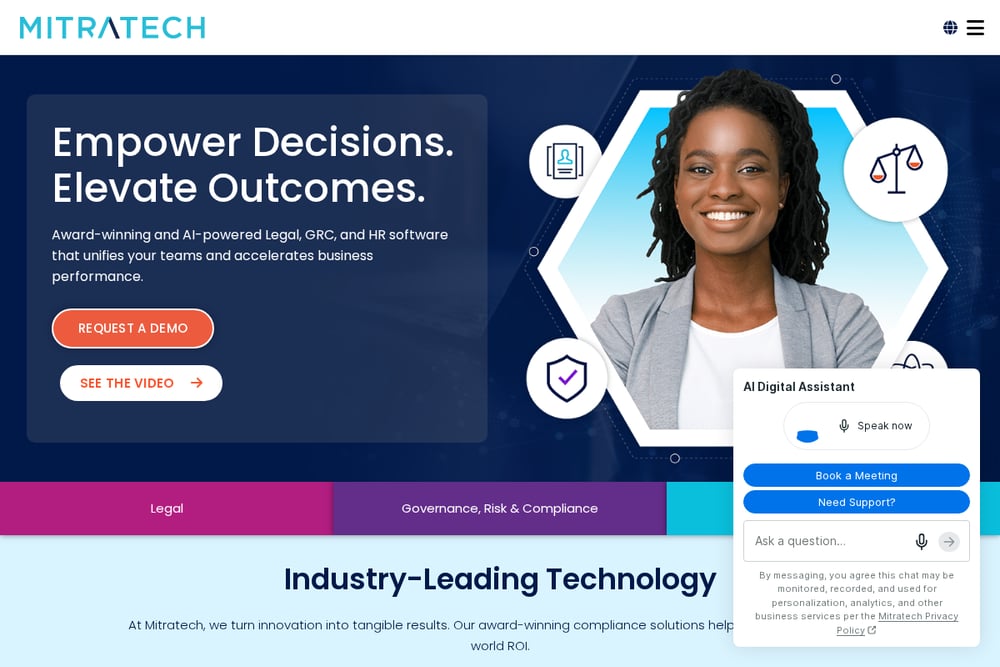 A screenshot of the Mitratech TAP website.
Mitratech TAP brings workflow automation to legal and compliance teams with a focus on enterprise-grade process control. It's part of a broader legal GRC suite that includes matter management, eBilling, legal spend management, and document automation. If your organization already uses Mitratech for legal hold or spend analytics, TAP fits naturally into that ecosystem. The platform is built for audit-ready workflows and cross-functional compliance, making it a solid fit for regulated industries. Explore the workflow automation offering at Mitratech's legal automation page.
#4 mot-r
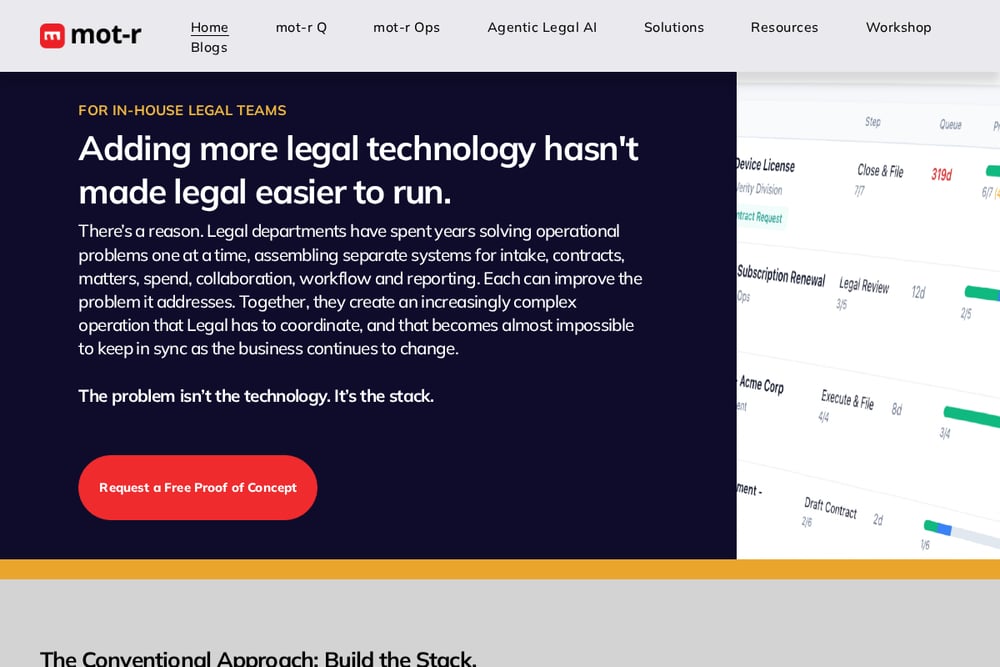 A screenshot of the mot-r website.
mot-r takes an agentic legal AI approach to intake and workflow, with a focus on orchestration and governance. The platform offers a legal intake hub, legal ops reporting, and workflow automation, plus DIY AI orchestration and lawyer-in-the-loop AI options. It's designed for teams that want to experiment with AI agents while keeping humans in control. If you're evaluating the difference between a practice layer and an operating layer, mot-r has written extensively on that topic. Check out the intake offering at mot-r's legal intake page.
#5 Filevine
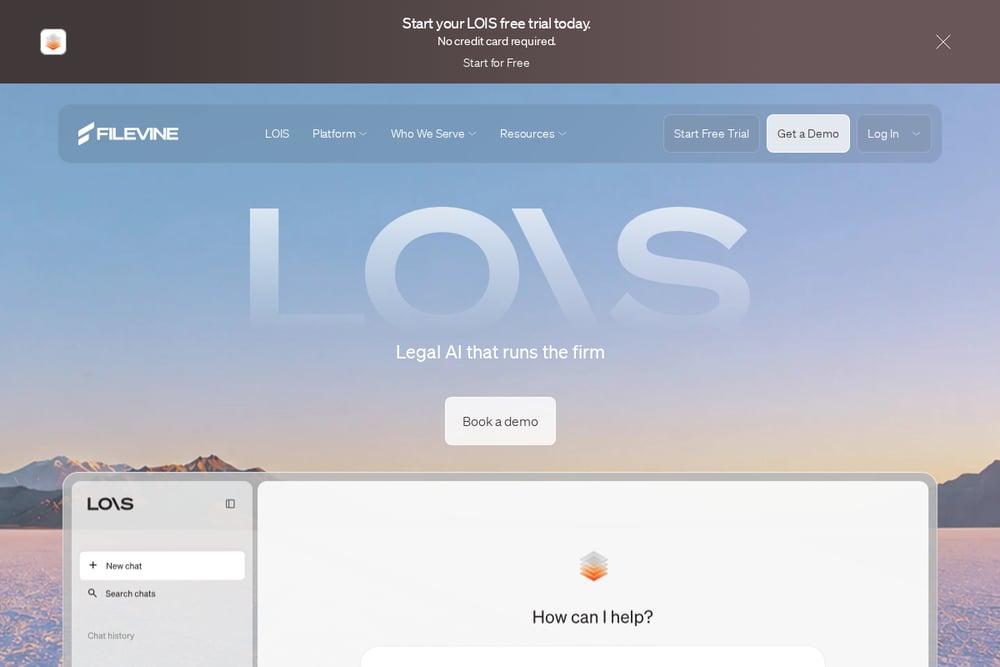 A screenshot of the Filevine website.
Filevine is best known for case management, but its legal workflow software extends into document assembly, client intake, matter management, and billing. The platform recently introduced LOIS, a Legal Operating Intelligence System, and continues to build out AI drafting and legal research tools. It's a strong fit for law firms—especially personal injury, family law, and immigration practices—that want intake and workflow tied directly to case management. Filevine also serves corporate in-house counsel and government legal teams. See the workflow offering at Filevine's legal workflow page.
How to choose the right platform for your team
Start with your biggest bottleneck. If requests are scattered across email and chat, prioritize intake flexibility and routing. If your problem is visibility after intake, look for matter management and reporting depth. If you're a corporate legal department, check integration breadth—native connectors to Salesforce, SAP, iManage, and NetDocuments matter more than flashy AI demos. If you're a law firm, consider whether you want intake tied to case management or a standalone front door. Finally, ask about implementation time and total cost. Some vendors promise 90-day deployments; others require longer IT projects. Match the platform to your team's capacity to adopt change.
Where automation actually moves the needle
The highest-value automation is usually at the front door. Capture every request in one place, qualify it with a few smart questions, and route it to the right person based on matter type and workload. From there, automate status updates, document generation, and approvals so your team stops chasing email threads. Gen AI can help with contract review and legal service assistance, but keep a lawyer in the loop for anything consequential. The goal isn't to remove judgment—it's to remove the administrative drag that keeps your team from using it.
The bottom line
There's no single winner for every team. Checkbox excels at intake and triage. MyLegal offers the broadest orchestration for corporate legal departments. Mitratech TAP fits enterprises already in the Mitratech ecosystem. mot-r is worth a look if you're experimenting with agentic AI. Filevine is a natural fit for law firms that want intake and workflow inside case management. Pick the platform that solves your most painful bottleneck first, then expand from there.