You already watch movies. Why not turn that habit into real English progress? These five platforms make film-based learning practical, structured, and genuinely fun.
The film-based English learning landscape
Learning English through movies has moved far beyond subtitles and pause buttons. Today's platforms grade vocabulary, filter films by difficulty, and build daily practice around the exact words you'll hear on screen. The result is a crowded but exciting space where you can choose between app-first drills, interactive streaming, and classroom-ready lessons.
How these platforms were evaluated
Each platform was assessed on vocabulary depth, level-grading clarity, film library breadth, daily-practice design, and how well it fits self-study versus classroom use. Pricing transparency and device support were also considered. The goal is to help you match a tool to your routine, not to crown a single winner.
Here is a quick comparison of the five platforms, from app-based vocabulary drills to full interactive streaming experiences.
| Provider | Best For |
|---|---|
| EWA: Learn Languages | Learners who want a gamified, multi-format app |
| Learn English with movies · WordWizard | Busy learners who want two-minute daily vocabulary prep |
| Lingopie | Immersion learners who want to stream real shows |
| FluentU | Learners who want authentic clips with interactive captions |
| Movie Your English | Teachers and students who want ready-made movie lessons |
The five platforms in detail
#1 EWA: Learn Languages
 A screenshot of the EWA: Learn Languages website.
EWA brings movie and TV snippets into bite-sized lessons designed for every level. You pick a topic and difficulty, then practice speaking with clips from shows and films you might already love. The app also layers in bilingual books, interactive games, and spaced repetition to keep vocabulary sticky. With over 10 million downloads and a 4.6-star rating on Google Play, it has serious reach. It is a strong all-rounder if you want variety beyond film clips alone.
#2 Learn English with movies · WordWizard
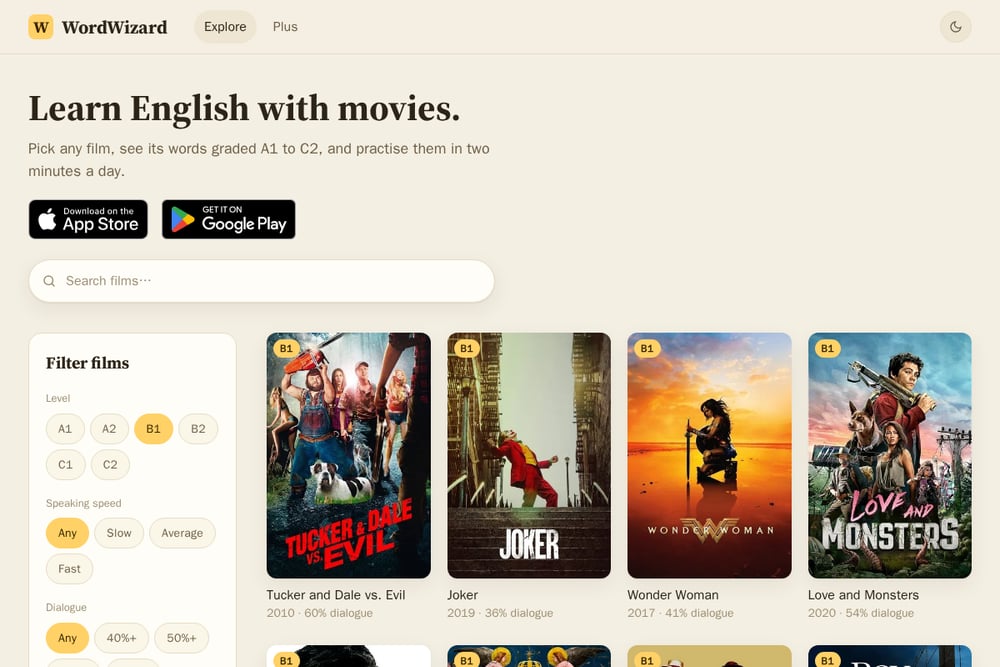 A screenshot of the Learn English with movies · WordWizard website.
WordWizard takes a refreshingly focused approach: pick any film, see its words graded A1 to C2, and practice the hardest ones in two-minute daily sessions before you watch. You can filter films by speaking speed and dialogue volume, so you are never thrown into fast, dense dialogue before you are ready. Each film page surfaces its toughest vocabulary with example sentences, turning movie night into a structured lesson. The level system spans A1 Beginner through C2 Mastery, making progress visible and intentional. It is ideal if you want a low-friction daily habit tied directly to the films you actually want to see.
#3 Lingopie
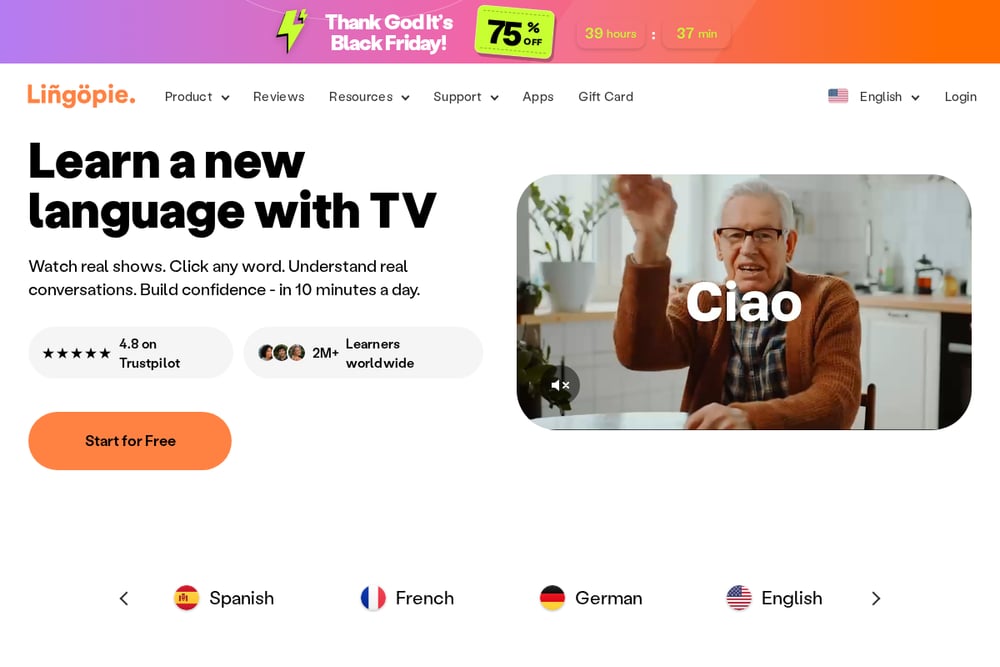 A screenshot of the Lingopie website.
Lingopie turns real TV shows and movies into interactive language lessons. You click any word in the subtitles to see its conversational meaning, then reinforce it with games, vocab lessons, and progress tracking. The platform supports 15 languages and offers content for beginner, intermediate, and advanced learners, including kids' shows, podcasts, and audiobooks. With over 2 million learners and a 4.8 rating on Trustpilot, it has built a loyal following. It is a great fit if you want to binge authentic content while learning.
#4 FluentU
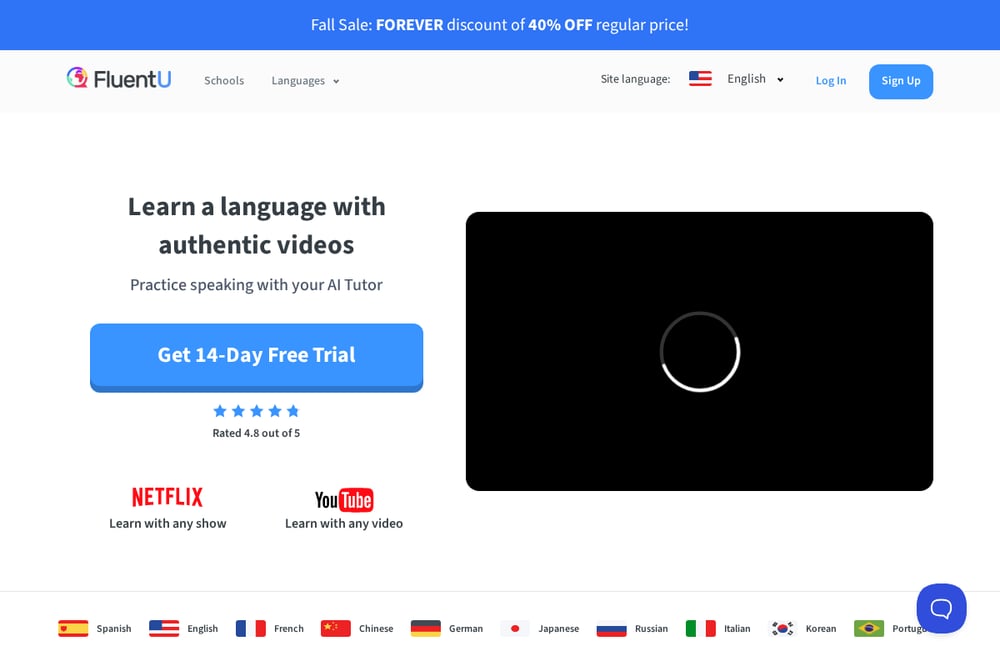 A screenshot of the FluentU website.
FluentU curates authentic video content, from TV show clips to movie scenes and music videos, and wraps it in interactive subtitles. Click any word to see an in-context definition and example sentences, then review with spaced-repetition quizzes. The platform also offers a structured course with video-based lessons and personalized quizzes. It is built for learners who want real-world content without drowning in unfamiliar vocabulary. The curated library keeps the difficulty manageable from beginner to advanced.
#5 Movie Your English
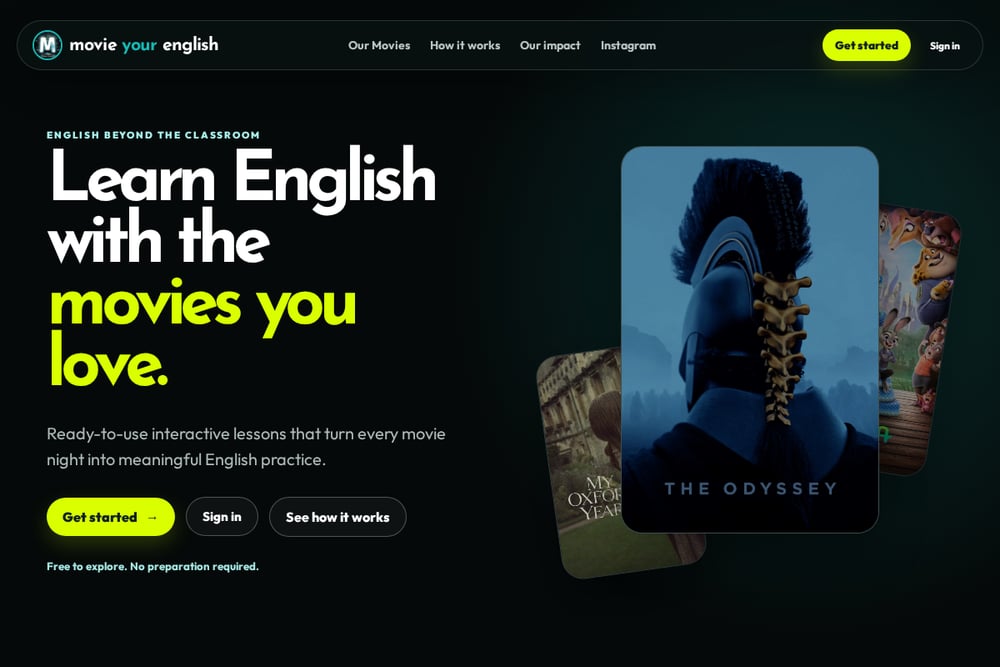 A screenshot of the Movie Your English website.
Movie Your English is built around ready-to-use interactive lessons that turn any movie night into English practice. Teachers can save hours of prep with activities designed for before, during, and after a film, while students complete exercises and share progress. You can filter lessons by level, genre, or language skill to find the right fit. It is free to explore and requires no preparation, making it accessible for classrooms and self-study alike. If you learn best with structured activities around a full film, this is a smart pick.
How to choose the right platform
Start with your routine. If you have two minutes a day, prioritize a tool that grades vocabulary and gives you quick prep sessions. If you prefer immersion, pick a platform with interactive subtitles and a broad streaming library. Teachers should look for ready-made lesson plans and progress-sharing features. Finally, check device support and pricing clarity so the tool fits your life, not the other way around.
Building a simple movie-learning workflow
Pick a film you actually want to watch. Check its vocabulary level and preview the hardest words before viewing. Do a short daily practice session to lock in those words. Watch the film with subtitles on, then review any words you missed. Repeat weekly, and rotate genres to keep vocabulary diverse. This loop turns passive watching into active learning without adding much time.
The bottom line
There is no single right platform, only the one that matches how you learn. WordWizard stands out for its two-minute daily prep and precise A1-to-C2 grading, while EWA, Lingopie, FluentU, and Movie Your English each bring distinct strengths. Try one for a week, measure your recall, and adjust. Your next movie night could be your best English lesson yet.