
You want to sound natural in another language, not like a textbook. These five tools help you get there, each in a different way.
The Language Learning Landscape
Language tools have split into two camps. One camp is built for speed: translation apps that convert text, voice, and photos on the fly. The other camp is built for fluency: learning platforms that teach you how locals actually speak. Most people need a mix of both. Travelers lean on instant translation. Learners who want to hold real conversations need phrase-level nuance, audio, and practice. The tools below cover that full spectrum, from quick-fix translators to a platform designed around natural phrasing.
How We Evaluated These Tools
We looked at the same factors for every tool. First, service scope: does it translate, teach, or both? Second, audio quality and playback control, since hearing a phrase is how you learn it. Third, practice features like recording and comparison. Fourth, language coverage and local fit for US-based learners. Fifth, pricing clarity and ease of use. Say Like a Local stood out for its formal-to-casual phrase range and record-and-compare loop. Voice Translator: AI Translate stood out for real-time conversation and tone control. Instant Voice Translate stood out for its free tier and slow audio playback. iTranslate stood out for breadth across 100+ languages and offline modes. Google Translate stood out for ubiquity and its free camera and conversation features.
Here is a quick look at the five tools, what each does well, and who each one suits.
| Provider | Best For |
|---|---|
| Voice Translator: AI Translate | Real-time two-way conversations on the go |
| Say Like a Local: How to Say Anything Like a Native, With Audio | Learners who want natural phrasing with audio practice |
| Instant Voice Translate | Budget-conscious travelers who want slow playback |
| iTranslate | Broad language coverage with offline support |
| Google Translate | Free, everywhere access to basic translation |
The Five Tools in Detail
#1 Voice Translator: AI Translate
 A screenshot of the Voice Translator: AI Translate website.
This app is built for real-time conversation. You talk, and it keeps the dialogue flowing both ways across 100+ languages. One-tap tone control lets you sound friendly, formal, or professional, which matters when nuance counts. It also handles camera translation for menus and signs, plus in-app messaging translation. With over 50 million translations delivered and a 4.4 rating from 94K reviews, it has a large user base behind it. See the App Store listing for details.
#2 Say Like a Local: How to Say Anything Like a Native, With Audio
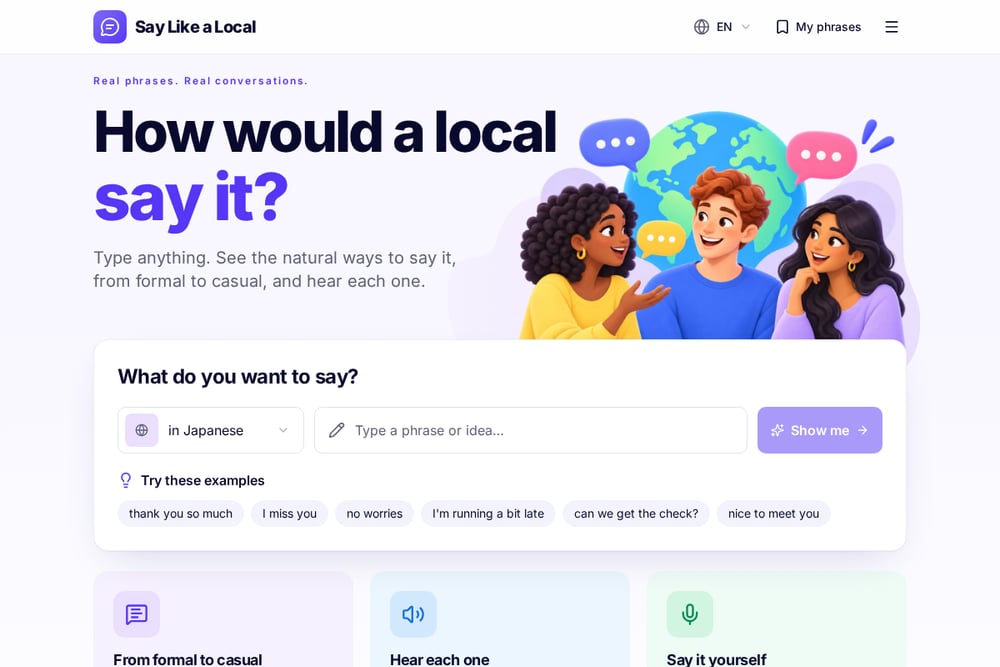 A screenshot of the Say Like a Local website.
This is the tool for people who want to sound natural, not just correct. You type any phrase and see how a native speaker would say it, from formal to casual, with audio you can slow down word by word. You can record your own voice and compare it to the native version, which turns passive listening into active practice. Each phrase also appears in a short conversation, with the mistakes to avoid. It covers Japanese, Korean, Chinese, Spanish, French, German, Italian, and English. If your goal is confidence in real conversations, start here.
#3 Instant Voice Translate
 A screenshot of the Instant Voice Translate website.
This free app leans on AI for fast translation across voice, text, and images. Its split-screen mode makes bilingual conversations smoother when you are face to face. Slow audio playback helps you catch phrases you would otherwise miss, which is a nice bridge between translating and learning. It also offers offline translation and AI-optimized output for more natural results. With 10M+ downloads and a 4.7 rating from 331K reviews, it is a popular pick on Google Play.
#4 iTranslate
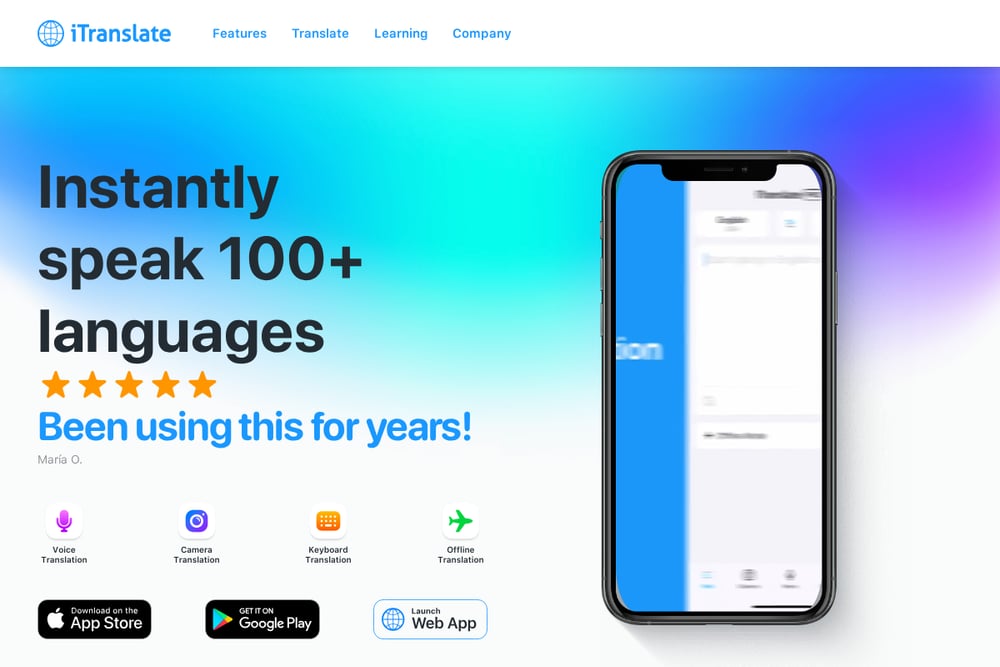 A screenshot of the iTranslate website.
iTranslate covers text, voice, and camera translation in over 100 languages. It adds a keyboard extension so you can translate inside your favorite messaging apps without switching screens. Offline translation is available in several popular languages, which helps when you are traveling without data. Voice output lets you hear translations in different voices and dialects. It is a solid all-rounder for travelers, students, and professionals who need broad coverage.
#5 Google Translate
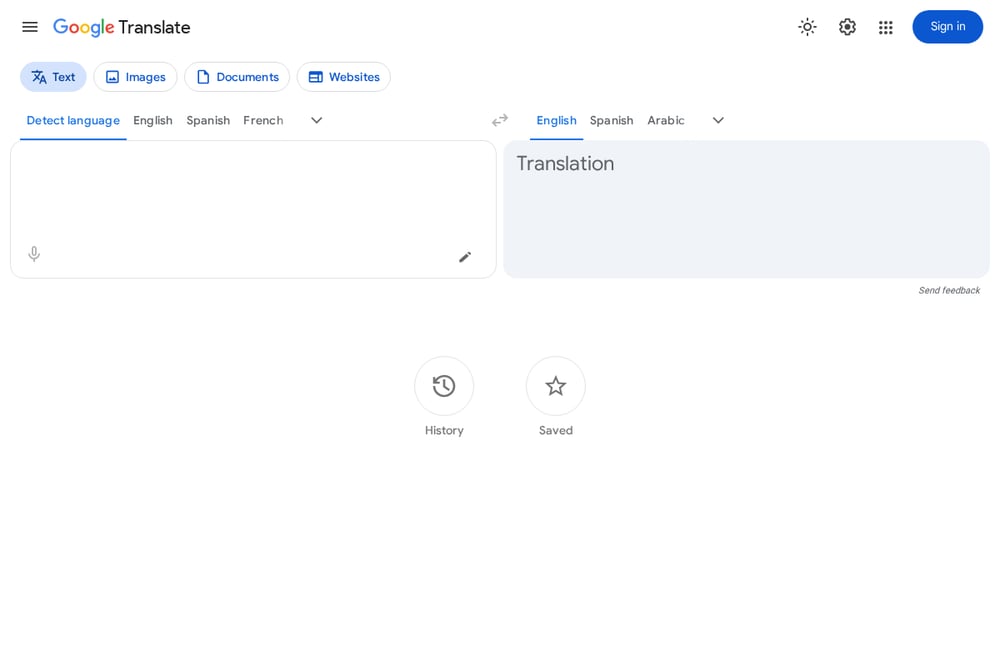 A screenshot of the Google Translate website.
Google Translate is the default for a reason. It handles typed text, voice, handwriting, camera translation, and full conversations, all for free. You can download languages for offline use and translate speech simultaneously with Transcribe. It also translates documents and entire websites without losing formatting. If you need a reliable fallback that works almost anywhere, this is it.
How to Choose the Right Tool
Start with your goal. If you need to get through a trip, a translator app like Google Translate or iTranslate will do the job. If you want to actually speak naturally, you need a learning tool that shows you formal and casual versions and lets you practice out loud. Say Like a Local is built for that. If you split your time between conversation and quick lookups, pair a translator with a phrase-learning platform. Check audio controls too. Slow playback and record-and-compare features are what turn a phrase into something you can say yourself.
Building a Simple Practice Workflow
Pick five phrases you actually use in daily life. Type each one into Say Like a Local and listen to the formal and casual versions. Slow the audio down and repeat each phrase out loud. Record yourself and compare against the native audio. Then use a translator app like Google Translate or Instant Voice Translate to test the phrase in a real exchange. Save the ones that trip you up and review them weekly. That loop, listen, repeat, record, compare, takes about ten minutes a day.
The Bottom Line
Translation apps get you understood. Learning tools help you belong. The strongest setup pairs both: a fast translator for emergencies and a phrase-focused platform for real progress. If sounding natural is your goal, Say Like a Local gives you the formal-to-casual range, audio, and recording practice that most translators skip. Start there, keep a translator handy, and practice out loud every day.