You don't need another app that teaches you to order a coffee and nothing else. You need one that gets you through the taxi, the pharmacy, and the awkward first meeting. These five tools take real conversation seriously.
Where language learning is heading
The old model was flashcards and streaks. The new model is scenes, voices, and simulated conversation. Learners want to practice the exact moments they will face, whether that is haggling at a market or introducing themselves to a new colleague. AI tutors and native-recorded audio have made that possible at scale, and the apps below each attack the problem from a slightly different angle.
How these five were evaluated
Every app was weighed on the same factors: how closely the lessons map to real situations, how much speaking practice you actually get, the breadth of languages and levels, pricing clarity and free access, and how well the experience holds up on both phone and browser. Nothing here is scored on marketing claims alone.
Here is the short version before the detail. Each entry below earns its place for a different reason, so match the tool to the way you actually learn.
| Provider | Best For |
|---|---|
| Speak | Structured speaking practice with AI feedback |
| Wowla: learn what you’ll use | Learning through real-life scenes and native audio |
| Scenaria | Custom voice scenarios with instant feedback |
| Langua (LanguaTalk) | Blending AI chat with human tutors |
| Pingo AI | Goal-driven conversation from the first session |
The five apps in detail
#1 Speak
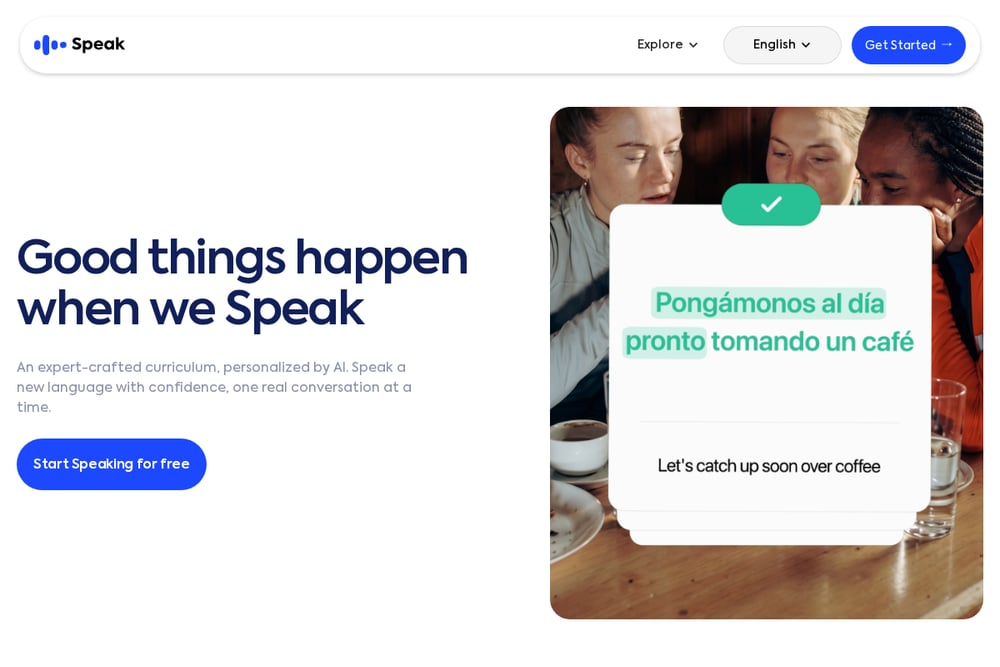 A screenshot of the Speak website.
Speak built its reputation on one idea: you learn a language by speaking it. The app pairs an expert-crafted curriculum with an AI tutor that pushes you through the learn, practice, apply loop until phrases feel automatic. Lessons are built around how native speakers actually talk, not textbook sentences. It covers Spanish, French, Italian, German, Korean, Japanese, Chinese, and English, and the polish shows in the feedback you get on each attempt. If you want a structured path with heavy speaking reps, this is the one to beat.
#2 Wowla: learn what you’ll use
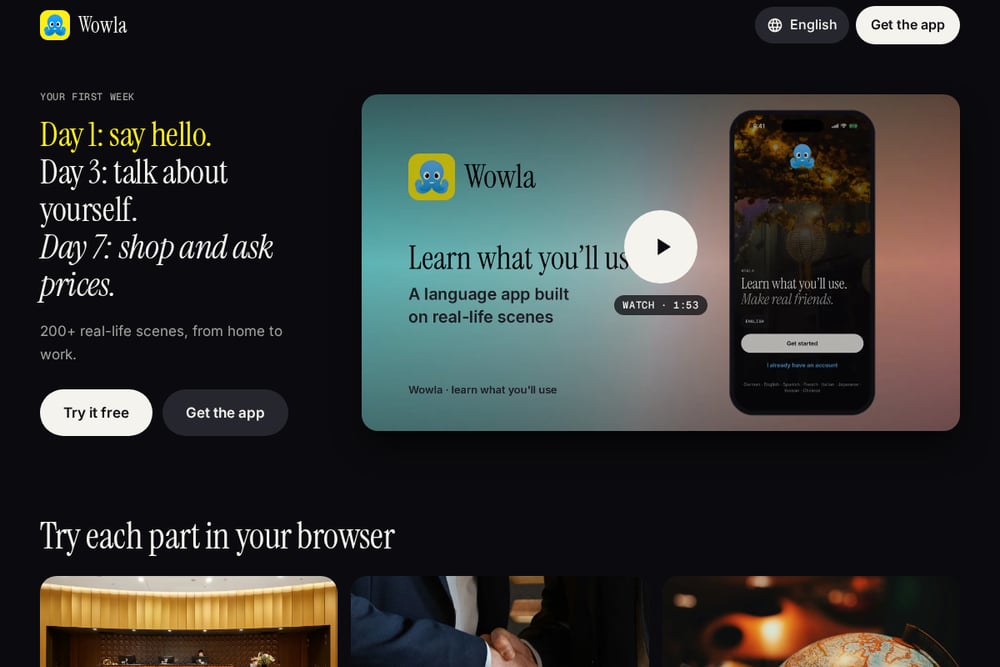 A screenshot of the Wowla website.
Wowla organizes everything around scenes you will genuinely walk into: taking a taxi, ordering food, meeting new people. Each scene gives you a dialogue, the words inside it, and audio recorded by native voices, so you hear the language before you try it. You can sample scenes, word cards, and dialogues right in your browser before committing to the app. Courses run deep, with 247 English scenes and 240 Spanish scenes, plus 200 each for German, French, Italian, Japanese, Korean, and Chinese. The first two scenes of every level are free, and every scene ends with something you can actually do.
#3 Scenaria
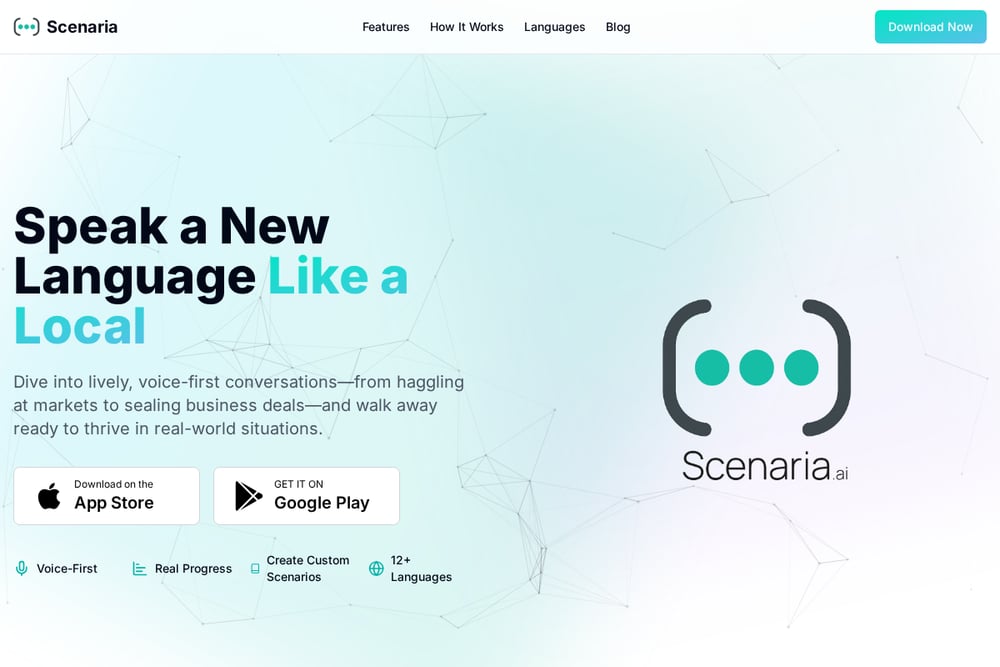 A screenshot of the Scenaria website.
Scenaria leans hard into voice-first roleplay. You pick a scenario, or describe your own, and hold a conversation with an AI character that adapts to your accent and level. After each exchange you get corrected phrases, richer alternatives, and pronunciation tips. It tracks grammar, vocabulary, and fluency scores so you can see progress rather than guess at it. With more than 12 languages and regional variants like Mexican versus Spain Spanish, it suits travelers and professionals who need local nuance.
#4 Langua (LanguaTalk)
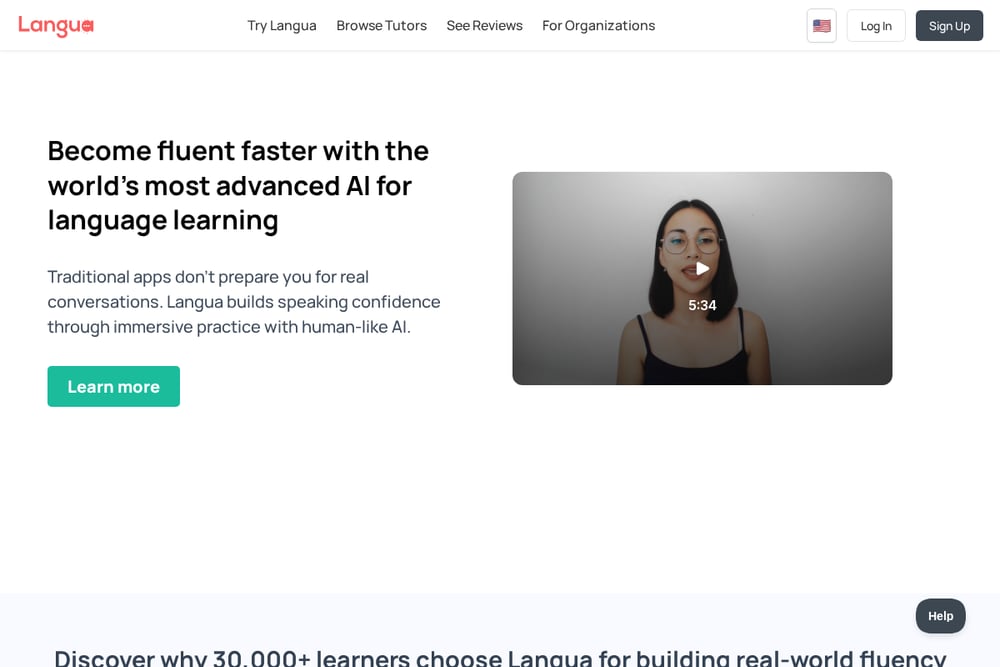 A screenshot of the Langua website.
Langua combines human-like AI chat with access to real online tutors. The AI voices are cloned from native speakers, and conversations are built around role plays and topics you care about. You can save vocabulary and the system weaves those words back into flashcards, stories, and future chats for retention. When you want a person instead of a bot, the platform connects you with vetted tutors across 16 languages. It is a strong middle ground between self-study and paid lessons.
#5 Pingo AI
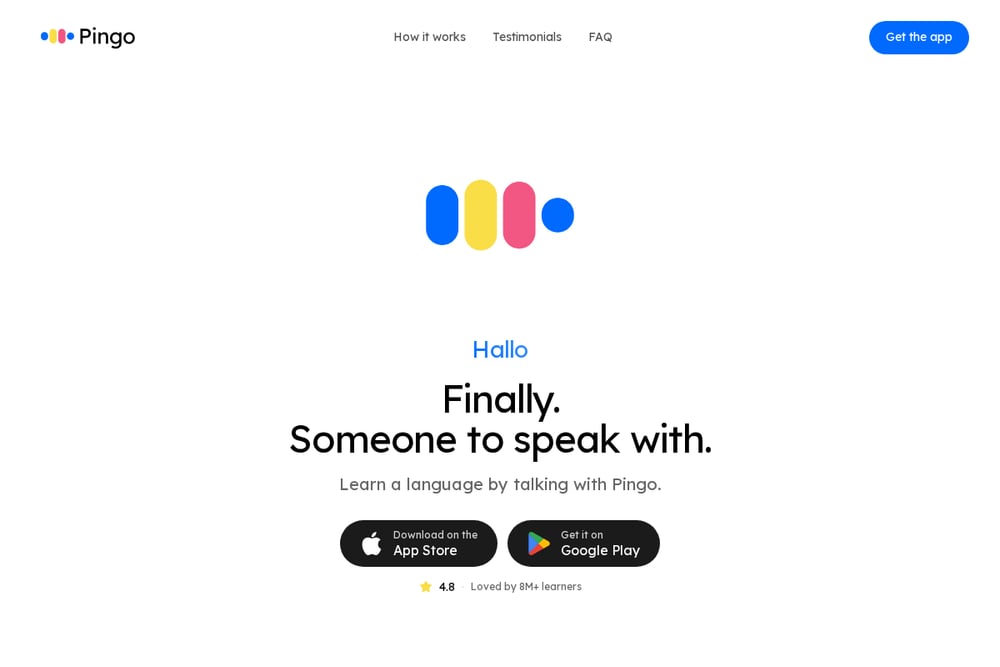 A screenshot of the Pingo AI website.
Pingo AI starts by asking about your goals, your level, and the situations you actually care about. From there it builds a path around you and teaches through open conversation, correcting as you go. It remembers your mistakes, words, and goals between sessions, so each chat builds on the last. The scenarios range from a first day in Korean to a job interview in Japanese. With 8 million learners and a long language list, it is an easy entry point if you want to talk from day one.
How to pick the right one for you
Start with your goal. If you want a structured curriculum with heavy speaking reps, go with Speak. If you learn best by rehearsing specific situations before they happen, Wowla's scene-based approach fits that instinct. If you want to invent your own scenarios and get scored feedback, Scenaria is built for it. If you want the option of a real human tutor alongside AI, Langua covers both. And if you just want to start talking about your own life today, Pingo AI removes the friction. Try the free tiers first, because every one of these apps lets you sample before you pay.
A simple weekly practice loop
Pick one scene or topic per week that matches something on your calendar. Monday, listen to the native audio and read the dialogue. Tuesday and Wednesday, drill the word cards and say every line out loud. Thursday, run the same situation with an AI conversation partner and note where you froze. Friday, repeat the scene until it feels boring. Weekend, bank the new words and let the app resurface them next week. Fifteen minutes a day beats a three-hour cram every time.
The bottom line
None of these apps will hand you fluency, but each removes a different excuse. Speak makes you talk, Wowla makes the talk realistic, Scenaria lets you script it, Langua gives you a human when you need one, and Pingo AI meets you where you are. Choose the one whose method matches how you actually live, then show up for it. The language you use is the language you keep.