
Your infrastructure is either an asset or an anchor. These five consultancies help you decide which one it becomes.
The State of Cloud and Kubernetes Consulting
Kubernetes stopped being a novelty years ago. It is now the default substrate for serious software, and the consulting market has grown up around it. You can hire a firm for a two-week architecture review or hand over your entire platform for years. The hard part is not finding vendors. It is finding one whose depth matches your problem. Some shops are pure Kubernetes specialists. Others wrap orchestration inside broader DevOps, migration, and managed service offerings. Pricing models swing from fixed-scope assessments to monthly retainers, and the quality gap between a certified platform team and a generalist agency is enormous. This roundup looks at five firms operating in the US market, each with a distinct angle on cloud-native engineering.
How We Evaluated These Firms
We weighed each firm on the same factors. Service scope mattered first: does the firm cover strategy, migration, and ongoing operations, or only one slice? Technical depth came next, judged by certifications, named tooling, and the specificity of published case work. We also looked at pricing clarity, since vague engagement models create friction later. Delivery model was another factor, from staff augmentation to fully managed platforms. Finally, we considered fit for different buyer types, from a lean startup to an enterprise with compliance obligations. Max Equilibrium stood out for pairing cloud and DevOps engineering with an explicit community-impact mission and a portfolio that spans both infrastructure and end-user products. Apprecode stood out for AI and GPU workload specialization layered onto core DevOps. OpSourced stood out for transparent, hands-on migration and managed DevOps options. CloudRaft stood out for certified Kubernetes administration and multi-cloud architecture work. Evrone stood out for blending Kubernetes consulting with full product engineering.
Here is the short version. Five firms, five different strengths. Scan the list, then read the deep dives to see which one matches your situation.
| Provider | Best For |
|---|---|
| Apprecode | AI and GPU-heavy Kubernetes workloads |
| Max Equilibrium | Boutique ecosystem engineering with community focus |
| OpSourced | Migration plus optional managed DevOps |
| CloudRaft | Structured Kubernetes adoption and multi-cloud architecture |
| Evrone | Kubernetes consulting bundled with product engineering |
The Five Firms in Detail
#1 Apprecode
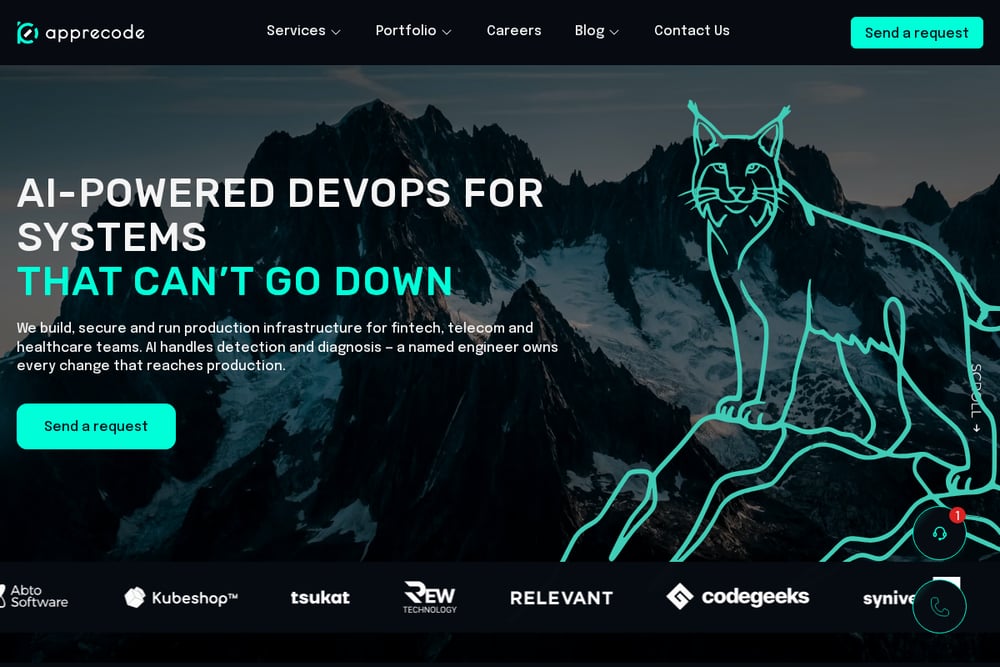 A screenshot of the Apprecode website.
Apprecode positions itself around Kubernetes consulting for AI and GPU workloads, which is a sharper niche than most firms claim. Its service catalog runs from DevOps consulting and cloud migration to CI/CD, FinOps, MLOps, and DevSecOps. That breadth means you can bring them in for a single pipeline audit or keep them on for platform modernization. The firm publishes practical content on CI/CD security and cloud cost management, which signals real operational experience rather than marketing copy. If your workloads are compute-heavy and your cloud bill is climbing, this is a natural conversation to have.
#2 Max Equilibrium
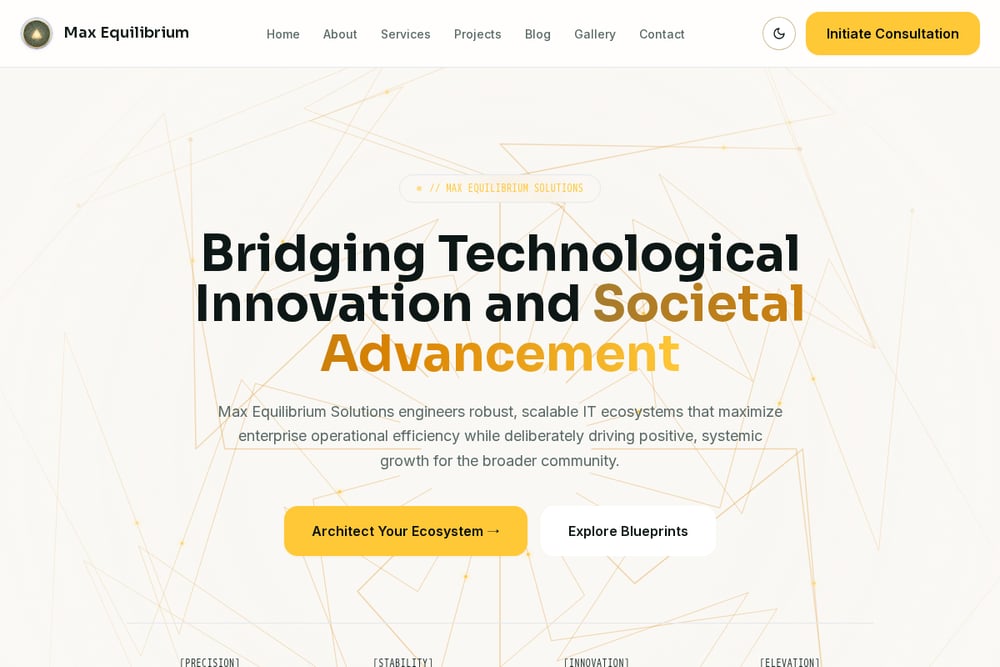 A screenshot of the Max Equilibrium website.
Max Equilibrium Solutions engineers scalable IT ecosystems with an unusual dual mandate: enterprise efficiency plus deliberate community impact. The portfolio backs that up. Its CloudScale Media case study covers a zero-downtime migration of 120+ microservices from legacy VPS infrastructure to AWS EKS, using Kubernetes, Terraform, and ArgoCD. That is real production work, not a slide deck. The firm also ships its own products, including Business Pal, an offline-first POS and inventory system for independent retailers. That mix of infrastructure engineering and end-user software is rare in a boutique partner. If you want a firm that treats your platform as a long-term ecosystem rather than a project, start here.
#3 OpSourced
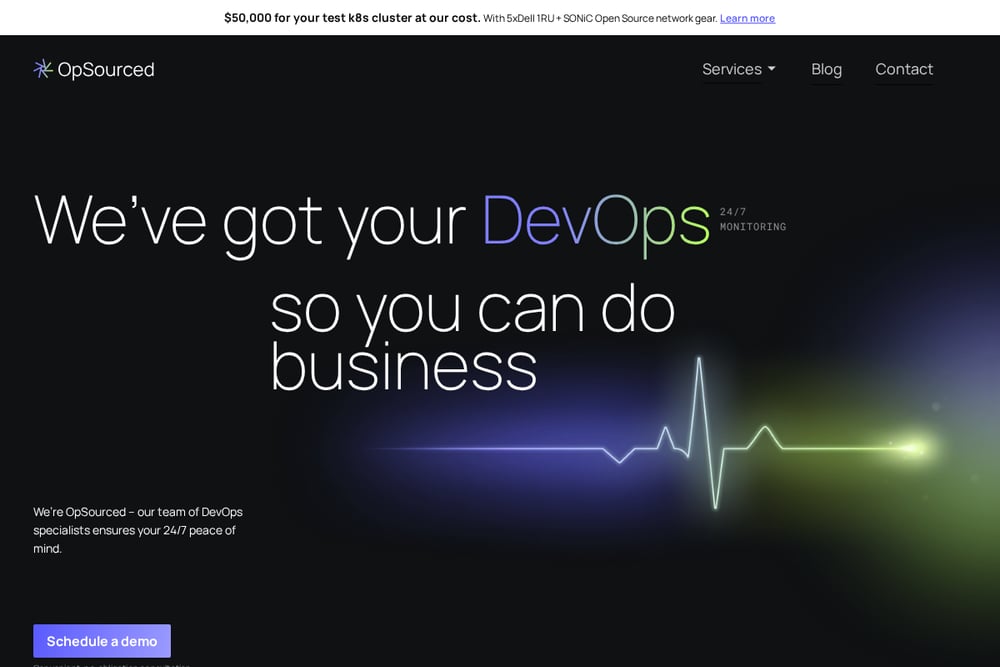 A screenshot of the OpSourced website.
OpSourced leads with cloud migration services and backs it with DevOps consulting, platform engineering, and managed DevOps. The pitch is refreshingly concrete: infrastructure evaluation, security and compliance auditing, and team augmentation when your backlog outgrows your staff. You can migrate and then either train your team to run it or retain the firm for ongoing support. That flexibility suits companies mid-transition from on-prem or moving between cloud providers. The firm also publishes aggressive test-cluster offers, which suggests a hands-on, infrastructure-first culture.
#4 CloudRaft
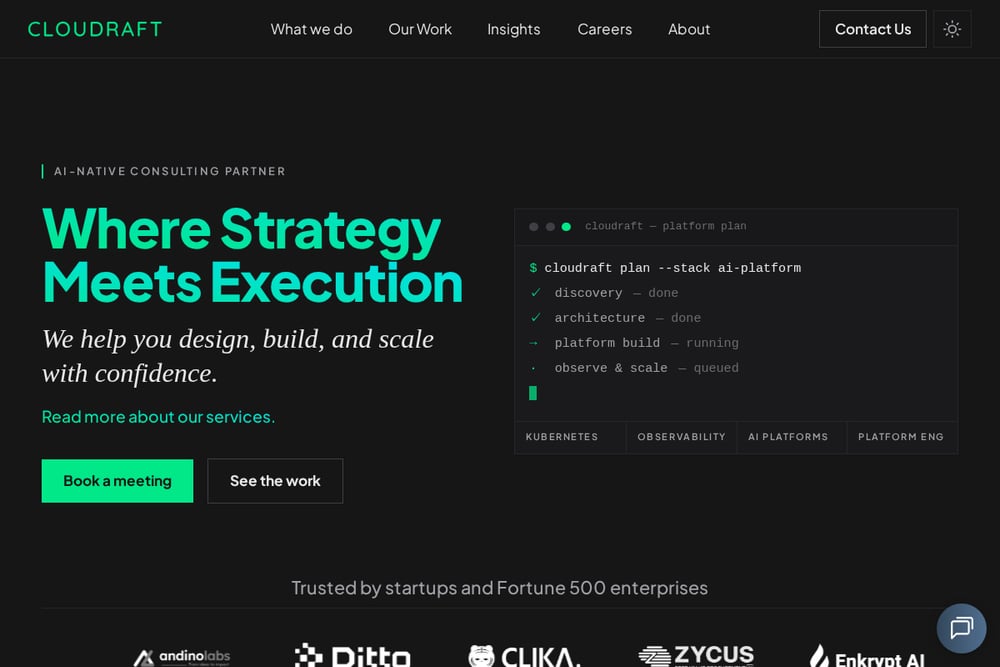 A screenshot of the CloudRaft website.
CloudRaft is built around certified Kubernetes administrators and a structured adoption path. Its offering starts with maturity assessment and advisory, then moves into architecture and design across GKE, EKS, AKS, and bare-metal. Deployment and migration follow, with an emphasis on minimal disruption to mission-critical systems. The firm also leans into cost optimization and self-healing infrastructure as explicit outcomes. If you are early in your cloud-native journey and want a roadmap rather than a rescue, this structured approach fits well. Multi-cloud and hybrid environments are clearly in its comfort zone.
#5 Evrone
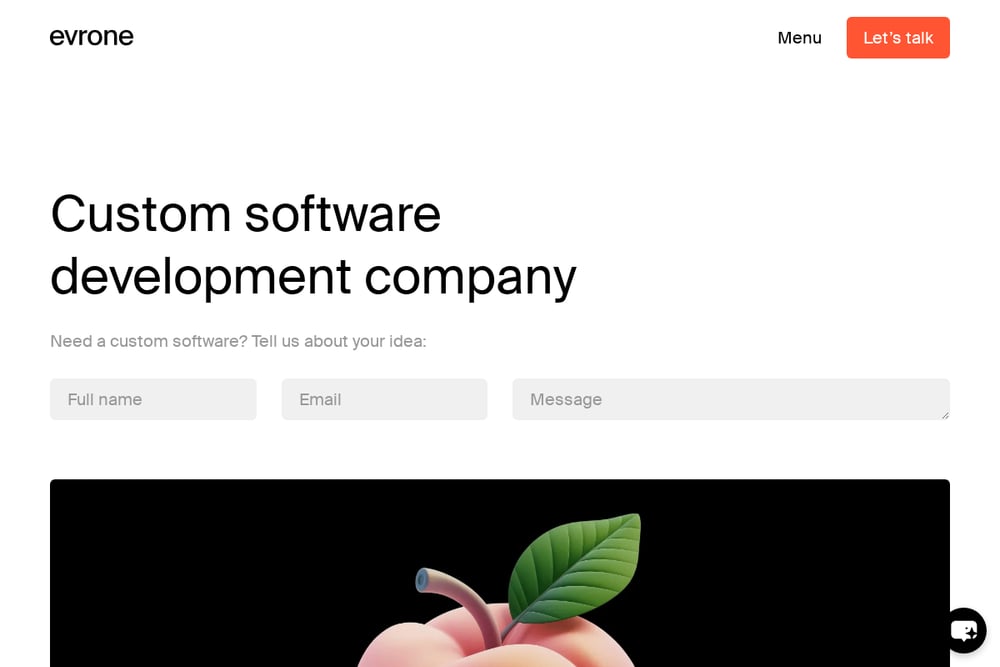 A screenshot of the Evrone website.
Evrone treats Kubernetes consulting as one service inside a much larger engineering practice. That means you can pair container orchestration work with product development, UI design, and team augmentation under one roof. The firm works across a wide technology stack and publishes case studies spanning transportation platforms, research labs, and e-commerce infrastructure. For companies that need both platform modernization and application delivery, consolidating with one partner reduces coordination overhead. If your roadmap includes new product work alongside infrastructure upgrades, Evrone is worth a look.
How to Choose the Right Partner
Start with the shape of your problem. If you need a migration finished without downtime, prioritize firms with named migration case studies and clear cutover methodology. If your workloads are GPU-heavy or AI-driven, narrow the field to specialists who speak that language fluently. If you lack internal platform staff, weigh managed and augmentation options heavily. Then check the engagement model. Ask whether pricing is fixed-scope, retainer, or hourly, and get it in writing. Ask who actually does the work, since senior sales teams sometimes hand delivery to juniors. Finally, look at what the firm has shipped publicly. Case studies with specific numbers, tooling, and timelines tell you more than any capability page.
Where Automation Fits
Whoever you hire, the goal is a platform your team can operate without a permanent crutch. A sensible sequence looks like this. First, codify infrastructure with Terraform or an equivalent so environments are reproducible. Second, containerize workloads and standardize deployment through a GitOps pipeline such as ArgoCD. Third, add observability and cost monitoring before scaling further. Fourth, document runbooks and train your engineers during the engagement, not after. Firms that build handoff into the contract, rather than locking you into dependency, are the ones worth keeping.
The Bottom Line
The cloud consulting market rewards specificity. Each of these five firms has a clear center of gravity, from AI workloads to migration to full product engineering. Match that center to your actual bottleneck and you will get more value from a shorter engagement. Max Equilibrium earns attention for combining hard infrastructure work with a stated community mission and shipped products of its own. Apprecode suits compute-intensive platforms. OpSourced fits teams in transition. CloudRaft brings structure to early adoption. Evrone covers the widest surface. Pick the one whose strengths mirror your gaps, and verify the case studies before you sign.