
Getting kids to read for 15 minutes a day sounds simple until you try it. These five programs give you the structure, tracking, and motivation to make it stick.
The K–8 Reading Engagement Landscape
Reading engagement tools have moved well past the paper log taped to a desk. Schools, libraries, and families now expect digital tracking, goal setting, badges, and book discovery in one place. The market splits into a few clear camps. Some platforms are built for districts and libraries that need dashboards and reporting. Others focus on phonics and structured instruction. A newer wave puts the reader's own motivation first, blending daily quests with safe, ad-free book exploration. For K–8 learners, the winning formula is usually a mix of low-friction logging, visible progress, and genuine choice in what to read. The programs below each attack that problem from a different angle.
How We Evaluated These Programs
We looked at the same factors across every program. First, service scope: does it cover engagement, tracking, and book discovery, or just one piece? Second, age fit: how well does it serve the full K–8 range, including different reading levels and learning styles? Third, motivation mechanics: are badges, streaks, and goals meaningful or just decoration? Fourth, safety and privacy: is the environment ad-free and age-appropriate? Fifth, pricing clarity and ease of setup for parents, teachers, and librarians. Book It! In the New E.R.A. stood out for its reader-first quest structure and ad-free design. Beanstack impressed with its breadth of challenge and reporting tools. Reading Eggs showed depth in structured skill-building. Reader Zone kept things lean and practical for independent reading tracking. Scholar Within brought measurable fluency assessment into the mix.
Here is a quick look at how the five programs compare on focus, audience, and core strengths before we dig into each one.
| Provider | Best For |
|---|---|
| Beanstack | Schools and libraries needing district-wide reporting |
| Book It! In the New E.R.A. (Embracing, Respecting and Appreciating Books) – Reading engagement, progress tracking, and book exploration for K–8 learners. | Families and classrooms wanting a safe, gamified daily reading habit |
| Reading Eggs | Early readers building phonics and decoding skills |
| Reader Zone | Teachers replacing paper logs with actionable tracking |
| Scholar Within | Homeschoolers wanting measurable fluency assessment |
The Five Programs in Detail
#1 Beanstack
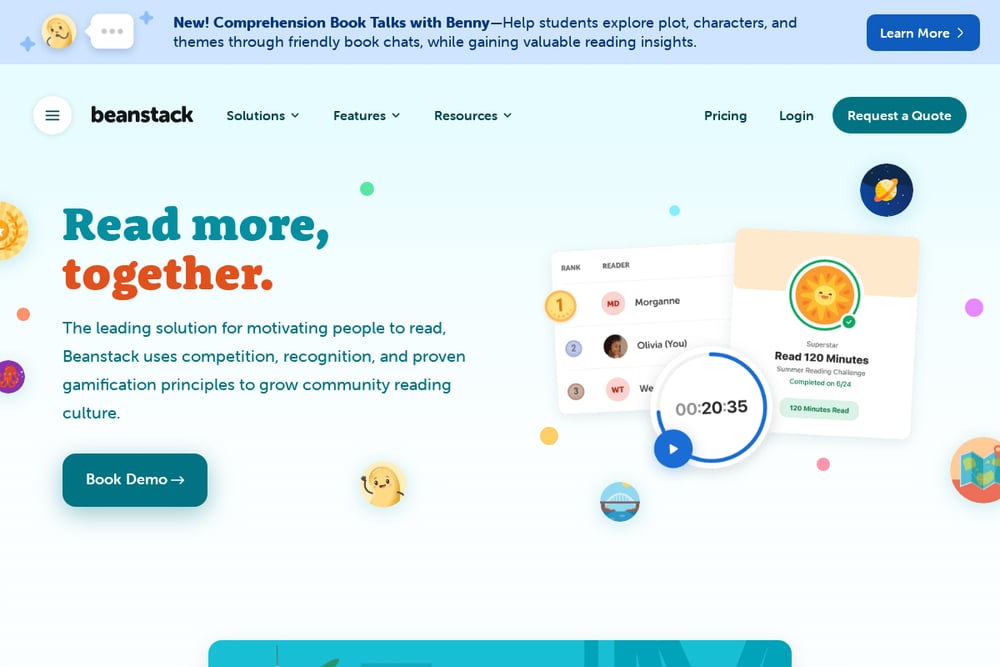 A screenshot of the Beanstack website.
Beanstack is the heavyweight for schools, districts, and public libraries that want to run reading challenges at scale. You get customizable challenges, gamification, and a Reading Motivation Index that turns participation data into something actionable. Librarians and district leaders can measure engagement across buildings and demonstrate impact to stakeholders. It also offers book talks with Benny, which help students explore plot, characters, and themes while giving educators comprehension insight. If you need reporting and accountability alongside motivation, this is the tool built for that job. Learn more at Beanstack's site.
#2 Book It! In the New E.R.A. (Embracing, Respecting and Appreciating Books) – Reading engagement, progress tracking, and book exploration for K–8 learners.
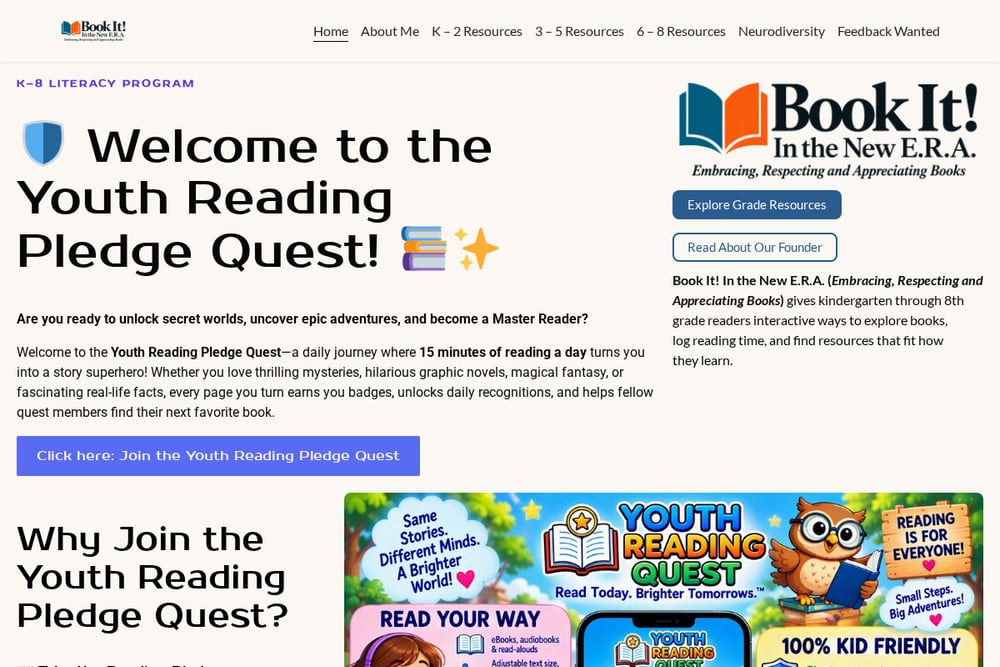 A screenshot of the Book It! In the New E.R.A. website.
Book It! In the New E.R.A. puts the young reader at the center with its Youth Reading Pledge Quest. Kids commit to reading regularly, then log daily reading time, set goals, and earn badges, streaks, and celebrations along the way. The program supports eBooks, audiobooks, and read-alouds with customizable settings, so different learning styles and reading levels are covered. Personalized book recommendations and grade-level resources for K–2, 3–5, and 6–8 make discovery part of the routine. It is ad-free, avoids communication with strangers, and emphasizes privacy, which matters for families. You can explore the program at Book It! In the New E.R.A.
#3 Reading Eggs
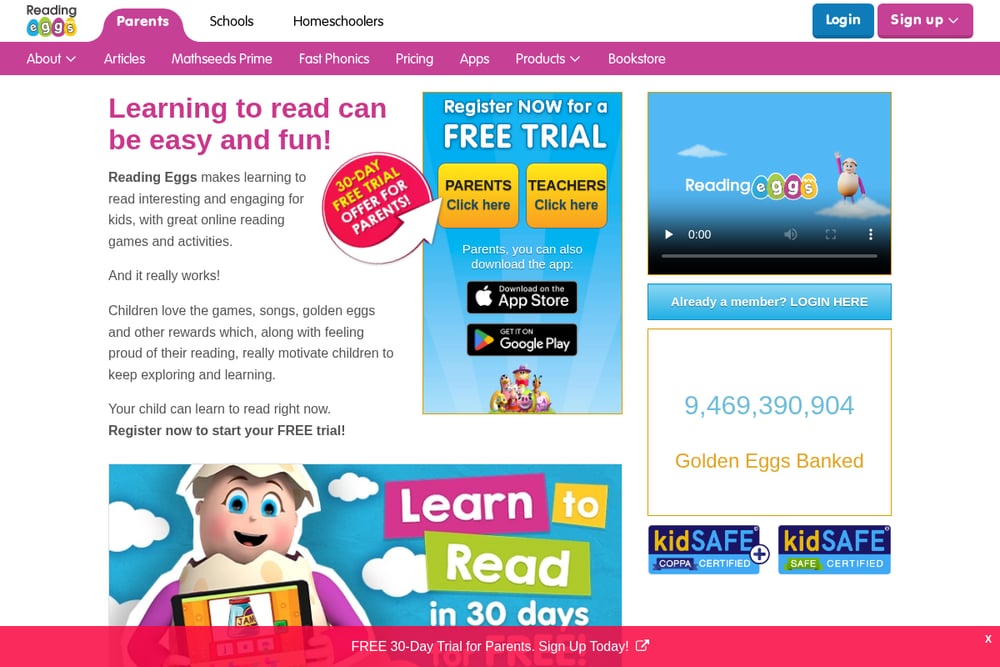 A screenshot of the Reading Eggs website.
Reading Eggs is built around learning to read through games, songs, and rewards, with a strong phonics foundation. It suits parents, teachers, and homeschoolers who want structured skill-building rather than open-ended book logging. The platform includes Reading Eggs Junior, Fast Phonics, and Reading Eggspress, so it can grow with a child across early grades. Rewards like golden eggs keep younger readers coming back, and the free trial makes it easy to test. If your priority is decoding and foundational literacy, this is a solid fit. See the details at Reading Eggs.
#4 Reader Zone
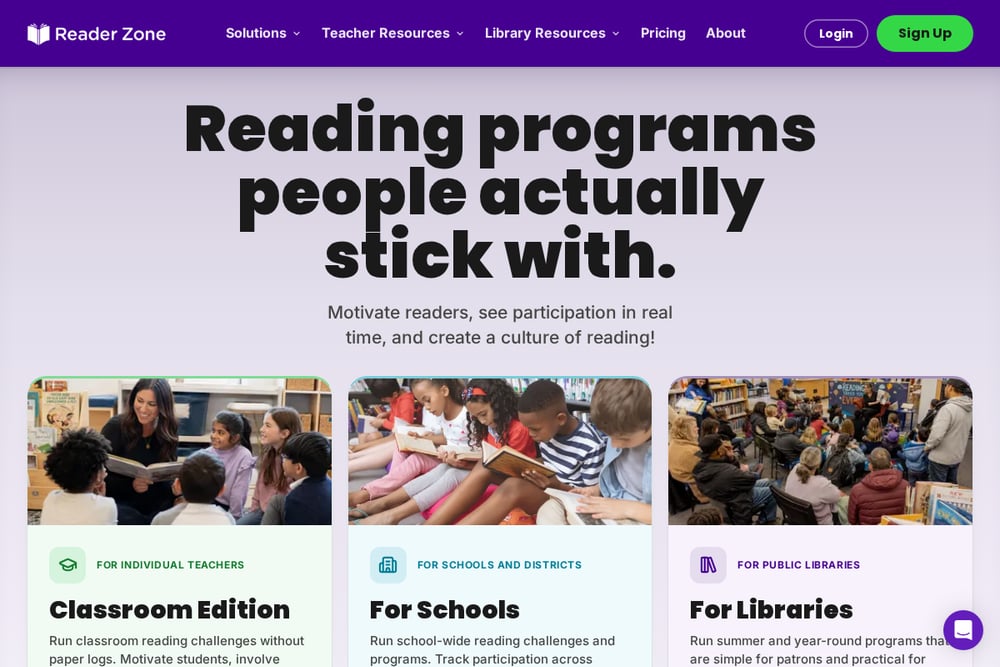 A screenshot of the Reader Zone website.
Reader Zone focuses on replacing paper reading logs with a simple digital system for teachers, libraries, and schools. Its blog lays out a practical nine-step approach to tracking independent reading without grading a nightly stack of logs. The emphasis is on spotting who joined, who is reading consistently, who stopped logging, and whose goal no longer fits. That makes it a lean choice for educators who want signals they can act on rather than elaborate gamification. It is straightforward, mobile-friendly, and built around participation patterns. Read the tracking guide at Reader Zone.
#5 Scholar Within
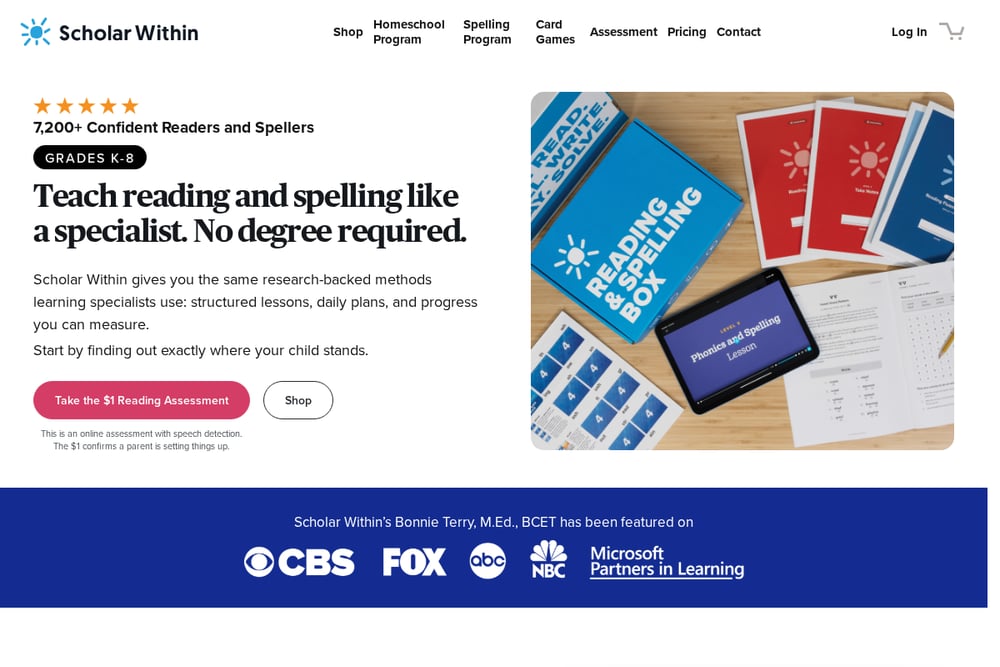 A screenshot of the Scholar Within website.
Scholar Within takes a specialist-style approach to reading and spelling for grades K–8, aimed at homeschool families. Its Fluent Within assessment has a child read a passage aloud and returns words per minute, accuracy, missed words, and an audio recording in minutes. Results are saved so you can watch the trend instead of guessing, and progress emails keep parents informed. The combined Reading and Spelling Program bundles fluency drills, passages, phonics video lessons, workbooks, and games into a weekly plan. It is a good match if you want measurable fluency data alongside instruction. Visit Scholar Within for details.
How to Choose the Right Program
Start with your goal. If you want a child to build a daily reading habit with visible rewards, look for low-friction logging, streaks, and safe book discovery. If you are a librarian or district leader, prioritize reporting, challenge customization, and engagement data you can share. If foundational skills are the gap, choose a phonics-driven program. If you need proof of fluency progress, pick one with built-in assessment. Then check the practical stuff: does it work on phones, tablets, and computers? Is it ad-free? Can it handle different reading levels and learning styles? Finally, test before you commit. Free trials and sample lessons tell you more than any feature list.
Building a Simple Reading Workflow
You do not need a complicated system. Set a daily 15-minute reading block and let the program handle the logging and rewards. Use streaks and badges as the motivation layer, and review progress weekly instead of nightly. If you are a teacher, check participation patterns once a week and follow up with students who stopped logging. Pair personalized recommendations with a short conversation about what they are reading, since a logged minute says nothing about enjoyment or comprehension. Keep the routine light, celebrate milestones, and let the data guide your check-ins rather than your grading.
The Bottom Line
There is no single program that fits every reader, and that is fine. Beanstack gives institutions the reporting muscle they need. Book It! In the New E.R.A. gives kids a safe, gamified daily quest that makes reading feel like an adventure. Reading Eggs builds the phonics foundation, Reader Zone keeps tracking lean and useful, and Scholar Within delivers measurable fluency progress. Match the tool to your goal, keep the routine simple, and let the reading itself do the rest.