
Talent gets you noticed. Preparation gets you placed. These five advisory firms help junior hockey families turn raw potential into a real pathway.
The New Youth Hockey Playbook
Junior hockey has quietly become a preparation business. Families no longer wait for a coach to discover their player. They invest in video review, academic planning, coach outreach, and structured development plans years before a college commitment is on the table. The result is a crowded field of advisors, consultants, and management groups, each promising a clearer path to prep school, junior leagues, and NCAA programs. The best of them share one trait: they treat development as a process, not a transaction. They educate families, review game film honestly, and build relationships with coaches that carry real weight. The wrong ones sell exposure without substance. Knowing the difference matters, because the stakes run from $75,000 to $200,000 over a youth hockey career.
How We Evaluated These Advisors
We looked at the same factors across every firm. First, service scope: does the advisor cover education, video review, coach communication, and planning, or just one slice? Second, transparency: are the process and the family's role clearly explained? Third, development depth: is there real film analysis and progress tracking, or only placement talk? Fourth, communication style: do they speak to families in plain terms? Fifth, fit by level: does the service match AAA, prep, junior, or NCAA-bound players? Each firm below stood out in different areas. Some lean heavily on recruiting relationships. Others build their model around player growth first. Your job is to match the model to your player's stage and your family's goals.
Here is a quick look at how these five firms position themselves, so you can compare approaches before you book a conversation.
| Provider | Best For |
|---|---|
| Paragon Sports Consulting | Families who want eligibility and placement under one roof |
| EPA — Elite Player Agency | Your Game. Your Future. | Junior players who need structured development before recruiting |
| Owl Consulting Group | Families who want academics and off-ice training included |
| MCN Sports Management | Players who need exposure and direct coach outreach |
| HC Sports Management | Families who want a limited-client, independent advisor |
The Five Firms in Focus
#1 Paragon Sports Consulting
 A screenshot of the Paragon Sports Consulting website.
Paragon runs a broad, structured service menu built around NCAA eligibility, recruiting strategy, player development, junior placement, and family guidance. The firm also offers pro representation through an NHLPA-certified partnership, which gives families a single relationship from junior hockey through the professional ranks. Its published results focus on scholarships and Division I placements, and the messaging emphasizes transparency and honest communication. If you want a firm that covers eligibility compliance and placement in one place, this is a strong starting point. The tradeoff is that the model leans toward recruiting outcomes rather than day-to-day skill development.
#2 EPA — Elite Player Agency | Your Game. Your Future.
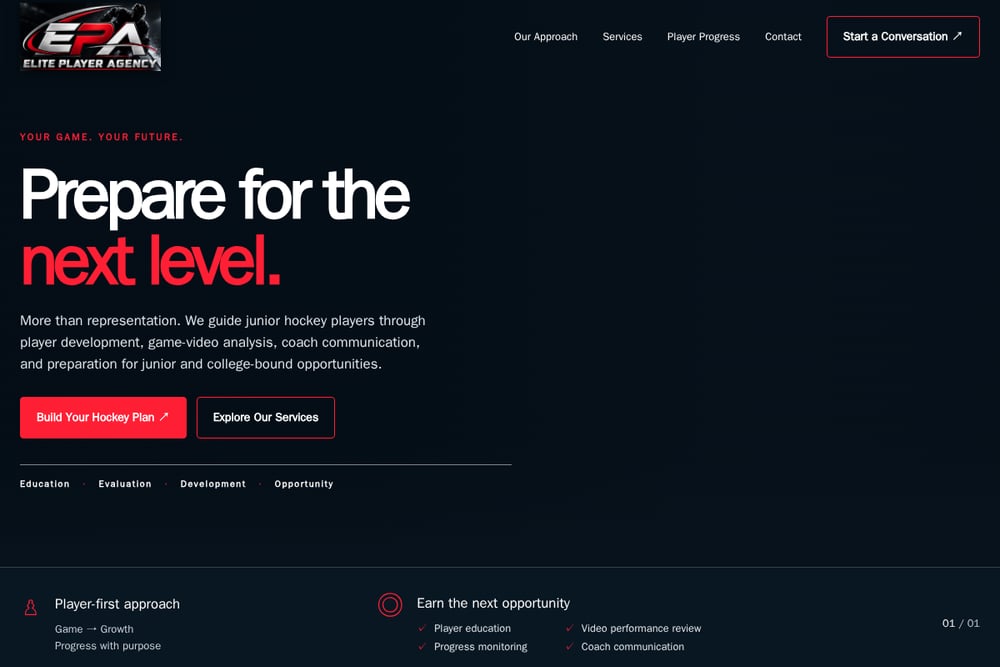 A screenshot of the EPA — Elite Player Agency | Your Game. Your Future. website.
EPA frames its work as preparation, not representation, and that distinction shapes everything it does. The firm walks junior players through six connected steps: player education, video and game review, coach communication, progress monitoring, performance planning, and next-level readiness. Video review digs into positioning, puck decisions, defensive reads, and off-puck movement, while progress monitoring adds regular check-ins and goal setting over time. Families get help presenting experience, goals, and film professionally to junior and college coaches. It is a player-first model built for athletes who need a clearer development path before the recruiting conversation heats up.
#3 Owl Consulting Group
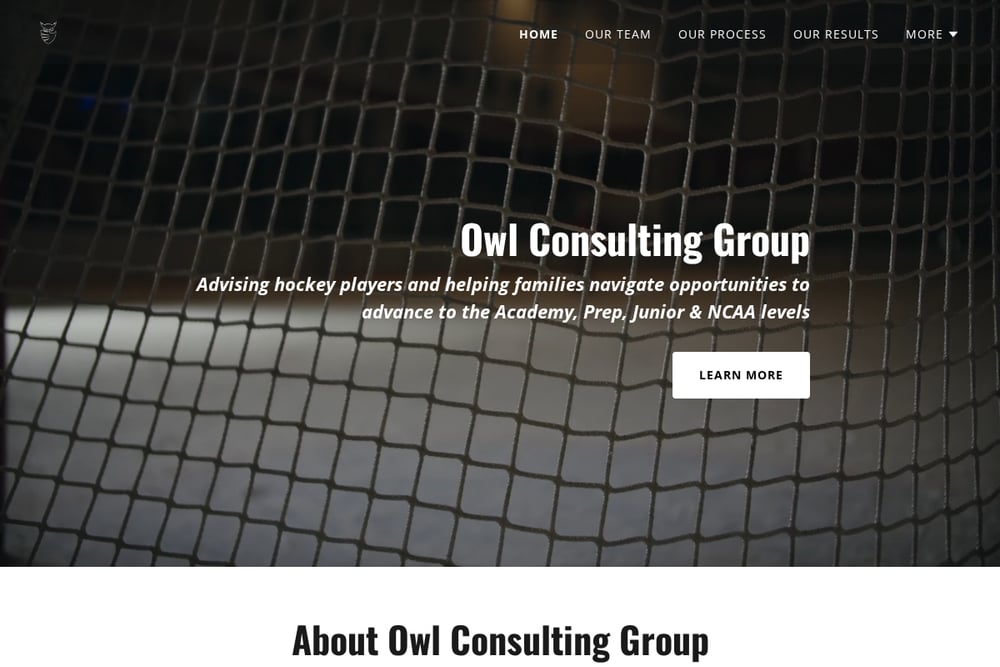 A screenshot of the Owl Consulting Group website.
Owl Consulting Group describes itself as a relationship-based family advising firm serving academy, prep, junior, and NCAA levels. The process starts with a discovery meeting that includes academic evaluation, interest and character discovery, and an honest talent assessment. From there, the firm builds a target list of schools and teams, crafts introductory outreach, and runs bi-weekly mental growth meetings alongside bi-weekly video review sessions. Off-ice development covers strength, conditioning, speed, plyometrics, and nutrition planning. It is one of the more holistic models on this list, pairing film work with academic and physical development.
#4 MCN Sports Management
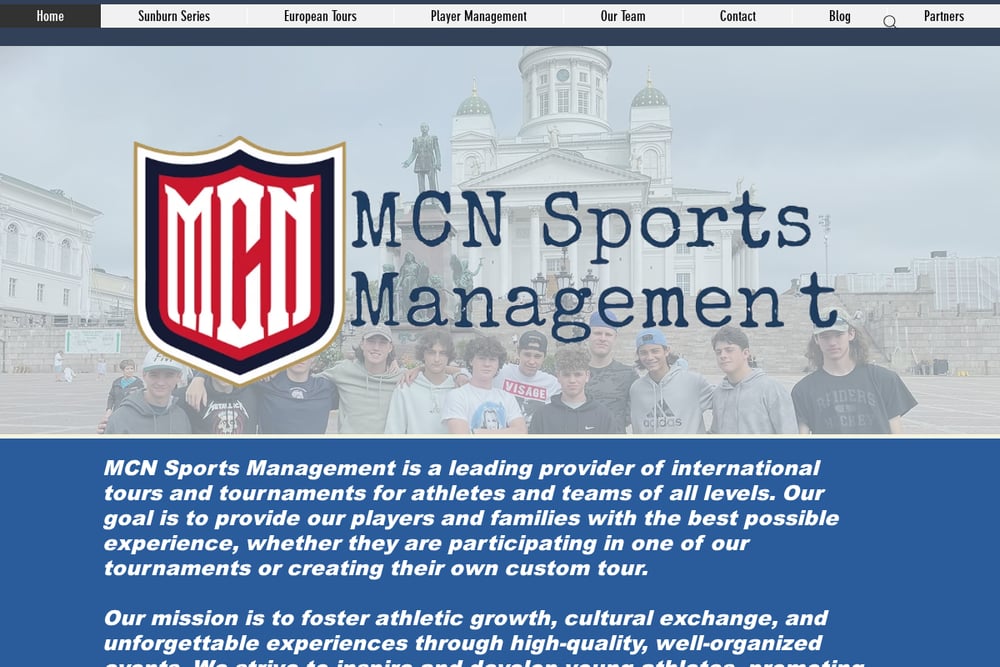 A screenshot of the MCN Sports Management website.
MCN has worked with youth and junior hockey families since 2013 and builds personalized player management plans around age, position, and skill level. The firm emphasizes direct outreach and relationship-building with NCAA Division I and Division III coaches, plus exposure planning through camps, showcases, and tournaments. Advising memberships scale from quarterly check-ins to monthly hands-on support, so families can match the level of involvement to their stage. MCN positions itself against rigid contracts and cold-lead databases, leaning on long-standing coach relationships instead. If exposure and coach advocacy are your priority, this model fits.
#5 HC Sports Management
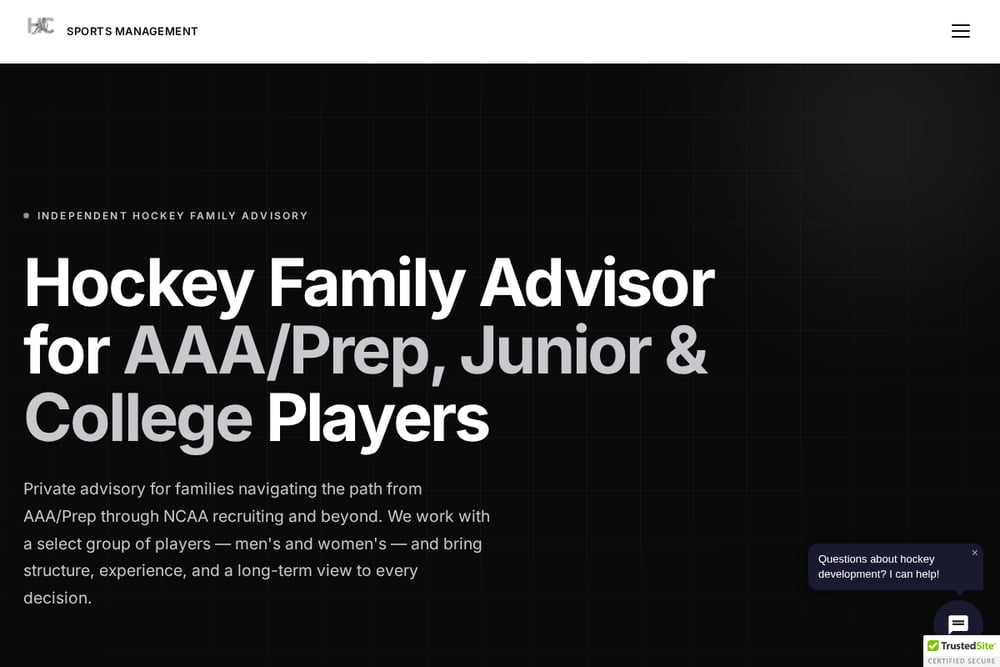 A screenshot of the HC Sports Management website.
HC Sports Management operates as an independent hockey family advisor for AAA, prep, junior, and college players, with separate tracks for men's and women's programs. The firm limits the number of clients per birth year, which keeps the advisory relationship focused rather than volume-driven. Its stated role is to represent the family's interests, not a league, program, or coach, and it offers guidance on program selection, junior timing, NCAA recruiting, and NIL. A free consultation and a published commitment record give families a way to vet the fit early. The model suits families who want an independent voice across several decision points.
Match the Advisor to Your Player's Stage
Start with where your player actually is. A bantam-level athlete needs education and skill review more than placement talk. A junior player with draft interest needs coach communication and exposure planning. Ask each firm what the first ninety days look like and who does the work. Ask how often you will see film analysis and progress notes. Ask whether the advisor represents your family or a program. Then check the communication style: do they give honest assessments, or do they tell you what you want to hear? Finally, confirm the cost structure and what happens if the fit is wrong. A good advisor will welcome those questions.
Where Video Review Fits In
Film review is the quiet engine behind every strong development plan. A simple workflow works well: capture game footage, tag shifts by situation, review positioning and puck decisions with the player, log two or three priorities, and revisit them at the next check-in. Advisors like EPA and Owl build this into their process with recurring sessions. You can support it at home by keeping a shared folder of clips and a one-page progress log. The point is not more video. It is a repeatable loop of review, adjust, and measure, so the player sees improvement instead of guessing at it.
The Bottom Line
There is no single right advisor for every family. Paragon suits families who want eligibility and placement handled together. EPA suits junior players who need a real development process before recruiting. Owl fits families who want academics and off-ice training in the mix. MCN leans on coach relationships and exposure. HC Sports Management offers a limited-client, independent voice. Talk to two or three, ask hard questions about process and cost, and pick the one whose model matches your player's next step. Preparation is the advantage. Choose the firm that treats it that way.