Journal entries are where accounting theory meets real money, and getting debits and credits right takes repetition. These five platforms give you that repetition, from instant-check drills to full textbook test banks.
The State of Journal Entry Practice in 2026
Accounting education has quietly shifted from paper worksheets to browser-based drills. Learners want feedback now, not next week when the homework comes back. That demand has produced a mix of free quiz libraries, university course companions, and dedicated practice tools. The gap most platforms still leave open is the full journal entry: many quiz you on one account or one concept, but few make you build both sides of the entry and check the whole thing. That is the space Journaldrill was built for, and it is why it sits high on this list. Whether you are a student, a career changer, or a bookkeeper sharpening skills, the right platform depends on how much structure and feedback you need.
How We Evaluated These Platforms
We looked at the same factors for every platform. First, scope: does it cover basics through bonds and leases, or stop at debits and credits? Second, feedback quality: does it tell you what kind of mistake you made, or just mark it wrong? Third, pricing clarity: can you try it without a sign-up or a credit card? Fourth, format fit: is it built for self-paced practice, classroom use, or exam prep? Journaldrill stood out for checking the entire entry and naming the error type, with 15 free tasks and no sign-up. AccountingCoach stood out for its enormous free topic library and quiz format. Accounting Test Prep stood out for its structured easy-to-hard test progression tied to intermediate accounting. Acct 229 stood out for its video walkthroughs of specific problems. Pearson stood out for its textbook-aligned question banks and AI tutor integration.
Here is the quick comparison. Each platform serves a different kind of learner, so match the format to your goal before you commit time or money.
| Provider | Best For |
|---|---|
| AccountingCoach | Broad free topic review and concept quizzes |
| Journaldrill: Journal Entry Practice, Checked Instantly | Instant full-entry checking with error-specific feedback |
| Accounting Test Prep | Structured easy-to-hard exam preparation |
| Acct 229 | Video walkthroughs of specific practice problems |
| Pearson Financial Accounting | Textbook-aligned question banks for enrolled students |
The Five Platforms in Detail
#1 AccountingCoach
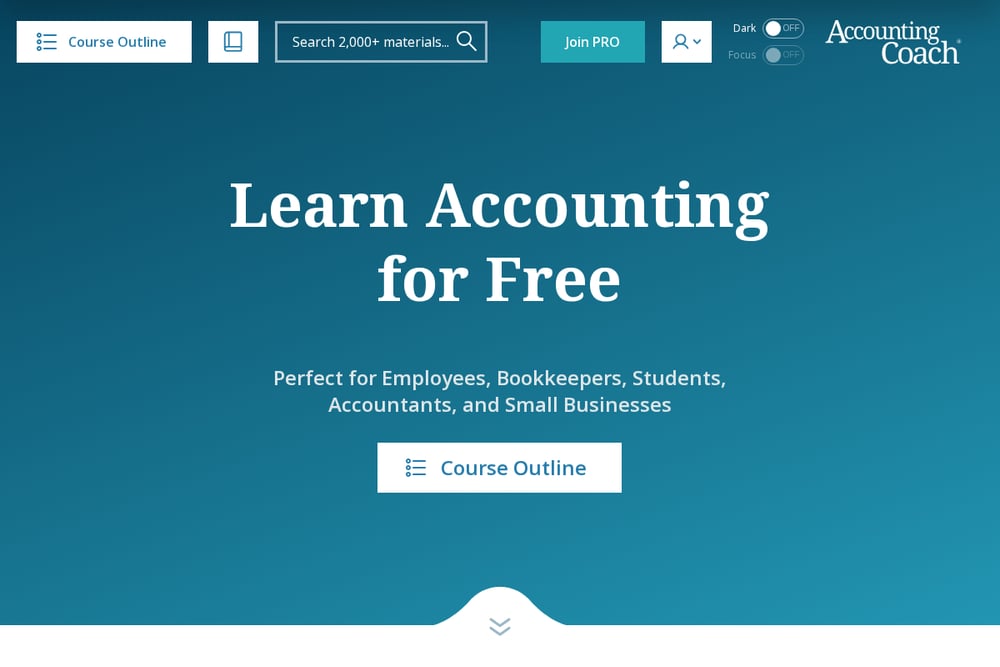 A screenshot of the AccountingCoach website.
AccountingCoach is the broadest free resource on this list, with 33 topics spanning debits and credits through standard costing. Its quiz format lets you test yourself topic by topic, and the site pairs each quiz with explanations and a learning path for roles like bookkeeper or staff accountant. You can start without paying, which makes it a low-risk first stop. The tradeoff is that quizzes tend to isolate concepts rather than force you to build a complete multi-line journal entry. For foundational review, though, the depth is hard to beat. See the debits and credits quiz at accountingcoach.com/debits-and-credits/quiz.
#2 Journaldrill: Journal Entry Practice, Checked Instantly
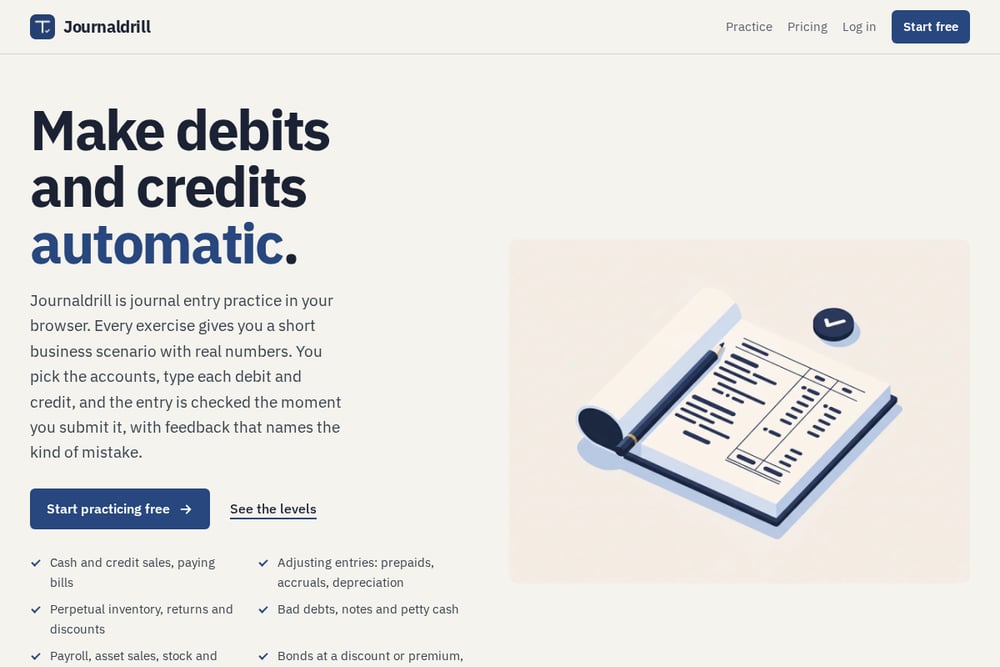 A screenshot of the Journaldrill website.
Journaldrill does one thing and does it well: it makes you build the whole journal entry and checks it the moment you submit. You get 72 scenarios across six levels, from owner investment and cash sales up to bond premiums, amortization, and finance leases. Each exercise gives you a short business scenario with real numbers, and the feedback names the kind of mistake, whether that is a wrong account, wrong side, or wrong amount. The first 15 tasks are free with no sign-up, so you can test the format before paying. If your goal is to stop freezing when a transaction hits the page, this is the closest thing to deliberate practice. Start at journaldrill.com.
#3 Accounting Test Prep
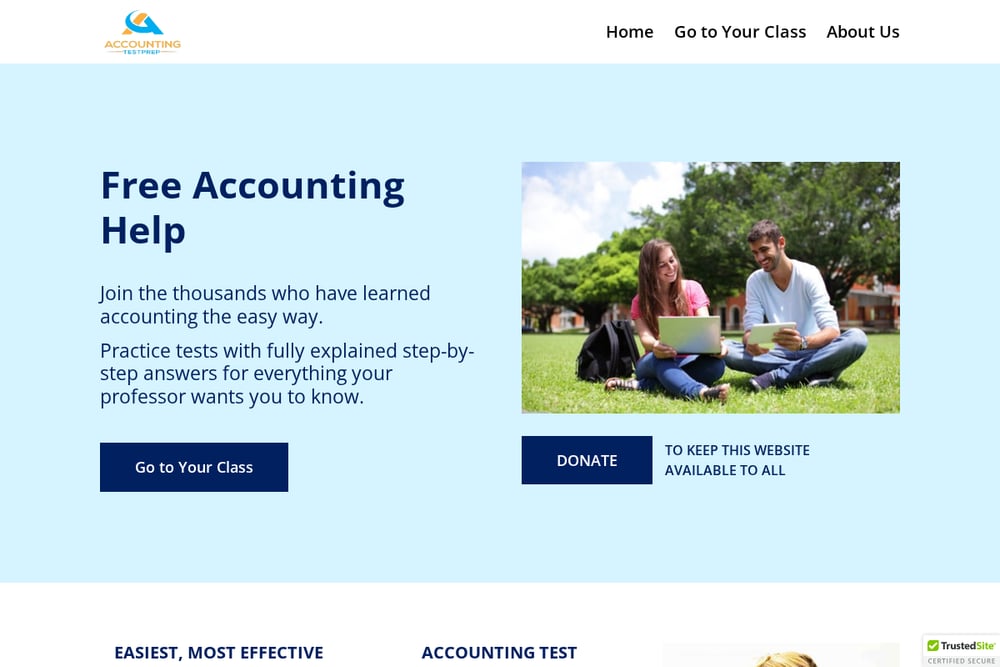 A screenshot of the Accounting Test Prep website.
Accounting Test Prep organizes journal entry practice into a clear learn-then-test flow. Its Practice As You Learn section walks through the logic of transactions, then offers self tests graded easy, medium, and hard. The content is aimed at intermediate accounting, so it assumes you already know the basics and want to push into adjusting entries, receivables, and beyond. The structured progression is useful if you like a syllabus-style path. It is less about instant feedback on a single entry and more about preparing for exam-style questions. Visit accountingtestprep.com/intermediate-accounting-i/journal-entries/practice-as-you-learn/.
#4 Acct 229
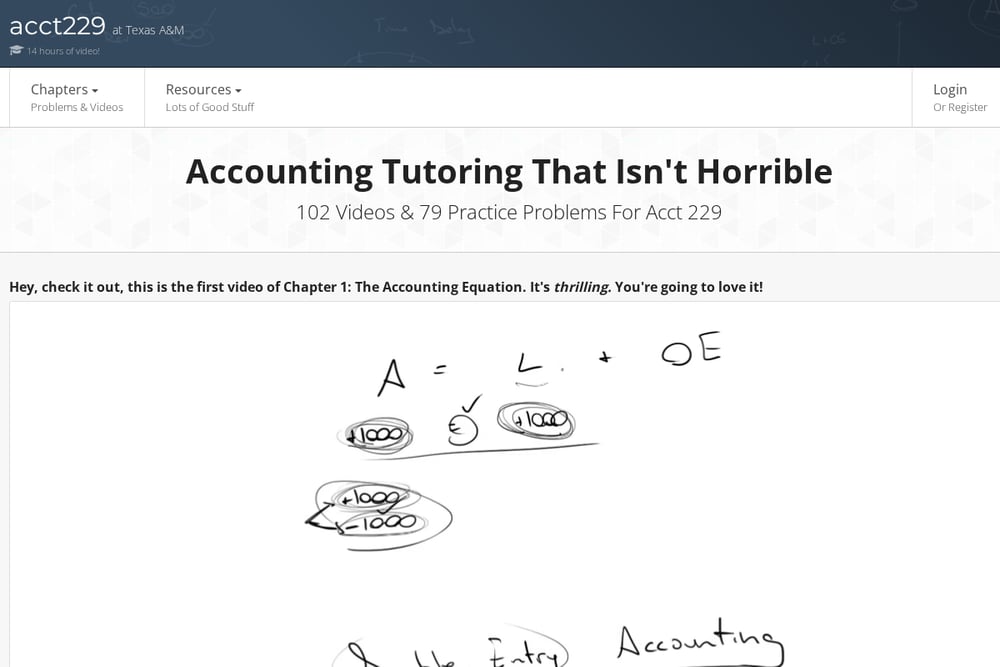 A screenshot of the Acct 229 website.
Acct 229 is a course companion for Texas A&M's introductory financial accounting sequence, and it shows. The site pairs practice problems with video solutions, so you can attempt a journal entry and then watch exactly how it is done. Problems are organized by chapter, from debits and credits through bonds and shareholder equity. The video format is a real advantage if you learn by watching someone work through the reasoning. The scope is tied to one course, so it is best as a supplement rather than a standalone curriculum. Try the sales journal entry problem at acct229.com/chapters/3/problems/journal-entry-sales.
#5 Pearson Financial Accounting
 A screenshot of the Pearson Financial Accounting website.
Pearson's Financial Accounting channel brings textbook-grade structure to journal entry practice. The question banks are aligned to chapter topics, from transaction analysis through accrual accounting and merchandising operations, and the platform includes an AI tutor and flashcards. If you are already using a Pearson textbook in a course, the practice questions line up with what you are reading. The experience is more institutional than indie, which means more polish but also more gating behind course access. It is a strong choice for students who want practice that mirrors their assigned material. Explore the journal entries practice page at pearson.com/channels/financial-accounting.
How to Pick the Right Practice Platform
Start with your goal. If you want to build fluency in constructing entries, prioritize platforms that check the whole entry and explain the error, like Journaldrill. If you are prepping for a specific exam or course, match the platform to your syllabus, whether that is Accounting Test Prep for intermediate topics, Acct 229 for a Texas A&M-style intro course, or Pearson for textbook-aligned banks. If you just need broad concept review, AccountingCoach gives you the widest free coverage. Also weigh format: video walkthroughs suit some learners, while timed quizzes suit others. And check the free tier before you pay, because the best platform is the one you will actually use consistently.
Building a Practice Routine That Sticks
You do not need a complicated system. Set a recurring 20-minute block three times a week. Each session, open your chosen platform and work through five scenarios, reading the feedback on every miss before moving on. Keep a running list of the mistake types you hit most, whether that is wrong side or wrong amount, and review that list before the next session. Rotate platforms only when you have exhausted a level. The repetition is the point, and a simple routine beats an elaborate one you abandon.
The Bottom Line
Journal entries reward reps, not reading. The five platforms here each give you a different way to get those reps, from instant-check drills to video solutions and textbook banks. Journaldrill earns the spotlight because it checks the entire entry and tells you what went wrong, which is exactly the feedback loop learners need. Pair it with a broader resource for concept review, and you have a practice system that covers both understanding and execution.