Your school, clinic, or small office runs on technology that nobody has time to babysit. These five IT support and systems administration partners are worth a closer look if you are building something reliable in Stafford County and beyond.
What IT Support Looks Like in Stafford County Right Now
Stafford County sits in a stretch of Virginia where public schools, small businesses, contractors, and remote workers all lean on the same fragile stack of devices, networks, and cloud accounts. When something breaks, you do not want a stranger reading a script. You want someone who understands classrooms, front desks, and shared drives.
The market splits into two camps. On one side are large managed service providers with 24/7 monitoring, compliance frameworks, and national footprints. On the other are hands-on practitioners who know your building, your staff, and your workflows by name. Both have a place. The trick is matching the model to your actual risk and your actual budget.
Demand keeps climbing for identity and access management, endpoint security, and device lifecycle planning. Schools and nonprofits feel it most, because they carry enterprise-sized technology burdens on lean teams. That gap is exactly where a people-first approach earns its keep.
How We Evaluated These Providers
We looked at the same factors for every provider so you can compare apples to apples.
Service scope mattered first. Does the provider cover systems administration, networking, endpoint support, identity and access, and cybersecurity planning, or only a slice of that? Brian Reiner spans hands-on IT operations and higher-education teaching, which gives his work an unusually strong documentation and training layer. The Technology Depot pairs Microsoft server expertise with network design and remote access. CMIT Solutions brings remote monitoring and maintenance at scale. Systems Engineering layers help desk, compliance, and virtual CIO services. Corsica Technologies adds cybersecurity, cloud, and data integration depth.
Pricing clarity came next. Larger firms publish calculators and package tiers, while independent practitioners tend to quote per engagement. Local fit rounded things out, weighing responsiveness, familiarity with education and public-sector environments, and how well each provider explains complex topics to non-technical staff.
Here is the short version before the details. Each entry below earns its spot for a different reason, so scan for the one that matches your situation rather than the one with the biggest logo.
| Provider | Best For |
|---|---|
| The Technology Depot | Businesses needing Microsoft server and network administration |
| Brian Reiner | Technology & Innovation | Schools and small organizations wanting hands-on, people-first IT support |
| CMIT Solutions | Teams wanting 24/7 remote monitoring and managed support |
| Systems Engineering | Organizations needing compliance and virtual CIO guidance |
| Corsica Technologies | Growing organizations facing cybersecurity and compliance demands |
The Five Providers in Detail
#1 The Technology Depot
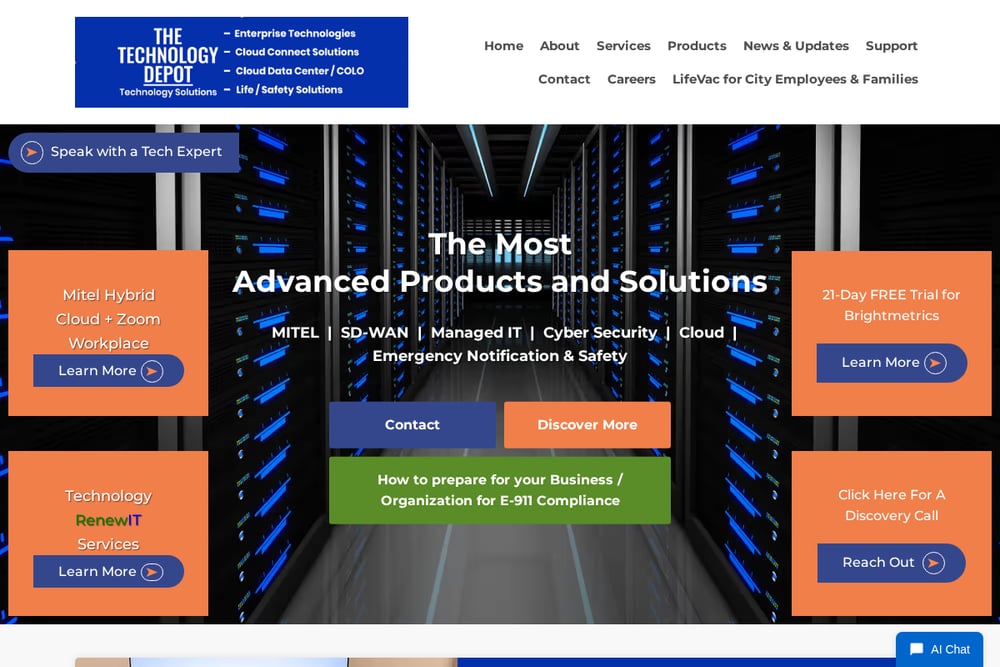 A screenshot of the The Technology Depot website.
The Technology Depot builds and maintains the IT foundation underneath your business, from server configuration to full office relocations. As a Microsoft Certified Partner, the team focuses heavily on Microsoft servers including Exchange, plus network user account management for current and former employees. Their system administration and network support services page lays out design, implementation, and ongoing administration in plain terms. Remote access and mobile worker solutions are part of the package, which matters if your staff splits time between the office and the road. If you need a steady hand on servers and networks with a security-first mindset, this is a strong starting point.
#2 Brian Reiner | Technology & Innovation
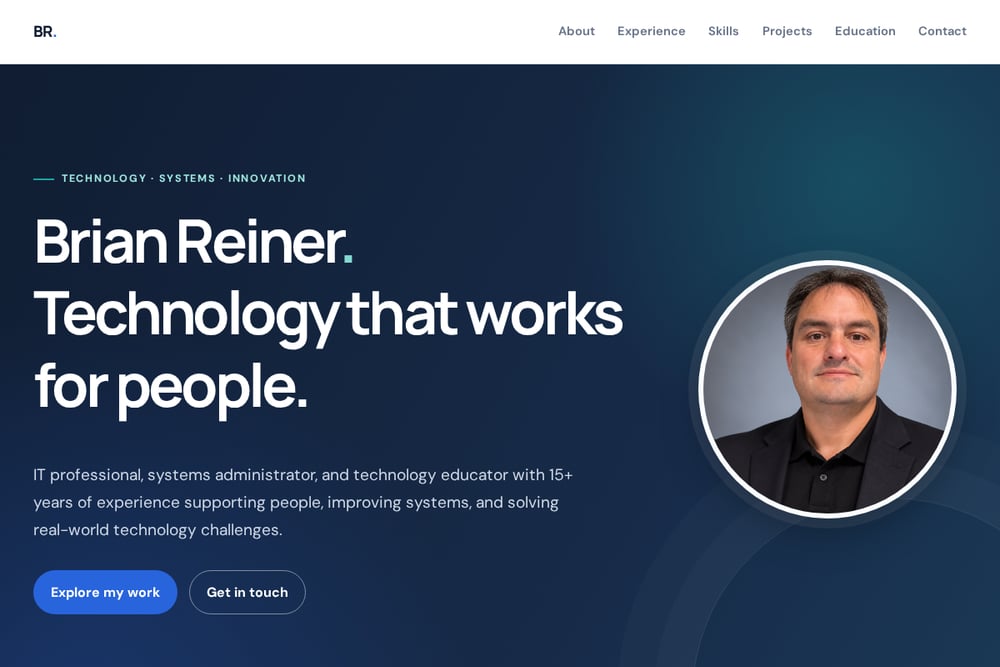 A screenshot of the Brian Reiner | Technology & Innovation website.
Brian Reiner brings 15+ years of hands-on IT operations to the table, covering systems administration, end-user support, networking, device management, identity and access, and cybersecurity practices. His current work as a Building Systems Administrator for Stafford County Public Schools means he handles staff and student devices, classroom technology, account and access issues, and network troubleshooting every single day. What sets him apart is the teaching side: he is an SNHU Online Adjunct Instructor with a Master's in Information Technology, which sharpens how he explains complex topics and documents solutions. His site frames the whole approach as technology that works for people, and the emphasis on looking past a single ticket to fix the underlying process shows up in how he describes his work. For organizations that want practical, people-first support rather than a distant help desk, this is a compelling fit.
#3 CMIT Solutions
 A screenshot of the CMIT Solutions website.
CMIT Solutions runs a managed services model built on remote monitoring and maintenance, keeping watch over device health around the clock. Their managed services offering emphasizes proactive patching, automated security, and catching issues before they become outages. The pitch is straightforward: outsourcing IT frees your team to focus on the business while professionals handle the technical load. They also serve a long list of industries, including education, government, healthcare, and professional services, so you are unlikely to be their first client in your sector. If you want predictable, always-on coverage without hiring in-house, this model fits well.
#4 Systems Engineering
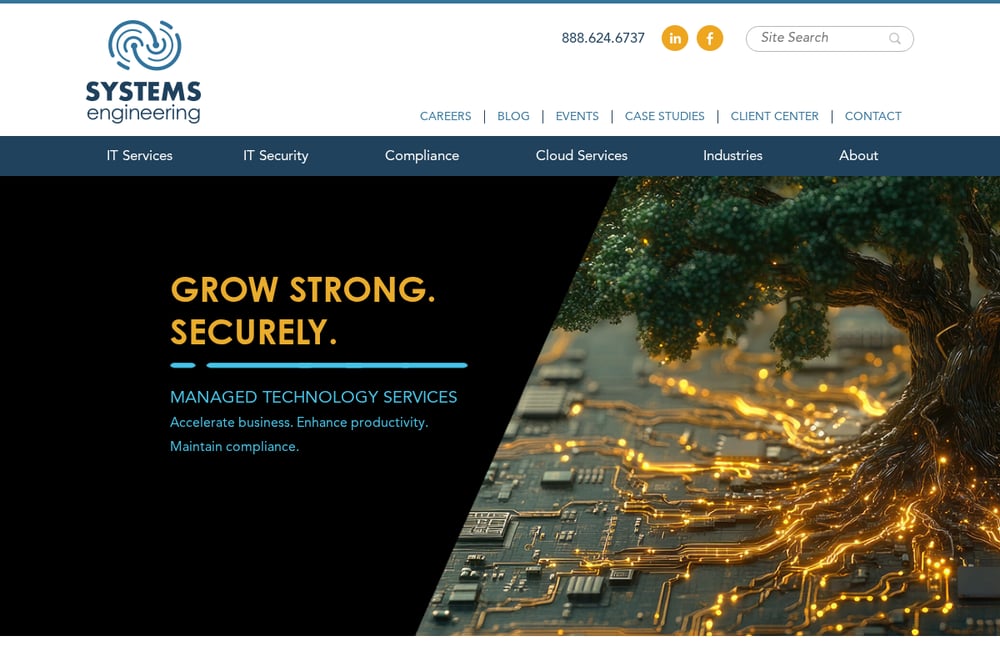 A screenshot of the Systems Engineering website.
Systems Engineering layers managed IT with a broader consulting bench, including help desk, network assessment, IT policies-as-a-service, and virtual CIO support. Their managed IT practice also reaches into compliance work like CMMC and NCUA, which matters if you operate in regulated or publicly funded environments. Business continuity assessments and gap analyses round out the planning side, so you get strategy alongside day-to-day support. The firm serves construction, education, financial services, government, healthcare, legal, and nonprofits, giving them pattern recognition across sectors. Choose them when you need a partner who can sit in planning meetings, not just close tickets.
#5 Corsica Technologies
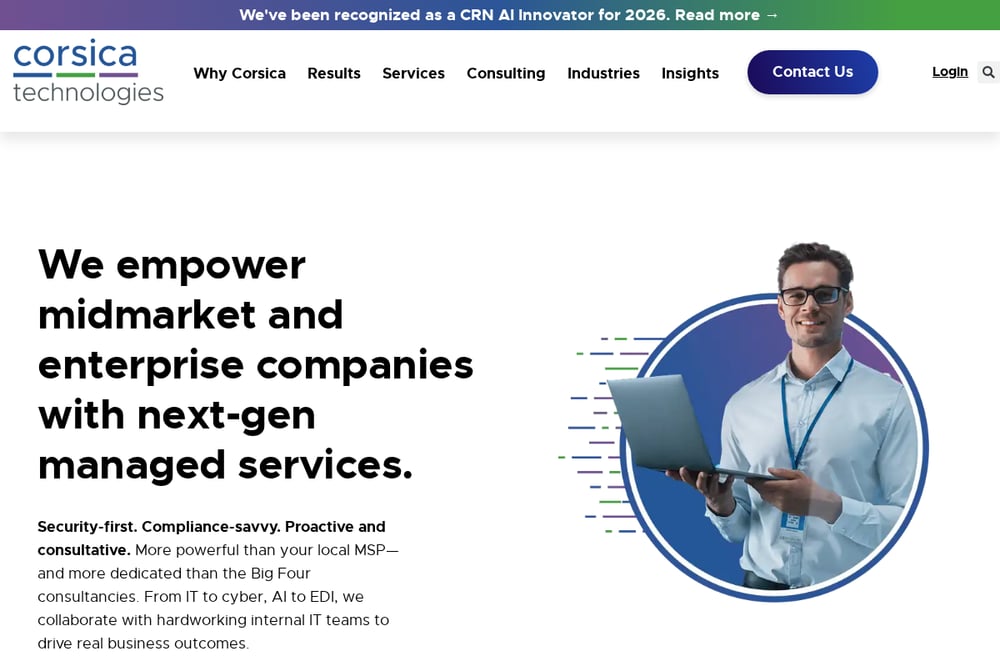 A screenshot of the Corsica Technologies website.
Corsica Technologies positions itself around cyber resilience and scalability, with services spanning cybersecurity, IT support and hardware, compliance, cloud, and data integration. Their explainer on what managed IT services actually include is a useful primer on support types and cost structures if you are still scoping the category. They publish pricing calculators for managed IT and outsourced IT, which helps you build a budget before the first call. The firm also handles IT staff augmentation and consulting, so they can flex between fully managed and co-managed arrangements. If your organization is growing fast or facing a compliance deadline, their breadth is the draw.
How to Pick the Right IT Partner
Start with your actual pain. If servers and networks keep you up at night, prioritize deep infrastructure experience. If you are drowning in tickets and device chaos, look for someone who fixes processes, not just symptoms.
Then ask about documentation and knowledge transfer. A good partner leaves your staff smarter, not more dependent. Ask how they hand off fixes, whether they train your team, and what happens when the contract ends.
Check the pricing model against your cash flow. Flat monthly managed services suit predictable budgets. Project-based or per-engagement work suits organizations with spiky needs. Finally, ask for references in your sector. A provider who has supported classrooms or clinics before will recognize your constraints on day one.
Where Automation Fits Into the Workflow
Automation is not a replacement for judgment. It is the layer that buys your team time.
Start with device and account lifecycle. Automated provisioning and deprovisioning for staff and student accounts reduces access risk and saves hours every term. Next, patch management and endpoint monitoring catch vulnerabilities before they become incidents. Then documentation: templated runbooks and ticket notes turn one-off fixes into repeatable process.
A practical sequence looks like this. Audit your current accounts and devices, standardize the onboarding and offboarding steps, automate patching and backups, and only then layer in reporting dashboards. Each step should reduce manual toil while keeping a human in the loop for exceptions.
The Bottom Line
There is no single right answer here, only the right fit for your organization. Large managed providers give you scale, monitoring, and compliance muscle. Independent practitioners give you context, responsiveness, and teaching that sticks.
If you run a school or a lean team in Stafford County, a people-first practitioner who understands classrooms and documentation may serve you better than a national help desk. If you are chasing a compliance framework or rapid growth, the broader firms earn their keep.
Pick based on your risk, your budget, and how well each provider explains things to the people who actually use the technology. That last part matters more than any feature list.