Your tender deadline is fixed. Your ISO 27001 certificate date is not. These five tools help you close that gap with dated steps instead of guesswork.
Why deadline-driven ISO 27001 planning is having a moment
ISO 27001 certification has moved from a nice-to-have to a gate on enterprise deals and public tenders. Buyers now ask for a certificate by a specific date, and your internal readiness work has to fit around audit slots, holiday blackouts, and certification body availability. Most compliance platforms focus on controls and evidence. Fewer focus on the calendar math that decides whether you can actually show a certificate on the day a contract demands it. That gap is where deadline planners and audit-timeline guides earn their keep. The tools below approach the same problem from different angles: some automate the ISMS, some explain the audit lifecycle, and one starts with the two dates that matter most.
How we evaluated these ISO 27001 planning tools
We looked at the same factors for every entry. Service scope: does it cover planning, controls, evidence, or all three? Pricing clarity: can you tell what you get before you talk to sales? Local fit: does it speak to US buyers, tenders, and audit bodies? Practical output: does it give you something you can hand to a bid team, an auditor, or a client? And timeline realism: does it account for Stage 1 to Stage 2 gaps, holiday blackouts, and nonconformity delays? Each tool below stood out on a different combination of those factors.
Here is a quick comparison of the five tools, what each is built for, and who gets the most out of it.
| Provider | Best For |
|---|---|
| RiskWatch | Teams that need full ISMS automation and surveillance-audit readiness |
| ISO 27001 certificate by your deadline? Plan the dates | Bid teams and compliance leads working backward from a fixed tender date |
| Hyperproof | Mid-market and enterprise teams managing ISO 27001 alongside other frameworks |
| Konfirmity | Teams that want to understand the audit lifecycle before committing to dates |
| ComplyJet | Startups that want compliance automation and a customer-facing trust center in one platform |
The five tools in detail
#1 RiskWatch
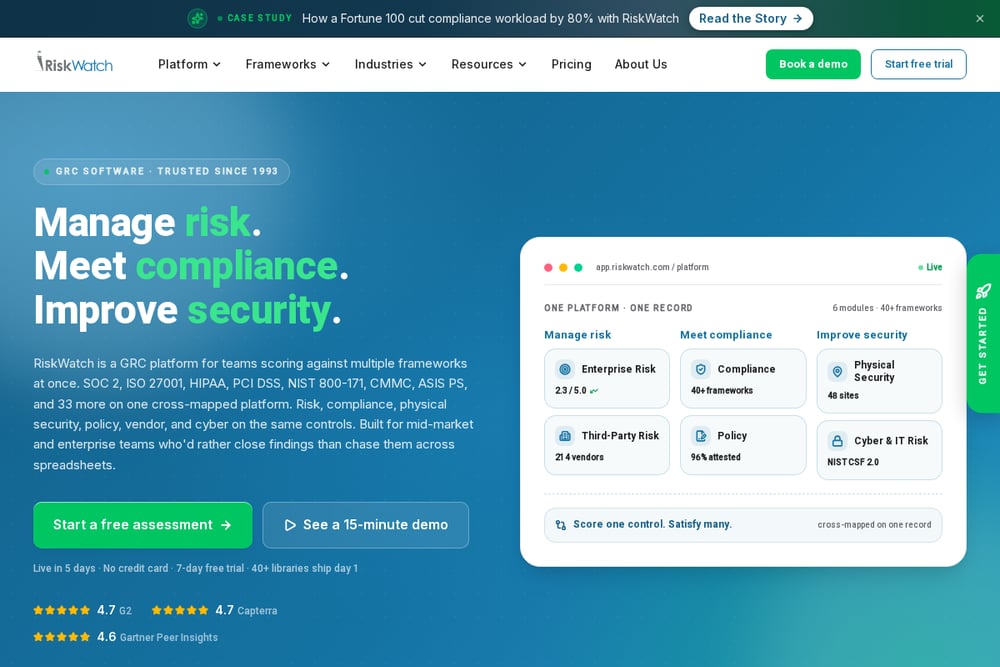 A screenshot of the RiskWatch website.
RiskWatch treats ISO 27001 as a living system, not a one-off project. The platform scores all 93 Annex A 2022 controls, auto-generates your Statement of Applicability, and collects evidence year-round so surveillance audits feel like confirmation rather than a second certification. It also markets an 8-week certification path, which is useful if your deadline is tight and your ISMS is still mostly on paper. For teams that need to keep the certificate after they earn it, the audit-pack export and continuous monitoring view are the real draw. If your problem is control coverage and evidence, start here.
#2 ISO 27001 certificate by your deadline? Plan the dates
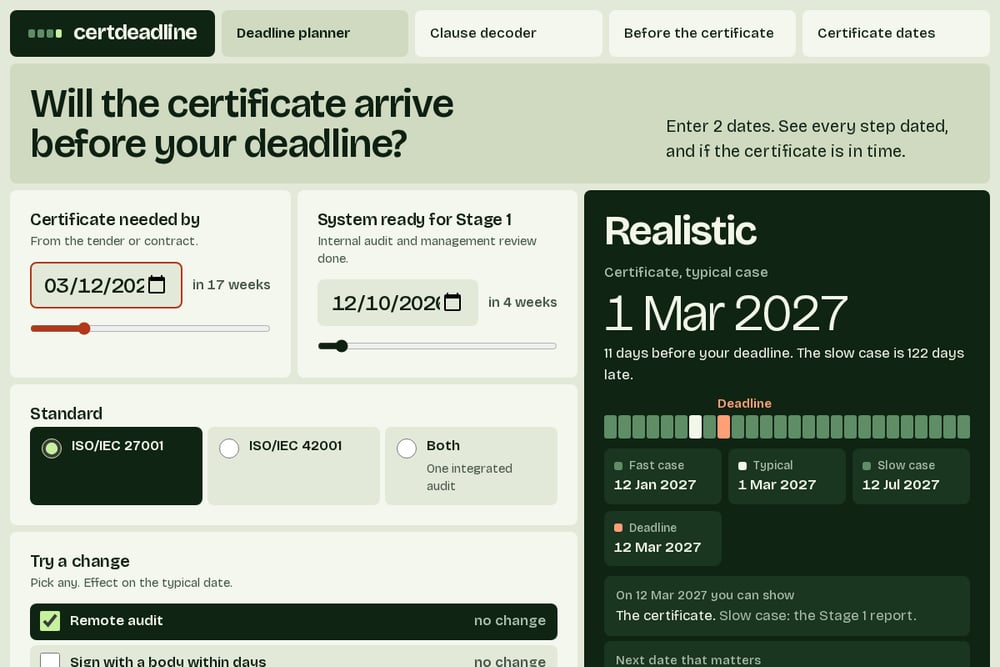 A screenshot of the ISO 27001 certificate by your deadline? Plan the dates website.
This is the tool you reach for when a client or tender has already named the date. You enter two dates: when the certificate is needed and when your system will be ready for Stage 1. The planner returns every step dated, from requesting quotes to signing with a certification body, Stage 1, Stage 2, and certificate issuance. It also shows a fast, typical, and slow case, so you can see the slack or the shortfall before you commit. The output is built for bid teams: a one-page PDF with the 10 dated steps, a calendar file with reminders, and email alerts if a rule in the plan changes. It covers ISO/IEC 27001, ISO/IEC 42001, and integrated audits, which matters if you are chasing both certificates on one timeline.
#3 Hyperproof
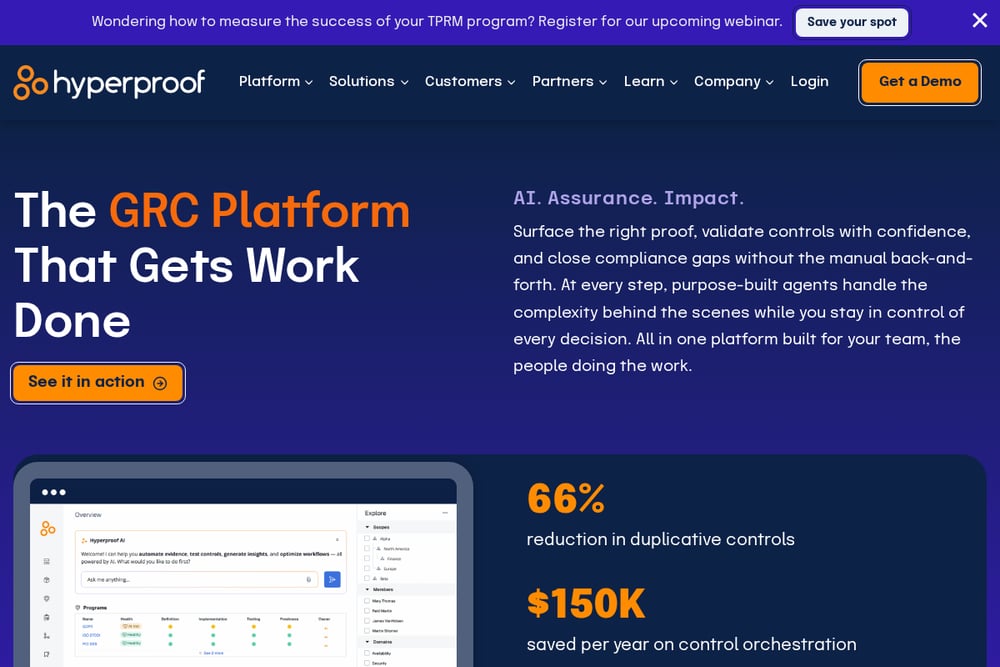 A screenshot of the Hyperproof website.
Hyperproof is a broad compliance operations platform with ISO 27001 as one of more than 160 supported frameworks. It brings risk management, policy management, third-party risk, and audit evidence into one workflow, which helps if ISO 27001 is one of several certifications your buyers ask about. The ISO 27001 template and continuous controls monitoring are aimed at teams that want to stop rebuilding evidence for every audit. It is less of a deadline calculator and more of a system of record for compliance work. If your planning problem is coordination across frameworks and teams, this is a strong fit.
#4 Konfirmity
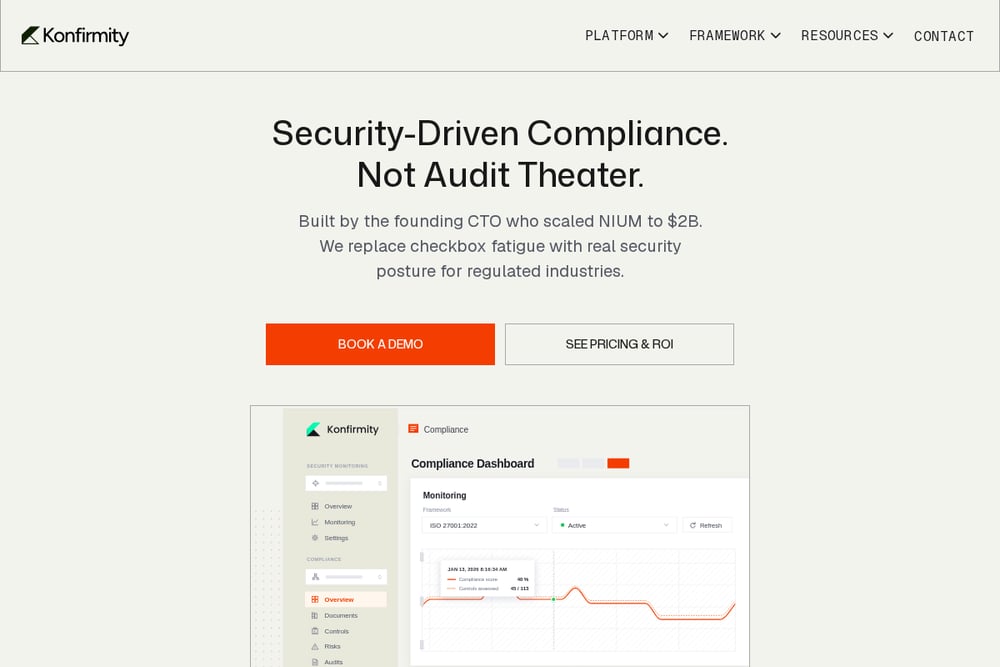 A screenshot of the Konfirmity website.
Konfirmity publishes a detailed 2026 ISO 27001 audit timeline breakdown that separates the two timelines most guides blur together: the readiness timeline and the audit timeline. The guide walks through pre-audit preparation, Stage 1 documentation review, Stage 2 implementation assessment, and the three-year certification cycle. It includes an eight-week prep schedule for a mid-size company and examples for fintechs, healthcare firms, and enterprise suppliers. If you want to understand what actually happens between signing with a body and holding a certificate, this is a useful read before you build your plan. It is education-first, with a platform behind it.
#5 ComplyJet
 A screenshot of the ComplyJet website.
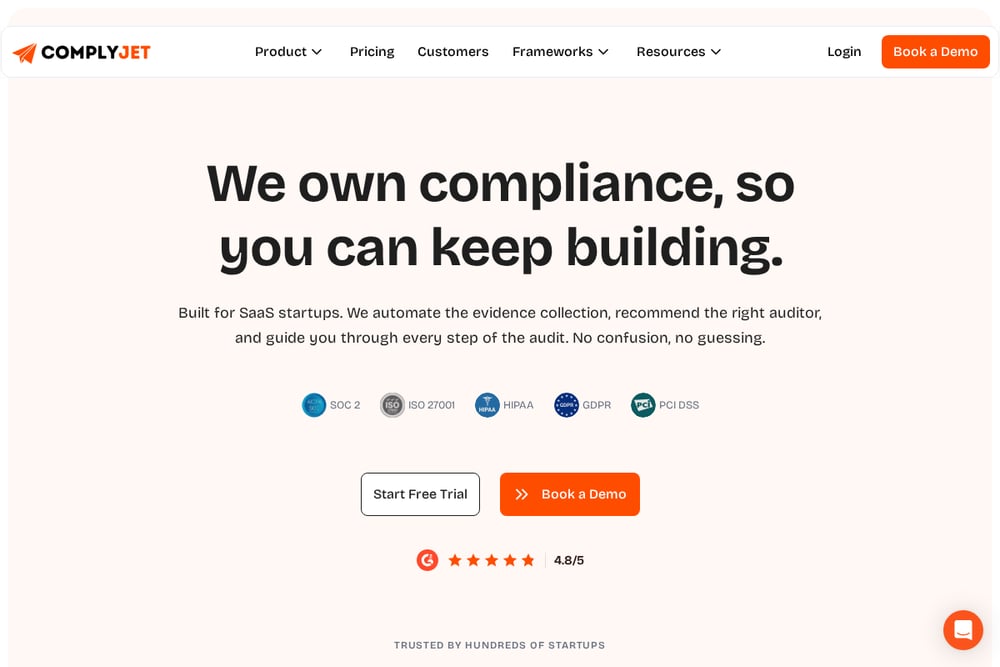
ComplyJet bundles compliance automation, audit management, a trust center, and questionnaire automation into one platform for startups. It supports over 25 frameworks, including ISO 27001 and ISO 42001, so you can plan both certificates in one place. The trust center is handy once you have the certificate, because it lets you share certifications with prospects instead of answering the same security questions repeatedly. For a small team chasing its first ISO 27001 certificate, the combination of audit management and evidence automation covers a lot of ground. It is a practical option if you want one tool from readiness through customer-facing proof.
How to choose the right ISO 27001 planning tool
Start with the date. If a tender or contract already names the day you need the certificate, use a deadline planner first to see whether the math works. Then decide what you need next. If your controls and evidence are thin, look at platforms that automate the ISMS. If you are managing several frameworks, prioritize a system of record that keeps evidence reusable. If you are still learning the audit process, read a timeline guide before you sign with a certification body. And check pricing clarity early, because the cost of a missed deadline is usually larger than the cost of the tool.
Where automation helps and where it does not
Automation is strongest on evidence collection, control mapping, and reminder scheduling. It is weakest on the things that actually move your certificate date: certification body availability, Stage 1 to Stage 2 gaps, and how fast you close nonconformities. Use automation to keep the ISMS alive between audits. Use a dated plan to protect the deadline. The two work best together.
The bottom line
You do not need five tools. You need one that matches your starting point. If the deadline is fixed and the clock is already running, start with the deadline planner and work backward. If the ISMS is the gap, pick a platform that automates controls and evidence. If you are still learning the process, read the timeline guide first. The common thread across all five is that they replace guesswork with dates, and dates are what your client or tender actually cares about.