
Counting stock eats hours. Losing it eats margin. These five services help you measure both and cut the waste.
What are Financial & Business Services services?
Inventory accuracy is no longer a clipboard-and-spreadsheet job. Retailers, warehouses, and manufacturers are turning to RFID, mobile scanning, and structured audit services to find what's missing and stop paying for it twice. The market splits into software platforms, hands-on audit firms, and hybrid services that measure your losses before selling you a fix. That variety is good news for you. It means you can start with a free assessment, a paid pilot, or a full-service audit depending on how much you already know about your own stockroom.
What we looked at when researching Financial & Business Services
We looked at five factors across every provider: service scope (does it cover counting, searching, and replacing, or just one?), pricing clarity (can you see what you'll pay before you commit?), local fit (does it work for US operations?), proof of savings (does it measure results in your records?), and ease of starting (free assessment, trial, or discovery call). Each provider stands out on a different combination, so match the factors that matter most to your operation.
| Provider | Best For |
|---|---|
| Stockount | Teams that want self-serve mobile stocktaking software |
| OverRack: spend less time counting stock, lose less of it | Operations that want losses measured before they commit |
| RGIS | Large multi-site operations that need on-site counting teams |
| Taqtics | Retail and facility teams that want audits inside an ops platform |
| TagMyAssets | Businesses that need asset tagging and verification services |
A closer look at 5 standout Financial & Business Services
#1 Stockount
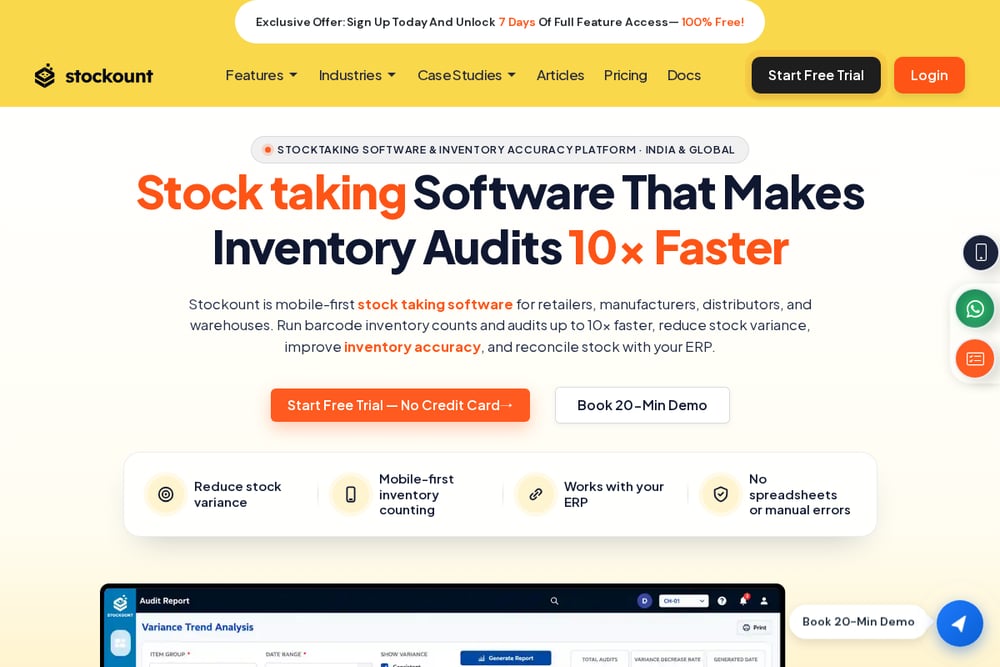 A screenshot of the Stockount website.
Stockount is a mobile-first stocktaking platform built for teams that still count on paper or spreadsheets. You get dynamic and static audit modes, ad-hoc and cross audits, and continuous count mode, all from a phone or tablet. The platform supports external scanners and configurable barcode parsing for serial, batch, and unit tracking. Variance trend analysis and photo cross-checking help you see where counts drift before they become write-offs. It's a strong fit if you want software your own staff can run without a consultant on site. See how they frame the counting problem in their inventory count guide.
#2 OverRack: spend less time counting stock, lose less of it
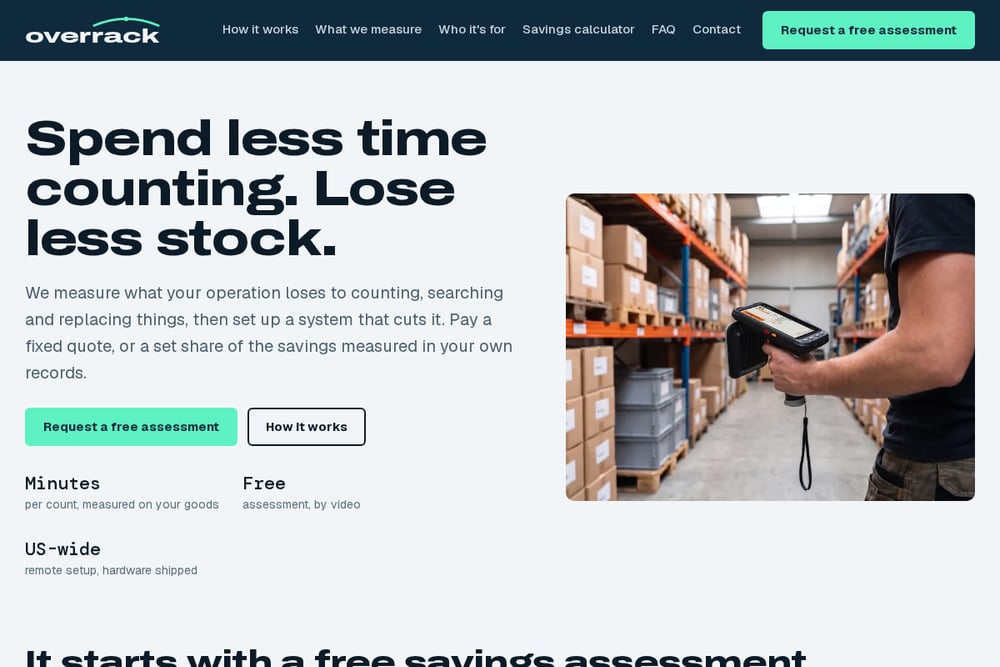 A screenshot of the OverRack website.
OverRack starts by measuring what your operation loses to counting, searching, and replacing items. You send a year of records, do a 30-minute video walk-through, and get a timed sample count with a reader and labels shipped to you. The result is a one-page savings report you keep, whether or not you go further. If the numbers justify it, you run a 60-day paid pilot on one area with success criteria agreed in writing. Pricing is your choice: a fixed quote or a set share of the savings measured in your own records. It's a low-risk way to find out what your stockroom is actually costing you.
#3 RGIS
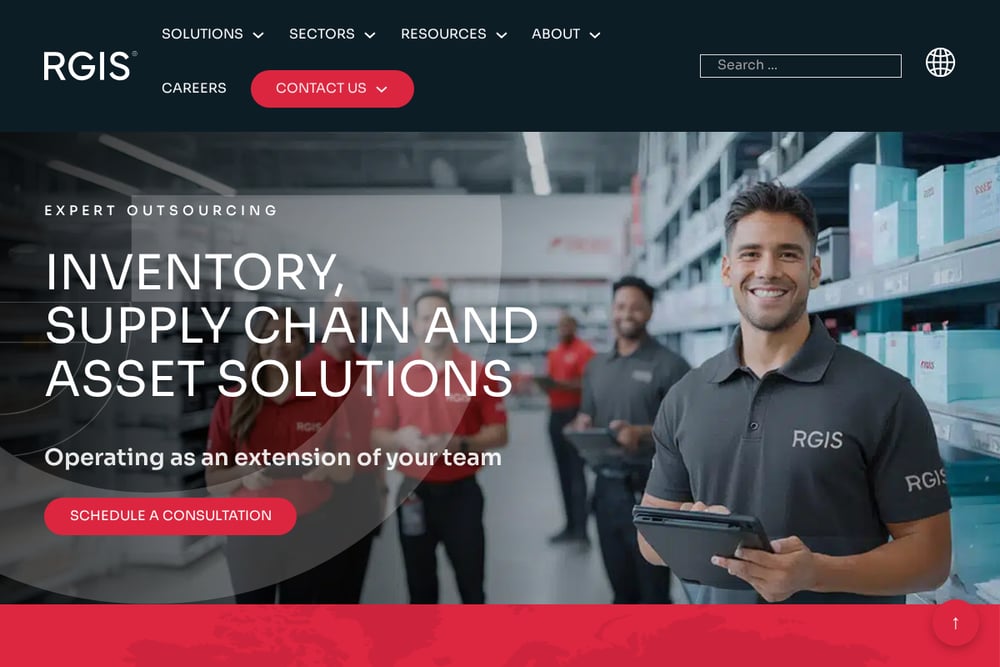 A screenshot of the RGIS website.
RGIS brings hands-on inventory and asset-verification services to retail, industrial, and healthcare operations. They handle physical counts, asset tagging, and supply-chain labor reductions with teams that show up on site. The enterprise software side supports complex global organizations that need predictable inventory performance. If you run a multi-location operation and want an established partner to run the count, RGIS is built for that scale. Their inventory counts overview explains how they think about accuracy and management together.
#4 Taqtics
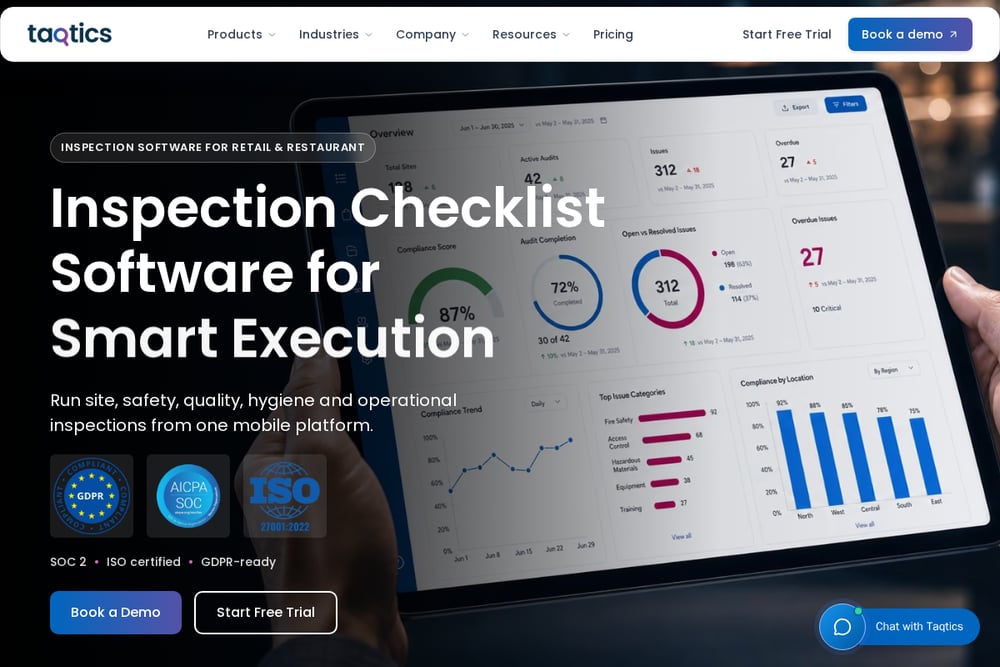 A screenshot of the Taqtics website.
Taqtics is an operations-execution platform with a strong audit and checklist layer. You can run inventory and stock accuracy audits through forms, issue tracking, and custom BI dashboards. The platform also covers visual merchandising, asset management, and workforce enablement, so inventory checks sit alongside the rest of your store or facility routines. It suits retail, restaurant, and manufacturing teams that want one system for audits and daily operations. Their inventory accuracy audit guide lays out the KPIs and methods they support.
#5 TagMyAssets
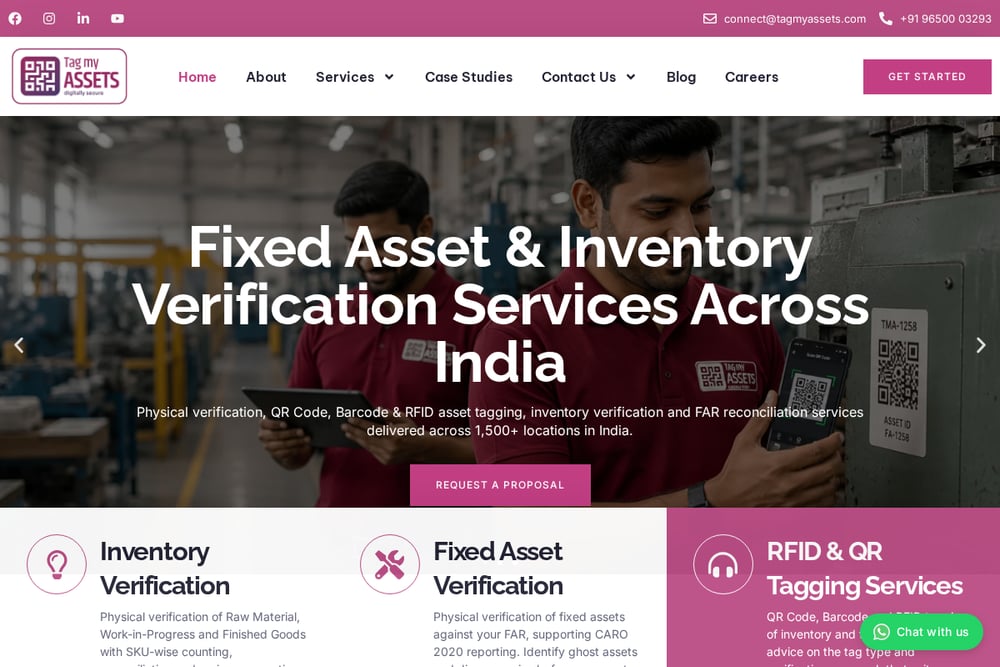 A screenshot of the TagMyAssets website.
TagMyAssets focuses on fixed-asset tagging and inventory verification services, including RFID asset tagging and customized inventory management solutions. They help you tell the difference between inventory verification and a full stock audit, which matters when you need the right process for the right problem. The service is hands-on: tagging, verification, and consulting rather than a self-serve app. If your priority is knowing what you own and where it sits, this is a focused option. Their verification vs. audit comparison is a useful starting point.
How to choose the right Financial & Business Services
Start with what you already know. If you suspect losses but can't prove them, look for a provider that measures first and charges later, like OverRack's free assessment. If you know the problem and need software your team can run, Stockount's mobile audits are a practical fit. If you want someone else to do the counting across multiple sites, RGIS brings the teams. If audits need to live inside a broader operations platform, Taqtics covers that ground. And if the real gap is knowing what assets you own, TagMyAssets specializes in tagging and verification. Ask every provider three questions: what will you measure, what will it cost, and how will we know it worked?
Expert Conclusion
The right inventory partner depends on whether you need measurement, software, manpower, or tagging. OverRack stands out for proving savings before you pay. Stockount gives you the tools to count faster yourself. RGIS and TagMyAssets bring hands-on service, and Taqtics ties audits into daily operations. Pick the one that closes your biggest gap first, then expand from there.