Finding your first internship shouldn't feel like a scavenger hunt. These five platforms give you a real starting line, whether you're a first-year student or a career-changer.
The internship search is broken for beginners
Most internship databases were built for people who already know the game. They assume you have a polished resume, a target industry, and a tolerance for endless filters. That leaves underclassmen and first-time searchers scrolling through listings they aren't even eligible for.
The market is shifting. A new wave of platforms filters by class year, surfaces paid roles, and bundles the tools you actually need: resume builders, outreach templates, and deadline trackers. Others lean on volume, aggregating tens of thousands of listings from career sites and Fortune 500 employers.
Your job is to figure out which model fits where you are right now. A high schooler needs different scaffolding than a college junior hunting a summer analyst role. The five platforms below cover both ends of that spectrum.
How we evaluated these platforms
We looked at the same factors across every platform. First, eligibility filtering: does the tool let you search by class year, age, or student status so you stop wasting time on roles you can't take? Second, tooling depth: does it stop at listings, or does it help you build a resume, write outreach, and track deadlines?
Third, pricing clarity: is the free tier genuinely usable, or a teaser for a paywall? Fourth, listing quality and volume: are roles current, vetted, and labeled paid or unpaid? Fifth, access friction: do you need an account, a login, or a profile before you see anything useful?
FirstPathways stood out for year-based filtering and a no-account browser-based toolkit. StandOutSearch impressed with age and interest filters built for high schoolers. InternshipFinder brought editorial guidance alongside listings. Internships.com showed scale with tens of thousands of roles and AI resume feedback. Simplify Jobs combined a large tracked-employer network with autofill and tracking.
Here's a quick look at how the five platforms compare on the factors that matter most: eligibility filtering, free access, and built-in tools.
| Provider | Best For |
|---|---|
| StandOutSearch | High schoolers filtering by age and interest |
| FirstPathways | Internships for first- and second-year students | First- and second-years who want a full starter toolkit |
| InternshipFinder | Readers who want guidance alongside listings |
| Internships.com | Students who want scale and AI-assisted applications |
| Simplify Jobs | High-volume applicants who want autofill and tracking |
The five platforms, one by one
#1 StandOutSearch
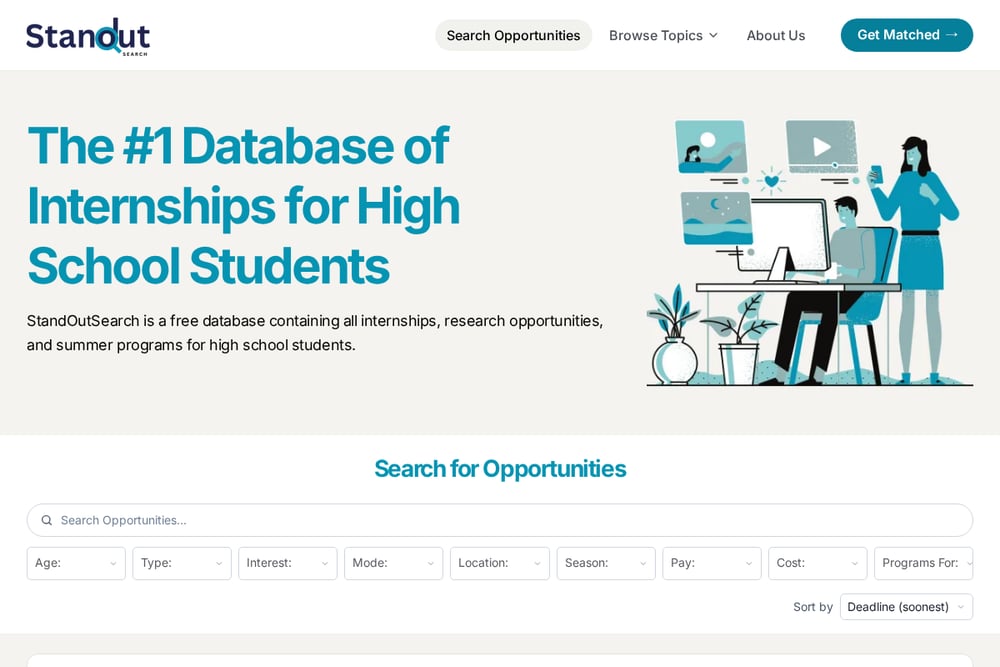 A screenshot of the StandOutSearch website.
StandOutSearch bills itself as the top database for high school internships, and the filter set backs that up. You can narrow by age, interest, location, season, pay, and even programs for underrepresented or low-income students. That last part matters if you're searching before college and need programs that actually accept your age group. The database covers research, internships, and summer programs across all 50 states. It's free to search, and the breadth of filters makes it a strong first stop for younger students.
#2 FirstPathways | Internships for first- and second-year students
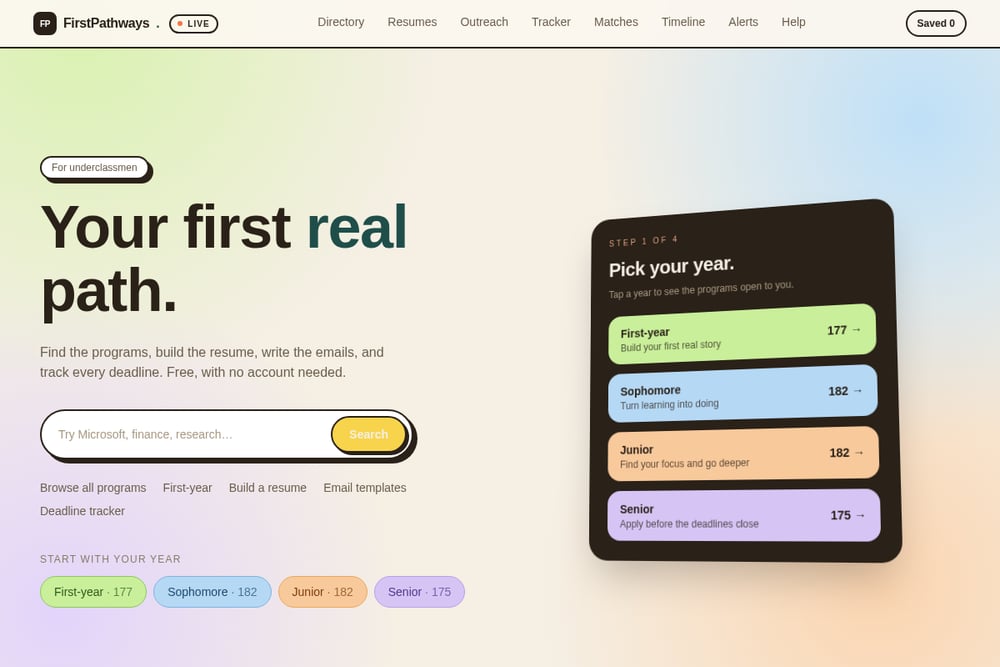 A screenshot of the FirstPathways website.
FirstPathways is built for the student who hasn't done this before. You pick your year, and the live directory shows only programs open to you, with counts like 177 first-year-eligible roles and 127 paid listings. No account, no login, no data selling. Your resume and tracker stay in your browser, which is a rare privacy stance in this space. Beyond listings, it bundles a resume builder, outreach email templates, and a deadline tracker with alerts. It's a complete starter kit for underclassmen rather than just a search box.
#3 InternshipFinder
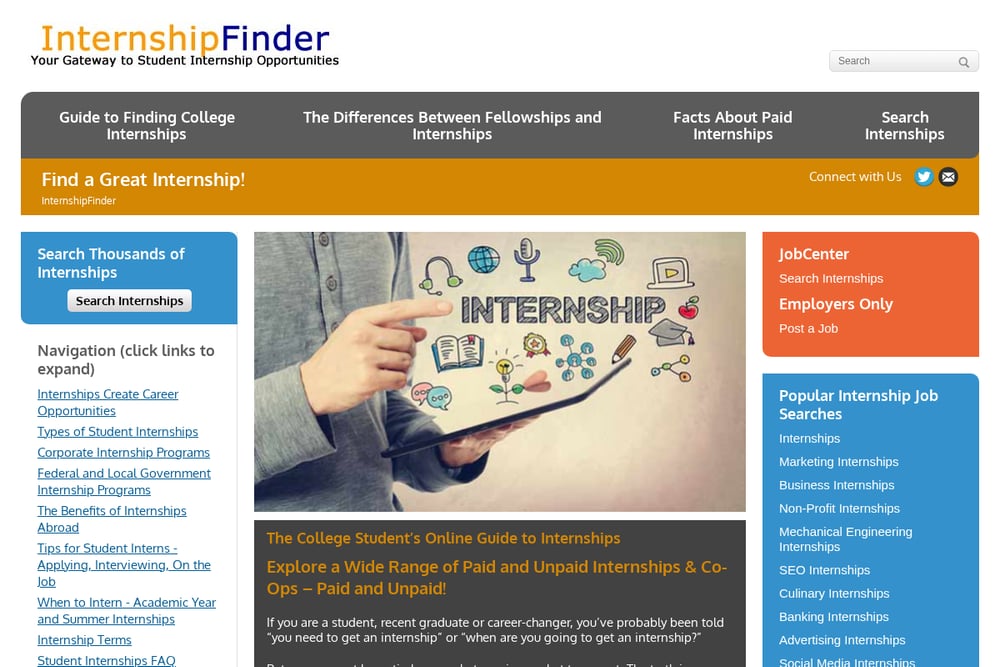 A screenshot of the InternshipFinder website.
InternshipFinder leans editorial. Alongside its searchable listings, it publishes guides on how internships work, the difference between fellowships and internships, and the realities of paid versus unpaid roles. That makes it useful if you're still figuring out what an internship even is. The site serves students, recent graduates, and career-changers, so the advice spans a wider audience than pure underclassman tools. Listings are organized by career field, from business and finance to engineering and media. It's a solid research companion when you need context before you apply.
#4 Internships.com
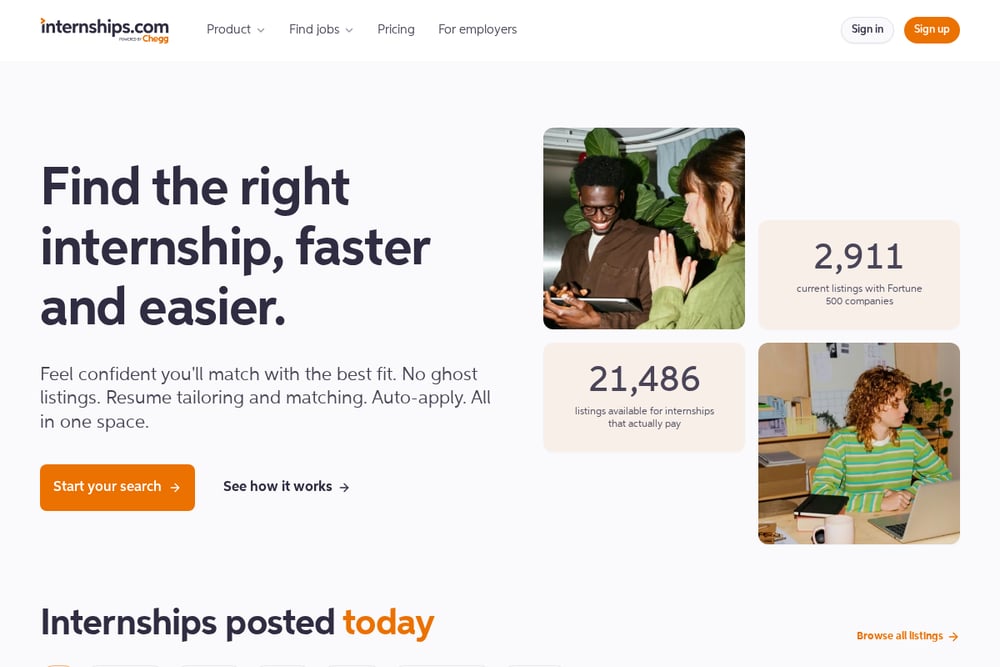 A screenshot of the Internships.com website.
Internships.com plays the volume game, with tens of thousands of listings including thousands of paid roles and postings from Fortune 500 companies. The platform layers on matching, resume tailoring, auto-apply, and interview prep, positioning itself as an all-in-one search space. You'll see fresh postings from names like ASML, BMO, Duolingo, and AstraZeneca with compensation details listed. The tradeoff is that it's built for the broad college market, not specifically for underclassmen. If you know your field and want scale, it delivers.
#5 Simplify Jobs
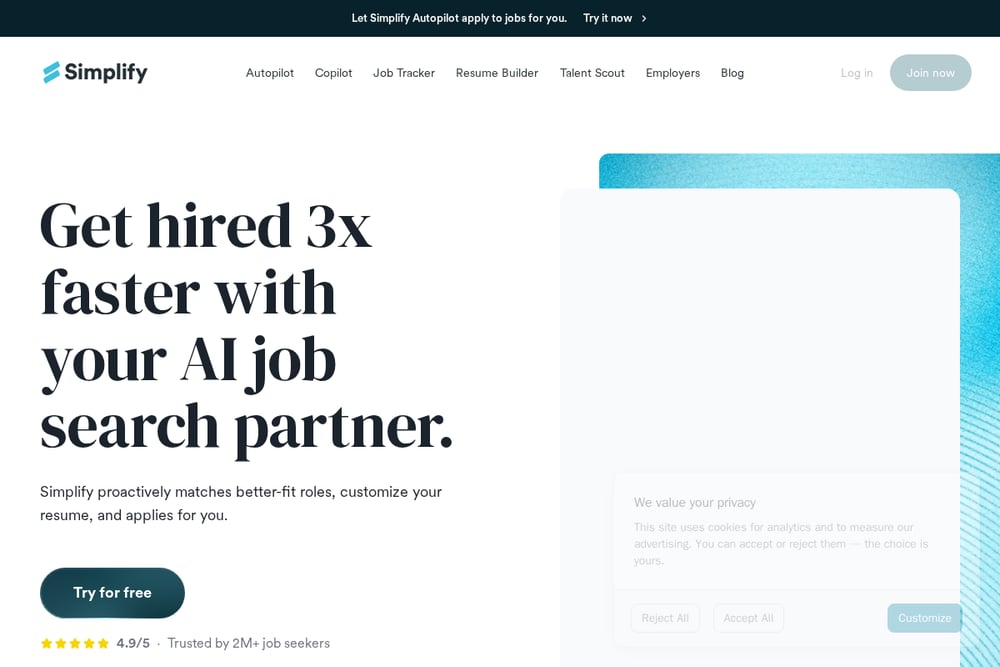 A screenshot of the Simplify Jobs website.
Simplify Jobs tracks over 100,000 career sites and curates lists like its freshmen and sophomore internship collection. The team handpicks roles from startups to the Fortune 500, and the underclassman list focuses on paid positions from vetted companies. Its Copilot tool autofills applications, and the tracker keeps your pipeline organized. The base version, including unlimited tracking and autofill, is free forever, with a premium tier for AI extras. It's a strong fit if you're applying at volume and want automation doing the repetitive work.
How to pick the right platform for your year
Start with your eligibility. If you're in high school, go where age filters exist, like StandOutSearch. If you're a first- or second-year in college, prioritize tools that filter by class year so you stop chasing roles meant for juniors and seniors.
Next, decide how much scaffolding you need. Some of you just want a list and will handle the rest. Others need a resume builder, email templates, and deadline reminders in one place. Be honest about which camp you're in.
Then check the access terms. Free tiers vary wildly. Look for platforms that let you browse without an account and are clear about what they do with your data. Finally, consider volume versus curation. Aggregators give you more listings; curated lists give you fewer dead ends. Most students benefit from using one of each.
A simple weekly workflow that keeps you moving
Set aside one hour each week and run the same loop. Start by filtering your chosen directory by your class year and paid status, then save three to five roles that fit. Move to your resume builder and tailor one version to the most common requirements you're seeing.
Next, send two outreach emails using a template, personalized with a specific detail about the person's path. Log every application and deadline in your tracker, and set alerts so nothing slips. Close the session by reviewing what's due in the next seven days. Repeat weekly. The compounding effect of consistent, small actions beats a single frantic application sprint every time.
The bottom line
There's no single platform that wins for everyone, and that's fine. The right choice depends on your year, your field, and how much hand-holding you want. Younger students should start where eligibility filters protect their time. Underclassmen in college benefit most from a toolkit that covers search, resume, outreach, and deadlines in one place.
Use one platform for discovery and another for volume if you need it. Keep your data private where you can, and treat the weekly workflow as non-negotiable. The students who land good internships aren't the ones with the most tabs open. They're the ones who show up every week and follow through.