
AI is reshaping every job, and you need practical skills fast. These five platforms make it easy to start learning without drowning in jargon.
The AI Literacy Boom
AI literacy has become a must-have for professionals, students, and leaders. But traditional courses often feel too technical or too slow. Interactive platforms now offer bite-sized lessons, hands-on labs, and real-world examples. You can learn at your own pace, often without writing a single line of code. The result is a surge of accessible AI education for everyone.
How We Evaluated These Platforms
We looked at five key factors: service scope, pricing clarity, local fit, learning experience, and support for beginners. Each platform was assessed on how well it serves US learners. We considered whether lessons are interactive, if coding is required, and how easily you can try before committing. We also checked for clear pricing and the availability of additional tracks like cybersecurity or data. No single platform wins on every factor, but each stands out in its own way.
Here is a quick look at five platforms that can jumpstart your AI journey.
| Provider | Best For |
|---|---|
| AI for Beginners | Self-paced learners who want a free, comprehensive curriculum |
| Practical Technology Learning — AI Forge and Beyond | Segmentation Fault Academy | Beginners seeking coding-free, multi-topic tech learning |
| Codecademy AI Courses | Hands-on learners who want to code AI projects |
| Google AI Training | Professionals seeking career-focused AI credentials |
| Coursera Introduction to Artificial Intelligence (AI) | Learners who want a certified, academic-style AI course |
A Closer Look at Each Platform
#1 AI for Beginners
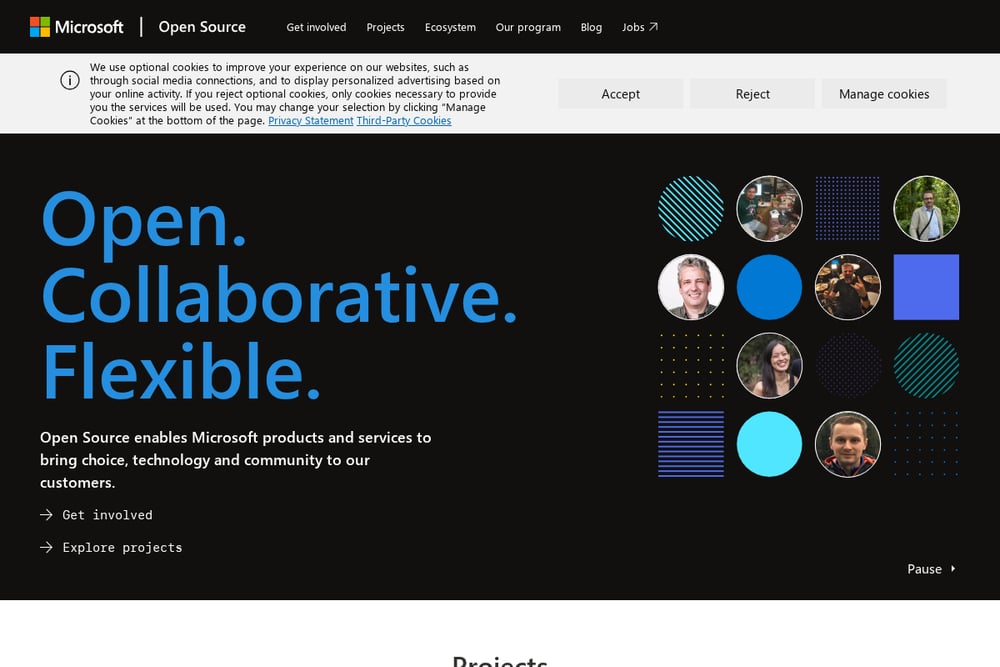 A screenshot of the AI for Beginners website.
Microsoft's AI for Beginners is a free, open-source curriculum hosted on GitHub. It offers a 12-week, 24-lesson program with practical labs and quizzes. You can learn at your own pace and even clone the repository for offline use. The content covers TensorFlow, PyTorch, and AI ethics. It is ideal if you want a structured, code-heavy introduction. The community translations make it accessible in over 50 languages.
#2 Practical Technology Learning — AI Forge and Beyond | Segmentation Fault Academy
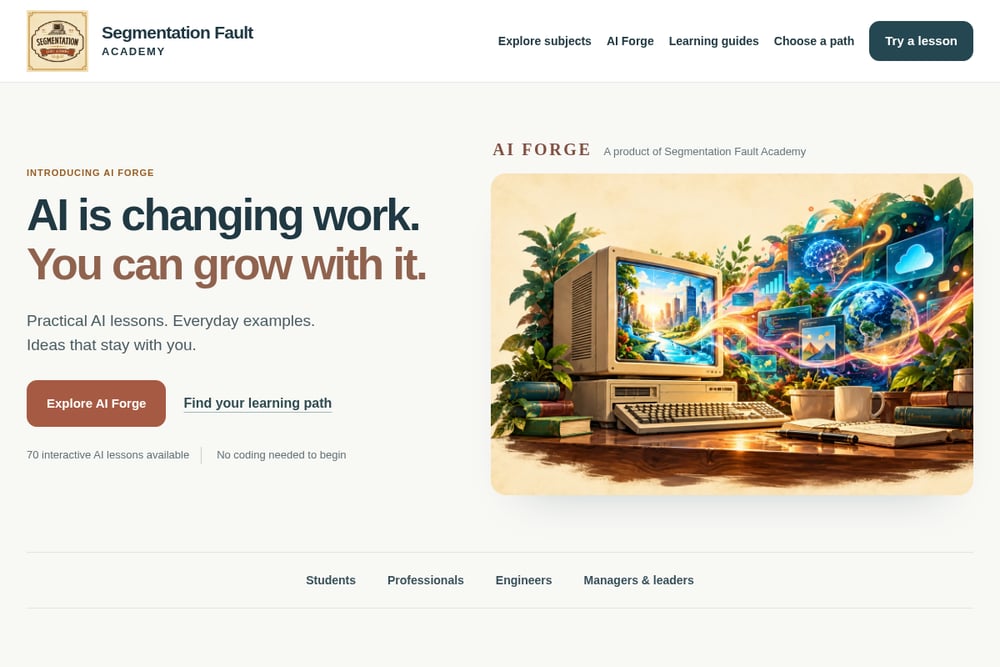 A screenshot of the Segmentation Fault Academy website.
Segmentation Fault Academy offers AI Forge, a set of 70 interactive AI lessons designed for beginners. No coding is needed to start, and lessons use everyday examples to make concepts stick. You can explore additional tracks like Cyber Shield for cybersecurity and Silicon Lab for semiconductors. The academy also provides course previews for embedded systems and data systems. It is perfect if you want a gentle, practical introduction to multiple tech fields. Try two chapters for free before committing.
#3 Codecademy AI Courses
Codecademy provides a wide catalog of AI courses, from intro to large language models to certification paths. You can filter by level, price, and duration to find your fit. Many courses are free, while paid plans unlock full career paths. The platform emphasizes hands-on coding, so it suits learners who want to build projects. Its AI Builder tool helps you turn ideas into prototypes. If you prefer a code-first approach, this is a strong option.
#4 Google AI Training
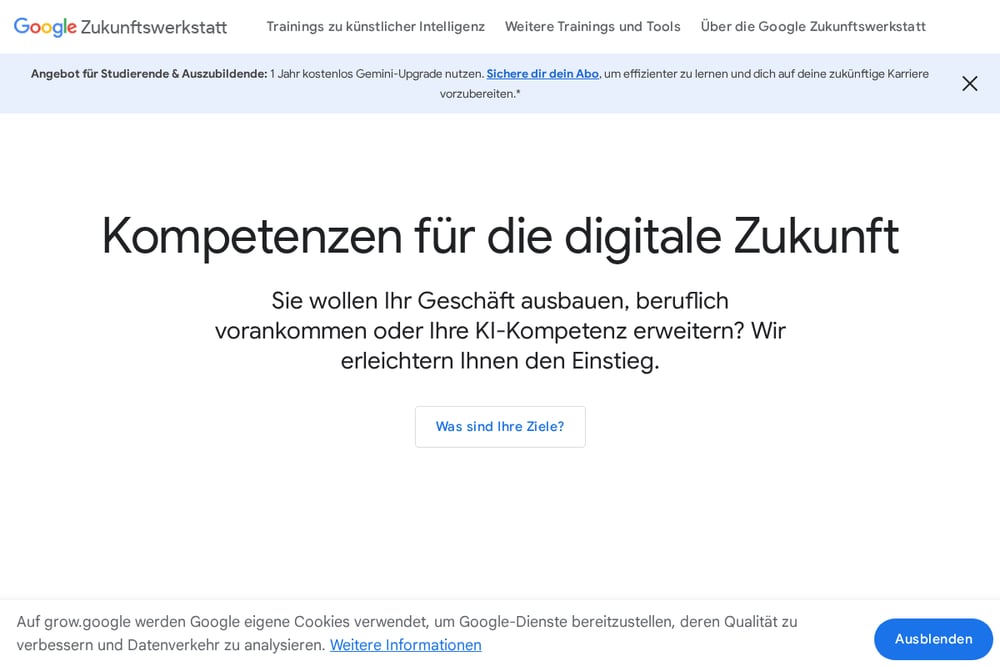 A screenshot of the Google AI Training website.
Google's AI Training hub offers practical, expert-led courses to boost your career. You can choose from foundational certificates or short courses like AI Essentials. The content is designed for busy professionals and includes interactive tools. Many courses are free or low-cost, with clear learning outcomes. It is a good fit if you want to enhance your resume with a recognized credential. The focus is on applying AI in real work scenarios.
#5 Coursera Introduction to Artificial Intelligence (AI)
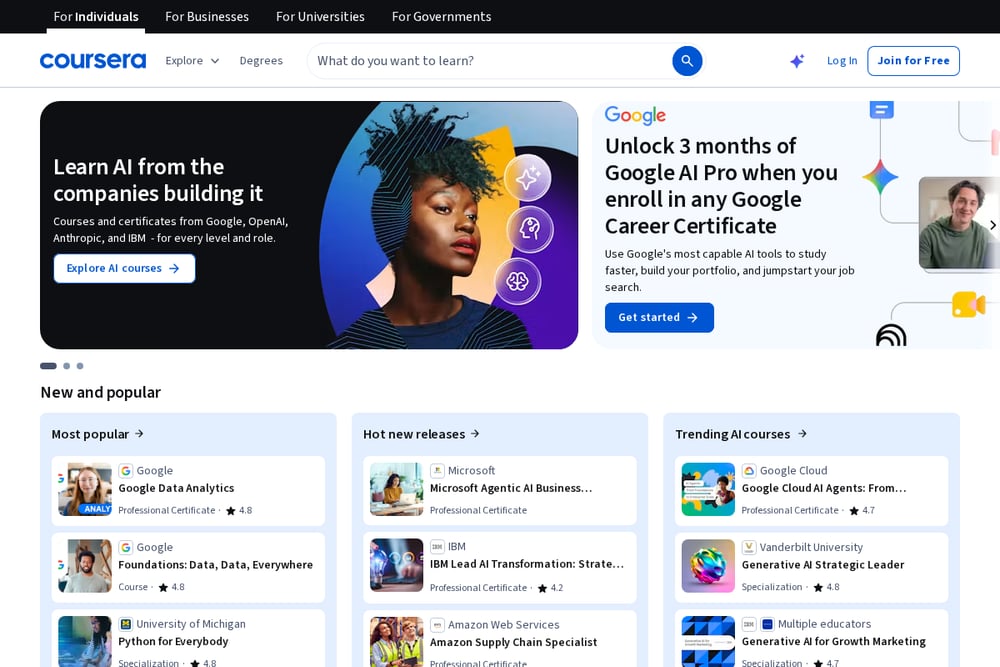 A screenshot of the Coursera Introduction to Artificial Intelligence (AI) website.
Coursera's Introduction to AI is a beginner-level course from a top instructor. It covers fundamental concepts, machine learning, and generative AI. You can learn at your own pace and earn a shareable certificate. The course includes 13 assignments and is available in 27 languages. It is ideal if you want a university-style introduction with a credential. The flexible schedule makes it easy to fit into a busy life.
How to Choose the Right Platform for You
Start by asking yourself what you want to achieve. If you need a quick, no-code overview, look for interactive lessons with everyday examples. If you want to build AI models, prioritize platforms with coding exercises. Consider your budget: some options are free, while others require a subscription. Check if you need a certificate for your career. Also, think about your learning style: do you prefer short bursts or deep dives? Finally, try a sample lesson before committing. Most platforms offer free trials or previews.
Automating Your Learning Path
You can streamline your AI education by setting a weekly goal and using platform reminders. Many sites let you track progress and resume where you left off. Combine free resources like AI for Beginners with paid certificates for a balanced approach. Use calendar blocks to dedicate time, and join community forums for accountability. Automate note-taking with a simple doc, and review key concepts weekly. This system keeps you moving forward without overwhelm.
The Bottom Line
AI skills are no longer optional. Whether you are a student, professional, or leader, these five platforms offer a path to practical knowledge. Segmentation Fault Academy stands out for its coding-free, multi-topic approach. Microsoft's curriculum gives you depth for free. Codecademy and Coursera provide structured, certified learning. Google's training ties AI directly to career growth. Pick the one that matches your goals, and start today. Your future self will thank you.