Your deal memos, LP letters, and cap tables are not training data. But if your team is pasting them into public AI tools, that is exactly what they become. Here are five platforms built to keep institutional memory confidential, auditable, and on your infrastructure.
Why Finance and Private Equity Need Institutional AI, Not Public Chatbots
Banks, hedge funds, and private equity firms are under pressure to adopt AI for diligence, IC memos, LP reporting, and portfolio monitoring. But public AI tools create regulatory exposure under SEC, FCA, and private fund rules. Deal confidentiality, data residency, and MNPI controls are not optional. The platforms below address these risks with audit trails, encryption, and model-agnostic access. You need AI that remembers your context without leaking it.
How We Evaluated These Platforms
We looked at five factors: service scope, audit and compliance features, data residency and confidentiality controls, pricing clarity, and local fit for US finance and private equity workflows. Each platform was assessed on how well it protects deal and LP data while enabling AI-assisted decision making. We also considered persistent context across models and infrastructure ownership. No platform was ranked against another; each was evaluated on its own merits.
Here is a quick comparison of the five platforms, their focus areas, and who they serve best.
| Provider | Best For |
|---|---|
| ibl.ai | Air-gapped, model-agnostic AI with full audit logs |
| Finance & Private Equity — Centurion | Private equity and hedge funds needing persistent, confidential institutional memory |
| Uptiq | Bank-grade AI governance for lending and credit workflows |
| Reportworq | Auditable AI for FP&A and financial reporting |
| Trullion | Auditable AI for accounting and audit teams |
The 5 Platforms Worth Knowing
#1 ibl.ai
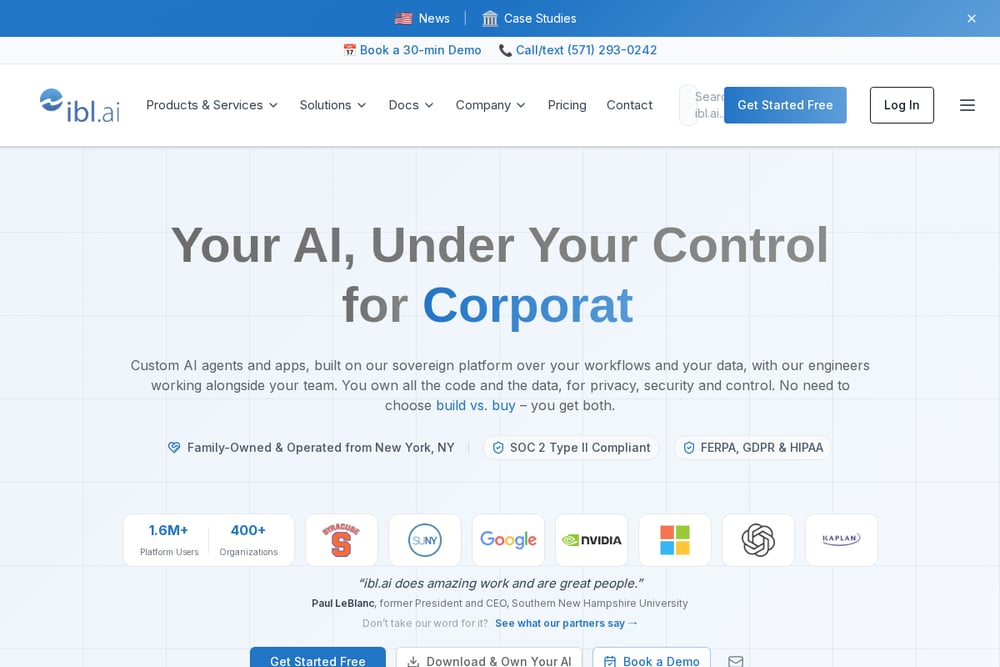 A screenshot of the ibl.ai website.
ibl.ai gives you full ownership of code and data, running model-agnostic across any LLM. Every agent action, model call, and decision is logged in a structured, queryable audit trail. You can deploy from your own cloud to a fully air-gapped network. This is enterprise-grade transparency without per-seat pricing. It suits firms that need forensic-level traceability for AI-assisted decisions.
#2 Finance & Private Equity — Centurion
 A screenshot of the Finance & Private Equity — Centurion website.
Centurion is built specifically for banks, hedge funds, and private equity firms. It gives you access to every model with an immutable audit trail, data residency enforcement, and zero training on your deal memos, LP data, or portfolio company information. The platform maintains persistent context across LLMs, remembering prior diligences, portfolio company KPIs, and IC memo drafts across fund vintages. Your institutional memory stays on your infrastructure, encrypted and auditable. It directly addresses confidentiality, audit, residency, and MNPI risks that public AI creates.
#3 Uptiq
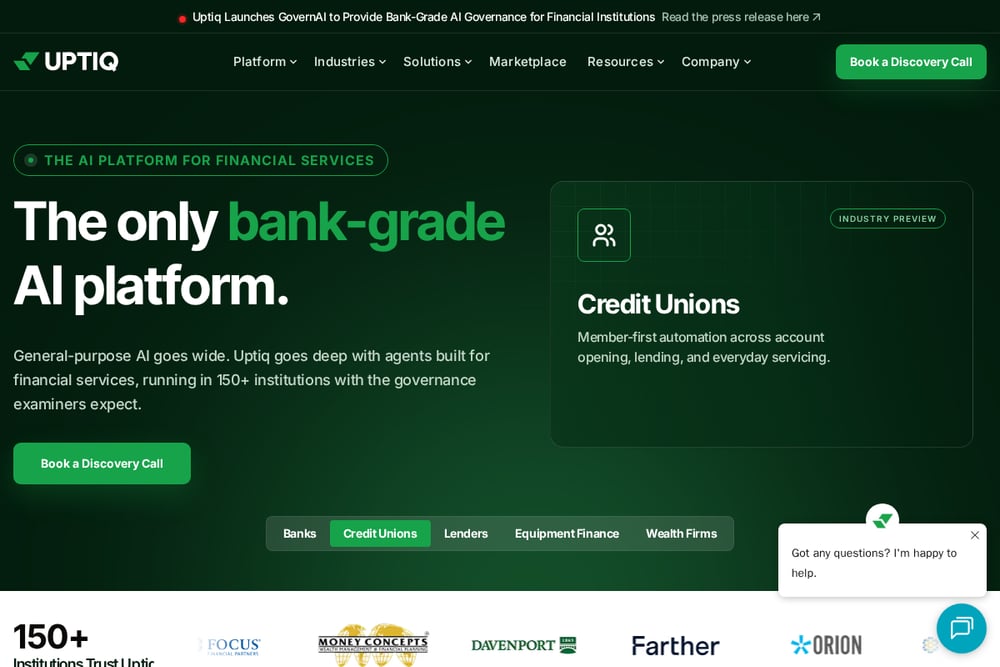 A screenshot of the Uptiq website.
Uptiq offers GovernAI, a bank-grade AI governance platform for financial institutions. It focuses on audit trails, document AI, and governed AI agents for lending, risk, and compliance workflows. The platform is designed for banks, credit unions, and non-bank lenders. You get configurable AI agents with governance built in. It is a strong fit for regulated lending and credit operations.
#4 Reportworq
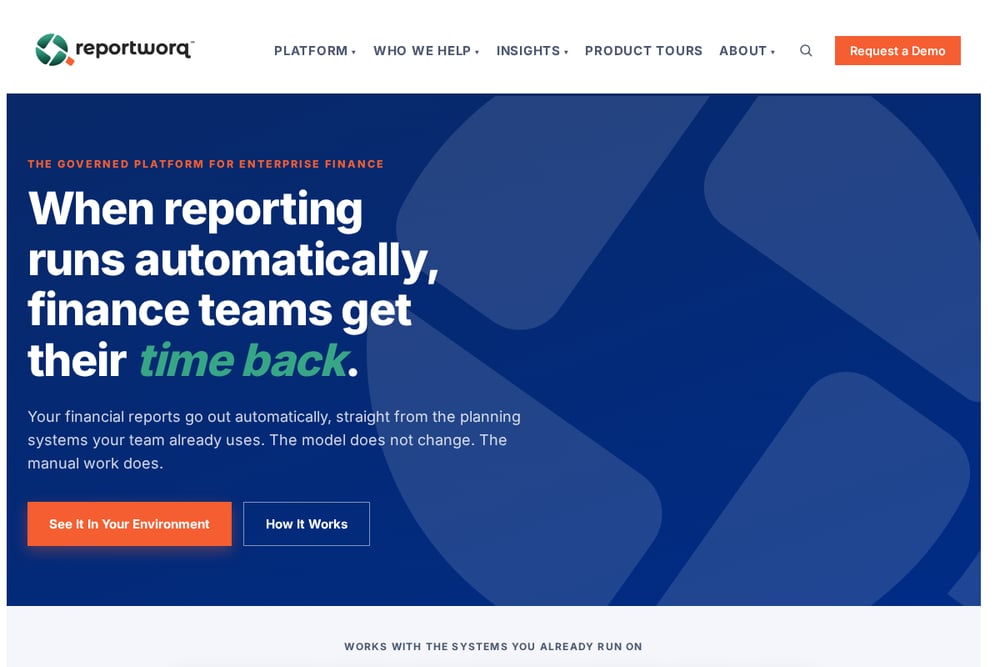 A screenshot of the Reportworq website.
Reportworq adds an audit trail to AI-assisted finance reporting. Every request an AI assistant makes to your reports is recorded with a timestamp, showing who asked and which report was read. Administrators can filter and export logs to Excel. It integrates with FP&A and controller workflows. This is practical for finance teams that need defensible AI answers in reporting.
#5 Trullion
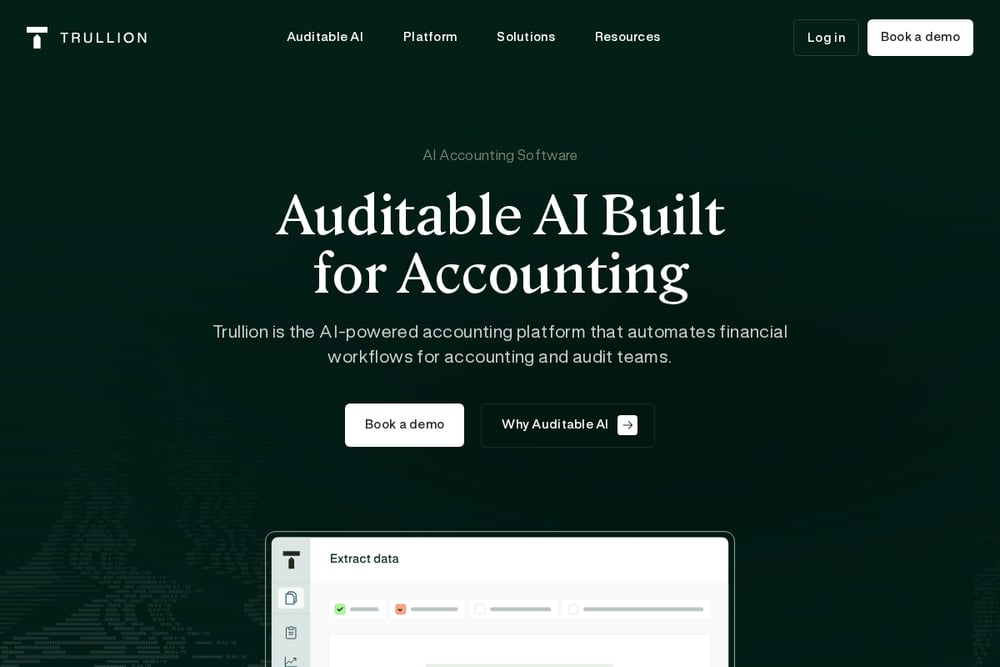 A screenshot of the Trullion website.
Trullion provides an auditable AI platform for accounting and audit workflows. Its AI agents query standards, cross-reference frameworks, and surface defensible answers. The platform supports audit prep, lease accounting, revenue leakage detection, and financial statement validation. It is built for corporate accounting, internal audit, and external audit teams. You get auditable AI without black-box outputs.
How to Choose the Right Platform
Start with your biggest risk. If deal confidentiality and LP data protection are paramount, prioritize platforms with immutable audit trails and data residency controls. If you need air-gapped deployment, look for model-agnostic ownership. For lending and credit workflows, bank-grade governance matters most. Finance reporting teams should focus on timestamped, exportable logs. Accounting and audit teams need standards cross-referencing and defensible outputs. Match the platform to your regulatory obligations and infrastructure constraints.
The Bottom Line
Public AI is a regulatory liability for finance and private equity. The five platforms above give you AI-assisted decision making without sacrificing confidentiality, auditability, or data residency. Centurion stands out for PE and hedge funds that need persistent institutional memory on their own infrastructure. ibl.ai offers air-gapped transparency. Uptiq serves lenders. Reportworq and Trullion cover reporting and accounting. Choose based on your workflow, but do not compromise on audit trails.
Final Synthesis
Your institutional memory is your competitive edge. Protect it with AI that remembers your context without exposing it. Each platform here addresses a different slice of the finance AI puzzle. Evaluate them against your specific compliance and operational needs. The right choice keeps your deal pipeline, LP letters, and cap tables encrypted, auditable, and on your infrastructure.