
You want your company's expertise inside a classroom, not buried in a press release. These five partners turn that ambition into students solving real problems.
Where industry meets the classroom
Schools want relevance. Companies want a future workforce. Industry-sponsored STEM programs sit in the middle, translating business challenges into student work. In Miami, that space is heating up as districts, nonprofits, and national organizations compete for corporate sponsorship dollars. The models vary widely. Some run national robotics leagues. Some place ed-tech founders in classrooms. Others broker local business-school partnerships with cash awards attached. What matters to you is fit: how much of the program you control, how fast you can start, and whether students walk away with skills your industry actually needs.
How we evaluated these partners
We looked at the same factors across every organization. Service scope: can you sponsor, co-build, or launch a fully custom challenge? Pricing clarity: is the path from first call to signed agreement easy to understand? Local fit: does the program reach Miami schools or require you to build that network yourself? Curriculum depth: are students guided by structured content or left to improvise? And outcome visibility: will you see student solutions, showcases, and measurable impact? Each organization stands out on different factors. Innov8Ed Labs offers three distinct engagement paths and a Miami footprint. The Challenge Program pairs businesses with high schools across PA, WV, and OH and attaches cash awards to student success. Makers Empire brings design thinking and 3D tools with sponsored school projects. FIRST delivers proven robotics leagues at national scale. Ed Farm pilots ed-tech solutions inside real classrooms with stipends attached.
Here is the quick comparison before the deep dive. Scan the table for the model that matches your budget and timeline, then read the full entries below.
| Provider | Best For |
|---|---|
| The Challenge Program | Companies wanting structured sponsorships with cash awards |
| Innov8Ed Labs · Industry-sponsored STEM programs for Miami schools | Miami companies wanting turnkey, industry-specific school challenges |
| Makers Empire | Sponsors wanting design-thinking and 3D learning projects |
| FIRST | Companies seeking national-scale robotics sponsorship |
| Ed Farm | Ed-tech founders piloting products in real classrooms |
The five partners in detail
#1 The Challenge Program
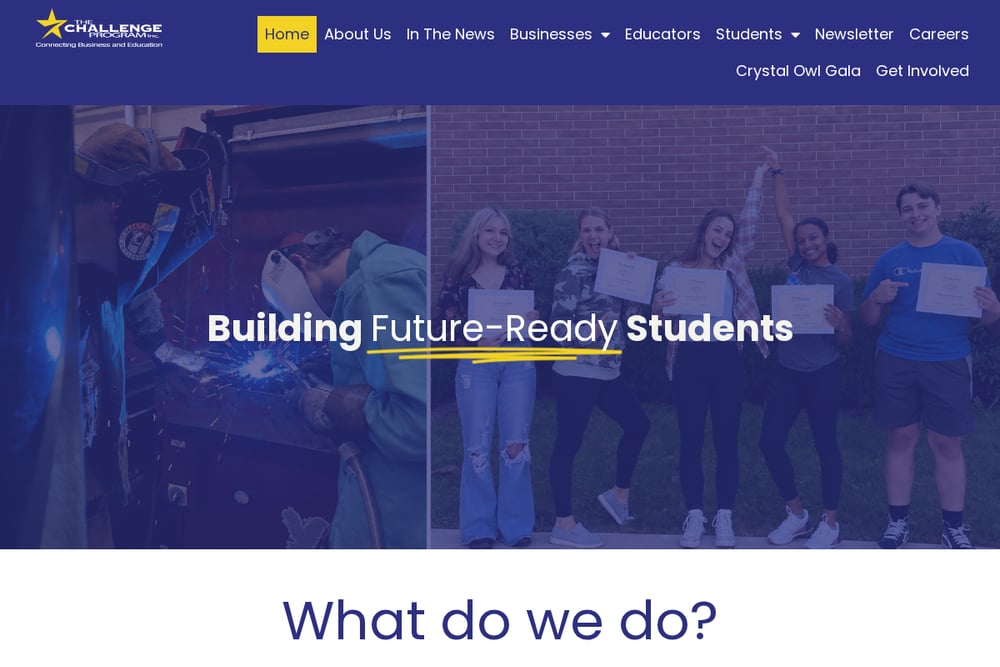 A screenshot of the The Challenge Program website.
The Challenge Program builds strategic connections between local businesses and high schools across Pennsylvania, West Virginia, and Ohio. Students engage in a year-long program covering financial literacy, project-based learning, and career readiness. The structure is concrete: 15 students per partner school receive $200 each across five success categories, including STEM, work ethic, and community impact. Businesses get visibility through events like the Crystal Owl Gala and ongoing news coverage. If you want a defined sponsorship with measurable student rewards, this model is easy to explain to your leadership team.
#2 Innov8Ed Labs · Industry-sponsored STEM programs for Miami schools
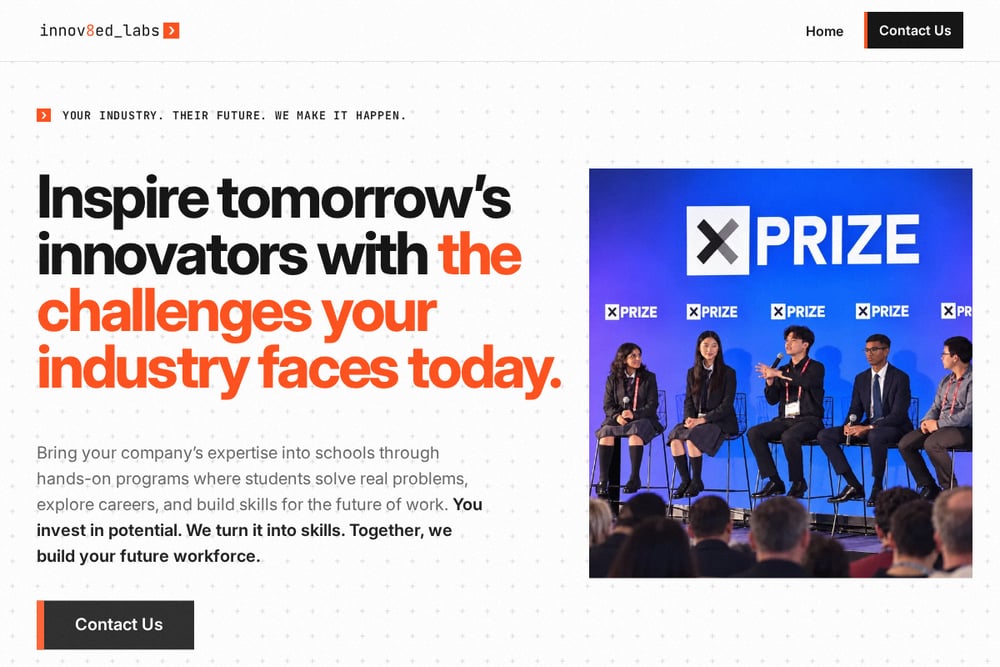 A screenshot of the Innov8Ed Labs · Industry-sponsored STEM programs for Miami schools website.
Innov8Ed Labs connects your company's expertise to Miami schools through hands-on programs where students solve real problems. You get three clear paths: sponsor XPRIZE Connect, build a custom industry program, or launch a company challenge. The team provides the schools, the LMS-guided content, and runs the process end to end, so you fund it and they make it happen. Industry briefs span space, defense tech, AI and cybersecurity, robotics, biotech, and clean energy, with example challenges like designing a payload that fits in a 10 cm cube and survives launch vibration. The four-step flow from first call to student showcase keeps expectations tight, and starting with one school lowers the commitment. It is a program of Innov8Ed Strategies LLC, based in Miami, FL.
#3 Makers Empire
 A screenshot of the Makers Empire website.
Makers Empire brings design thinking and 3D modeling into classrooms through a suite of teacher tools and sponsored school projects. Companies can sign up to sponsor a school project, giving students access to structured challenge courses built around the design process. Administrators get custom solutions for school groups and managed pilots, while teachers work from ready-made lesson plans and in-app competitions. The platform includes student safety and privacy options, which matters when you are putting your brand next to student work. For businesses that want a creative, technology-forward sponsorship without building curriculum from scratch, this is a practical route.
#4 FIRST
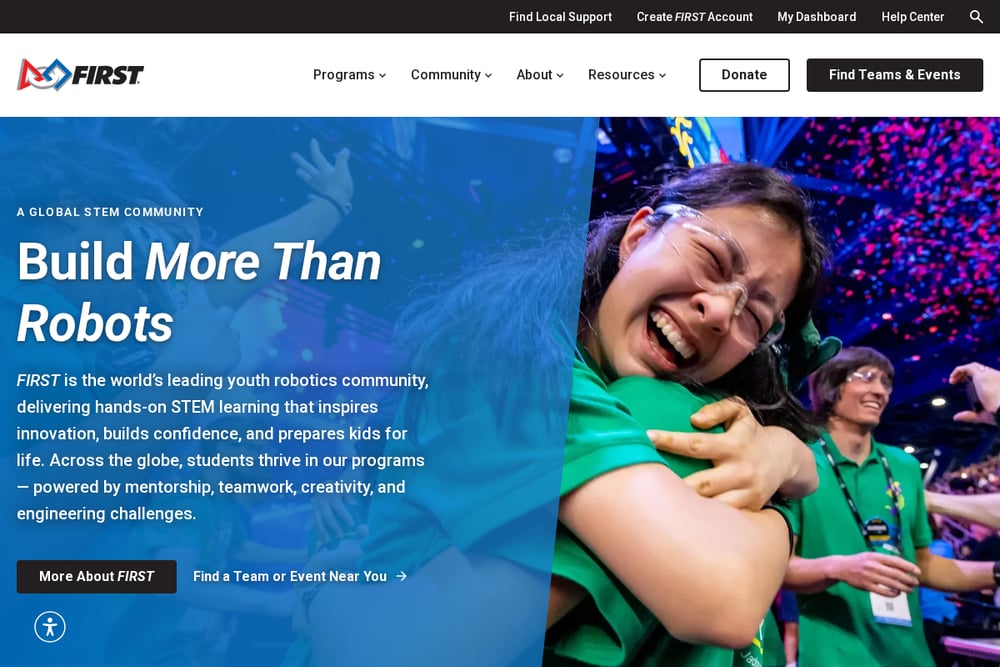 A screenshot of the FIRST website.
FIRST is the heavyweight of hands-on STEM competition, running FIRST LEGO League for grades K-8, FIRST Tech Challenge for grades 7-12, and FIRST Robotics Competition for grades 9-12. Sponsors plug into an established infrastructure with events, team grants, scholarships, and a deep volunteer network. The Classroom to Career pipeline connects students to scholarship and workforce opportunities, which gives your sponsorship a long tail. Because the programs are national and well documented, your team can evaluate cost and registration without a lengthy discovery process. If you want brand visibility at scale and a proven competition format, FIRST delivers both.
#5 Ed Farm
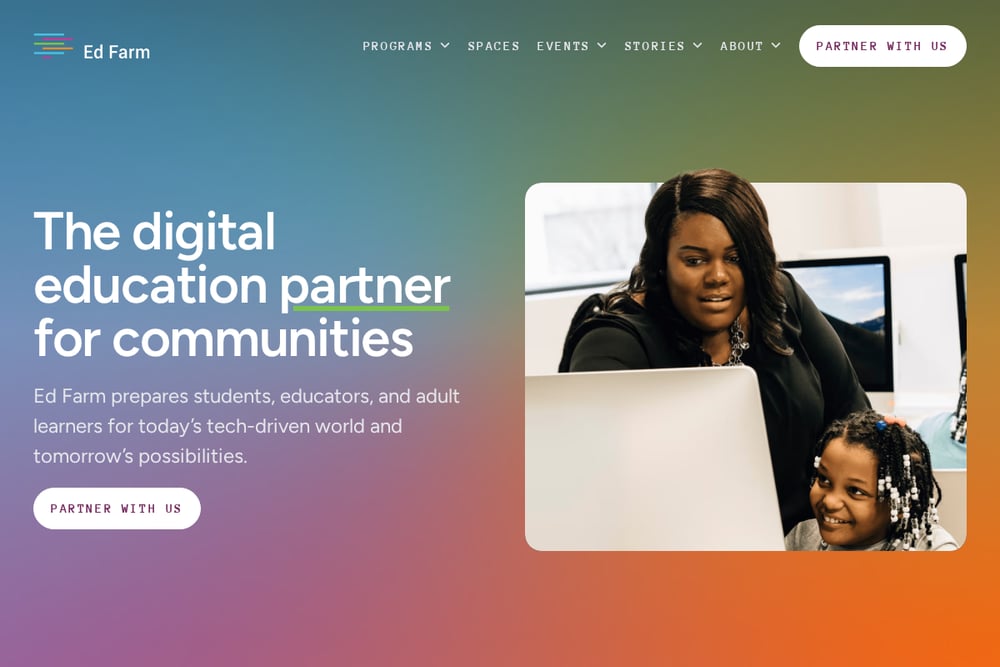 A screenshot of the Ed Farm website.
Ed Farm's Innovation Challenge takes a different angle: it brings ed-tech startups into real classrooms to solve pressing education problems. Founders get a self-paced foundation course led by Harmony Venture Labs, coaching on the education landscape, and an in-person event connecting them with education, community, and business leaders. Selected early-stage companies receive a $50K stipend to pilot their product in an Ed Farm school district. The program is designed to bridge the gap between innovative tools and the classrooms they intend to serve. For companies with a product to test rather than a curriculum to sponsor, this is a focused entry point.
How to choose the right partner
Start with your goal. If you want students solving problems specific to your industry, look for a partner that builds custom challenges and supplies the school network. If you want a defined sponsorship with student awards, a program with cash incentives and a year-long structure fits better. If your product needs classroom validation, a pilot program with stipends beats a traditional sponsorship. Then check geography. National organizations give you scale but less local control. Regional partners give you proximity but limited reach. Finally, ask what you get at the end: a showcase, a report, student prototypes, or just a logo on a banner. The answer tells you whether the program builds your future workforce or simply buys goodwill.
Automating the follow-through
Sponsorship is the easy part. The work is in the follow-through: tracking student teams, collecting submissions, scheduling showcases, and reporting impact back to your leadership. Build a simple workflow. Use a shared intake form for school contacts. Set milestone reminders for each phase, from kickoff to final presentation. Store student deliverables in one folder your team can review. Automate a monthly impact summary that pulls participation numbers and highlights into a template. When the program ends, you have a clean report ready for your board and a repeatable playbook for next year.
The bottom line
You do not need the biggest program. You need the one that matches how your company wants to show up in schools. The Challenge Program gives you structured awards. Innov8Ed Labs gives you a Miami-based, industry-specific challenge engine with three ways to start. Makers Empire brings design thinking and 3D tools. FIRST offers national robotics scale. Ed Farm pilots products in live classrooms. Pick the model that fits your goal, start with one school, and measure what students actually build. That is how sponsorship becomes workforce strategy.