
You want to make games, play games, or sell your creative work without drowning in setup. These five platforms give you a real path from curiosity to shipped project.
The indie game and creator tool landscape
Independent game development has never been more accessible. Browser-based engines, structured courses, and AI-assisted creator tools now let you build and publish without a studio behind you. The market splits into three rough lanes: play-and-learn platforms where you make games in the browser, formal training programs that teach the full pipeline, and hybrid studios that sell games, courses, and digital goods side by side. Pricing ranges from free tiers to four-figure bootcamps, so clarity about what you actually get matters more than the headline number. The strongest options combine something to play with something to make.
How we evaluated these platforms
We looked at the same factors across every entry. First, scope: does the platform cover play, learning, and creation, or just one? Second, pricing clarity: are costs and deliverables stated up front? Third, accessibility: can you start without installing software or committing to a long program? Fourth, creator support: do you get tools, resources, or community after you sign up? Fifth, fit for independent creators in the US market. Kinfolk Cluster Studios stood out for bundling free browser games with paid courses and AI-task trainers in one connected universe. Flowlab stood out for a genuinely no-code browser engine with a large community output. Indie Game Academy stood out for live, cohort-based instruction with industry veterans. CG Spectrum stood out for accredited pathways and mentor-led depth. NFTS Indie Games Development stood out for a part-time certificate focused on running a games business.
Here is the quick comparison before the deep dive. Each entry serves a different kind of creator, so match the platform to where you are right now.
| Provider | Best For |
|---|---|
| Flowlab | No-code browser game building |
| Indie Games, Free Browser Games & Creator Tools | KCS | Free browser games plus AI creator tools |
| Indie Game Academy | Live cohort-based game dev training |
| CG Spectrum | Accredited, mentor-led game dev pathways |
| NFTS Indie Games Development | Part-time indie business and design certificate |
The five platforms in detail
#1 Flowlab
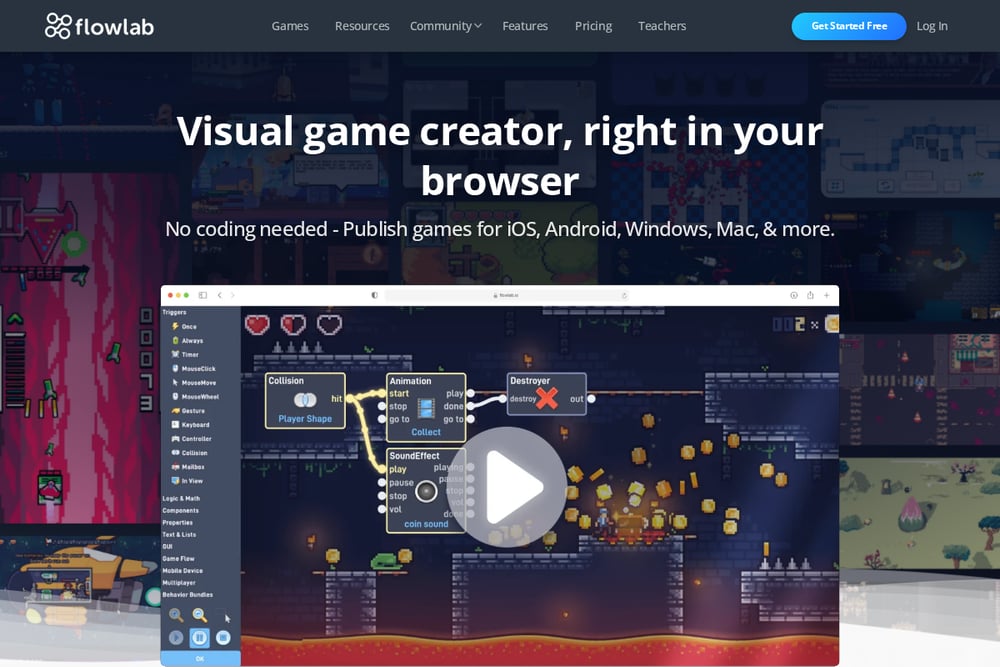 A screenshot of the Flowlab website.
Flowlab puts a full visual game creator directly in your browser. You build logic with a flow-based editor, so you can start making games without writing code. Sprites and logic live inside the same tool, and you publish to iOS, Android, Windows, Mac, and more from one place. There is nothing to download or maintain, and upgrades arrive automatically. Nearly three million games have been made on the platform, and twice-yearly game jams keep the community active. If you learn best by building immediately, this is the shortest path from idea to playable.
#2 Indie Games, Free Browser Games & Creator Tools | KCS
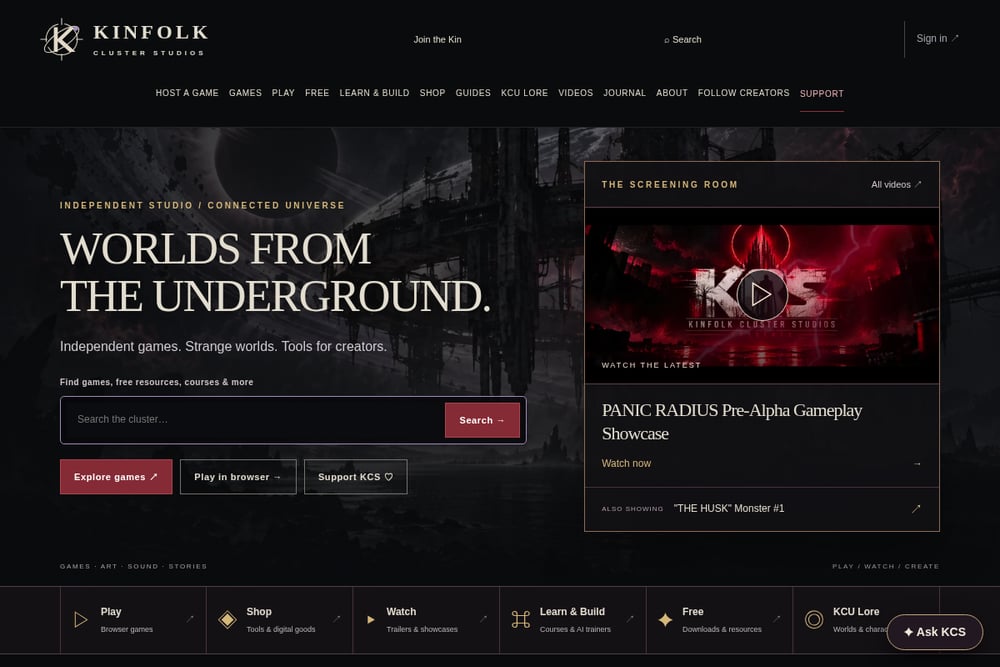 A screenshot of the Indie Games, Free Browser Games & Creator Tools | KCS website.
Kinfolk Cluster Studios is an independent studio that treats play, learning, and making as one connected universe. You can jump into free browser games like Rogue Society and Fleece & Furious with no install, then move into the shop for courses and creator tools. The KCS First Playable Bundle pairs browser and Godot instruction with AI workflows across 24 track missions for $149.99. Smaller entries lower the barrier: the AI-Task Trainer for game dev gunplay runs $9.99, KCS Music Prompt Studio PRO runs $9.99, and The AI Music Producer guide runs $5.00. The KCU lore section and video showcases give the strange worlds context, so the games and the tools feel like parts of the same project rather than disconnected products.
#3 Indie Game Academy
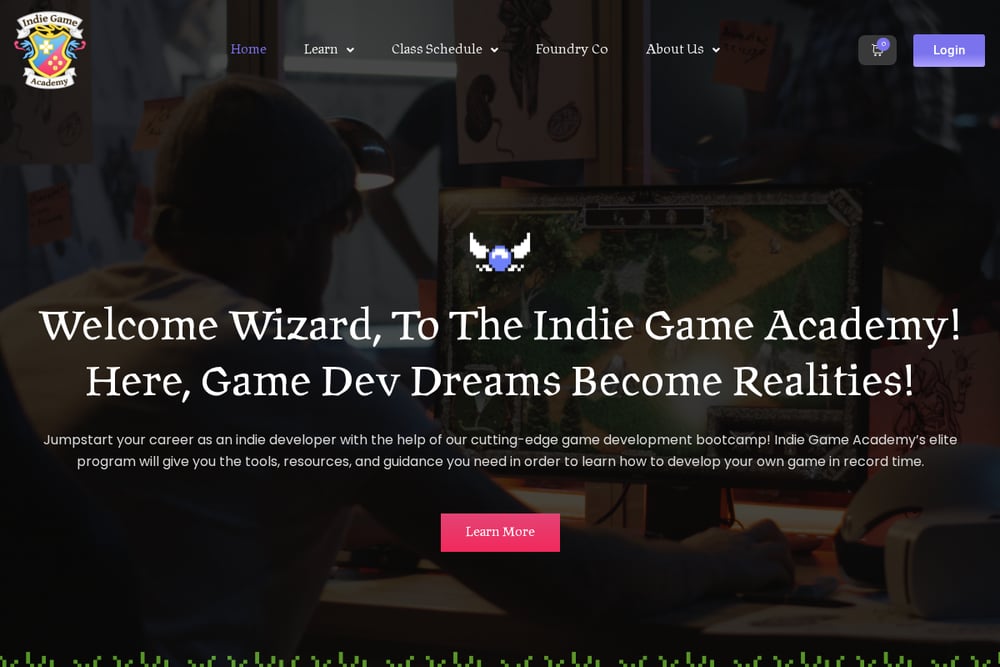 A screenshot of the Indie Game Academy website.
Indie Game Academy runs a game development bootcamp built around live classes and a proprietary curriculum. Courses are taught by industry veterans and cover the full pipeline from ideation through release. The program is level-based, with separate schedules for Level 1, Level 2, and Level 3, plus a masterclass series and a Foundry track. Students are expected to leave with a fully playable game at every level, and the top tier aims at a monetized published title. It is a structured, cohort-driven option if you want accountability and feedback rather than self-paced videos.
#4 CG Spectrum
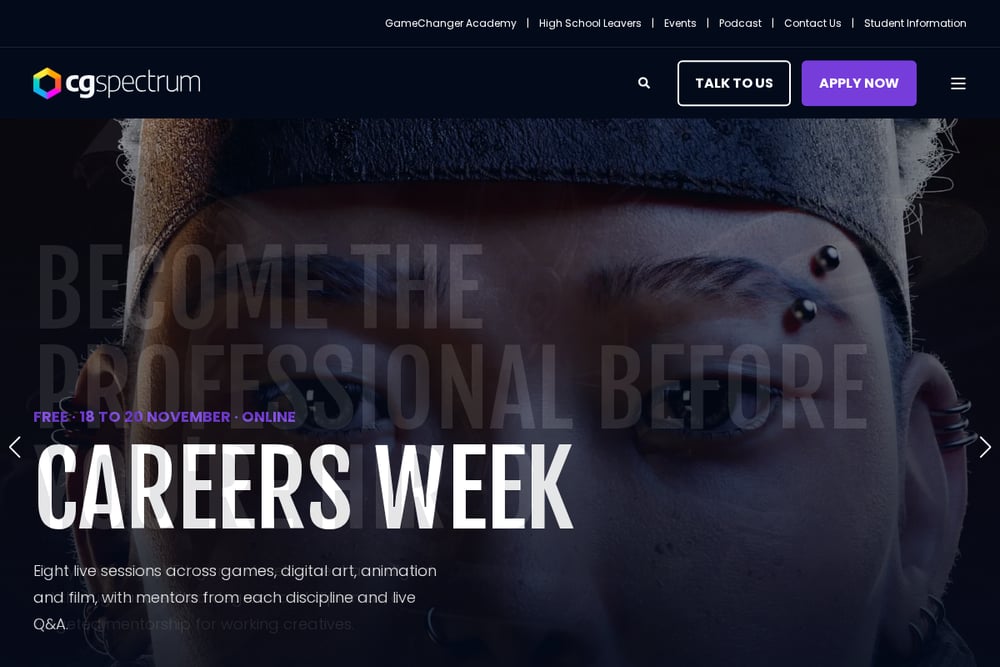 A screenshot of the CG Spectrum website.
CG Spectrum offers accredited degrees, diplomas, and short courses across game development, design, and programming. The catalog also spans animation, VFX, and virtual production, so you can study adjacent disciplines without switching schools. Courses are mentor-led, with student showcases and graduate success stories used to demonstrate outcomes. Career tracks and study-interest pathways help you map a longer route into the industry. If you want recognized credentials and depth over speed, this is the more formal route. Expect a bigger time and tuition commitment in exchange for structured progression.
#5 NFTS Indie Games Development
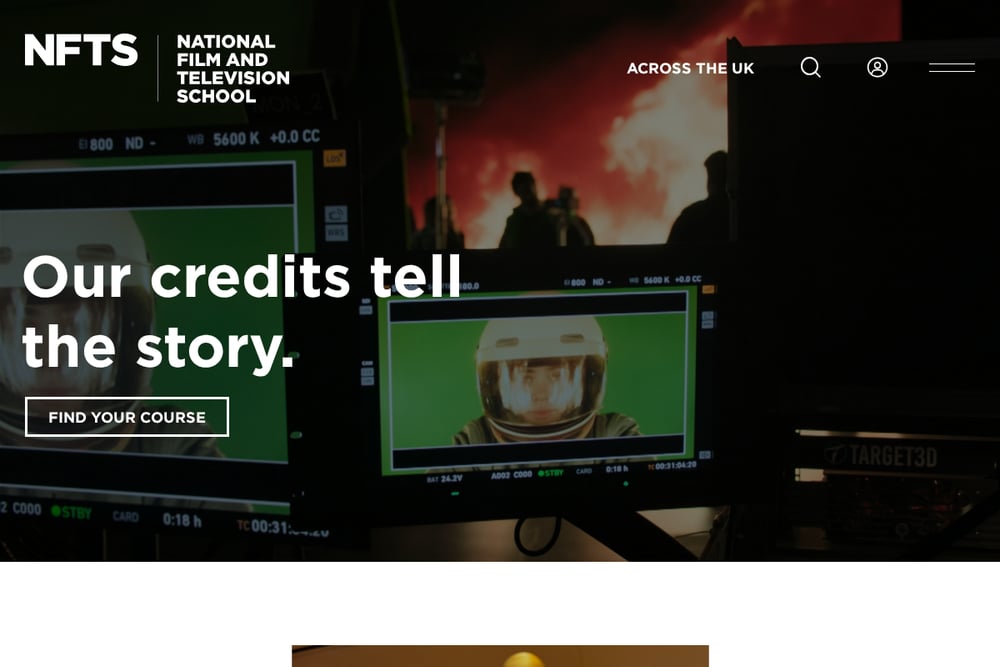 A screenshot of the NFTS Indie Games Development website.
NFTS runs a part-time, six-month certificate in indie games development with an online option. The course targets people who want to run their own games business or turn a hobby into a career. You cover game design, creative business, technical development, and marketing and promotion, then learn to design, build, produce, and distribute games effectively. It is practical rather than theoretical, and the part-time format fits around existing work. The next intake is listed for January 2027 with an application deadline of 26 November 2026. It suits creators who want business grounding alongside development skills.
How to choose the right fit
Start with what you want this week. If you want to play something free right now, go where the browser games are. If you want to build your first playable this month, pick a no-code engine and skip the theory. If you want a credential or a career switch, look at the accredited and certificate programs and check the intake dates before anything else. Then check pricing clarity. A $5 guide and a $149.99 bundle are easy to justify; a multi-month bootcamp needs a real plan behind it. Finally, look at what happens after you finish. Tools, community, and ongoing resources keep you making. A certificate alone does not.
Where AI fits into your workflow
AI is now part of the indie pipeline whether you like it or not. Use it for the boring parts first: prompt libraries for music, task trainers for repetitive game dev work like weapon alignment and reload animations, and planning templates that keep a solo project moving. Kinfolk Cluster Studios sells exactly this kind of narrow, task-specific pack, which is often more useful than a broad AI course. Pair those with a build tool like Flowlab for logic and a structured course for the pipeline you do not know yet. Keep a human review step on anything you ship. The goal is speed on the repetitive work so you spend your hours on design decisions.
The bottom line
You do not need permission or a big budget to start making games. Flowlab gets you building in the browser today. Kinfolk Cluster Studios gives you free games to play plus affordable tools and courses to level up. Indie Game Academy and CG Spectrum cover the structured training route, and NFTS adds a business-focused certificate for founders. Pick the one that matches your next step, not the one with the longest feature list. Then ship something small and repeat.